


Introduction
When we step into the wilderness, we face both circumstances beyond our control (e.g., the environment) and limitations in our ability to cope with them (e.g., our physical and mental fitness). For centuries, philosophers have explored the intersection of these conditions (circumstances beyond our control and our responses to them) to probe the meaning of a good life [ref. 1].
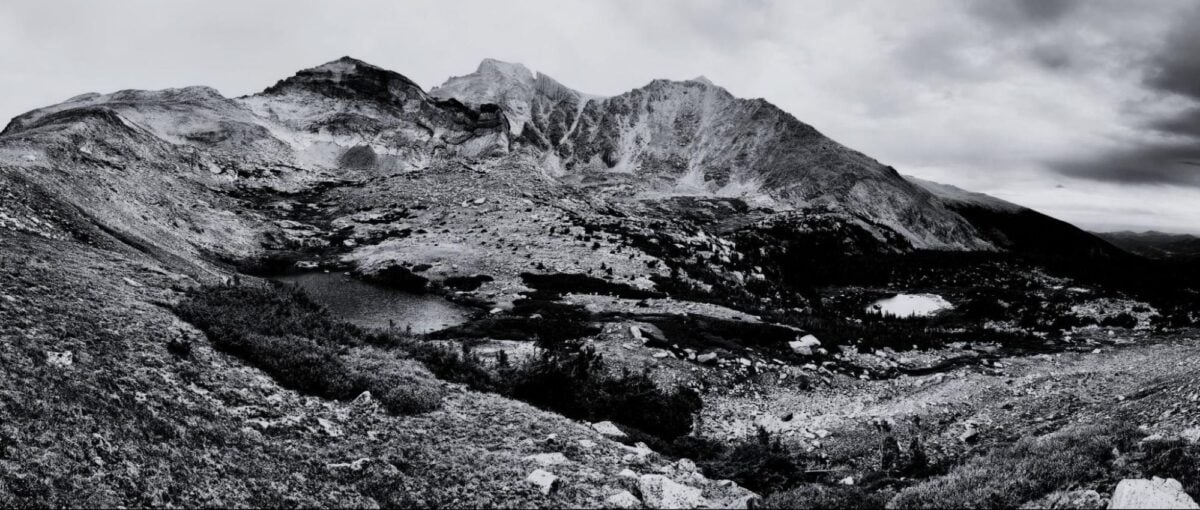
We have long wrestled to understand the relationship between humans and the natural environment. Wilderness (defined here as the remote, relatively untouched natural place where human artifice recedes and necessity reasserts itself) offers a particularly revealing stage for this inquiry.
In the backcountry, our gear and supplies are limited, man-made entertainment is unavailable for distraction, and thriving depends on one’s endurance and judgment. It is in such environments that the human condition can be exposed (rather than manipulated), and some of the more grandiose claims of philosophers can be fairly evaluated.
Western philosophical traditions offer different lenses through which to view the value of wild places. Yet each tradition also has limits. To explore these limits, it is worthwhile to examine how different ancient and modern traditions frame the value of wild places and where they fall short. In this essay, I’ll examine both ancient philosophies (egoism, hedonism, Epicureanism, and Stoicism) and modern philosophies (consumer environmentalism, technological optimism, therapeutic nature, utilitarian conservation, and political nationalism), eventually setting up a thesis that Aristotle’s Nicomachean Ethics [ref. 2] may provide a more comprehensive account of the human-nature relationship – and a framework for a more durable case for modern wilderness conservation: The Wilderness Ethic of Flourishing.
In this essay, I use “wilderness” in its strongest sense – not just as scenic parkland or recreational open space, but as relatively undeveloped, self-willed landscapes where ecological processes unfold with minimal human control or intervention. The 1964 Wilderness Act in the United States defines “Wilderness” as land “untrammeled by man,” where humans enter as temporary visitors. In contrast, national parks, forests, and refuges often allow roads, facilities, and other infrastructure that facilitate recreation and access. These designations are valuable, but they differ from wilderness in the degree of human imprint. By focusing on wilderness, I aim to preserve clarity: wilderness represents the most demanding and least managed form of protected nature, where philosophy and human virtue can be tested with less interference. Still, the arguments advanced here extend by analogy to other forms of protected land, since parks, nature preserves, wildlife refuges, conservation easements, and other forms of natural areas also safeguard fragments of wildness that nurture human flourishing.
Part 1: Ancient & Modern Philosophical Lenses
Ethical Egoism
Ethical Egoism (as advanced by philosophers from Yang Zhu [ref. 3] to Henry Sidgwick [ref. 4]) asserts that one should always act in one’s own self-interest.
In this view, wilderness becomes a resource for the backcountry traveler. For example, the core objective of the ethical egoist might be to complete the thru-hike and collect the patch, conquer the summit, or otherwise finish their backcountry journey primarily for personal achievement. It reflects the mindset of wilderness as a commodity of experience, serving private goals rather than public goods. The egoist stance reduces wilderness to a personal stage.
Egoism shows up in conservation rhetoric when public lands are justified primarily in terms of personal benefit. Think of arguments like: “wilderness should be protected because it provides a place for me to find solitude, test myself, or cultivate self-reliance” [ref. 5]. Early 20th-century American preservationists (Teddy Roosevelt comes to mind [ref. 6]) sometimes used this appeal to individual vigor and masculinity – the idea that “the frontier” or wilderness is essential for keeping citizens (especially men) tough, resourceful, and independent [ref. 7]. Edward Abbey was a champion of the wilderness as a personal arena where humans can enjoy true freedom and defy societal norms [ref. 8] – which could be interpreted through an egoist lens. Scholars and critics sometimes mischaracterize his wilderness philosophy as egoistic, but his activism (cf. The Monkey Wrench Gang, 1975) demanded collective action that conflicted with the egoist’s drive for private satisfaction. [ref. 9])
Admittedly, egoism has appealed to me through the years. There’s something about conquering nature’s challenges that boosts my confidence and self-esteem (even though these experiences may inflate my sense of self to levels that are higher than deserved).
The egoist frame reduces wilderness to a commodity serving private ends. It cannot justify why wilderness should be preserved for others, for future generations, or for nonhuman life. In a policy context, egoism fails to ground conservation in shared responsibility: if my interest lies in logging, mining, or tourism profits, egoism gives me just as strong a reason to exploit it as it does to preserve it.
Cyrenaic Hedonism
The Cyrenaics (a 4th-century BCE Greek school of philosophy [ref. 10]) placed the highest good in immediate pleasure – intense, fleeting, predominantly physical sensations pursued without regard for long-term consequences. In nature, this might correspond to the thrill of mountain biking down a steep single-track at high speeds, the rush of powder underfoot while skiing off a mountain summit, or simply the euphoria of physical exertion while hiking on a trail. Such moments are undeniably powerful, emotionally rewarding, and addictive. But if you’re a thousand miles into a long-distance trail, when your feet are sore, you’re out of calories for the day, rain is falling, temperatures are dropping, and you still have a two-hour walk in the dark to camp, the thrill of the moment tends to be quickly replaced by the prevailing need for sustained endurance and perseverance.
That’s why, as a philosophy, Cyrenaic hedonism cannot account for why the most profound lessons of wilderness seem to come not from transient thrills but from slower, enduring rhythms, e.g., endurance, perseverance, patience, quiet attention, reflection, and contemplation [ref. 11]. To reduce wilderness to a playground of momentary sensation is to miss its capacity to shape character.
Hedonistic appeals surface whenever wilderness is defended as a place for recreation and pleasure. This is the “playground” model of preservation [ref. 12]: wilderness as a place for hiking, skiing, hunting, rafting, and thrill-seeking. Abbey’s pleasures included drinking beer by a campfire, reveling naked in the desert sun, and engaging in reckless adventures [ref. 13]. I find it difficult to argue that these and similar activities in nature are not hedonistic – and yet, intensely rewarding. They clearly add value to the human experience of wilderness and, for that reason, cannot be dismissed as irrelevant to the case for wilderness preservation. But by themselves, they are inadequate to describe the beneficial whole of wilderness’s impact on the human experience.
In the mid-20th century, recreation-based arguments were frequently used to persuade policymakers that parks and wilderness areas had social value [ref. 13]. In the debates leading up to the Wilderness Act of 1964, proponents emphasized the recreational benefits of wild lands to demonstrate that wilderness had tangible value for American citizens. Howard Zahniser, the Act’s chief architect, often framed wilderness as “a resource of recreation” that would strengthen families and communities [ref. 14]. Congressional testimony in the 1950s stressed that wilderness areas should be preserved because they offered opportunities for outdoor leisure and “healthy play” for millions of postwar Americans [ref. 15]. This strategy helped persuade lawmakers that wilderness was not just an idle luxury for those with the discretionary time and the wealth to enjoy it, but a social asset for the public good, accessible to everyone. Of course, the Act passed because of a comprehensive set of merits [ref. 16], but we can’t ignore the plea for wilderness’s hedonistic value realized by its recreational benefits.
But if wilderness is preserved only as a playground, it becomes easy to justify altering or even destroying it when other pleasures (economic development or non-wilderness consumer leisure) are deemed more pressing [ref. 17]. Hedonism cannot explain why solitude, beauty, or risk matter more than short-term stimulation. Nor can it justify preservation in places where recreational “fun” is limited (e.g., wetland swamps, barren deserts, or impenetrable rainforests). It collapses wilderness into the logic of amusement, which Aristotle warned time and again was insufficient for a good life [ref. 18].
Even in modern wilderness culture, we find echoes of both egoism and hedonism. The thru-hiker’s mantra “hike your own hike” is a distillation of egoism and individualism. It grants each person the freedom to pursue the trail in their own way, to define success on their own terms. There is wisdom in this autonomy, and wilderness does indeed resist one-size-fits-all definitions of meaning. Yet left unchecked, “hike your own hike” risks collapsing into relativism: every hike is equal because every hiker declares it so [ref. 19]. Wilderness ceases to be an ethical teacher and instead becomes a blank screen for the subjective projection of one’s hedonistic preferences.
Epicureanism
The ancient Greek philosopher Epicurus (341-270 BCE) taught that the highest pleasure lies in tranquility and the absence of pain [ref. 20]. For the Epicurean, wilderness might be valued as refuge or escape. The solitude and sensory calm found at a remote alpine lake is a powerful contrast to what most of us experience in day-to-day life. Yet, wilderness is not only a place of serenity – it also comes with some environmental hardships (e.g., inclement weather and rugged terrain). In turn, the wilderness environment presents physiological hardships for its human visitors, including hunger, fatigue, cognitive stress, and difficulties regulating body temperature, among others.
Epicureanism falters in the face of these realities, for it values wilderness only insofar as it soothes. If you spend enough time in wilderness, you come to realize that while it can sometimes offer a contrast to the normal stressors of modern urban living, escape or refuge are not its uniquely defining or exclusive features. Epicurus’s garden [ref. 21] is a cultivated refuge, not a raw, unpredictable landscape. Wilderness is more than a source of calm; it also requires an assessment of risk, and accessing it demands some physical and mental exertion. And because our backpacks must remain necessarily light, wilderness requires us to confront the limitations of necessity and the trade-offs that come with leaving the excess behind at home.
Epicurean reasoning is evident in conservation arguments that praise wilderness as a refuge of tranquility – a place to escape stress, regain balance, or find peace. Modern interpretations of wellness (nature therapy, forest bathing, backcountry retreats) echo Epicurean ideals of minimizing disturbance and seeking serenity [ref. 22]. John Muir’s writings (cf. The Mountains of California, 1894) often resonate with this theme, presenting the High Sierra as a sanctuary of healing from industrial society [ref. 23]. Thoreau’s insistence on sufficiency and the rejection of luxury echo Epicurus’s focus on modest needs and tranquility. His famous words, “Simplify, simplify…”, constitute a decidedly Epicurean refrain. For Thoreau, wilderness was a cure for the disturbances of industrial society [ref. 24], much like Epicurus’s garden.
While tranquility is real and valuable, wilderness is more than a spa for urban fatigue. Epicureanism struggles to account for wilderness as a place of risk, hardship, or danger – some of the very elements that are intrinsic to wildness. While Abbey’s life reflected Epicurus’s ataraxia (i.e., tranquility, manifested by Abbey through the practice of modest living), he rejected the wilderness as a garden-like retreat. Instead, he saw it as raw, wild, and uncomfortable – necessary components of the human experience, not just balm for the nerves [ref. 25]. If conservation rests only on the promise of tranquility, policymakers can dismiss preservation whenever “safer” or more easily curated (or cost-effective) environments can provide similar effects [ref. 26]. Epicurean appeals can preserve wilderness-as-refuge, but they cannot justify wilderness-as-wilderness, in all its difficulty and unpredictability.
Stoicism
The Stoics (starting with Zeno of Citium around 300 BCE) counseled people towards endurance and equanimity in the face of adversity, treating external conditions (especially stressors) as “indifferent” [ref. 27]. In the wilderness, Stoicism seems well suited to successful adventuring: enduring hunger and fatigue without complaint, accepting the wet and cold consequences of a storm, and approaching solitude as an exercise in self-command (i.e., remaining steady, rational, and virtuous even when removed from the comforts of society). This philosophy honors wilderness more than egoism or hedonism because it recognizes hardship as a teacher. However, while Stoicism dignifies hardship, it can overlook how nature itself fosters virtue, treating adversity as morally neutral rather than as an active partner in shaping character.
Stoic language has fostered arguments that the wilderness is a place to test and harden character, rather than develop it. Advocates of Stoicism sometimes describe wilderness experiences as training grounds for resilience, independence, and discipline. Even a contemporary Epicurean, John Muir, reflected in writings from later in his life (cf. Stickeen, 1909; Travels in Alaska, 1915) a sense of reverence for nature’s order and the need for quiet endurance in the face of environmental hardship [ref. 28]. Henry David Thoreau’s embrace of solitude and indifference to hardship reflect Stoic tones prevalent throughout Walden (1854) [ref. 29]. Outward Bound programs and military training exercises often invoke this Stoic framing: wilderness teaches self-command by confronting the uncontrollable [ref. 30]. One of the most profound ideas advanced by the modern conservationist Aldo Leopold is rooted in Stoicism (although his broader philosophy is more aligned with Aristotelian ethics) – a Stoic respect for nature’s order, which requires us to align ourselves with nature’s larger processes, even when they frustrate human desire (cf. A Sand County Almanac, 1949) [ref. 31]. Even Abbey dipped his toes in Stoicism, celebrating human endurance as part of the wilderness experience while accepting nature’s severity with a grim sort of joy (“Wilderness is not a luxury but a necessity of the human spirit.”) [ref. 32].
Because Stoicism treats wilderness as morally neutral, it denies wilderness intrinsic value and reduces it to a backdrop – a setting against which human virtue is tested but not shaped by nature itself. Therefore, in conservation debates, Stoicism can inadvertently support exploitation: if what matters is only the individual’s response, then the destruction of wilderness does not matter as long as we train ourselves to endure its loss. Stoicism may build inner strength, but it cannot provide a foundation for defending wild places as valuable in themselves or for the flourishing of all living beings for all of time.
Member Exclusive
A Premium or Unlimited Membership* is required to view the rest of this article.
* A Basic Membership is required to view Member Q&A events


Discussion
Become a member to post in the forums.
Companion forum thread to: On Wilderness and Flourishing
In this philosophical essay, Backpacking Light founder Ryan Jordan argues that wilderness is more than scenery, recreation, or resource. Drawing on Aristotle, and testing ancient and modern philosophies against the state of humanity’s relationship to nature, he proposes a Wilderness Ethic of Flourishing: wild places cultivate prudence, courage, temperance, and contemplation in ways modern civilization cannot. This philosophical foundation offers a deeper case for preserving wild lands in an age of distraction, extraction, and political distortion.
“A week immersed in news or entertainment passes without transformation. A week in the wilderness can alter one’s entire life trajectory.”
What a read! That was pretty deep Ryan. I enjoyed it very much.
That line, ” A week immersed in news or entertainment passes without transformation. A week in the wilderness can alter one’s entire life trajectory.” , That says so much right there and it is so very true.
Wow Ryan! That’s not just food for thought, it’s a feast. Thanks for the deep reflection. Spot on!
Not one single word about indigenous people? Or an acknowledgement that “untouched” wilderness (I don’t believe it exists) cannot come into being until you forcibly eject the people who lived there for millennia? I’m disappointed by another example that echoes the continual neglect by all of us to realize those people haven’t gone away, and that they appreciate this land from still another viewpoint.
Admittedly, I skimmed the essay; I’ll need a couple of unscheduled hours to digest it all and will do. Regardless, I appreciate the effort you took to consider this concept of “wilderness” from multiple views.
That is one viscous essay. I don’t argue that time in the wilderness does help one flourish (it may even be the enabler), and the philosophical lenses offer interesting perspectives, but none quite nail it for me.
Wilderness calls me when I need to slow down and relearn how to listen, and immersion allows me to again master that skill. Whether it be the outdoor sounds, others’ stories, or the voice of God, I in time within my daily grind tune out everything but what is immediately in front of me and in a sense become deaf.
Time in the wilderness is the reset where I learn again to tune in which allows me to flourish, allows me to nurture those close to me and add to their flourishing; in short, to live fully.
I love the ambition of this essay. And how BPL is a place where these deeper topics get attention.
AK – I wondered about this as well–not only the indigenous perspective but how other non-Western contemplative traditions fit into the thesis. The indigenous perspective, for one, is reciprocal. Our culture has taken a long time to understand the value of that perspective, and only recently. (One reference point being the popularity of Robin Wall Kimmerer’s writing.) Buddhist contemplative practice would be another example–letting the natural world flourish for its own sake, which of course also includes us. In Ryan’s defense though, I think he was pretty open about using Aristotle as a focused lens, rather than trying to build on a more comprehensive set of viewpoints.
Viewed as a place where we flourish still hints at nature as something instrumental, for our use. It won’t win any political arguments, but isn’t nature valuable for its own sake? As the only intact evidence of the causal chain that produced us? Call it God, or god, or whatever you want, but no matter how granular science explains it all, no amount of names, labels, or systems get to the bottom of the mystery and the inscrutability of it all. Allowing space for that inherent mystery to exist in its fullest form is impossible to price.
All that said, I 100% agree with “a week immersed in news or entertainment passes without transformation. A week in the wilderness can alter one’s entire life trajectory.”
Hi, unfortunately I cannot access the full essay even though I have just joined for this purpose as a Basic member. Would it be possible to make it freely available to all members, at least for a limited time?
It is a challenging task to defend wilderness against national agencies, forestry representatives, progress enthusiasts, virtual reality dwellers, civilization-first proponents, and utilitarian-minded industrial actors, among others. I value this forum, and I believe this essay could expand my “defence toolkit.”
Thanks in advance
Wow! What an interesting philosophical framework for the thoughts I have while immersed alone in wilderness, whether a politically-defined national wilderness area or one that nature amazingly is recovering after man’s exploitation. There’s nothing more liberating to the soul than lying on one’s back under the splendor of the nighttime sky unpolluted by artificial lighting for miles and miles around and contemplating the magnificent universe in which we live together with our place in it.
Beautifully said, Richard!
Wow. From Aristotle and Edward Abbey to Walden Pond (Thoreau).
What’s it all about?
Oh beautiful…
Become a member to post in the forums.