

About this story: This is a narrative photo essay about a fall trek in the Rocky Mountains of central Colorado. It includes a few dozen photographs, a narrative account of the trip, and field and gear notes about our route and equipment choices.
I leaned back in my backpacking chair and for the first time in 96 hours, felt relief instead of anxiety.
We were at the tail end of our route, with the only remaining puzzle piece an unknown bushwhack. We had to figure out a last-day bushwhack descent of nearly 4,000 vertical feet from the tundra bench where we were camped on our final night down into the spruce forest and the footpath to our exit trailhead. I knew how to bushwhack, and knew that one doesn’t reverse course once the thrashing begins. It can be its own kind of hell but it’s not eternal and is always a good reminder that some experiences must be earned.
But for now, that was tomorrow’s problem.
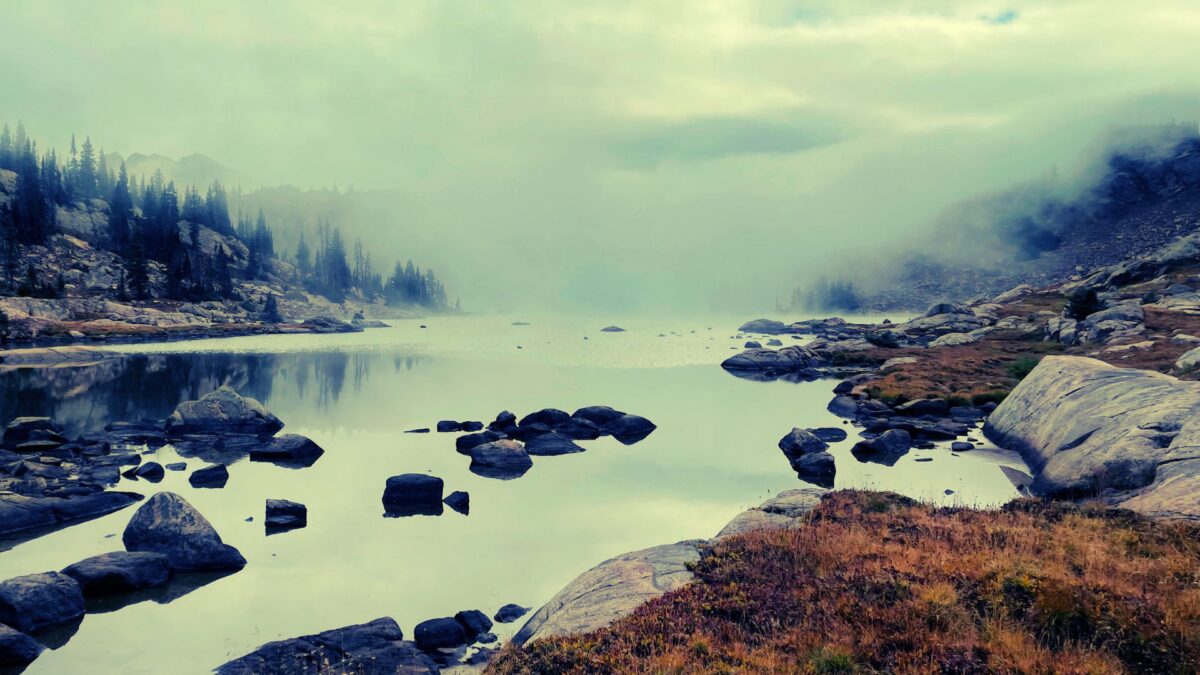
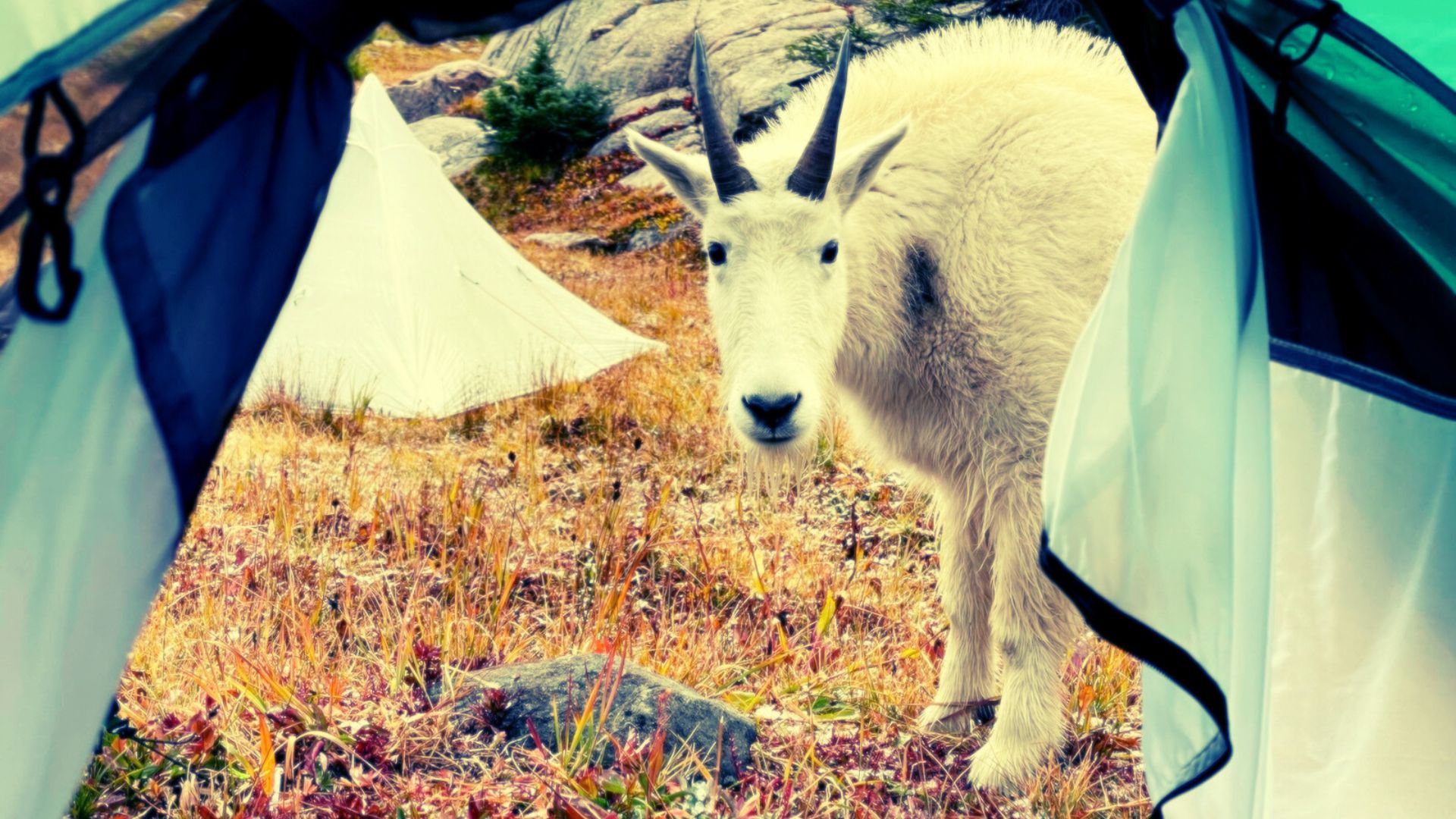
Warm afternoon sun, a curious goat, and 360-degree views of Colorado’s most remote and rugged mountains would provide the moment’s elixir as I reflected on the past four days.
Finding solitude is no easy feat in a state with six million people who are addicted to a so-called outdoorsy lifestyle.
Colorado boasts an embarrassing amount of world-class hiking destinations: the Colorado Trail, Maroon Bells, Collegiate Peaks, and Rocky Mountain National Park to name a few. Full trailhead parking lots, limited access permits, and human-clogged vistas are a normal part of the hiking experience for those who want easy, accessible terrain with Instagrammable scenery.
But that wasn’t what we were looking for.
If you ask my son and wilderness partner in crime Chase what we want out of a trek, you’ll understand that “off the beaten path” constitutes our primary trip planning principle.
While poring over maps, Chase found one Wilderness area in particular with high alpine terrain and a notable lack of online trip reports.
“What’s it like?” I asked.
“No trails, big mountains, lots of talus.”
I built an AI-agent that scraped online forums and articles to build a database of user sentiment for off-trail travel in the range we were looking at.
The agent wrote me back with this summary:
This range isn’t well-known as a hiking destination, but many users report varying levels of success using off-trail approach routes to alpine lakes and mountaineering objectives that are seldom attempted. Negative user sentiment (etymology) includes “difficult“, “sufferfest”, “tedious”, and “steep”. Positive user sentiment includes “rewarding” and “beautiful.” Feelings of awe, remoteness, and solitude are commonly reported.
Count me in.
Member Exclusive
A Premium or Unlimited Membership* is required to view the rest of this article.
* A Basic Membership is required to view Member Q&A events


Discussion
Become a member to post in the forums.
Companion forum thread to: Off the Beaten Path in the Colorado Rockies
Ryan and Chase explore the central Rockies deep off trail surrounded by talus and goats.
“The most remote and rugged” must refer to the Weminuche, which is truly one of my favorites, and I try to explore a new piece of it each summer. Love those goats, and of course you probably saw a ton of moose.
My wife and I had planned to do a big chunk of the high route through the Needles/Grenadiers last summer, but we ended up doing a trip in the West Elks instead because the weather was so much better there. Monsoon season can be unpleasant in the San Juans. Hopefully, we will get back there this summer.
What a trip report, you must have had an awesome time!
I’m confused about the La Sportiv TX4 Evo’s though. Everywhere I’ve looked online it says they weigh just over 800g but here you wrote they weigh 1247g. Is that because that’s the weight in your size or is it a mistake? from just over 800g to 1247g because of the shoe size seems like an awful lot.
My second question is about their fit. They seem like really nice shoes but in some reviews I’ve read, people mentioned the tx4 being a lot narrower and smaller than the previous model. What’s your view on this?
Dan I think it’s somewhere else than the Needles/Grenadier. Maybe not even the Wemi
Keelan, I chose the TX3 for their breathable uppers. My 11.5 pair is 794g and the orange generation
Bad bunions but they still work. Not as comfy as Altra/Topo etc, but man I’m over the sloppy fit and low durability for off trail stuff
I also have the TX Hike which are a little roomier in the front and the most comfy shoe in the rugged category for my bunion, but I have to deal with the GoreTex aspect. Not so ideal in mid summer
Keelan – thanks for pointing that out – typo on our part. My size 43 TX4 Evo with no insoles weighs 802 g per pair. With my insoles, 890 g/pair.
I didn’t wear the old style TX4’s, so can’t compare, although from photos online the older models do look wider. I graduated from TX3’s.
The forefoot width:length ratio of the TX4’s (in my size) is 0.36. My trail running shoes (Ribelle Run XTs) are about 0.38. My son’s Lone Peak 8’s are around 0.36 (size 11). From an absolute perspective, my Ribelle Run’s are about 1/4 inch wider in the forefoot than the TX4’s. I wouldn’t call them narrow, but my feet aren’t super wide paddles, either.
I do prefer something a little narrower (more control on technical terrain) in a mountain shoe.
Years ago when I was working trail crew in the Olympics in Wa. state, we were visited at one of our high camps by mountain goats. they are amazing creatures and a delight to watch as they climb across cliff faces. these goats were somewhat brazen in terms of approaching our camp. We welcomed their coming right up to our site and poking around. Habituated? Possibly, although we saw no one during our three days in this section of trail. I’m guessing they were more curious than anything, and attracted by the smell of food. We were in a National Park, where hunting isn’t allowed.
My impressions are:
–goats seem to have poor near eyesight, which made them a little unpredictable
–goats loved the salt found in our urine. Peeing near your tent would guarantee waking up to the snuffling of one or more goats at night
Ryan was in a more remote region. I can’t read the article,, but I’m sure it includes an appreciation of these magnificent creatures, so rarely seen up close, or even at distance!
Lucky to have mountain goats here in Northern Idaho.
Here is a Colorado front-range example. This goat was attracted to his pose by peeing while they were watching me. An intrepid goat is always willing to risk walking near me for such a treat.
Haha, I didn’t read the article, just assumed when I saw “most remote and rugged.”
My contribution to the goat photos, from 20+ years ago. My dog couldn’t believe they were walking right up to her, and I had to leash her.
Great trip report Ryan. Are you planning on putting this trip or any recent ones on the YouTube channel?
My contribution to the “Goats waiting for me to pee in the Weiminuche” school of outdoor photography.
The Sangres get my vote for the mystery location, although maybe they should be considered the southern Rockies. Much more rugged than the San Juans, six passes in 23 miles is pretty much the norm there.
Another of my favorite areas. In recent years, I’ve really been enjoying Crestone as a starting point.
More goats. Mount Massive saddle 14K July ’24. Everyone carefully backed up as momma and baby casually walked by.
This thread has turned in a caprine direction. I’m not complaining, mind you.
I think I have an idea where they went but I’m not saying. Cool trip. A reminder that adventure is where you push your limits a bit.
@Ryan I’m fascinated by calorie estimations as they’re a far bigger opportunity to save weight than any individual piece of gear would be.
I’ve been estimating calories with a slightly different approach and getting good results (estimated weight loss = real weight loss), but the method comes up with some very different outcomes than Ryan’s way of doing it.
Ryan and I both start with the same base calories using a BMR formula.
Ryan then estimates 100kcal/mile then adds extra miles based on the difficulty using Petzoldt (add 2miles/1000 ft elevation). He then adjusts the added miles based on steepness & obstacles where multiplier could be as high as 3.3/1000feet (based on his 4.3 difficulty factor)
My method uses a different approach. I start with Petzoldt, to add 2miles/1000 ft elevation. It then adjusts the calorie requirement using “PAL”, Physical Activity Level, a multiplier for BMR taken from here which increases as total energy miles increase. Assuming a mid-weight unloaded backpacker on flat ground but increasing distance for Petzoldt:
Using this study which validated Petzoldt and which Ryan referenced in one of his old articles, loaded with a 44.5lb pack requires ~ 29% more calories than unloaded (Table 3). But the study also found that calorie burn depended on total skin out weight, not carried weight. So adjusting the unloaded PAL for a 155lb hiker carrying a 30lbs pack, the loaded PAL becomes:
Now comparing the PAL method to Ryan’s method, the calorie count is very different as difficulty increases. These are two single day use cases within longer trips where I counted calories and monitored weight gain and found my results very accurate. And this is assuming 2.0 Petzoldt multiplier for Ryan’s method, not the adjusted 3.3 for really hard days where Ryan would now estimate even more calories are needed.
Ryan’s finding with HRM validates that is more accurate than either of these back of envelope calculations. While it’s true HRM is a good estimator of calorie burn, the accuracy of the watch HRM can vary significantly and needs to be considered as well:
So why are PAL method and Ryan’s old (not HRM) method so different? Especially given both Ryan and I get good estimates of weight loss that track with field outcomes?
Dunno.
I suspect some of it is that these really hard days or really easy days are outliers and we don’t do enough of them repeatedly to collect stats to deduce which method is most accurate. I also don’t know if Ryan accounts for water loss. I give it a couple days after the trip before weighing myself, while not over eating on those days, because my water weight is artificially low.
Santa gave me a Garmin watch for Christmas and I’m going to start using it to track calories with the HRM. And given some free time, I plan to review the studies looking for clues.
I love this nerdy stuff, so I revisited the “The Validity of Petzoldt’s Energy Mile Theory ” study, which measures caloric burn with live subjects.
Some interesting outcomes from the study:
I rethought my penalty for the pack weight and realized it should only apply to the excess calories burned from the exertion of the hike, not to the base burn rate (BMR). Readjusting:
The standard deviations of the outcomes in the study are significant and actual calories burned will vary notably with individual, just as Ryan’s 100kcal/mile assumption will vary person to person.
What I’ve done for my trips is to customize the PAL-vs-km table based on real data from my trips. If using Ryan’s method, it will probably result in more consistent and repeatable outcomes by adjusting both the 100kcal assumption and the route difficulty rating using personalized results.
I chose 4.8kph to 6.4kph data for the PAL method since that’s the speed range I move at on flat ground. Faster or slower hiking will adjust PAL up or down accordingly, similar to how Ryan adjusted his multiplier for hard scrambling.
This may seem like excessive hand wringing but using this approach I’ve been able to drop pounds off my food carry for even just week long trips.
Whoah!!!
Ryan already knows what my boomer response will be.
After three years of heavy hiking, I had my dietary needs pretty much dialed in, through mere experience. Experience counts for a lot, and often trumps charts.
But I’m a boomer! so what do I know?
Trust your experience and learn from it? How old school! Chart your hearts and appetites out ahead of time, gen why-ers!
Still, I like articles that push forward with our understanding and potentially help to lower pack weight and/or improve the quality of our calorie consumption while hiking.
And still: as a boomer, I tend to trust my real time experience more than detailed studies about my appetite.
Science can tell me one thing and my body at the time another. Rather than studying charts I’ve paid attention to the needs of my body in real time and space. I’m happy with that.
I suppose Gen X, Y and Zers need a chart to tell them what to eat.
(and hey, do we just begin again with A-ers next year?)
jscott, I do both: better outcomes. A lot of assumptions (as they say) about me personally in your reply :) Hoping for feedback based more on the concepts
Become a member to post in the forums.