


Every backpacker, thru-hiker, or endurance athlete knows how to suffer. It’s an intrinsic part of what we do, and it sets the people who reach their goals apart from the people who quit from the discomfort.
Maybe you remember when you first learned to suffer. It could have been on a thru-hike, elsewhere in the mountains, or in some other, disconnected part of your life. I learned to suffer during my first season as a wrangler in Yellowstone National Park. It was 2010, I had just graduated from college where I had lots of friends and soft hands. I went from my plush New England existence to working 14 hours a day at a rugged corral where my coworkers hated me. It was my first experience with both manual labor and being despised.
Leading up to this point, I’d never had to “gut it out.” Life had been easy. To everyone’s surprise (and possible dismay), I finished the season—a full four months where I wanted to quit every. Single. Day. It was the first time I’d suffered in something and saw it through to the end.
Though it seems disconnected, I carried that horrendous season with me as I moved forward in life. There wasn’t a smack-you-over-the-head bedtime story lesson, but it was more the fact that I had forged through misery and loneliness, physical and emotional pain. Something about that experience wedged into the back of my mind as I became more involved in backcountry sports.
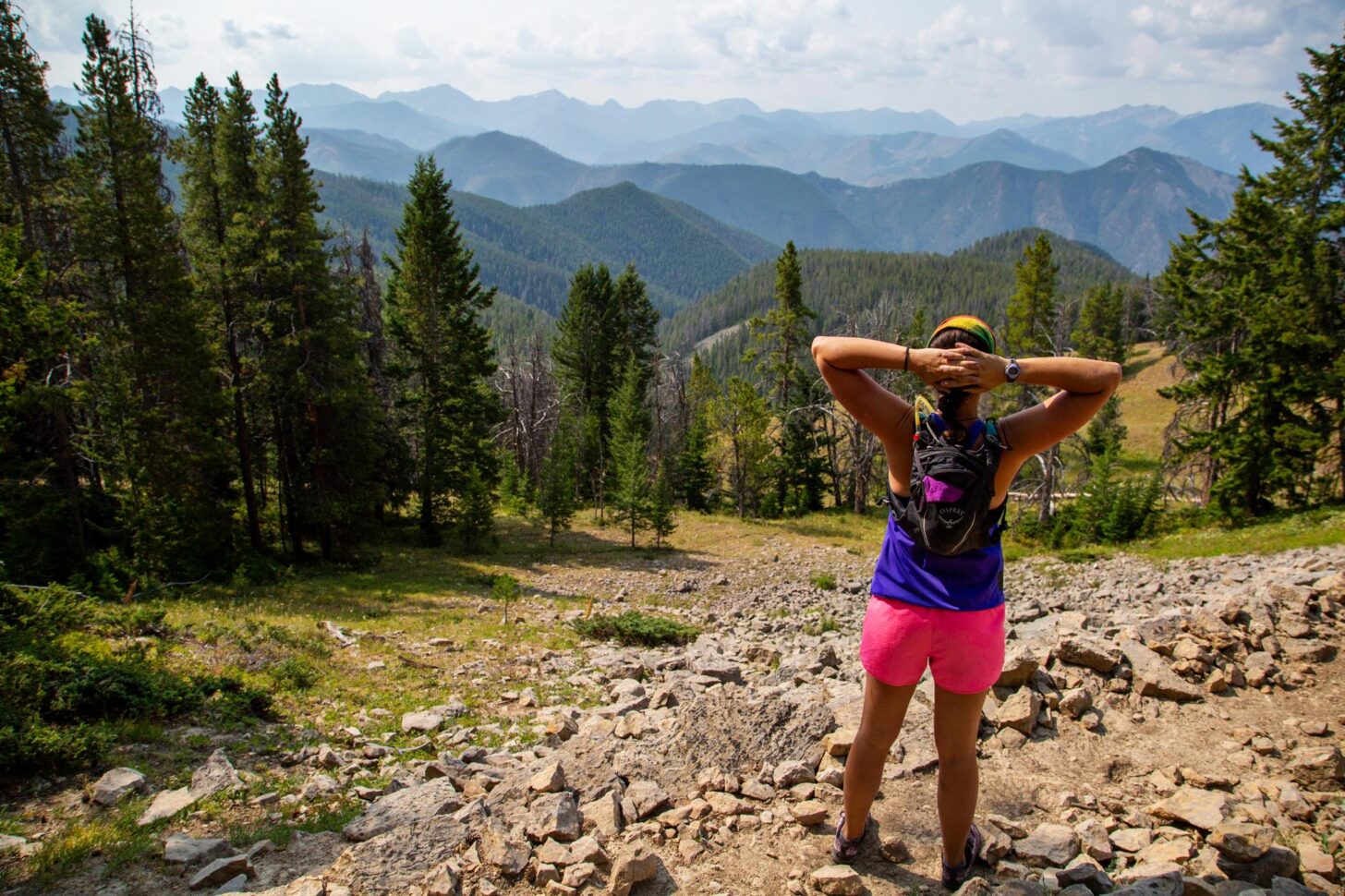
When it comes to many endurance endeavors, mental fortitude often plays a bigger role than physical capabilities, and this includes backpacking—athletic abilities are irrelevant for most long-distance hikers. Out of shape? Hike fewer miles. Out of breath? Stop and rest. It’s not a race and there is very little skill involved in walking. With this lack of hard skills is where the ability to suffer comes in. This is what sets the people who finish apart from the people who throw their packs down at a road crossing, stick out their thumb, and google nearest airport from the bed of the pickup truck that took pity on them.
I am a very average athlete. I lack coordination, endurance, speed, and anything else it took to succeed in gym class. As I got into climbing, mountain biking, and thru-hiking, I learned that while I was average in anything that makes people passable at sports, I could keep up and do well because I was willing to suffer. The mental aspect could override any physical shortcomings.
None of the literature on “mentally preparing for a thru-hike” is groundbreaking. We all know that there are mental and physical components to backpacking. But what sets the finishers apart from hikers who quit when it gets hard is the ability to compartmentalize the discomfort and endure some amount of suffering. That mentality lets average athletes do above-average things.
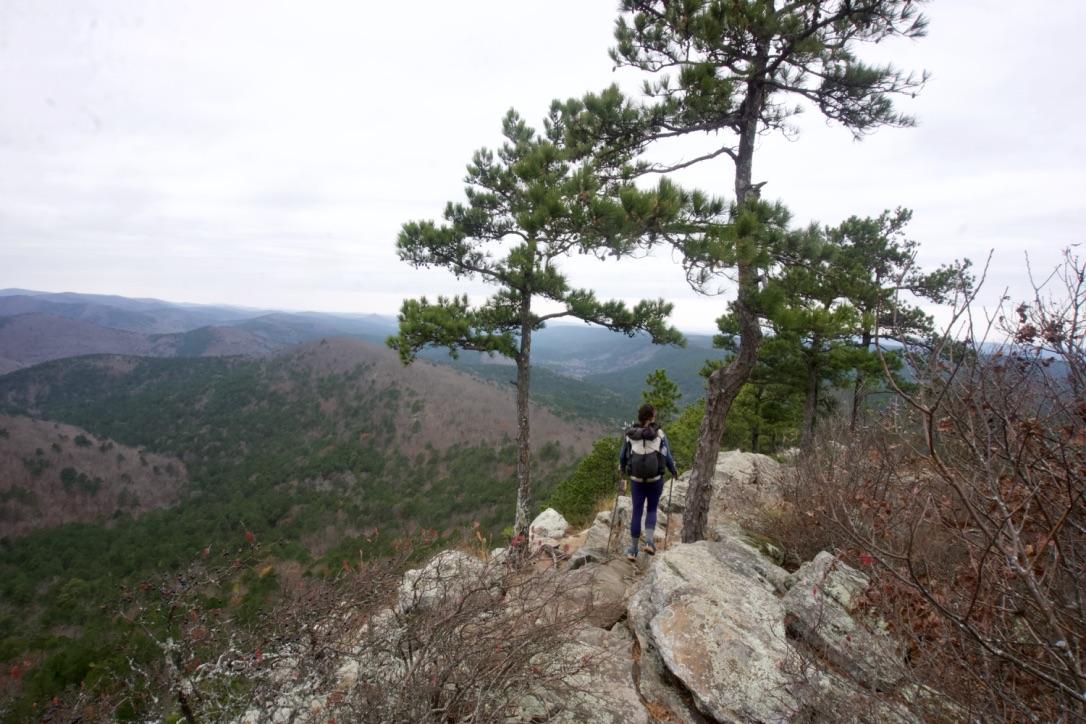
I thought a lot about what sets people apart during my recent thru-hike of the Ouachita Trail. The people who are out there completing thru-hikes aren’t necessarily the ones who excelled in high school athletics. We saw a few other thru-hikers out there last month, and it seems like half of them quit before the halfway point, citing pain and discomfort. Totally fair! Long-distance backpacking can be a wildly uncomfortable experience and not something most people put themselves through. The people who do get out there are often surprised by the sheer misery some days on the trail throw at you.
I had awful foot issues on the Ouachita Trail, pretty much from the beginning. The trail was 223 miles long, and I’m not exaggerating when I say I hiked maybe 40 miles without enduring moderate to extreme foot pain. It ranged from pounding soreness to blisters that made me shriek when half of my heel skin peeled off with my socks. I spent one evening picking crusted blood and pus from my socks so I could wear them the next day.
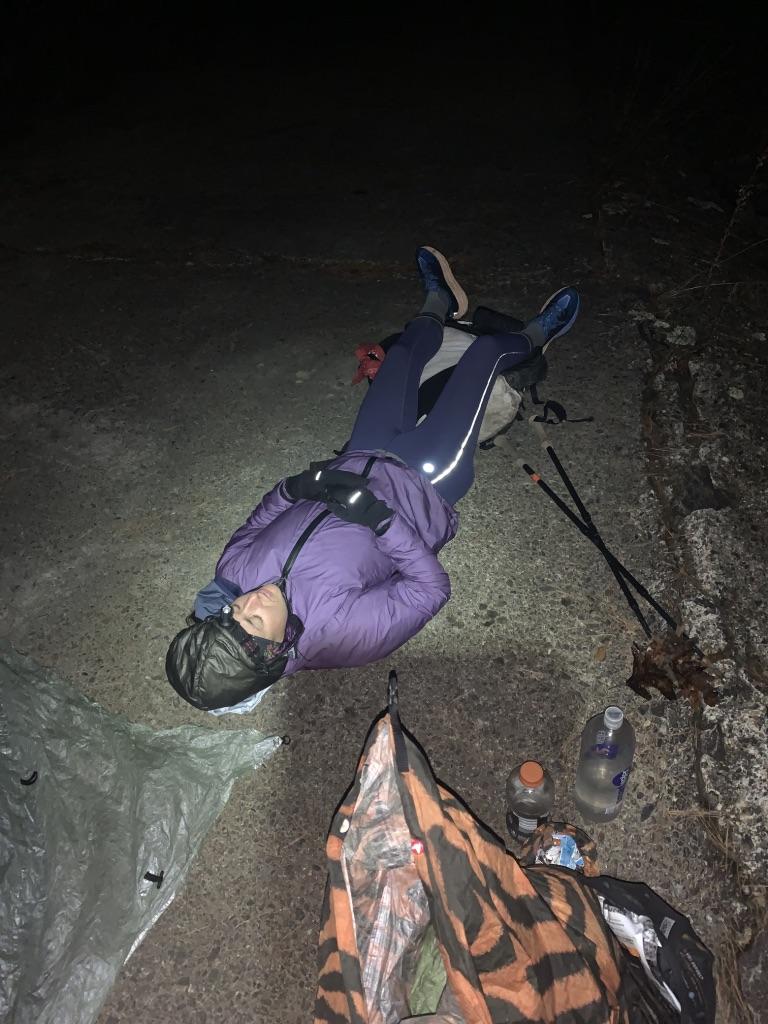
But the worst was the pain in my heels. It prevented me from sleeping and made me walk with a staggering limp. I had the nagging feeling it was the start of plantar fasciitis, but I never figured that out. Whatever it was, the pain would be absent for two or three miles each morning, then start building throughout the rest of the day until I would count my steps, backward from 500, to have something else to focus on.
I developed mental tricks for continuing to move forward. Instead of trying to ignore the pain, I would focus on it, untangle it. Left on its own, the daggers through my heels would become overwhelming, but if I could narrow it down or describe it to myself, it was less intimidating. I’d keep walking and not let myself stop until a predetermined, arbitrary spot every few hours. By the time I reached the spot, I would be gasping for air—the pain was so bad it made my chest constrict.
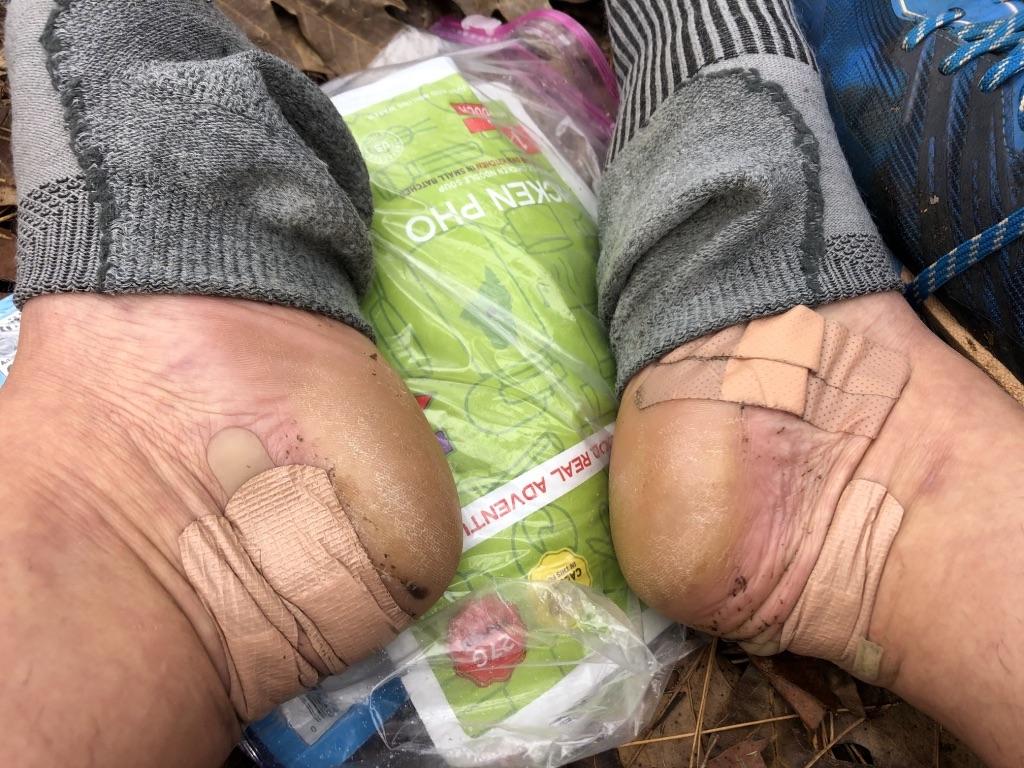
For some (maybe asinine) reason, it never occurred to me to quit. Sure, I’d have stopped if I felt like I was truly injured, but the fact that my feet would (mostly) recover each night gave me confidence that I wasn’t doing irrevocable damage to my body. I figured my feet were just Going Through It, and as long as I could continue physically moving forward, I would. The suffering would eventually end, and in the grand scheme of things, I told myself it really wasn’t that bad. It wasn’t my knees or ankles, it wasn’t gastrointestinal distress, it wasn’t my back going out. I could walk through it. Plain and simple.
Since physical pain and discomfort is such an individual experience, it’s impossible to accurately scale it. Was my foot pain bad enough it would have caused someone else to quit? Maybe. But with the “gut it out” mentality of just hiking one more mile, one more afternoon, one more day, one more week, the suffering eventually ends. When it does, you’ve completed your goal. And I did complete the goal, which was to hike this trail end to end. It hurt and I’d say I was suffering, but not bad enough to make me stop.
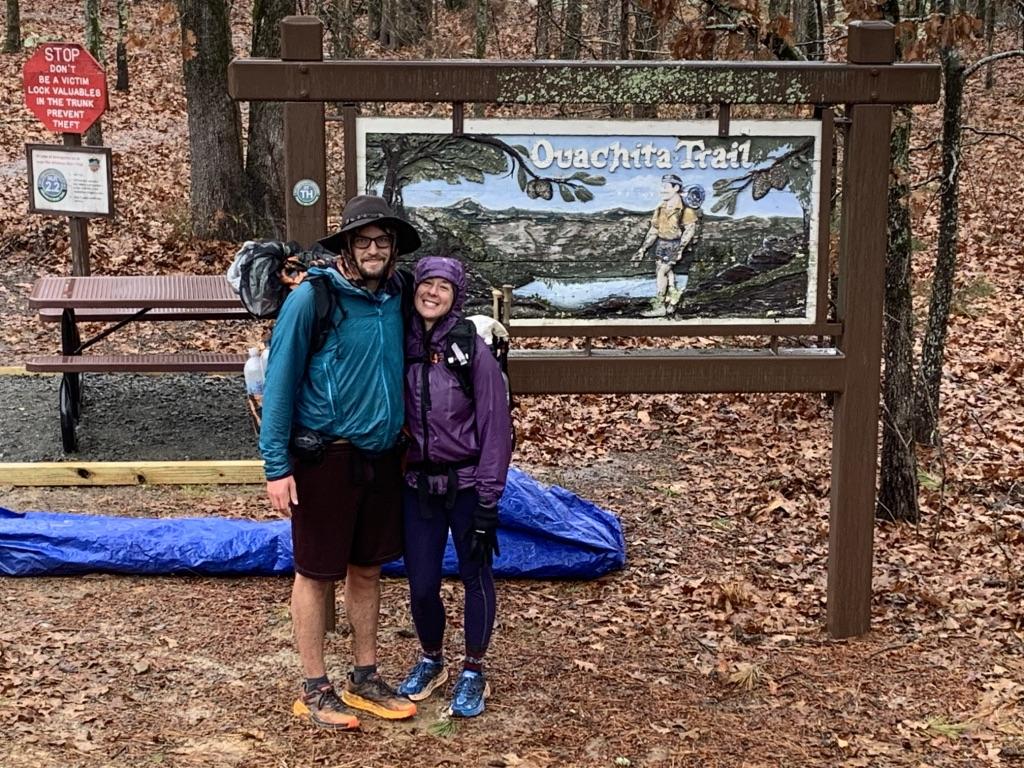
When we each learned to suffer, we also learned that the suffering eventually ends. That’s what keeps us going. My wise, endurance-athlete father once told me: “It doesn’t always keep getting worse.” That’s how I keep going, and that’s how I finish what I start.
Despite my curated existence on the internet and the fact that I am a Writer in the Outdoor Industry, I am not a skilled athlete and I don’t possess supernatural endurance capabilities.
Some of you might be lucky enough to be skilled athletes or have those supernatural endurance capabilities. Most of us though? We’ve just learned to be really, really good at suffering.
Related Content
- More Learning Curve by Maggie Slepian
DISCLOSURE (Updated April 9, 2024)
- Backpacking Light does not accept compensation or donated/discounted products in exchange for product mentions or placements in editorial coverage. Some (but not all) of the links in this review may be affiliate links. If you click on one of these links and visit one of our affiliate partners (usually a retailer site), and subsequently place an order with that retailer, we receive a commission on your entire order, which varies between 3% and 15% of the purchase price. Affiliate commissions represent less than 15% of Backpacking Light's gross revenue. More than 70% of our revenue comes from Membership Fees. So if you'd really like to support our work, don't buy gear you don't need - support our consumer advocacy work and become a Member instead. Learn more about affiliate commissions, influencer marketing, and our consumer advocacy work by reading our article Stop wasting money on gear.


Discussion
Become a member to post in the forums.
Well said, Tom.
I remember describing a backpacking trip to a neighbor where I’d had a bit of inadvertent suffering. “Oh well, no pain no gain!” I chirped.
He replied, “No pain…no pain.” And that’s become my mantra.
Actually, I think it’s a sensible mantra in all things physical. Pain is your body’s way of telling you that you’re doing something wrong, in most instances.
Suffering is inevitable and we’ll all have our share. I like to immerse myself in nature. Pain and suffering keep me from that. I certainly don’t backpack to suffer. That said, given my body, I usually experience a fair amount of pain or exhaustion (or cold and wet) at several points in all my trips. And it’s true, accepting this and taking it in stride so to speak is part of the whole canoli.
““much like packing your fears”
Why is that arrogant?”
IMO (not so popular around here… :-), what no doubt started out as a way to get people to contemplate what they bring and why they bring it has kinda morphed into, at times, if I don’t think it’s necessary then you shouldn’t either, you must be packing your fears. I think it’s outgrown its original purpose and has become a throwaway line (like HYOH).
“Pack your own fears. Hike your own hike.”
It is a little bit of gas lighting sometimes, but requires a bit of nuanced understanding of the source and motivation. Sometimes hard to sort out.
I don’t even get what the bickering is about. Huh? Oh well. The conversation is suffering.
Be careful, someone’s challenge is someone’s suffering is someone’s normal through hike.
I took my younger son when he was 15 on his first backpack trip. My kids did a lot of camping and day hiking with me but not backpacking, mostly because I was selfish; I wanted to enjoy my trips and since the burden was 100% on me (my husband usually doesn’t go), I didn’t bring them along. So not until 15 for a first trip. Day one was sunny and windy, and everyone had fun. The first 8 miles were easy, and we pitched a nice camp, played frisbee, nice evening. He loved backpacking!
Woke up to fierce wind and intermittent spritzes of cold rain. Morning wasn’t terrible but as the day went on, we got wetter and colder. Some snow, some rain, hail, lots of wind, hard elevation losses and gains, wading through wet tussocks. 100s of switchbacks up a steep hill. We were saturated and exhausted. I found out how much a cotton hoody weighs when wet (I hadn’t checked to see what my son was wearing, should have!). I almost buried that sucker under a shrub! Finally, we emerged on a hilltop in thick fog. The rest of the group was well ahead, and it was just my son and I at the back. We couldn’t see or hear the group, hadn’t seen them in 1/2 hour, and couldn’t find the next cairn in the fog. Finally, he quit! he sat down on a boulder and waited to die. I cajoled, encouraged, urged, yelled, threatened, bribed and still he sat. As far as we knew, the group was gone without us. In my head I went through everything we each had with us, to determine if we could survive where we were. I had the tent, but my husband – with the group – had all the food and the gas for the stove. I figured we’d be ok for a night, but it would be better to continue, at least find a slightly more sheltered location for the tent.
I was not ready to die. I picked up my trekking pole and started whacking the kid with it! (Don’t call child services; he’s 18 now. This was not my normal mode of parenting.) That worked! A few good hits (no injuries) and he got up and started walking again, we found our way back to the cairns. Within 15 minutes we found the emergency shelter, and our group. It rained hard for 12 hours, and the next day we hiked out in torrential daylong rain. He will never go backpacking again, too much suffering. I’ve probably told you all this story before.
NM.
Yes, well said Tom.
“It is a little bit of gas lighting sometimes, but requires a bit of nuanced understanding of the source and motivation. Sometimes hard to sort out.“
Agreed. I know that many people use the phrase trying to be helpful, and that the overall intent of the phrase is to be helpful.
If I think back over decades of backpacking, my fondest memories aren’t of bluebirds and clear skies. The best stories involved treacherous weather, bear encounters, perils of some sort. As a buddy of mine said to me as we sacrificed ourselves to the mosquito hordes in the Sierras 2 summers ago, “Embrace the suck!”. One of the best trips ever.
If I think back over decades of backpacking, my fondest memories aren’t of bluebirds and clear skies. The best stories involved treacherous weather, bear encounters, perils of some sort. As a buddy of mine said to me as we sacrificed ourselves to the mosquito hordes in the Sierras 2 summers ago, “Embrace the suck!”. One of the best trips ever.
@Doug-I – No offense taken at all…When I said “anybody” I meant to include myself. I’ve pushed through significant knee pain while backpacking to finish a trip and would do so again if the trip warranted it. Every trip, and every person, has their own reasons for going out. If I’m taking a newbie on a trip and they’re miserable and convinced that backpacking isn’t for them then we’ll bail (happily this has never happened to me). Alternatively, if I’m with someone for whom the trip is the “trip of a lifetime” I’ll push myself as hard as I possibly can to ensure that their trip is great – as I would for myself.
It wasn’t clear from the article, but perhaps Maggie was hiking with someone for whom the Ouachita Trail WAS that “trip of a lifetime” and that if she bailed the trip, and dream, would end for the other hiker.
I’m going to add my voice to those who have taken the position that we don’t go backpacking to suffer, or even to enjoying suffering. We go backpacking for joy. The tone of this article did not manage to communicate with me on any level because of that. If I am suffering on a backpacking trip, the first thing I am going to do is to look for a way to stop the suffering—and that includes turning around on the trip.
Wasn’t it Yvon Chouinard who said that “adventure is just bad planning?”
^^^ Indeed ! Thanks for this Ryan.
I have toyed with the idea of submitting a write up here but this thread kinda shut that door for me. No big loss ;)
I kinda get where Maggie is coming from. I agree that the title could have been different, which might have elicited different responses than many posted here. Lessons learned from suffering, as someone (Jon I think) said, might have been better. And then focusing on those lessons instead of the suffering might have been a better story structure, at least for the experienced backpackers here.
Minor points though. I appreciate Maggie sharing the story, I think many of us have been there, done that over our backpacking careers. I know I have, which is one of the things that led me to adopt Tom’s position in his post. I’m not into suffering is probably better said that I’m no longer into suffering (this applies to me, not extending it to anyone else).
Instead of Learning to Suffer it should be learning FROM suffering and then trying not to do the same dumb things again. Suffering has taught me more about outdoor comfort than anything else. All I have to do is remember the stupid things I’ve done and how the pain any misery really sucked. I don’t like pain and wanting to toughen up so as to actually embrace the suffering might be okay for some type of soldier training, or a tribal rights of passage like in the movie A Man Called Horse.
Karen’s story about taking her 15 year old son on his first trip is poignant for me, with Scouting. In South Australia I’ve been involved with Scouts most of my life, and still involved through the Bushwalking Team (state level activity leaders dedicated to said).
One thing most of us have well noted over the years through experience, is that most Scouts do their first overnight bushwalk. It generally happens in the “Scout” section (10.5-14.5 years old in Aus). Unfortunately, the vast vast vast majority of line leaders in Australia are NOT trained, experienced bushwalking leaders. They don’t have the skills to really safely, and comfortably, prepare, pack, and conduct a trip by themselves, let alone run one for youth. They probably have enough skills to go out on a overnight and, well…survive and thats about it (they do survive…. pretty rare there’s a fatality or permanent disability from bushwalking in Scouts in Aus…).
The problem is, the level of suffering on that first overnight hike is far too high. The result is that while most Scouts do their “first” overnight bushwalk, they rarely go on to do another. Hiking is labelled as horrible.
Often its little things are the cause of the suffering, and they are basic. Not enough navigation ability so they get lost and do extra distance, hills, stress about it, etc. Inappapropriate clothing and clothing skill so they are cold and wet too much. Poor food choices; they are hungry, it tastes crap, they burnt it, etc. Not enough water, suffer through some dehydration and headaches etc. Poor footwear choices and understanding of blister prevention, so they get blisters they have to suffer through, as they also don’t know how to treat them effectively or have the right materials to do so. Pack is far far too heavy, and poorly adjusted, so everything is constantly sore and every metre is a struggle. Poor route choice; just way too hard for a beginner, poor choice of time of year; weather too insufferable for an unprepared beginner.
Now some kids survive through this, and thrive. They go on to do more overnight bushwalking. They solve all those problems that they suffered from in that first trip, improve them, so they happen less next time. They do bigger and better trips. This is likely due to appropriate mentorship through the reflection of the suffering they endured, as well as some prior experiences that allow that individual to take the right viewpoint and grow from the suffering they endured.
The level of suffering always needs to be appropriate to the individual, and appropriately matched to the reflection resources available. Otherwise, the person doesn’t grow from that piece of suffering, instead they just suffer and it is a wasteful endeavour.
“what no doubt started out as a way to get people to contemplate what they bring and why they bring it has kinda morphed into, at times, if I don’t think it’s necessary then you shouldn’t either, you must be packing your fears.”
Probably more than a grain of truth to this, unfortunately. For me, taken in its original context, back when most BPLers actually knew who Roman Dial was, it became an axiom for me. I guess my age is showing, huh? ;0)
I’m going to say a hard no on that one. Thought I knew mosquitos until a swarm in central Oregon followed me for 2 miles and then buzzed into the early AM despite getting to a camp with some breeze. We must be selecting for mutant strains.
Luckily I had a headnet, permethrin sprayed long sleeve shirt/gloves, and some DEET for exposed legs. Some other hikers … didn’t and actually had to get off trail to tend to the welts.
I’ve found it helpful to distinguish between two kinds of suffering, roughly “physical pain,” like heel blisters; versus “mental pain,” like constantly berating myself for carrying a heavier pack. Often these are linked, and sometimes hard to distinguish.
But in the moment I can do much more about one kind of suffering than the other.
In almost all cases, focusing on the suffering doesn’t make it better.
And it can be useful to think about the Fun Scale in this context. For Type II Fun, we suffer but push on, and go back despite the suffering, after the immediate distress subsides.
And sometimes suffering is just evolution trying to tell you “don’t do THAT again!” Surprisingly hard to properly decode that message at times.
Thanks, Maggie, for starting an interesting conversation.
— Rex
I’m agreement with Jon Fong and Tom K. I used to be one who believed in “what doesn’t kill you make you stronger.” These days, after many injuries, I believe more in “what doesn’t kill you might cripple you.” And that applies to both physical and mental injuries.
The goal of backpacking or hiking for me is to enjoy the experience. But for some might be different, overcoming obstacles or gaining mental victories through sufferings. Whatever the goal maybe, it’s good to be able to go out and it’s even better if we can do it for a long time.
I once came up on a group of young-ish boy scouts being led on a trip. Oh, no I groaned. Their adult leaders were force marching them on a hard trip with long days. Most were not having fun. Many had blisters with no way to treat them. Most wanted out. My guess is that many won’t want to backpack again.
Same with a father and son I saw once. The boy was perhaps 8 years old, maybe 7. The father had him carrying a large pack with all of his stuff in it. the kid was in some pain.
I don’t think educating a newbie in suffering is a good way to sell this activity. the first priority should be making sure that things like good blister treatment and mosquito protection (with clothes) and warm and comfortable sleep pads are in use. and no forced marches. Kids aren’t miniature adults.
“What doesn’t kill you might cripple you.” And that applies to both physical and mental injuries.”
Indeed. Unfortunately for many who have chosen that path, the damage does not immediately disable them. Instead, it insidiously accumulates over time and deprives them of quality hiking and backpacking in their “Golden Years”, at a time when they need it most to enjoy what time remains to them. I have seen it all too many times with people, many of them friends/acquaintances known for their “toughness”. It is painful to witness, to put it mildly. I have condensed the concept into a maxim: Balance the yin of desire with the yang of restraint.
works for me, although I still find myself giving into a natural desire to squeeze just a little more out of an ageing body as I approach the end of a long career in the mountains.
That resonates with me Tom. You have a few years on me and I suspect you can do a bit more mileage than I.
I broke my ankle and lower leg skiing when age 25. Spiral fracture. That bothers me some today, but not too much. I think, when young, I managed to balance adventurousness with not damaging myself too much for my golden years.
“I think, when young, I managed to balance adventurousness with not damaging myself too much for my golden years.”
You’re still out there, Jerry, getting it right most of the time and enjoying a high quality of life when all too many of our peers are sidelined for youthful indiscretions and/or sheer genetic luck of the draw. How sweet it is, to be able to move in the mountains at a time when life experience has honed your ability to really appreciate the gift in so many dimensions, eh?
Happiness doesn’t necessarily come from agreeable or pleasant feelings.
Backpacking, especially when done for days or weeks at a time, inevitably entails exposure to situations that are physically unpleasant and cannot be controlled. One of the take aways from Maggie’s article is that even unpleasant situations come to an end, sooner or later.
I’ve found that letting go is a much greater source of happiness than feeling good.
Become a member to post in the forums.