


Where the Wild Things (That Can Easily Kill You) Are
Most of the landscapes we backpack in have pretty clear-cut answers regarding which Potentially Hazardous Animals (PHAs) one might reasonably expect to encounter in the backcountry. PHAs are one of backpacking’s newest three-letter-acronyms (TLAs), for those In The Know (ITK), just FYI.
Humans, unfortunately, seem to exist as PHAs in every landscape desirable for backpacking. Rattlesnakes, scorpions and venomous arachnids have a fair degree of landscape coverage, while alligators occupy a considerably smaller landscape. Black bears cover a wide swath of the appealing backpacking landscapes in the continental United States, with grizzly bears occupying smaller and more sharply defined areas of habitat.
As someone who backpacks extensively in areas that are on the fringes of the expanding habitat of grizzly bears, the lack of certainty of exactly which apex predator might be ambling along the trail in front of me creates an interesting mix of apprehension and awe.
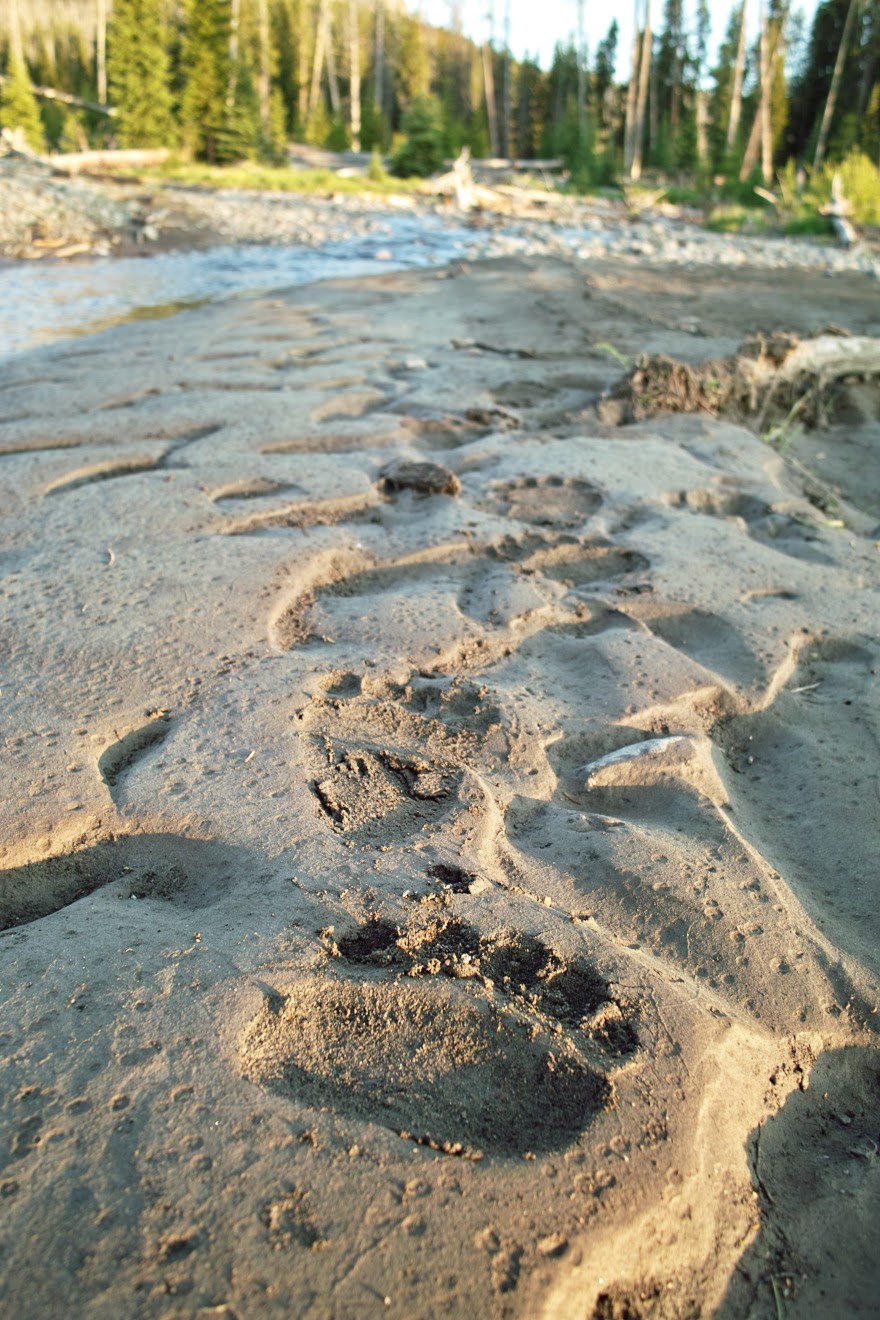
If you’re planning a backpacking trip to Glacier National Park, Yellowstone National Park, or the Bob Marshall Wilderness Complex, your odds of seeing a grizzly bear in its natural habitat are far greater than anywhere else in the Lower 48. Each of these areas have long-established regulations by their respective land management agencies to prevent human-bear conflicts, with the parks featuring dedicated infrastructure and/or explicit instructions on how and where to store food, sleep, and eat at the designated campsites. To a certain degree, I’ve found some comfort in these preventive rituals when backpacking in Glacier and Yellowstone and knowing that there’s a better-than-average chance that the previous occupants of the campsite did the same thing and, presumably, made it out of the backcountry alive.
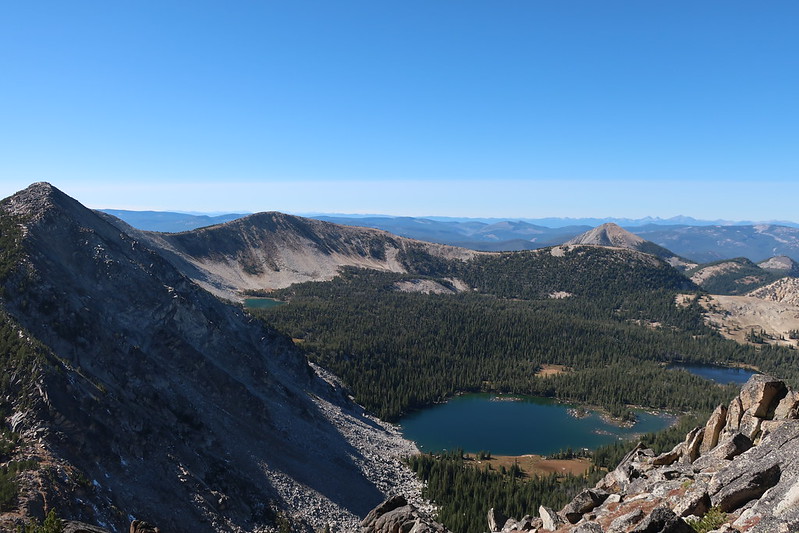
In the national forests of western Montana and northern Idaho, where I do the majority of my backpacking, grizzly bears have begun to venture in from the Northern Continental Divide Ecosystem (to the north) and the Greater Yellowstone Ecosystem (to the southeast). Part of their historic range, the Bitterroot, Pioneer and Beaverhead Mountain ranges have been absent of sustained populations of grizzly bears for over a half-century. Food storage regulations and cultural norms for those recreating outdoors in this area are well-established in regard to preventing bear and human conflict, but it is also not terribly uncommon to come across a campsite where it is abundantly clear that those who stayed there did not follow the letter, or even the spirit, or basic “bear aware” camping. Scraps of food in the fire pit (which is seemingly always annoyingly located right next to the best place for a tent) and bits of trash (of both the micro and macro varieties) around the campsite periphery can cause a bit of justifiable unease if you’re planning to stay there that night. You can control what precautions you take, but you can’t control those of the people who camped there before you.
Being Bear-Aware, but Not Bearanoid
As grizzly sightings become more common on the fringes of the established grizzly bear ecosystems, the notion of seeing one on a trip into my local Selway-Bitterroot Wilderness and nearby public lands becomes more pronounced. When backpacking solo, as I often do, the mind tends to wander just a bit further when pondering the source of a mysterious noise outside the tent at night than it does in places without the chance of encountering a grizzly bear.
I once gave two Continental Divide Trail thru-hikers a ride on my way to a five-night bikepacking trip in the Beaverhead Mountains. They shared with me that they’d seen a grizzly at a lake I would be passing by on my trek, and resultantly I found myself scratching it off my list of places I’d plan to camp.
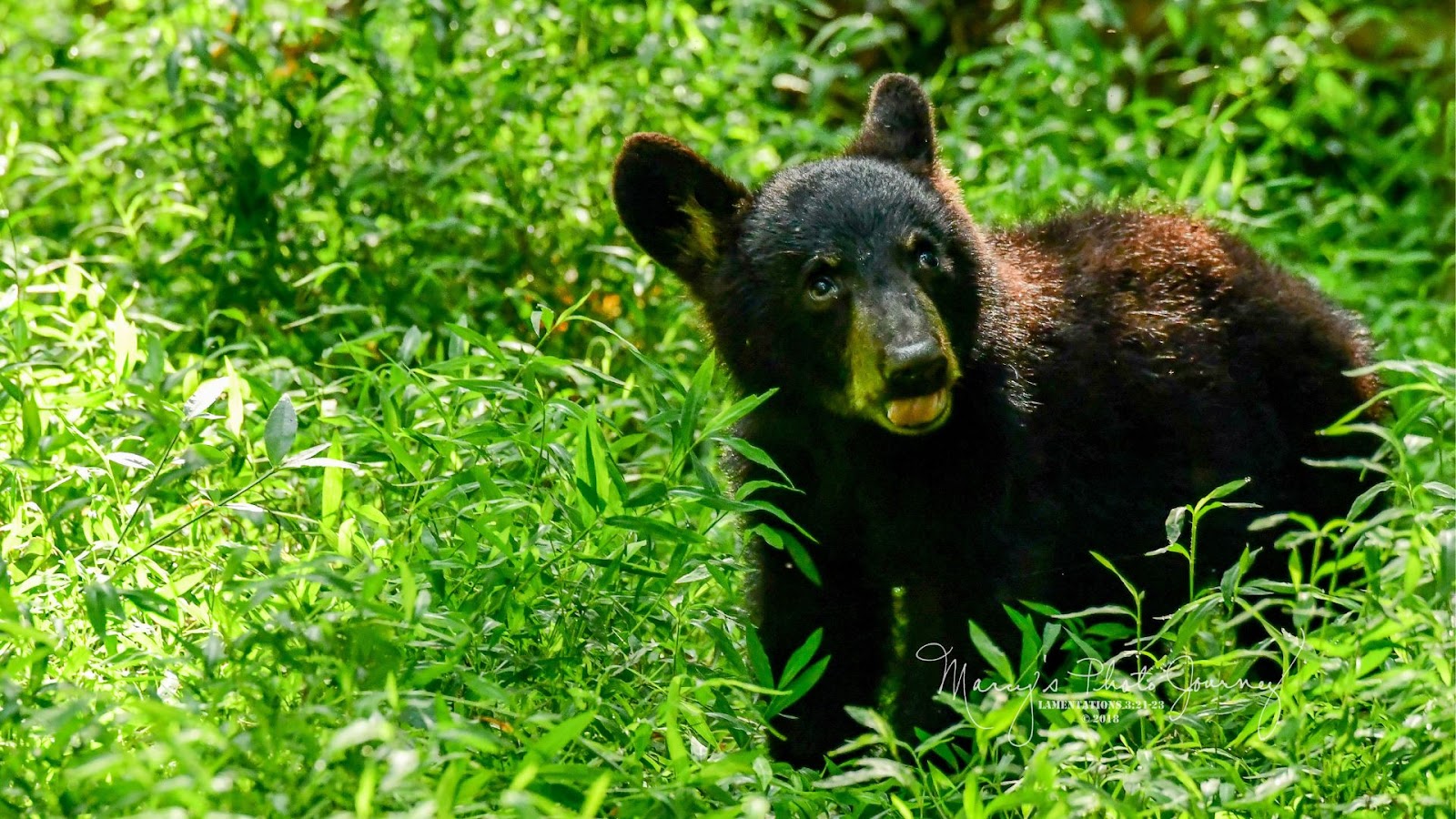
Black bears are common in Great Smoky Mountains National Park and food-conditioned bears can cause headaches – or much worse – for backpackers and other park visitors. This young black bear was photographed in Cade’s Cove, GSMNP. Photo: Douglas Wielfaert.
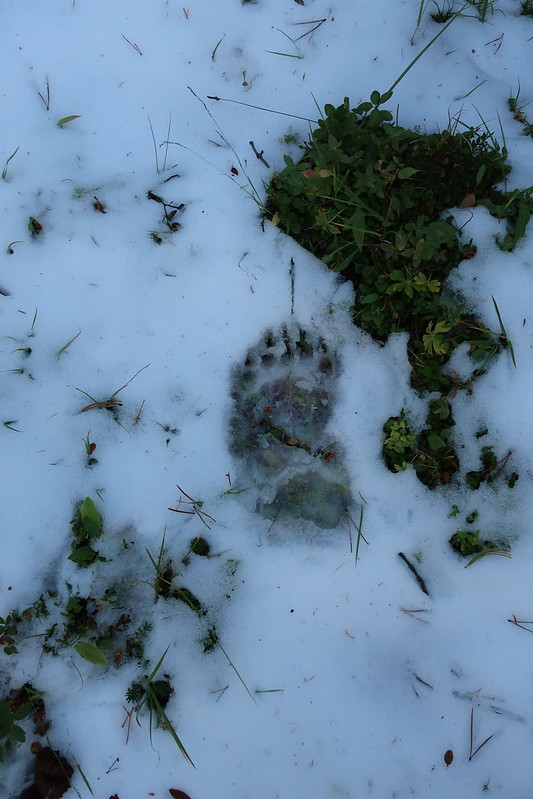
On a trip to the East Pioneer Mountains two years prior, a lake just over a ridgecrest from where two friends and I camped during a four-day fall fishing trip had been the location of a grizzly bear sighting and rumors that it had gotten into food stored improperly at a campsite. This information added a slight bit of initial tension to the trip, which was further punctuated by a large bear track we came across in fresh snow. Fortunately, the tension dissipated after stellar fishing at the alpine lakes and cold beers around the campfire. With the peace of mind that our food was stored properly, our eating area was far enough away from camp, and after seeing no signs of bears at the lake we camped at, we knew that we had taken every precaution we reasonably could.
But reason often doesn’t enjoy a primary role in managing our fears. And with backpacking, “packing our fears” is something that is best avoided. Even if the weight is only a mental one, it can have nearly as detrimental an impact on a trip as an extra few pounds in the backpack. Like most people who spend significant amounts of time outdoors, the calmness and serenity that tend to wash over me when in uncrowded and profoundly beautiful places are one of the reasons why I keep returning to wilderness areas.
Practicing proper food storage and not adopting the attitude of “there’s only black bears here, so it’s not a big deal to sleep with my food” – that seems to be distressingly common among some ultralight backpackers – is doing a good thing for both myself and any bears around – grizzly or otherwise. Once a bear is food-conditioned, the likelihood of it injuring humans and eventually having to be euthanized becomes a sad reality. Making the risk mitigation of proper food storage and not cooking too close to camp part of my habits don’t cost anything or add too much of a hassle as it is, so adopting them sooner rather than later seems most appropriate.
Appreciating Nature On its Own Terms
When asked about what they like about the landscapes they backpack in, a common refrain among hikers is to praise the “pristine” or “natural” state they believe it to be in. The mountains aren’t manicured to meet a certain image determined by an algorithm to be the most stunning; the forest floor isn’t maintained by a landscaping crew to create an illusion of lushness; the water levels of a waterfall aren’t adjusted to create maximum effect – these aspects just simply exist (Note: Indigenous inhabitants had profound impacts on landscapes that we are only now beginning to acknowledge, however that topic is beyond the scope of this essay – for conversation’s sake, we won’t spend time dispelling this erroneous notion among many backpackers but will instead address its relationship to the topic at hand). And few, if any, backpackers would probably prefer to backpack in an area that was specifically designed to cater to their whims, fancies, and specific tastes in natural splendor. After all, who would really want to hike in an area that is the equivalent of a soulless Spotify playlist? Isn’t the lack of personalized, taste-specific curation part of the allure of the outdoors? There’s a bit of nuance involved in that most people choose to backpack in the areas that resonate with them, but that’s an entirely different animal than backpacking in an area that is managed specifically to resonate with you (which, hopefully never becomes an option – Metaverses and Outside, Inc. NFTs be damned).
However, when the topic of grizzly reintroduction comes up there is often ambivalence – if not downright opposition – from some outdoor recreationists who are reluctant to share the natural landscape with another apex predator. But isn’t denying the return of grizzly bears to their historic range akin, at least in principle, to a ludicrous request that some natural arches in Kentucky be curved just ever-so-more to be more visually appealing? Or that rattlesnakes should be removed from Utah to allow for more care-free canyoneering? It’s saying “we like it natural, but not that natural”.
Learning to quell, or at least manage, the low-level anxiety that comes from backpacking solo in soon-to-be grizzly habitat – with the possibility of running into one becoming higher each year – helps me to view the situation less as a potential hazard and more as an opportunity. Like lightning, unbridged creek crossings, and unstable talus, the wildlife we encounter can be unpredictable but risks can be largely mitigated. While no risk can be eliminated entirely from the pursuit of life, liberty and the bliss of backpacking, we can recognize that the reward – witnessing the return of an amazing animal to its historic range – inherent in that risk can add a more holistic context. Although it might not help you get back to sleep any better when you awake after hearing something scratching on the whitebark pines outside your tent.
Related Content
- Webinar: Protect Your Food From Bears
- Article: Backpacking and the Bruin Mind


Discussion
Become a member to post in the forums.
Companion forum thread to: Musings: Hiking in Grizzly Country
Musings about backpacking in grizzly bear habitat.
“If people persist in trespassing upon the grizzlies’ territory, we must accept the fact that the grizzlies, from time to time, will harvest a few trespassers.”
― Edward Abbey
We’ve sometimes taken the reverse approach from the author’s (“seen a grizzly . . . I found myself scratching it off my list”). One time in Banff, we were debating about a nice loop with lots of glacier views with the downside that it was a very popular itinerary. There was a sign outside the permitting office that two grizzlies were active along that trail, we looked at each other, and knew we were going there since that warning would scare away the nervous hikers.
It worked out well – there were very few other people on the trail, sometimes we had campsites entirely to ourselves, and we saw both bears as we hiked. Because we did what we were supposed to – yakking it up where there were poor sightlines, water noise and berries – the bears did what they’re supposed to and were heading away before we came over the rise.
This betrays my location, but isn’t “hiking in grizzly country” just “hiking”?
When species cannot co-exist and conflicts arise, then the stronger species will win. That is evolution at work. So as human/bear conflicts arise more often in the future, bears are going to lose out.
You’re definitely right in the macro sense, but I think in the micro sense myself and most other backpackers would be on the losing end of a direct physical conflict with a grizzly bear. And that’s fairly disconcerting. I can’t imagine myself limping out of Glacier National Park beaten and bruised and remarking to the ranger “If you think I look rough, you should see the bear . . .” ; )
David:
That’s an interesting approach and one I hope to get comfortable adopting in the future. To clarify, the CDT hikers said they saw a grizzly cub at the lake, but didn’t see the mother, and I still visited that lake I just didn’t camp there (it wasn’t really a lake I was stoked on camping at anyways, as a more scenic one with better fishing was just on the other side of the pass). I recognize my response to that info (grizzly sighting at the lake) was irrational — it’s not like the bear signed a six-month lease there and was going to be hanging out there until hibernation, it could easily have moved on to the lake I camped at or somewhere else a dozen miles or more away. But I suppose I was trying to get at how rationality is often trumped by more primal emotions, despite knowing better, and how that influences our interaction with the landscapes we backpack in.
There have been proposals to re-introduce grizzlies in several lower 48 states where they used to exist before they were hunted out of existence in those areas. I believe California has that proposal… as a CA backpacker, I would not be happy about that. And… can you imagine the lawsuits after the first human death by grizzly ???
Mark – I think folks like David Thomas and Philips of this world who hike in Alaska are very comfortable hiking in grizzly country. Maybe it is just getting used to – like pretty much everything in life. They claim the wild Grizzlies avoid humans. I have hiked in Jasper/Banff and in Yellowstone/Grand Tetons with bear spray etc Luckily never encountered one on the trail – but saw several from car especially in Jasper/Banff area. I was hiking alone and was literally screaming/singing loudly to make sure that I don’t surprise a bear. Probably my singing kept the bears away :-)
DWR D – Yeah – I don’t understand these re-introduction efforts. There is absolutely no reason to.
I wish the bears would leave us alone and I am sure all humans will leave them bears alone!
Murali: You definitely get used to your local hazards. I was struck, while on walking safaris in Zimbabwe, that I was much more nervous about a little ole 300 to 400 pound African lion than I am about 400 to 1000 pound brown bears back home. Part of it was that we were walking TOWARDS the critters, instead of AWAY like we do at home.
Every time I’ve encountered a brown or black bear in Alaska or Canada, it quickly went the other way (unless we shot and ate it). Versus in California, where it takes black bears a while to register that I’m not acting like other backpackers and WILL be hitting them with my stick if they’re still around when I get there. Only once they realize that, do they scamper away.
Yeah – I have heard that Masai in Kenya are a terror to the lions and lions keep their distance from them. In a recent book Burn – the author was talking about living with hunter gatherer society and one day, the tribe stole a zebra or impala from a lion that had just killed it. These folks are very used to lions and are not that scared of them.
As long as the bears run away and stay wild, great for everyone.
“I’m not acting like other backpackers and WILL be hitting them with my stick if they’re still around when I get there. “
Ha ha! That is funny….maybe someday, I will develop that attitude….
David’s “attitude” might give him the confidence other hikers lack to chase off a bear and actually scare it. I think bears can sense to some degree if you are afraid of them. I’m convinced the vast majority of black bears will back down from a sufficiently confidence/aggressive human.
For one thing, many black bears are fairly small. I’m taller than the vast majority of black bears i encounter. Obviously they are stronger and they have claws. But they don’t know I’m weak and clawless. If I’m aggressive most are going to run from the bigger “bear.”
Grizzlies seem a bit more curious, they are less likely to just run, and they are bigger. But mostly they want no part of me either. I just don’t push my luck with grizzlies as much.
So, if you are hiking alone – how do you make sure that you are heard so that bear doesn’t get surprised? I know David talks about his dog sometimes sounding the alarm that something is afoot. I think that is the biggest problem – a surprised bear that is suddenly scared and thinks it needs to defend itself.
bear bell is an old technique to warn bears
I’ve seen black bears maybe 10 times in Oregon, Washington, and northern California. They always run away. You have to be quick with your camera to get a picture.
California proudly has the last remembrance of the grizzly on its state flag, but I’d warrant there are few Californians who want it back; they prefer their fantasyland rather than the real land they moved into. If you read the literature documenting early explorations of California, most describe the grizzlies there as fairly shy and not very dangerous, easy to shoot. Native Americans living there didn’t fear them either, according to most accounts. Hollywood has managed to instill irrational fear in most of us. But California has more serial killers than any other state, and deathly traffic in every community. Why worry about grizzlies? If California had fewer people, less traffic, and affordable housing, I’d move there and advocate for grizzly reintroduction, just to get out of the cold.
I would never want Alaska to lose its grizzlies or its wolves, wolverines, or any other of our amazing wildlife. A short-tailed weasel has been hunting my woodpile lately – I love where I live! When Outsiders move in, and wonder why we haven’t shot all the predators to keep humans safe, or why Denali NP doesn’t have a coffee stand in the middle of the park, I want to send them back to California, or wherever they came from. It’s not Fantasy Island, and it’s not “wilderness.” It’s wild land, with all (most) of the creatures who have lived here thousands of years; enjoy them! Land much used by humans as well for all of that time. It has “natural splendor” but it isn’t landscaped to suit the needs of REI members (like myself). It isn’t here just for the amusement of the well-off.
You do get used to hiking and camping with big wildlife in Alaska, but bears make you more aware of your surroundings. After living here 30 years, I’m still paying attention when I’m in brown/grizzly bear country, more so than elsewhere, noting the freshness of tracks or scat.
Risk assessment always makes sense on an intellectual level, and it’s pretty clear that fear of grizzlies is much hyped; stats just don’t back up that fear. But as humans, our emotions get the better of us, and all those silly movies come back to haunt us at 3am in the tent. I sleep pretty well these days in my tent, here or elsewhere! So yes, you get used to it.
Want to see a great demo of our most dangerous Alaskan animal in full attack mode? Here’s a YouTube video I just watched, and the canoeists caught some behavior that highlights how dangerous moose really can be. Outsiders often don’t believe they are dangerous, because they seem so complacent. Fast forward to 15:40 and watch what happens. Turn up the volume so you can hear the moose growl. This is the critter I worry most about surprising on a trail. But I wouldn’t live without them.
I am more wary of moose since I run into them more often than bears and their behavior can change so rapidly without any warning. The rare black bear encounter I’ve experienced while hiking is a view of its backside rapidly moving away. My two Grizzly encounters while backpacking were in the northern end of the Wind River range, one during the day and one at night. I felt kind of honored from the perspective of more than a thousand nights in my bag with hundreds of those in grizzly country, and I finally saw one. They happened two years apart 20 years ago and it hasn’t happened since.
We did have a Cougar take a deer in our backyard this past January which was pretty cool. My wife didn’t think so and wouldn’t go out there for nearly month and it was my job to clean up the leftovers.
Old, yes, but also ineffective. See:
Primary author Smith tells of watching bears repeatedly ignore bells, but immediately take notice
when a pencil is snapped in two. The theory is that high-pitched sounds (like little bear bells) are
interpreted by bears as birds or squirrels or other non-threatening creatures. So if you want to alert
a bear to your approach, you need to make noises that sound more like something that might worry the bear. Grunting, throat clearing, talking in a normal voice, crashing brush, snapping twigs,
etc., could sound like something big (another bear?), so they get the bear’s attention.
Bear bells do a good job, however, of irritating every human within a mile of the nervous hiker. (Grrr!)
“Grunting, throat clearing, talking in a normal voice, crashing brush, snapping twigs”
Hmm…none of these seem practical if hiking long hours. What else can one do?
A guy on trail once asked me “do you know how to tell the difference between black bear and grizzly from the scat?” Answer: if the scat has berries it is a black bear. If the scat has a bear bell, it is a grizzly.
Bear bells clearly indicate newcomers or tourists here in Alaska. I know no one who would use those, so annoying. It would also be hard to hear them in places where the wind is blowing hard, or there’s a rushing stream nearby.
What else can one do? Hiking in groups is useful, because there is often talking, and even the sound of many footfalls is noisier than a single person. When I’m alone I sing quite a bit, especially in brushy areas. If it’s head high alders and I cannot see anything, I do shout and clap every few seconds, until I’m in the clear. But you’re right – hiking alone for long hours it’s hard to stay noisy. I try to stay alert for scats, tracks or broken bushes that might indicate an animal has been through recently. Most places are not teeming with bears or moose; they like some areas more than others. Learning where they like to go helps with how attentive you need to be. Often we end up hiking in the alpine, where visibility is fantastic.
When I do see bears or moose, I watch their behavior closely (if they’re actually nearby; sometimes you see them a long way off and then you just keep an eye on them). A super scary bear (which I’ve never seen, but friends have) is one that is interested in you, follows you, or that you see over and over again after thinking you’ve passed it by. Then the bear spray is in your hand and you’re making a shit-ton of noise, constantly. And listening to your heart race. Even moose sometimes follow people, not sure why. I have had this happen. It was so weird and freaky like those deer in the Sierra that wait around camp for you to pee. Not sure if that’s the moose’s intention also. Eventually they quit bothering you.
There’s no magic formula; it’s one of the risks of hiking.
edited to add: a fair number of Alaskans also carry guns. I don’t, but I don’t mind when folks do, if they seem like intelligent people who know what they’re doing.
David T, what do you think of Prof Smith’s advice that, instead of talking, clap when there’s a possibility to have a surprise encounter:
“Make sharp noise when approaching blind corners or brushy areas: “clap” and say “Hey bear”. They ignore bear bells and conversation level speech/music, its just background noise to them. It’s a burst of sound – a clap, a “hey!” – that gets a bear’s attention”
Someone told me whacking a stick on a tree works well.
I have walked up on grizzlies just strolling mindlessly along. I started to yell occasionally in thick areas and/or smack my trekking poles together. Seems to help. A bear safery expert told me the human voice is something bears really don’t like. I’ve seen grizzlies a long ways off that ran when i yelled.
But outside of thickets i don’t worry much. On an alpine ridge the bear and i will probably have plenty of time to react.
that’s funny about bear bells
I’ve heard people with bear bells before and thought it was mildly annoying
of course the most effective is bear spray, worn so it can be immediately deployed
You left out the “smells like pepper” part, which was the best part. As in this version:
An interesting suite of responses to the article. Some I must admit I found frustrating and some I felt misguided. But then I realized that I was looking at it from my perspective. I am a long retired wildlife biologist and a still active backpacker (into my 7th decade of exploring the wilderness). I have spent quite a bit of time in country inhabited by grizzly bears. I have always considered it an extra blessing to see a grizzly bear while on a backpacking trip – but really at any time.
I take what I believe are reasonable and sensible precautions when I know I am hiking in grizzly country. May I suggest that anyone who does ready Dr. Stephen Herrero’s book Bear Attacks: Their Causes and Avoidance. The reason I take the precautions are not only for my own safety but for the bear’s well being. They are an integral part of the ecosystems that they occupy (as are humans). Just because humans have an ingrown fear does not mean that the right solution is to kill them (or lions, alligators, rattlesnakes, etc.).
The majority of bear encounters, black or grizzly, are incidental or accidental. Most of the time the bears sense us long before we show up. They choose to avoid us. Very few are interested in an encounter with humans, or other bears. Those encounters that result in a serious incident as often the result of a sow protecting her cub(s) or a bear protecting its food. As a side note there are more ‘mother protecting it’s young’ encounters involving elk, moose, etc. A further side note, a former work colleague was once treed for close to 16 hours by a cow moose.
I encourage people who want to venture into the wilderness to take a similar approach to Leave No Trace camping when it comes to wildlife, in this case the grizzly bear. Learn as much as you can about how to venture safely into the country they inhabit. Take the correct precautions. Mostly take the right attitude, which in my view is not humans win – bears lose.
Phillip, the most scared I’ve ever been was in Denali when a momma moose and calf came trotting down the trail towards us. As soon as I saw them, I immediately went behind a tree while dragging my spouse with me. Thankfully the moose just trotted by nonchalantly. (I’m not an Alaskan native, and it was my first time there).
Bears will usually run away—but not always. In 2021 three buddies and I were backpacking the Shipwreck Coast in Washington. One two occasions we saw juvenile bears down on the shore. The first bear we saw was probably 2 years old, and dutifully ran away from two us shouting at it. The second bear was a little older, and directly in our path. With four of us shouting at it, trying to look big, waving our poles, etc., the bear actually walked towards us. Not because he was trying to threaten us but because he saw something on the beach he was interested in. He saw us and just didn’t care. Luckily the tide was out so we could give him a wide berth. But he didn’t get the “humans come, I run” memo.
Clapping is effective for me. When I first started backpacking solo in SW Virginia I would run into black bears constantly. Happened a 3 or 4 times in that fist year.
Then I started clapping anytime I’m in dense brush. Haven’t seen a bear since then while backpacking in this part of the country.
Honestly sometimes I want to stop clapping just so I can see them again but…that could be problematic.
It probably harder to clap every minute or so in brush if you are highly dependent on 2 trekking poles though.
Become a member to post in the forums.