

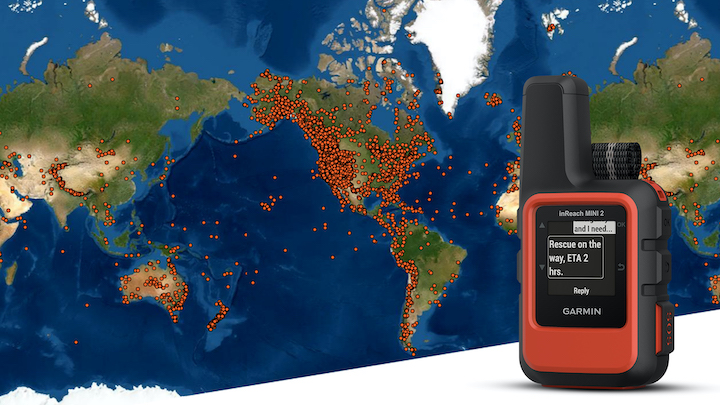
This morning, Garmin announced the milestone of inReach having aided in 10,000 SOS incidents globally.
Data analysis is discussed in this blog post published by Garmin, and summarized in the following two charts:
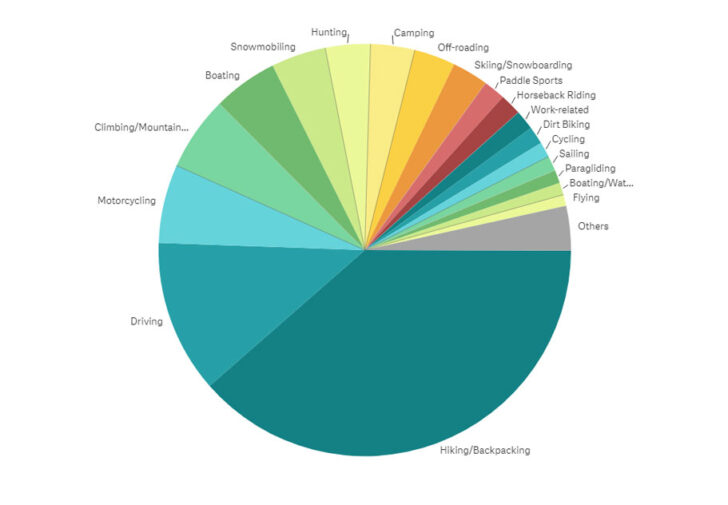
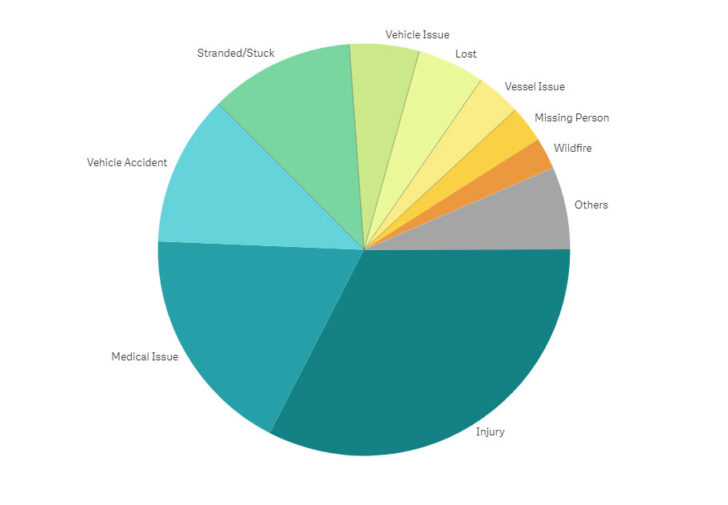
In our community, it’s probably not surprising that hikers and backpackers needing SOS assistance for injuries and medical issues are the dominant use-cases for inReach SOS triggers. It’s certainly the primary reason why I carry an inReach device – it adds that little bit of insurance for low-probability, high-consequence accidents.
Learn More
- Learn more about Garmin inReach devices or browse all satellite communications content at Backpacking Light
- See what satellite communicators we recommend in the Backpacking Light Gear Shop


Discussion
Become a member to post in the forums.
Companion forum thread to: Hiking and Backpacking Injuries and Other Medical Issues Dominant inReach SOS Incidents
Data from 10,000 inReach SOS incidents show that hikers and backpackers needing emergency assistance for injuries and other medical issues is the predominant inReach use case.
I thought it was interesting that somewhere around 20% (no details provided) of the cases were for third parties. This is actually one reason I don’t carry massive amounts of first aid gear to deal with third party issues — CPR shields for example. I can get professional help for a third party with the inReach, and much faster than if I had to hike out to cellphone coverage.
The title would be better using ‘dominate’ or ‘ are dominant in’.
Thanks for the article Ryan, that was not quite how I expected inReach use to be.
Thanks. That’s interesting and reinforces why I got one.
Interesting that “lost” is so few of these incidents. And none for being attacked by wildlife? Or would those be in “injury?” I think many people purchase inReach for fear of getting lost, or at least that’s what I read in the many forums and groups I follow. But in fact, it’s what happens to our bodies, injuries or medical incidents that really make the inReach worth the high cost.
Pie charts … ugh. Particularly awful are pie charts without the actual data in the labels.
Frankly, I don’t trust the data analysis. Look at the second chart. ‘Injuries’ and ‘Medical Issue’ combined account for a bit more than half the pie. Yet the text says they account for 47%.
These are marketing statistics. Medical and injury are useless categories. A good service to the community would be a breakdown on what those were in order to educate ourselves on prevention and understand what is likely to be useful in a first aid kit. I wonder what the “others” were. Orders for backcountry pizza!?
I almost think that Ryan buried the lead, because what’s surprising to me are how many incidents are NOT Hiking/Backpacking or Injuries/Medical. I would have expected those categories to be even more dominant. It seems like a LOT of people carry the InReach in their vehicles and report accidents, which was interesting to me, and made me think about how I would report an accident in the mountains. Even boating was significant. I also enjoyed looking at the map and would have liked to see some more geographic data. Tons of calls from Alaska and Western Canada, despite the relatively low population. Nepal, Iceland, and Patagonia were also pretty well represented. :-)
So, basically inReach is clearly famous among Hikers and Backpackers and driving a car remain more dangerous than climbing montains. There is evidence that some folks have been able to push that button for (and by) themselves. PS: maybe. The only thing certain is that these data were published by the Marketing department.
The important related question to ask is: what percentage of inReach are carried by hikers/backpackers vs. people involved in other activities? For example, if 80% of all inReach are carried by hikers/backpackers, but only 40% of SOS calls involve that community, then that makes them half as likely to trigger an SOS vs. other inReach users. Unless you know what percentage of inReach users are in each demographic, then these stats aren’t really all that meaningful.
This sort of data analysis seems like an idea for an article on BPL. For instance : what are the most common injuries backpackers face? I assume NOLS or Outward Bound keeps track of this sort of thing. There are probably a ton of articles in the Wilderness Medicine journals that could be referenced for us lay persons. It could be helpful in putting together your first aid kit to know that sprain ankles are very common and need for a cervical collar is not. This seems like something BPL could do well.
Scott
John Ladd has been running the JMT Hiker survey since about 2014. It’s probably the only publicly available resource I’m aware of where common issues and injuries for backpackers is tracked.
The data is hard to get to, but here’s a digital version of a newspaper writeup that was published this year:
https://www.pressreader.com/article/282205129392440
Data from older surveys can be found on this Google Drive:
https://drive.google.com/drive/folders/1ub8cvDcWsec5AWmbM1iQhOH7B1PQ5NoF
Newer stuff is now located at https://hikethesierranevada.com
https://hikethesierranevada.com/significant-jmt-challenges-2014-21/ does a good job summarizing the types of difficulties JMT hikers have reported during the survey. Some of those are medical issues but some are not.
NOLS stats: “The truth is out there.”
https://backpackinglight.com/forums/topic/backpacking-first-aid-philosophies/#post-3719195
Plus the base article on backpacking first aid philosophies, including training and kits. Lots of good discussion in the followup posts, too.
— Rex
One thing to note is that if you don’t buy rescue insurance you will incur a large rescue bill. This isn’t mentioned anywhere as far as I know when you buy a device. Quite cheap like 25 a month, Rob
“One thing to note is that if you don’t buy rescue insurance you will incur a large rescue bill.”
I think that depends on where you are and who rescues you, and what kind of rescue you need.
$25 a month to buy rescue insurance? who are you buying it from? What all does it cover?
You might find this 2014 article useful:
Rescue Insurance for Backpackers, BPL
— Rex
Sorry it’s only 30$ a YEAR through “GEOS Emergency response coordination”. Hope I never need it !
And Garmin also has an add-on plan for their devices with a similar annual cost. However, I think it would take a lot of research for me to know if it would actually have any benefit for me. To my knowledge, in Colorado, SAR expenses are generally not passed on to the person being rescued and it’s not clear to me whether these insurance policies would cover any additional non-SAR expenses that might be billed to me (e.g. medical transportation and expenses). Of course, I understand that I would be making a claim to my own medical insurance before making a claim to the rescue insurance.
To be clear, I’m not asking anyone to explain this to me, I’m sure it’s quite complicated and detailed, and like most insurance, one really wouldn’t find out the true benefits until after making a claim.
I live in Alaska. People are not charged for being rescued here; it’s the job of State Troopers to coordinate it, and many volunteer organizations and sometimes military are involved. You would have to pay any medical care costs, but not plucking you off a mountain and bringing you to safety.
I broke AND sprained my ankle on slick rock in Yosemite. I decided to try to hike out when a horse train of campers came by and the leader agreed to take my pack. It would have been a really bad idea, except after a 1,000 foot climb over a few miles I ran into a ranger leading a horse (!!!). I said, someone sent you! She said, no, I’m just heading home. Anyway, she asked if I was requesting help and I said “damn sure!” . She put me on her empty horse and took me back to Vogelsang, where another ranger had been alerted at Tuolumne and rode up to meet me with yet another horse in tow. After some hours I was back at my car. I drove to the hospital at Mammoth.
My cost? Zero. I thank the rangers whose day was wrecked by my emergency all the time. It was a seven hour ride up and back for the ranger at Tuolumne, maybe longer. His day was ending when he got the alert.
Become a member to post in the forums.