Topic

Your Thoughts on the New GG The One

Viewing 25 posts - 1 through 25 (of 28 total)
Crystal G BPL Member
PostedNov 8, 2020 at 3:58 pm

I have been eyeing The One for a bit as it seemed to hit a sweet spot (for me) with a bit more space than some similar single walled tents and better than average condensation management based reviews (I have no in-person experience with The One).  I had been watching for the new version that was coming out this month and was disappointed when I noticed that they seemed to have decreased the interior by 3″ in every direction.  I am curious if anyone has seen a new The One and/or your thoughts about the change.

For a bit of background, I am looking for a tent for 1 – 5 night trips in the Northeast, generally along well used long trails where I am pushing my miles.  I might go in summer or winter, but because these are “close to home” outings in a part of the country where it is typically fairly easy to bail, I don’t need a tent that can handle high winds or snow (I plan around that – so I may go when it is going to be sub-freezing, but I won’t be out in a storm with sub-freezing temps dumping snow).  I have an older BA CS UL1 (pre-HV) that I love and that comes in at 2.5 pounds.  I use that for shorter basecamp trips and if I am going to be on platforms a lot. That tent is luxurious and sometimes I think I just need to carry a few less Snickers and use it all the time (but packability).  I also have an X-mid I purchased in part to see how I felt about trekking pole tents (no problem at all).  I like my X-Mid (especially just using the fly with a polycro ground sheet in mild weather) but dislike the really narrow inner and find that even pitched low I have splash back issues in the hard packed sites I often need to use due to its low bathtub floor.  I would also prefer to not carry all that vestibule space because I really don’t need it for most of my trips.  I am ready to venture into the realm of single walled tents, knowing the trade-off with condensation. I may decide I am not a fan and want to go back to double walled (thus I am not looking at DCF tents until I get some single walled experience and decide I am okay with it) – that is okay – I am up to buy a used tent to give it a shot.  My sweet spot would be less than 24 ounces, but then I remind myself that if I just gave up a those damn Snickers bars in my pack . . .

So, your thoughts on that new GG The One . . .

Turley BPL Member
PostedNov 9, 2020 at 7:46 pm

I tend to think that the reason for the decrease in dimensions is to make it the same size as the DCF version (one template for manufacturing). Outside of the slightly smaller size I don’t see much difference so performance should be very similar. If interested in a 2020 version there is one one sale currently in Gear Swap.

Todd T BPL Member
PostedNov 9, 2020 at 8:26 pm

@cee-gee wrote:

…they seemed to have decreased the interior by 3″ in every direction…


@turley
replied:

Outside of the slightly smaller size…

Slight?  3 mm would be slight.  I think the word for 3 inches in a backpacking tent is “gargantuan.”

Turley BPL Member
PostedNov 9, 2020 at 9:15 pm

Well at 5’4″ (vertically challenged am I) most one person shelters have more than enough room for me. I could see that the decreased dimensions would be more of an issue with someone taller.

PostedNov 10, 2020 at 10:24 am

Regarding splashback on hard packed sites, the X-Mid fly can pitch almost right to the ground to minimize splatter coming under the fly. I think a low cut fly like this is the ideal way to manage spatter because it stops the spatter at the outset so you get drier vestibules compared to higher cut fly that allows splatter in the vestibules and then tries to stop that with a higher bathtub floor.

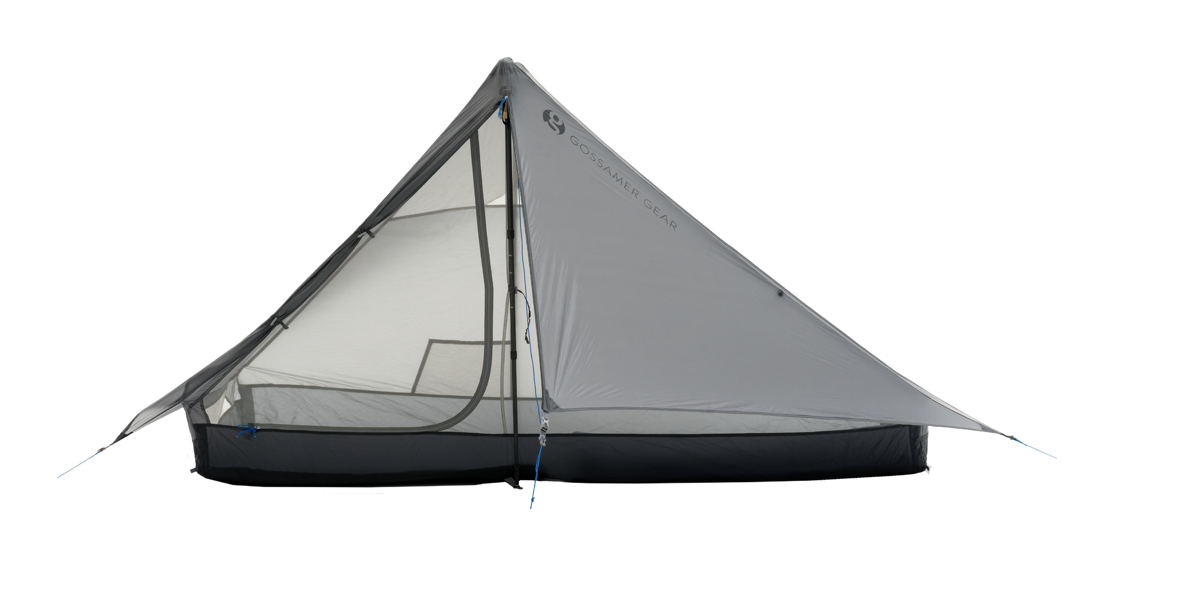
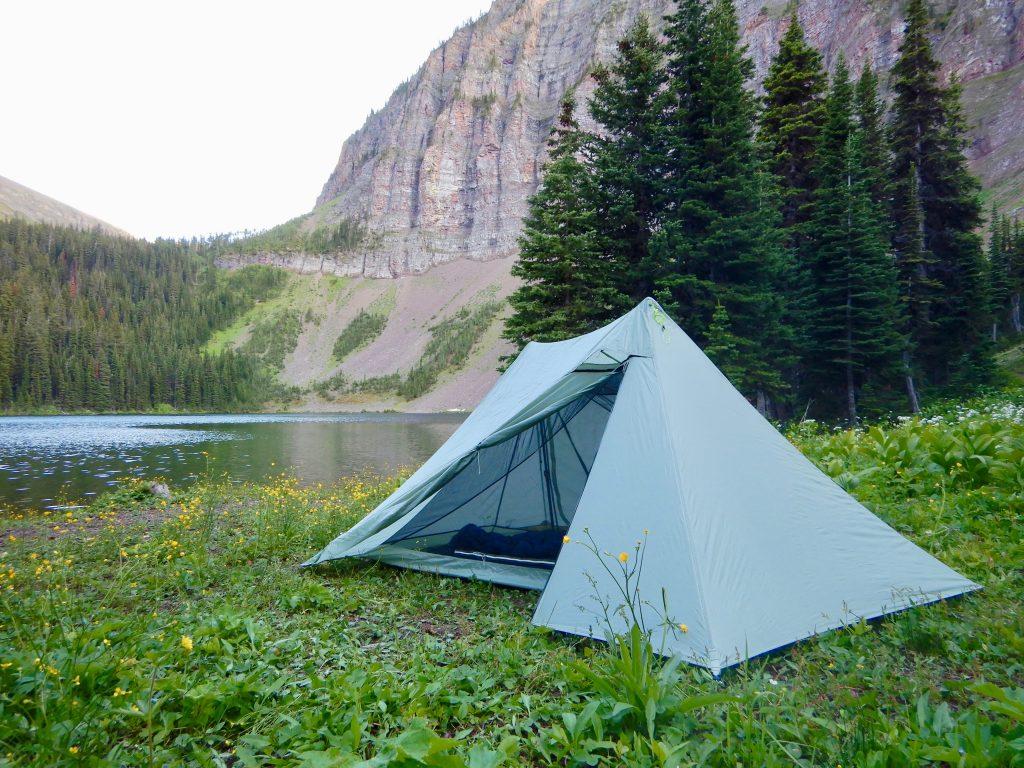
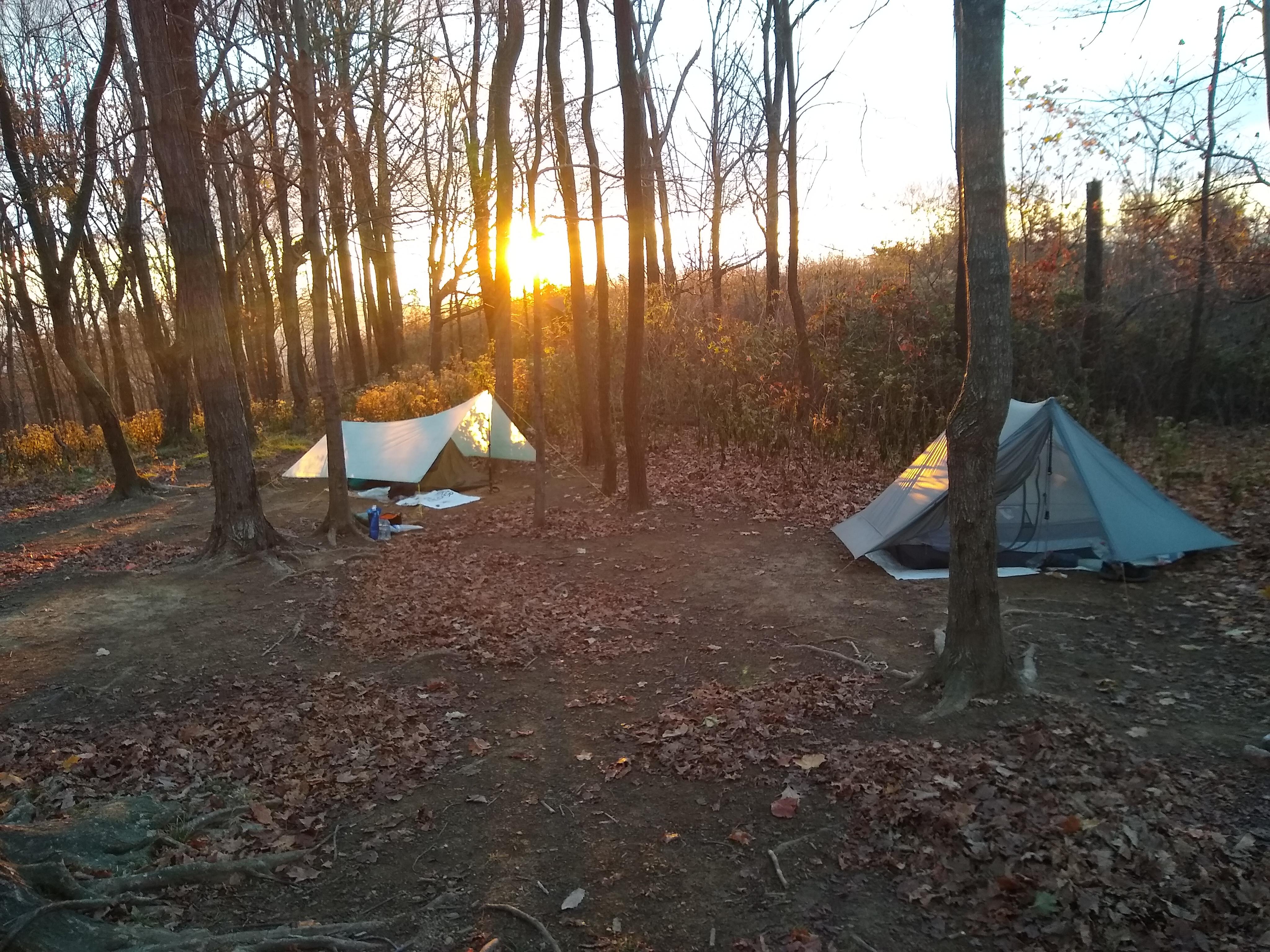
The GG One does have a higher bathtub but also a much higher cut fly that will expose the inner to a lot more splatter. There is some variability in the pitch as well, but it’s not intended to go right to the ground like the X-Mid. Also the One’s bathtub is only slightly taller (about 6″ vs 4″), so overall I’d expect substantially more splatter on the mesh in the One. As you can see in their photos, the bottom edge of the fly is higher than the top of the bathtub, whereas these overlap in the X-Mid.

Also note that the average floor width in the One is less than your X-Mid. Note that you can substantially increase the width of your X-Mid at shoulder height by clipping the inner to the fly at the door toggles. That pulls in 4-5″ wider there, which is a noticeable difference.

The One’s high cut fly is above the top edge of the bathtub floor

X-Mid fly extends nearly to the ground and lower than the top edge of the bathtub floor.

PostedNov 10, 2020 at 10:36 am

You might like the TarpTent Protrail or SMD Lunar Solo. Both are singlewall, affordable and have a much larger floor. Downsides are that you wouldn’t be saving much if any weight, and the footprints are similar (Lunar Solo) or larger (Protrail) than the X-Mid.

Crystal G BPL Member
PostedNov 10, 2020 at 7:45 pm

Thanks for the thoughts so far everyone.  Dan, yes, the new version of the One is more narrow that I would want.  The older version was 36″ at the head and 24″ at the feet, which would have felt relatively roomy I think.  I will take a second look but my initial reaction to both the Protrail and the Lunar Solo was similar to yours in terms of weight savings.  I have a nice tent (yours) already that is fairly close to their weight (I mean, I know 4-6 oz. is a ton for some people, but I am not to that point yet), has a separate inner, and is quite packable.  I have not personally had an issue with the size of the X-Mids footprint – it is easy enough to pitch it around rocks and other “stuff,” but I don’t need all of that vestibule space for this type of trip and wouldn’t mind saving some weight there.  I have about 20 nights in it and maybe I am missing something with the pitch because I can usually get one side quite low but unless I am on a perfectly flat spot, I end up with one side of the fly up off the ground (where the ground slopes) and that is where I have had problems in a heavy rain.  As I said, it is my first trekking pole tent and I have found it easy to set up and get a taut pitch, but when I try to lower the side on the lower ground I find it challenging.


lee kingry BPL Member
PostedNov 11, 2020 at 10:07 pm

I have three versions of the one including the original Spinnaker. And I’ve tried the Luna and the pro and nothing’s enticed me away from my gg1. I’m still using the mini year old thousand miles plus One, and mainly bought the next one as a backup if it ever has issues. Then bought the newer version though not the one year discussing, to see if the improvements would have me leaving the original at home. I am preparing for a short 5-day trip and somehow another the original still in the pack and probably going to stay there.

All that to say I can’t imagine a better tent, and if you can get last year’s or two years ago model and you’re comfortable with trekking pole like you stated, it really is the perfect one person super light, super packable, all situation tent for me ,even winter tent.

jimmyjam BPL Member
PostedNov 12, 2020 at 5:07 am

My hiking buddy has one and he likes it. It sets up easy enough. It does have some condensation problems, like all single wall tents, he leaves a door open which helps somewhat. On an AT trip last week I used my Grace Duo and we both had bad condensation when camped out in the open on grass. Two other nights camping in the woods, I had none and he had very little.

PostedNov 12, 2020 at 10:56 am

“…unless I am on a perfectly flat spot, I end up with one side of the fly up off the ground (where the ground slopes) and that is where I have had problems in a heavy rain.  As I said, it is my first trekking pole tent and I have found it easy to set up and get a taut pitch, but when I try to lower the side on the lower ground I find it challenging.

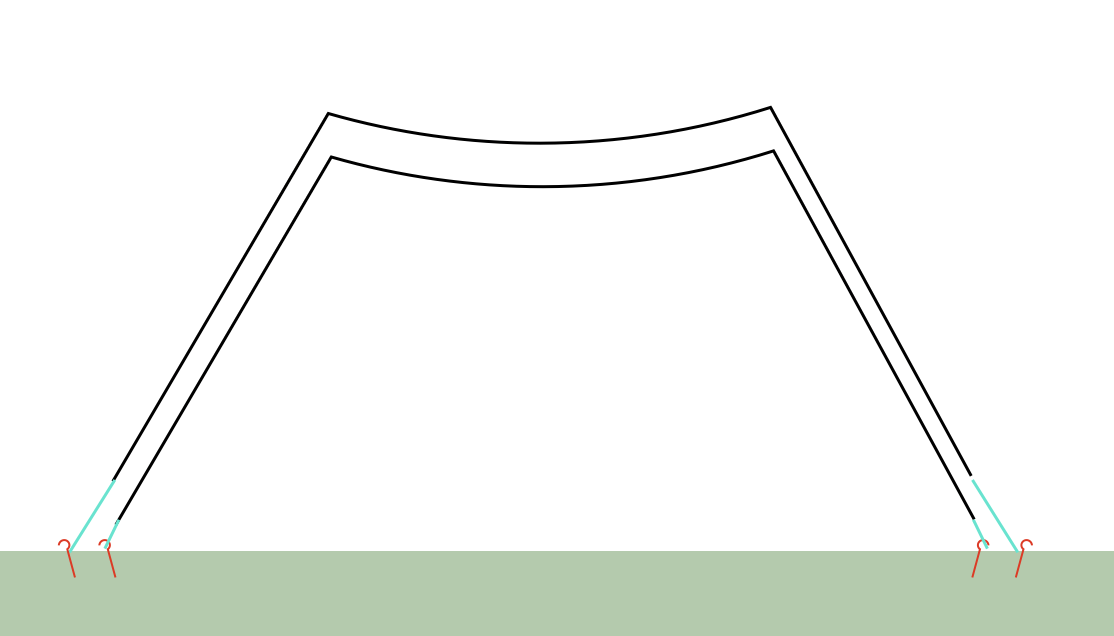
This is a bit difficult to diagnose without seeing it, but it sounds like you are setting it up and then trying to lower it, which doesn’t work that well. The geometry of it is a bit complicated, but when you try to lower it you can’t just shorten the cords – the stake positions really need to move in a little bit too because a lower pitch relies on a smaller rectangle base (e.g. a high pitch is long cords staked out in a larger rectangle, and a low pitch is short cords staked out in a smaller rectangle). This is how all pyramids work (and actually all trekking pole shelters – if you pitched the One and then later tried to lower it by only shortening the poles and cords it wouldn’t be quite right unless the stakes were moved because the angles the stakes are at ends up being off).

Lower tents have shorter cords AND a smaller staked area, like this:

So it is tricky to change the height after it’s pitched. Instead a simple way to have a low tent is to shorten the cords before you stake out the tent. If you want a low pitch, set the cords quite short, then stake your rectangle, then make sure the rectangle is accurate and tight before the poles. With the cords set first, those will define the rectangle to the right size.

Crystal G BPL Member
PostedNov 13, 2020 at 9:52 am

Ohhhh.  This makes a ton of sense.  I am heading out this weekend and will give it a try.

PostedNov 17, 2020 at 2:07 pm

I went with the TT Notch Li for a double wall solo Dyneema tent.

I think my choice for a 3 season single wall tent would be the TT AEON Li for its better interior volume and good bottom-to-top ventilation. Further I feel it would be better than The One in windy conditions.

Bruce Tolley BPL Member
PostedNov 17, 2020 at 6:53 pm

“and we both had bad condensation when camped out in the open on grass.”

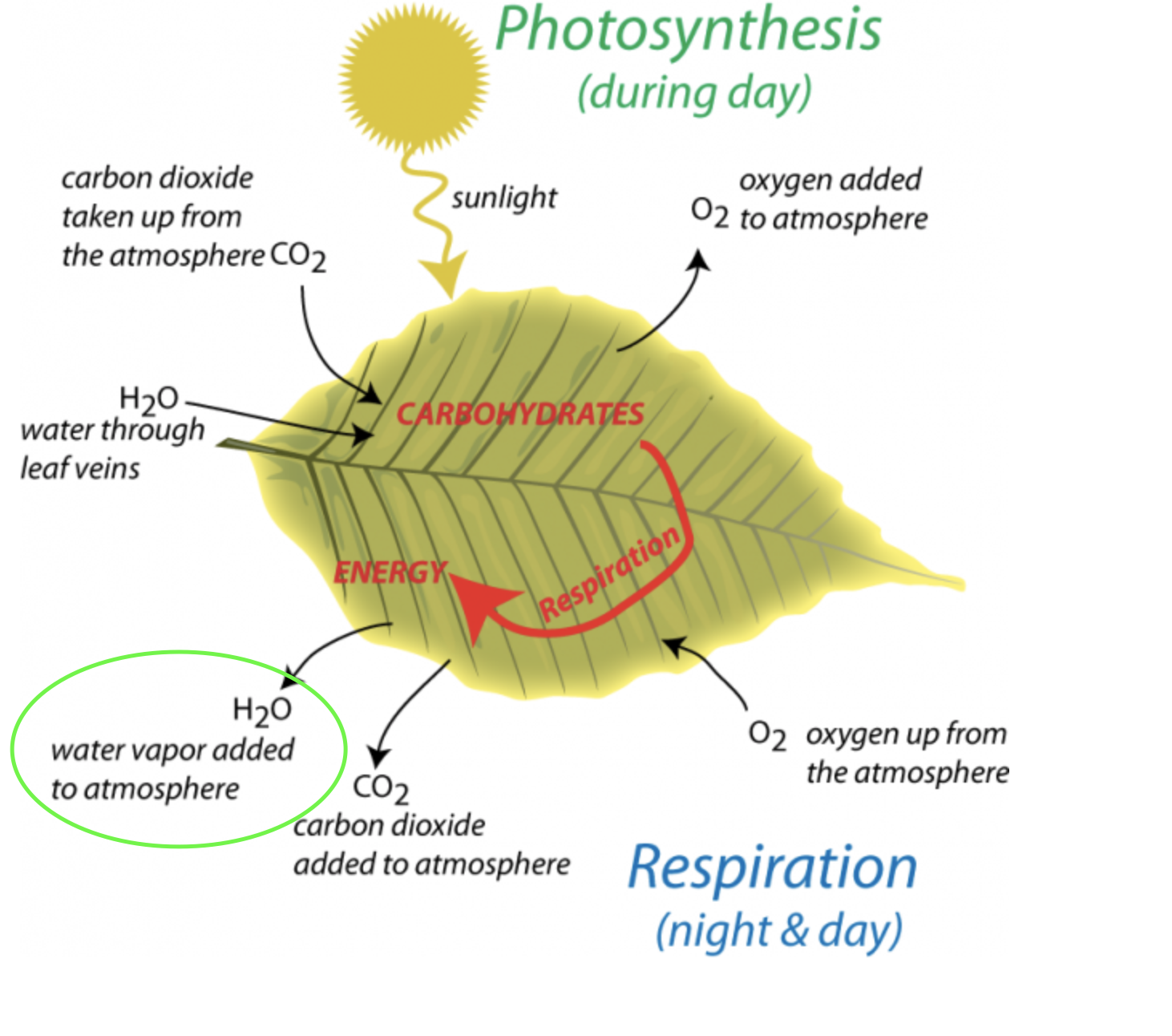
Yup I think any single wall tent no matter what brand or material or construction or design would suffer when pitched over grass. The grass releases water vapor all night into the atmosphere.

Just like in real estate, when pitching a single wall shelter, the mantra should be: Location location location.

Roger Caffin BPL Member
PostedNov 18, 2020 at 2:07 pm

Yup I think any single wall tent no matter what brand or material or construction or design would suffer when pitched over grass. The grass releases water vapor all night into the atmosphere.
Can’t agree with that, not at all. I have spent far too many nights in a single-skin tent pitched on grass without any condensation.

What makes the difference is the amount of ventilation and wind overnight. Cold humid night with the tent shut up: condensation for sure.

Cheers

Stumphges BPL Member
PostedNov 18, 2020 at 3:01 pm

Dan, I love your various posts about the nuances of pitching mids. Clear presentation, and if it’s information that’s already known by many I’m not sure where they learned it (if not by trial, error and “intuition”) – in any case I’ve not seen it presented in writing anywhere before.

Regarding the One and Two, as compared to the single-walled Duplex, where the mesh angles horizontally from the fly inward towards it junction with the bathtub floor, these GG tents seem to have the mesh hanging vertically from the fly to the bathtub. I’ve read that the Duplex design works to allow any condensation running down the inside of the walls to pass through the mesh and so out of the tent and the bathtub. Those descriptions have me wondering how it is that condensed water running down the slants of the One or Two doesn’t just hit the mesh and continuing on into the bathtub.  It must not, but how not? From a pitch height perspective I think vertical mesh would be better.

PostedNov 18, 2020 at 8:27 pm

Grass is a major moisture source (unless it’s dry, dead grass). Since it’s not only inside the tent (“internal”) but also all around the tent (“external”) venting the tent to exchange the moist internal air for similarly moist external air isn’t going to do much. Roger mentions “wind overnight” avoiding condensation, which could do it if the wind was sufficient to replace the moist external air with drier stuff for another locale, and then tent venting exchanged the internal air for that. I suppose that works, but not camping on the grass would be a more reliable method.

I like double wall tents that protect from condensation so there’s not the hassles of trying to avoid grass, or hoping for a windy night. Avoiding condensation is still good practice, but the consequences are lower if you don’t.

Roger Caffin BPL Member
PostedNov 18, 2020 at 8:38 pm

I will have to disagree with Dan D here. I find that it is not grass but wet soil under the grass which can be a source of moisture. But what happens to that moisture – it depends on air movement.

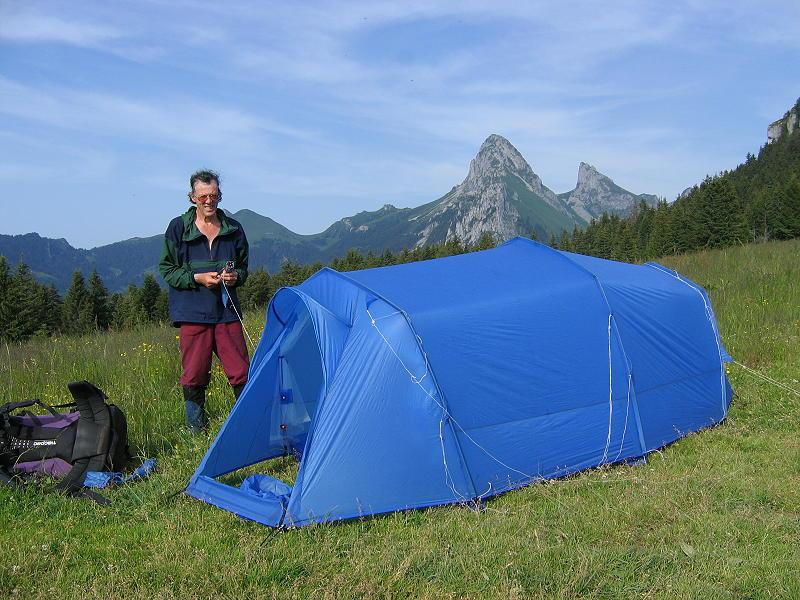
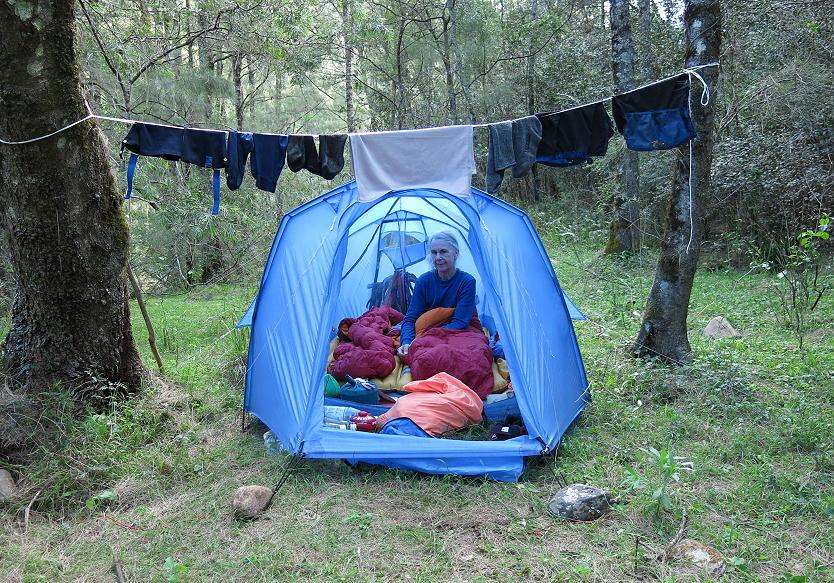
I have so many picture of our blue tent pitched on grass with no condensation overnight to speak of that I gave up counting them.

My 2c.
Cheers

PostedNov 18, 2020 at 8:56 pm

I guess like anything there are a few factors. Plants do give off moisture at night as part of their respiration cycle, but of course wet soil would contribute as well. And even without either of those sources, open environments where grass is found tend to cool off more at night and thus are more likely to hit the dew point.


Whether it’s the grass, the soil, extra air cooling, or all of the above, either way grassy areas aren’t an ideal site to minimize condensation. But of course if the air is dry/warm enough then none of that may matter. I’m not familiar with the conditions where Roger hikes in Australia, so problems from grass may be much less frequent there.

Roger Caffin BPL Member
PostedNov 19, 2020 at 2:31 am


Dry country, Australia. Wet grass is (very) seldom a problem. YMMV.

Cheers

PostedNov 19, 2020 at 7:15 am

STEVEN A. ACKERMAN and JONATHAN MARTIN | UW-Madison department of atmospheric and oceanic sciences
Q: Why is the grass wet in the morning, when it didn’t rain?
A: Recent spring mornings have produced wet lawns. To explain this, we start with the fact that air contains water in the gas phase, called water vapor. Dew is made of liquid water that has condensed from some of the water vapor in the air.

Dew occurs when objects cool. A common example of dew formation is when drops of liquid form on the glass of an ice-cold drink. Dew forms when the object, such as the glass, cools down to the dew point temperature.
Water molecules in the air continually bombard surfaces, like blades of grass. Some of the molecules stick, forming a very thin film of water. This film may not last long, as the water evaporates. The evaporation rate depends on the temperature of the water, which is the same temperature as the blades of grass.

So, condensation depends on the state of the atmosphere, such as its temperature and moisture, while evaporation depends on the temperature of the object.

If the object gets cold enough, and there is enough moisture in the air, condensation is much greater than evaporation and the film grows into dew drops.
Each night the weather report includes the temperature and the dew point temperature.
If the two temperatures are close, it is likely that dew will form during the night.

Dew also tends to form on calm nights that come with clear skies. Windy conditions and cloudy skies keep the ground from cooling.

The air at any given temperature is capable of holding a certain amount of water vapor. When that maximum amount of water vapor is reached, that is referred to as saturation. This is also known as 100% relative humidity. When this is achieved, the temperature of the air has reached the dew point temperature. It is also called the condensation temperature. The dew point temperature can never be higher than the air temperature.

Said another way, the dew point temperature is the temperature at which the air must become cooled in order to become completely saturated with water vapor. If the air is cooled to the dew point temperature, it will become saturated, and condensation will begin to form. This could be in the form of clouds, dew, fog, mist, frost, rain, or snow.

Condensation: Dew and Fog
The dew point temperature is what causes dew to form on the grass in the morning. The morning, just before sunrise, is the lowest air temperature of the day, so it is the time when the dew point temperature is most likely to be reached. The moisture evaporating into the air from the soil saturates the air around the grass. When the temperature of the grass’ surface hits the dew point, moisture comes out of the air and condenses on the grass.

High in the sky where the air cools to the dew point, evaporated moisture becomes clouds. At ground level, it’s fog when a layer of mist forms at a point just off the ground surface, and it’s the same process. Evaporated water in the air reaches the dew point at that low elevation, and condensation occurs.


PostedNov 19, 2020 at 11:15 pm

Agree with Dan about the vulnerabilities created by the GG One canopy that does not reach anywhere near the ground.  Well illustrated by Dan’s photo.  And the One is a 10D sil/PU nylon single wall, so weight comparisons with the 20D double wall X-Mid make no sense.

Would not like to be in the One in a severe blow + heavy rain with the sagging nylon raised single wall.  GG is not the only one that makes tents like this.  Maybe OK in the Sierras in sunny CAL.  At least it is well ventilated, or should I say, irrigated.  Come to think, don’t see any peak vents either.


Crystal G BPL Member
PostedNov 25, 2020 at 10:28 am

Thanks for the thoughts and info about condensation management is always helpful.

Sam, you are right that if a person was tent shopping in general it wouldn’t make sense to compare the two tents.  In my case, however, I have an X-Mid already and thus, a new tent (regardless of whether it is single or double walled) needs to be different enough (you can read my parameters in my OP) for it to make sense to even get something new.  As I originally mentioned, this would be a tent for warmer weather short trips (a couple nights) where I am trying to go light and make miles, where there is likely going to be bugs, and where I can plan around any serious weather.  If I were heading up your direction to the Whites, thought I’d be on platforms, or didn’t know I could dry out fairly easily, I’d take a different tent.

I do worry about the condensation issue – this would be my first single wall tent and I may just decide I hate them, or I may decide I can handle some condensation – I won’t really know until I try.   I definitely am not going to spend $$ on a DCF single wall until I have some sense how I feel about them or if I will scurry back to double walled tents.   A couple of the Tarp Tents are also on the possible list as well.

Sam, the Aeon is on the list, but my sense was that the interior was smaller than the One.  Can you give me more info?

Finally, Dan, I went out for a trip a few days ago and using your suggestions felt like I was able to get the X-Mid pitched lower than I have in the past.  The weather was clear, but I do think had it rained I would have minimized any splash back.


PostedNov 25, 2020 at 12:12 pm

People sell used stuff all the time. Maybe you can buy a used One from last year. I have seen the one from last year and it looks really nice and durable. Anybody who used it a few nights and then sold it would be selling something good as new.

PostedNov 25, 2020 at 3:56 pm

“I do think had it rained I would have minimized any splash back”

Nice to hear! If you really want to go low you can insert the stakes above the tensioners, but then it’s non-adjustable.

PostedNov 26, 2020 at 1:09 am

Given you plan to use it on short trips where you are confident of the weather The One seems like a great choice. It’s very light, and looks to provide good volume – provided it’s not too short for you. 

Viewing 25 posts - 1 through 25 (of 28 total)
Loading...