Topic

Your hiking trip research- consider print sources for a deeper experience

Viewing 13 posts - 1 through 13 (of 13 total)
AK Granola BPL Member
PostedJun 10, 2026 at 2:44 pm

I know most folks just use internet sources, AI, blogs, YT or whatever to plan hikes. But I will once again strongly advocate for consulting old hiking guides, often found in your local libraries (unless they’ve tossed them because no one is using them). While some information in those old tomes might be out of date for exact planning purposes, the enrichment they provide far surpasses most trip reports posted online. Of course I use both, but I really really enjoy reading the older, more literary works.

I have in my hand right now, from our library, “Exploring Mount Rainer” by Ruth Kirk, in anticipation of our upcoming summer jaunt. Published 1968 when most of you were not alive, and I was just learning to swim and read, not even reading chapter books yet. This author assumed the reader wanted more than simply to get to the top of a peak, or finish a route. While there are very brief route descriptions and hand drawn maps, the focus is on geology, weather, nature, and indigenous history. There’s the history of discovery and exploration, and the founding of the park. It’s the “why” behind choosing this area to explore.

Most YouTubers care not one whit about this stuff; their shows are all about what they ate or what blisters they got. Some are better at telling a tale or making an engaging film. But many have no idea what the trees and plants are, what mammals might be leaving those turds on the trail, or how much advocacy and effort went into preserving this land for all to enjoy. I’m sure they’re producing what their viewers want, and I’m just a weirdo nerd, not the target audience, although I have enjoyed watching some of them nonetheless. Gear reviews get old though; 2 minutes max per item, please. Yawn.

This book like others have lyrical prose to deepen one’s relationship with a place; they’re about appreciating and noticing what you might find there, and assumes a reading level of “grade 13” or higher, which most adults ought to have. It’d be nice if you all used these books, so they don’t disappear forever! I can only collect so many.

What are your favorite hiking guides of yesteryear?

Alex H BPL Member
PostedJun 11, 2026 at 6:10 am

I totally agree but then I was older than you in 1968!  I always look for a guidebook for a new area I am planning a trip in.  I have found many trails and routes not discussed anywhere else and the background information about the areas too.

David D BPL Member
PostedJun 11, 2026 at 2:51 pm

A plug for Dustin Lynx’s “Hiking Canada’s Great Divide Trail”.  Interesting read with helpful insights.

Paul Wagner BPL Member
PostedJun 12, 2026 at 8:53 am

Totally agree.  We just got back from a day hike on Sonora Peak with a few wildflower questions.  Out came the books!

We used our copies of Sierra North and Sierra South so often we had to get new versions, nicely updated.

Influencers and websites (including ours!) come and go. Books are for the long haul.

andrew elmore BPL Member
PostedJun 15, 2026 at 11:41 pm

Well said.

I have been enjoying the different editions of RJ Secor’s “The High Sierra: Peaks, Passes, Trails”.  As I was reading, I noted his introductory comment about having access to a complete collection of Sierra Club Bulletins, and happened to find they are available via the Internet Archive.

Jerry Adams BPL Member
PostedJun 16, 2026 at 7:34 am

Don and Roberta Lowe’s “62 hiking trails northern oregon cascades”.  I don’t consult it very often.  All the pages are separated.  Interesting to compare 1979 pictures and maps with today.

John B BPL Member
PostedJun 19, 2026 at 12:15 pm

John Muir Laws’ The Laws Field Guide to the Sierra Nevada isn’t a guidebook, but it has enriched my experience of the Sierra. Like Paul Wagner, I use it partly to learn a little about the flora and fauna that I see on my trips.

Andrew, that is very good news about the old Sierra Club bulletins.

Steve S BPL Member
PostedJun 19, 2026 at 3:48 pm

Old topos, really old topos, sometimes show trails and ways that have been forgotten, or sections that have been rerouted. In the USFS nomenclature ways were direct routes, while trails were horse graded, so lookouts often had ways in addition to a supply trail. In the western national forests the blaze pattern was dot over dash for a trail and dash over dot for a way, and in some places the blazes remain visible on old big trees, confirming a route.

Some guidebooks reported such routes — and not just trails that have been closed since their publication — but most did not.

Finding and following old routes is a pleasure; partly because the local animal population is no longer avoiding the trails, so the understory is grazed in more natural pattern — sometimes with different plant species dominating. And sometimes one finds unexpected bits of history, such as buildings or mines.

AK Granola BPL Member
PostedJun 19, 2026 at 4:08 pm

Old topo maps prior to modern revisions also have other important information for historians, genealogists, and archaeologists, such as the location of old mines, old cabins, churches, graveyards, rail lines, even ghost towns. There are so  many old mining towns out there, all over the west and Alaska, if you know where to look for them.

Miner BPL Member
PostedJun 19, 2026 at 4:20 pm

I still have every physical guide book I’ve ever bought. What I like are the books of the older trail stories of the early days of some of the major hiking trails like the PCT and CDT that inspired me to hike. The trail they describe no longer exists but the wildness and challenges they talk about still speaks to me.

But I’ve even found some of them in electronic form. The recent editions of the Wilderness Press PCT books aren’t nearly as comprehensive as the older editions, especially describing alternative routes. A few years ago, I was surprised that I could buy a kindle version of the older edition from WA/OR and NCal that I hiked with. Doesn’t look like you can still do so at the moment though they are still in my Kindle Library.

PostedJun 19, 2026 at 5:43 pm

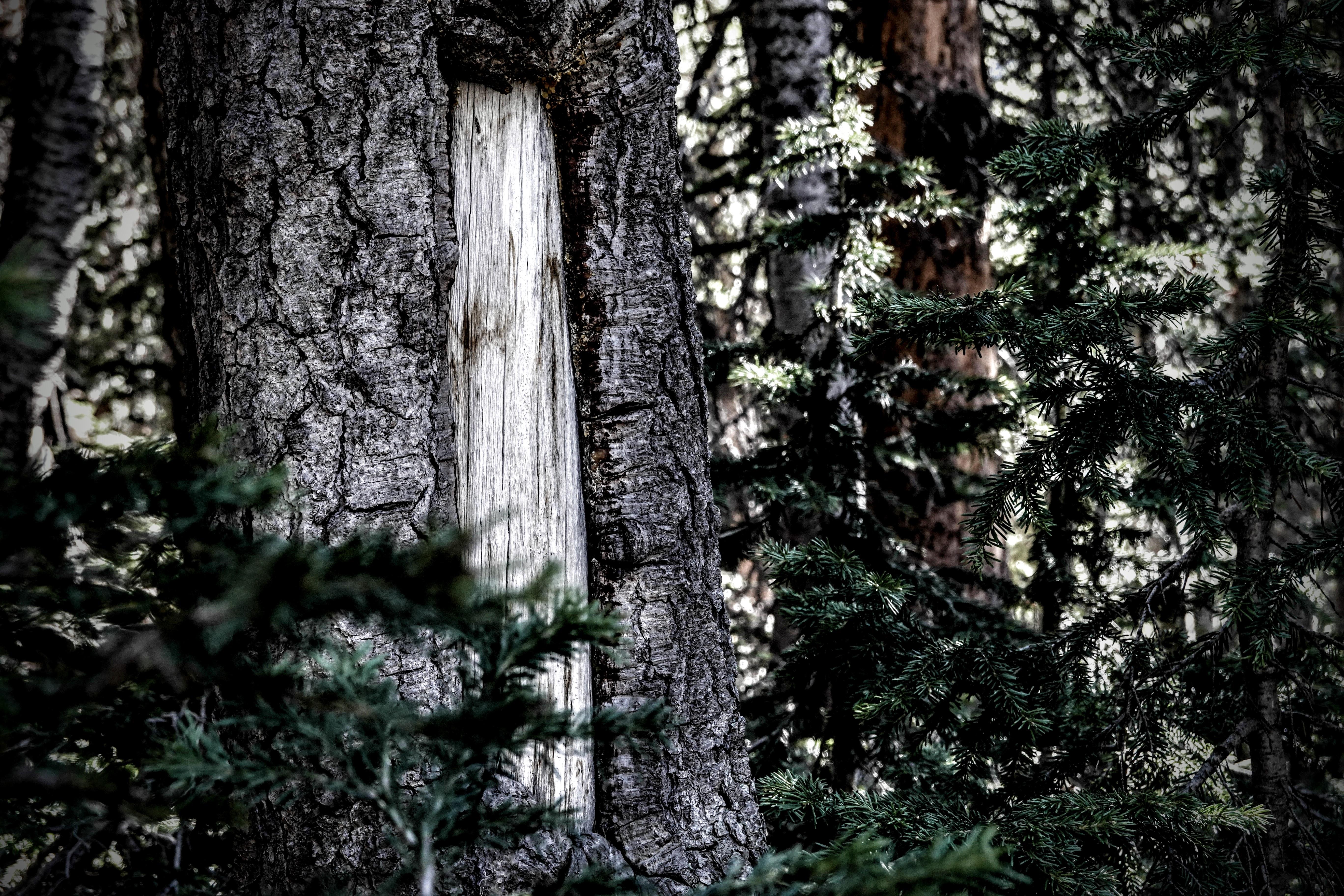
Earlier this week, I did a trip along a historic trapping route. That route eventually became a “fishing” trail to an alpine lakes basin that was maintained by a federal agency until the 1960s. Since then, it’s been decommissioned, has disappeared from modern maps, and the trail is all but gone. But there are still some blazes, which is kind of jarring to see out in the middle of nowhere when there is no visible trail:

Lots of places to explore by mining historical records!

Terran BPL Member
PostedJun 19, 2026 at 6:21 pm

Finding and following old routes is a pleasure; partly because the local animal population is no longer avoiding the trails, so the understory is grazed in more natural pattern — sometimes with different plant species dominating.

You look for what’s different. Younger trees. Where the buckthorn meets the manzanita is the easiest route and one often taken.

Viewing 13 posts - 1 through 13 (of 13 total)
Loading...