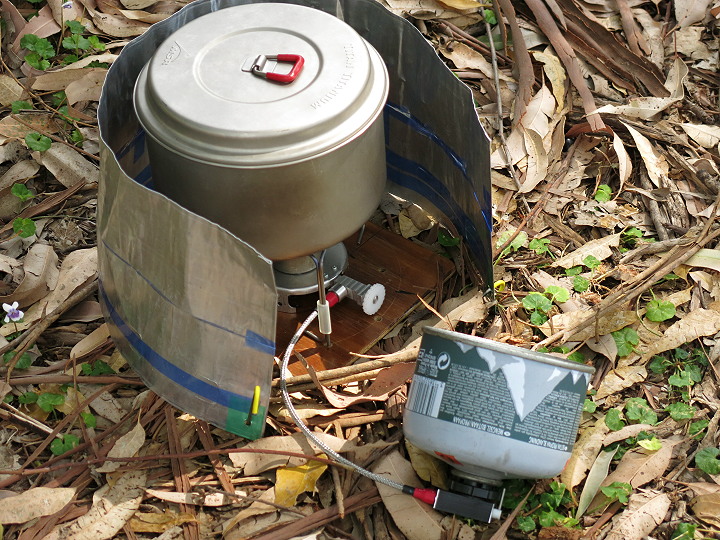
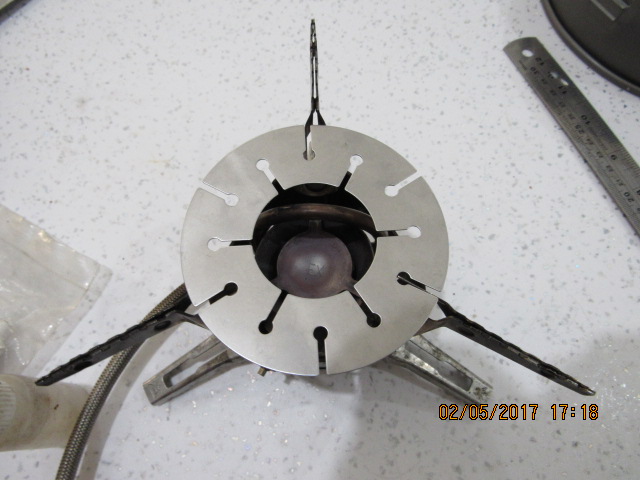
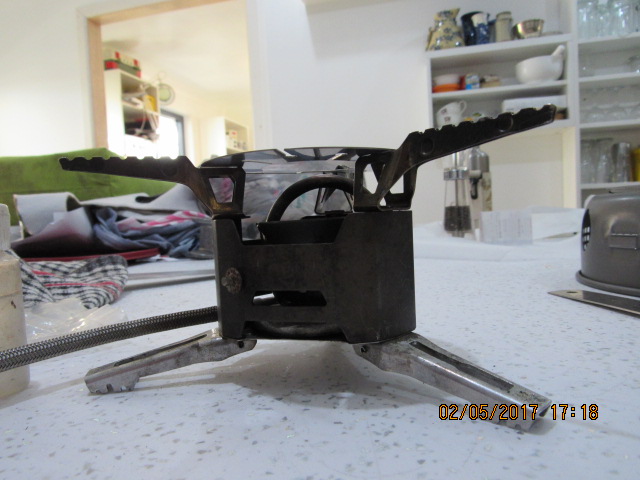
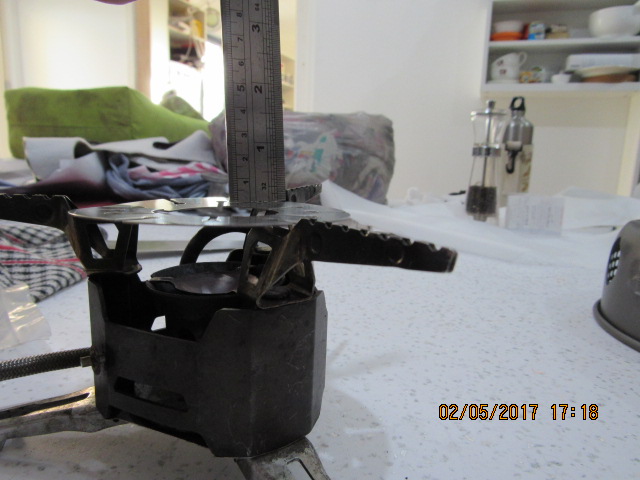
Very short version: Yes.
But I don’t know for sure. The two conflicting thoughts in my mind are:
1) you want most of the combustion gases to pass through the heat fins so the closer to the pot the burner is, the better.
2) the closer the burner is to cold pot surface (and in winter camping melting snow, that pot bottom is really cold most of the time), the most “quenching” of the flame front there will be. Quenching the flame before it completely reacts can result in more CO. And CO is bad. Because it can kill you.
But I haven’t tested either of those thoughts out. You know, with instruments and thermometers and scales.
Testing stove efficiency as a function of pot height is the easier thing to do. And maybe someone has already done it. It will vary with each flame pattern (some are more vertical, some are more horizontal).
Testing CO generation as a function of pot height is trickier. First off, you need a CO meter (I just ordered one). And some kind of standardized test set-up. Slight differences in cross winds would dominate over actual performance differences otherwise. I’m imagining a lab-hood type set up, out of a cardboard box, necking down to a metal chimney of fixed diameter. With a air inlets low and a window to see what’s going on. So all combustion air passes through a fixed passage which can be sampled and analyzed.
But, if I’m guessing right, and I do about 80% of the time, the manufactured stove has its pot supports in about the right spot for maximum fuel efficiency (or at least minimum boil time). Unless they are really thoughtful (or got bad PR for making lots of CO), they probably haven’t optimized pot height for reducing CO nor for snow-melting applications.
Summary: I’d suggest your HX pot bottom proper (not the fins) rest on the burner pot supports AND that you maintain good ventilation unless you have great data on your stove being low CO in that configuration.