Topic

Winter backpacking – sensible redundancy or packing fears?

Viewing 23 posts - 1 through 23 (of 23 total)
Henrik S BPL Member
PostedOct 11, 2026 at 2:28 pm

I enjoy winter backpacking, especially in snow over a few days on cross country skis. I like the feeling of adventure when going from A to B and being further into the backcountry than a days worth of skiing. Then it’s about relying on your own tools and abilities. And of course, with a Garmin inReach there’s always a last resort (unless it fails).


I’ve had a few experiences (defective sleeping pad) that has led me to think that it may be sensible to double up on a few items that would be tripkillers if failing in winter, like the sleeping pad and stove/fuel (snow melting for water). And maybe add an extra headlight and a small backpack (e.g. the 100 gram type from S2S), if you need to bail in the night or leave your gear behind in an emergency.

On the other hand, packing all these fears may lead to a very heavy backpack. With a pulk, it’s no problem to brung extra gear along.


Winter camping can be more risky, and therefore I’d like better margins for equipment error. Any thoughts on where to draw the line?

JAshley73 BPL Member
PostedOct 11, 2026 at 5:24 pm

Two headlamps (three actually) is the standard in Caving, and for good reason. When you need light, it’s awfully hard to go without it. An extra is certainly a great idea, and worth it’s weight.

Two sleeping pads? Maybe not two inflatables, but perhaps a patch/kit, and a foam pad for under the inflatable.

After reading “Into the Void” I would say an extra stove, or at least an extra fuel canister.

Extra dry socks, and (liner) gloves.

Extra water filter? Thinking only of things that are damaged if frozen. Maybe not necessary if thawing/boiling snow is the water source.

Devin Z BPL Member
PostedOct 11, 2026 at 8:21 pm

Absolutely two pads, but one should be closed cell so you don’t risk puncturing both pads. It’s also really nice to have the ccf to kneel on when getting set up.


Two headlamps for sure. Primary bright one and lighter backup, but definitely two.

Not two backpacks. If you have to bail you need to have enough capacity to bring your ccf and sleeping bag in case you have to bivvy on your way out (and pack an e bivvy too. They’re so light and will keep you alive with your ccf/bag.)


Pack double of critical pieces, or go with others who will have redundant equipment.

Henrik S BPL Member
PostedOct 12, 2026 at 2:34 am

JAshley73; thanks. Clothes are pretty dialled in and also mostly repairable. Three headlights when caving sounds sensible (never tried it). Two should be enough when skiing for a few days, especially since there’s actually daylight involved (as opposed to when inside a Cave).

A patch kit for the sleeping pad always comes along but I don’t think it’s that easy to find leaks in the Field in the dark and without using water. Also usually bring a long a closed cell foam pad, but that is way too Cold to be used by itself. Seems like it’s possible to bring along an extra pad for 500grams, and that would be a life saver.

Devin Z; If the backpack fails and you’re unable to carry gir With it (e.g. straps fail), and you don’t have an extra backpack, then how would you get out and bring along sleeping pad/bivvy/water? Thanks for highlighting the MSR E bivvy for me, that might be useful and a small weight penalty.

Terran BPL Member
PostedOct 12, 2026 at 7:24 am

Pilots don’t bring two planes. They have a very comprehensive preflight  checklist. Failure is not an option. I’ve only been in one airplane that failed anyway. That was fun.

Odds are your pack won’t fail unless it’s already started to fail or it’s not heavy enough for the job. Make note of the possible failure points and check them every time you go out. I think that can be just as important or even more important than redundancy.

I carry a pouch/ front pack/ brain/ purse that can be carried separately. I have another setup with 2 HMG fanny packs with a lunch bag style fanny pack in the middle..dependent on how much small stuff I bring. I never thought of it as redundancy, but I guess it is.

A closed cell pad works pretty good and is worth having. Sleep on your side. When the cold creeps in, flip to the other side. It’s not fun, but it gets you through. Temperature dependent, your quilt will keep you warm enough. In extreme cold, you should probably have a mummy bag anyway which will provide bottom insulation .

I can only speak for myself and my conditions.

I had a friend taking his first flight going to a ballgame. I told him don’t worry. It was an unaborted missed approch that did him in. Be safe.

JAshley73 BPL Member
PostedOct 12, 2026 at 7:59 am

Re: Pack Failures – I can’t imagine anything on a pack, that couldn’t be fixed with some extra guy-line, gorilla tape, zip-ties, and a knife/needle…

A small contingent of these doesn’t take up much space, and can be very useful to fix just about anything. A failed boot/shoe is a likely possibility as well. All of these can be used to fix a failed shoe as well. I would probably add/include the rubber cement meant for the pad, as it would be useful for shoes, tent, etc. too.

All of that should fit nearly in the palm of one’s hand.


Volker64 BPL Member
PostedOct 12, 2026 at 9:17 am

Some redundancy for lightweight items such as a lighter is sensible. But my packweight is always greatest in winter so I can’t afford the luxury of bringing duplicates for most items. I think more in terms of dual use items (to save weight) and distributed risk (don’t put all your eggs in one basket).

_Trekking poles are a dual use item for shelter and sure-footedness.

_A 30″ wide foldable reflective mat is much less bulky than a closed cell foam pad.

_Two UL headlamps enable you to always have one ready to go as well as well offering a backup in case one fails. Cellphone light is another backup. A small lantern is yet another.

_Two separate battery banks is more resilient than one big one. It also helps you to distribute the weight more evenly.

_Multiple stores of water are a safer bet to keep from freezing. It one does freeze, you’ve got another store somewhere else. The larger the container of water, the longer it will take to melt if it does freeze. This also greatly helps with weight distribution.

_A wood stove that can double as a compact firepit makes a good backup for a butane stove (should you run out of fuel, or if it’s too cold to operate), and/or if wood is scarce but you need a fire for warmth and therefore need to conserve on the amount of wood you burn.

_A titanium pot works with any kind of stove or an open fire. Relying on a heat exchanger pot may conserve butane, you can’t use it over an open fire or you’ll clog the fins with soot.

_A spork obviates the need for a spoon and fork. If you forget to bring your spork – you can make a crude one out of a stick, use two tent stakes as chopsticks, eat with your hands, or drink your food from a pot. Not a reason to end a trip by any means.

_I don’t use Aquamira tabs. If my water filter craps out or freezes, I would simply be much more selective about the clarity of my water sources and preference those that are also fast moving – as would a cat. I would melt chunks of ice and boil them to kill funky stuff.

_If my battery banks run out and/or my phone is without juice, I use dead reckoning and observing where the sun rises and sets to help me navigate. I should learn more about how to use my compass. But I would celebrate being liberated from the teat of electronics.

Henrik S BPL Member
PostedOct 12, 2026 at 9:25 am

The repair kit items you mention are very useful and should be brought. Agree.

Very sorry to read about your friend Terran. Although they do not bring an extra plane, a bit of googling indicates that redundancy in aviation certainly is a thing. I guess I’m mostly worried about the sleeping pad failing (again). If an extra wing only weighed 500 grams, they (pilots) might have brought one 😃

I’m not sure the sleeping bag provides bottom insulation. I thought one of the central arguments for a quilt over a bag was that the part of the bag you lay on top of provides no insulation?

Luckily we do not need a water filter most places in Norway. The water is pure/clean enough.

Under the treeline there are almost always some running water to be found. But over is more complicated. I guess whether or not one should bring an extra stove and canister (if not white gas) would depend on the distances between other water sources. Planning thouroughly. Preflight checklist. Where to fly.

Henrik S BPL Member
PostedOct 12, 2026 at 9:43 am

Volker; yes these are good thoughts. I’m already on board on most of your points. Though i’ve only ever used a spoon – the spork seems unnecessary to me.

Funny enough there is a stick burner that charges batteries. If that’s what you mean as a wood stove.

Trekking pole shelters on snow is difficult. Depending on the snow of course. Brought my Notch Li out on an overnighter on snow, and I certainly did regret my choice. Both size wise and because it was a trekking pole shelter. I could get better on that. But an arcdome 1 with carbon poles is 1,3 kg so that is not that much.

I had a 17kg pack for a weekend skiing last winter. That was a bit too heavy for my taste. Have sold a few items and got some lighter ones, but still too much. Redundancy on top would have to be strictly necessary.

Terran BPL Member
PostedOct 12, 2026 at 10:18 am

If fuel is available, a twig fire can sometimes be useful.

Perhaps if you were lost. For self evacuation. I won’t say no. I’m not sure. If you’re not disorientated, it might be better to keep moving. IDK

Just to geek out a little…

Abandoning a winter hike

  1. Self rescue
  2. Self evacuation
  3. Just plain lost
  4. All of the above


  1. Distance
  2. Time
  3. Physical condition
  4. Environmental conditions


  1. Physical failures
  2. Mental failures
  3. Equipment failures
  4. Geological failures
  5. Preplanning failures
  6. Route failure


  1. Self examination
  2. Redundancies
  3. Supporting facts
  4. Solutions


Paul S BPL Member
PostedOct 12, 2026 at 2:36 pm

When my wife and I go winter backpakcing we do bring back-up gear:


1) closed-cell thermarest Z-lite, Full length. Since we both bring one, if either one of us has an air mattress failure we can double up two Z-lites.

2) in addition to our headlamps we have a) A tent lamp  and B) An air pad inflator-it doubles as a lamp.

3) cell phone and Garmin mini.

4) Tent and MLD cricket. We have the Cricket also because we don’t like having food in our tent. Both because we don’t want food spills on sleeping bags, etc. But also because we do not want to attract animals.

Henrik S BPL Member
PostedOct 13, 2026 at 1:05 am

Paul S; Thanks for sharing. I do bring several of these items already, like a padpump with an integrated light, cellphone and garmin inreach mini. What kind of animals are you worried about – bears? There was a wolf spotted in the area I camped last time, but did still cook inside the tent. Apparently it’s 200 years since the last wolf attack in Norway.


Any recommendations on heat reflective mats? 25 inch or 30 inch wide.

Terran BPL Member
PostedOct 13, 2026 at 6:37 am

Does reflective work without an air gap?

Exped Flex. Not reflective but R2.8.

Next year. S to S has a mat coming out where the sides fold in making a 30″ mat easier to pack.


bradmacmt BPL Member
PostedOct 13, 2026 at 7:34 am

Random winter gear in no particular order ~

Wide Mouth Nalgene with Insulated Cozy

Candle Lantern

Two Headlamps

Small Saw

Fire Starter Materials and Flint

Mitten Shells with long attachment cord (goes up sleeves and over shoulders).

Extra Mittens and Gloves

Wind Shells

CC Pad

Liquid Fuel Stove w/ plenty of extra fuel

Large Capacity/Diameter Cook Pot

Wool or Fleece Balaclava or Pile & Shell Yazoo Style Hat

Facemask

Headband

Snow Rated Sunglasses or Goggles


JAshley73 BPL Member
PostedOct 13, 2026 at 9:08 am

I’ve posted this before, but I’ve used reflective “bubble” insulation under a sleeping pad before, and it worked well enough. As in, my son & I felt comfortable with it under our R4.8 pads, down into the mid-20’s.

Reflective Insulation

It’s available in multiple widths – the 24″ works great for our 20-25″ sleeping pads. I don’t know how effective it truly is, but the weight is negligible, and they can be rolled, and “unrolled” inside the pack, which seems to pack & carry well.

I’ve used these before whilst caving. Two layers makes a good sit-pad to keep the bum away from cold ground.

While I doubt this is anywhere close to the holy-grail of foam pads for backpacking, it’s cheap, lightweight, and can easily be tailored to suit one’s needs.


Henrik S BPL Member
PostedOct 13, 2026 at 10:23 am

Interesting. The bubble mat. Though difficult to use if not tested.

I’ve looked at the S2S mat you mention Terran. It might be an option, but first I’ll have to see what S2S replies to my complaint that my Ether Light XR Pro failed in only -3 celsius this winter (though successful in -15 last winter). Not buying another product from them before I know what the customer service is like (no reply yet). Very nice comfort but did not keep me warm, even with a Zenbivy 10 degree, a z lite mat, and a 0,5l hot water bottle. Performed worse than my Zenbivy Light mattress with an r value of only 5.

bradmcmt; thanks for your list – these are sensible items. Not sure about the candle lantern though.

bradmacmt BPL Member
PostedOct 13, 2026 at 11:51 am

bradmcmt; thanks for your list – these are sensible items. Not sure about the candle lantern though.

Henrik, I use one of these:

https://ucogear.com/collections/candle-lanterns/products/original-candle-lantern-painted-classic-series?variant=50641942970689

A candle lantern adds a bit of warmth to a tent, isn’t reliant batteries that can fail in cold, and offers a cheery glow in a tent on long winter nights. It can also double as an emergency fire starter.

Terran BPL Member
PostedOct 13, 2026 at 12:33 pm

I think the candle is a great idea. Both physically and mentally. Bring good matches.

Does that fit the regular tea candles?


Tipi Walter BPL Member
PostedOct 13, 2026 at 1:07 pm

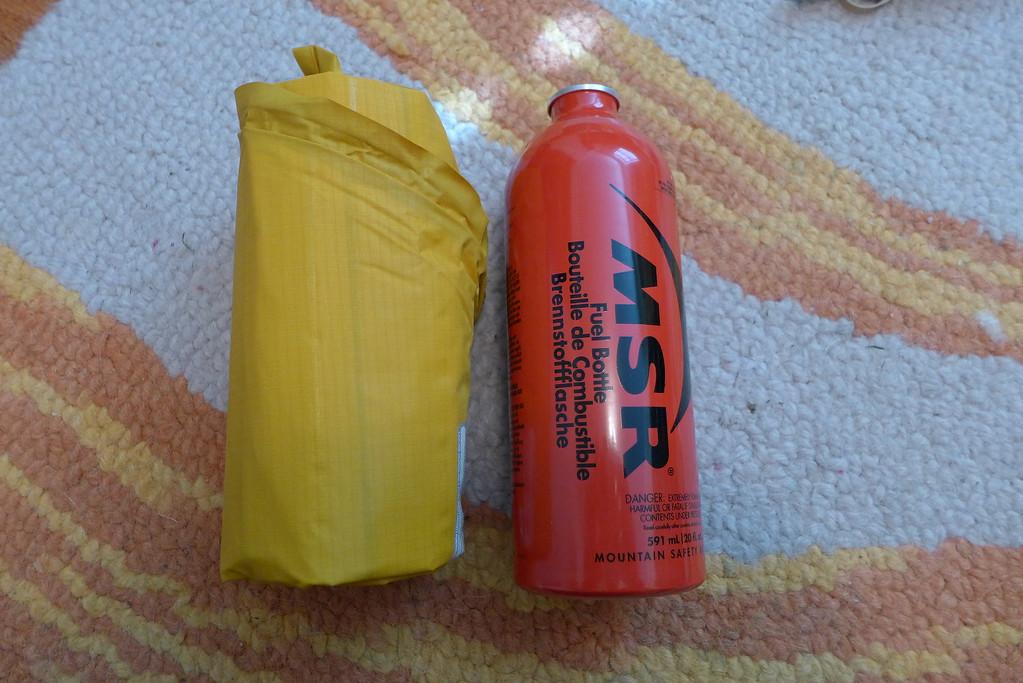
I carry a few redundant back-up items on long winter backpacking trips—an emergency NeoAir tiny inflatable if my regular Thermarest Trail Pro pad fails(and it will eventually)—also a spare MSR Whisperlite stove pump in case the first one’s plastic pump handle snaps in half.(Before a trip I usually inspect pump and replace gaskets etc).  No spare stove.  No spare boots.  I used to carry a spare digital camera and spare tiny radio as I’ve had both go out on a trip.  Stopped doing that due to the extra weight.  My flip phone takes pics but it’s terrible.

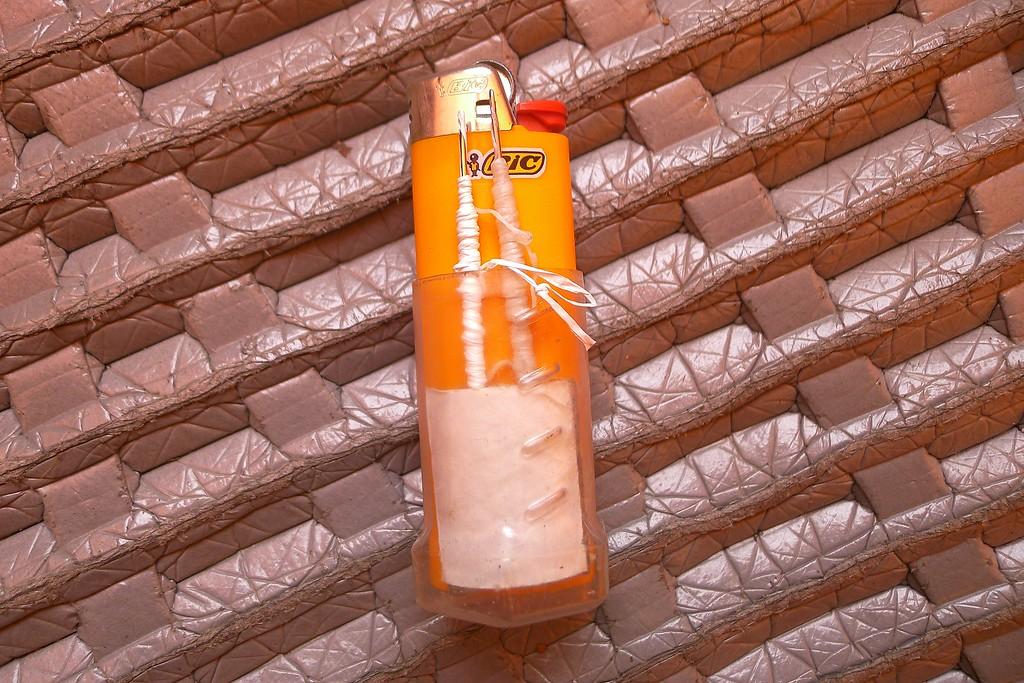
I always carry a spare Bic lighter as one time my mini Bic lost all its fuel when pressed inside a ditty bag.  Also with the lighter are two pre-threaded needles using waxed dental floss—very important for emergency repairs.

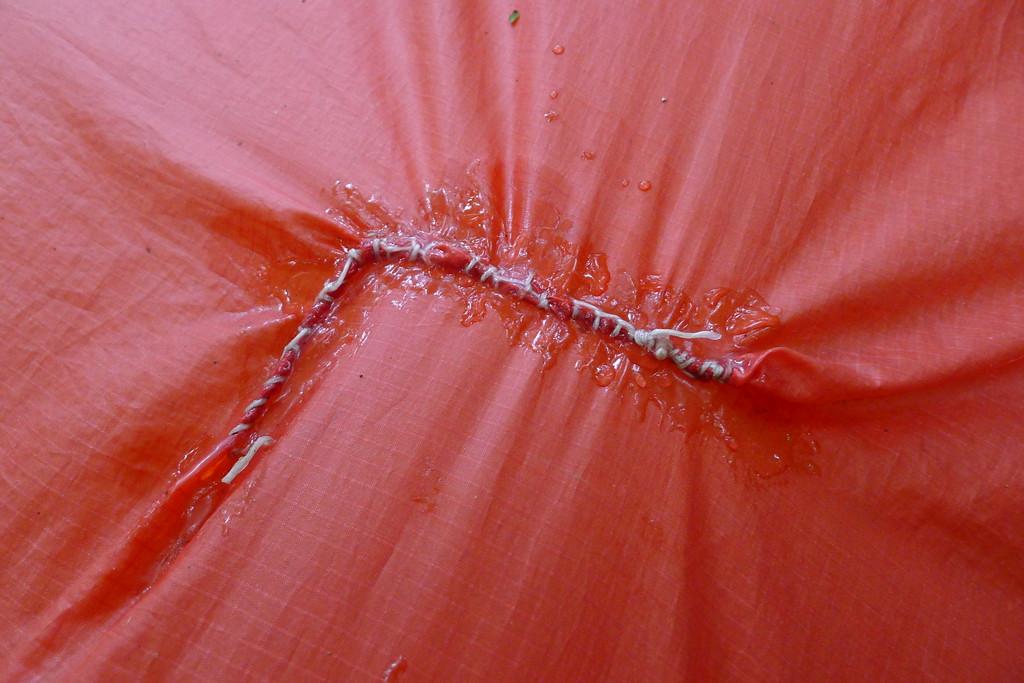
In a windstorm a tree branch hit my tent and I was able to quickly sew it up with needle and I also carry a tube of McNett’s Silnet seam sealer which makes the repair waterproof.  Voila trip can continue.

On one trip a black bear took a bite out of my tent vestibule so I slapped on a silicone patch and used Silnet sealer to keep it attached.  Standard items I always carry.

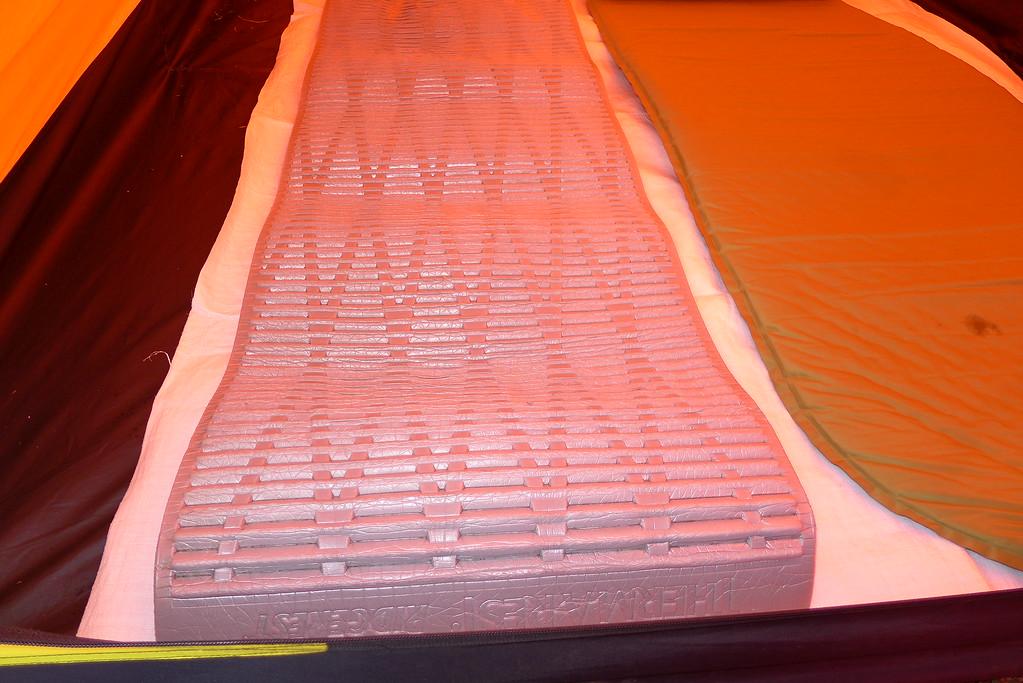
I always carry a CCF pad as a backup sleeping pad  and mostly used as a place to sit when cooking meals or hanging out in the tent.  This is a Solar pad at 3.4R but now discontinued by Cascade Designs in their wisdom.

If you’re out long enough this is what happens to Thermarest inflatable pads—this on a 40th Anniversary model—but it can happen on any pad and at the worst time, i.e. winter.  Ergo redundancy!!  See next pic—

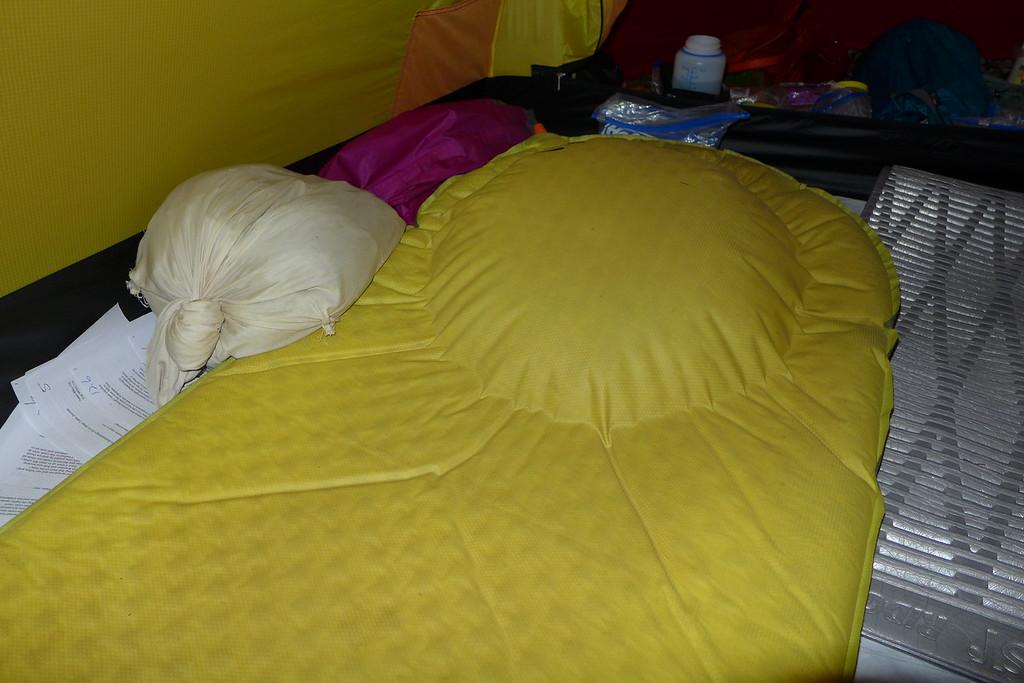
I always carry an emergency NeoAir pad for every trip in case my inflatable dies.  I sometimes cache a bigger inflatable at the trailhead which helps if my regular pad dies.  I can also fold my Solar CCF pad in half to use for chest/torso comfort at 6.6R.  And during cold trips at 0F or below I put the Solar pad under my regular inflatable for extra warmth.

Tipi Walter BPL Member
PostedOct 13, 2026 at 1:18 pm

PART TWO OF REDUNDANCIES

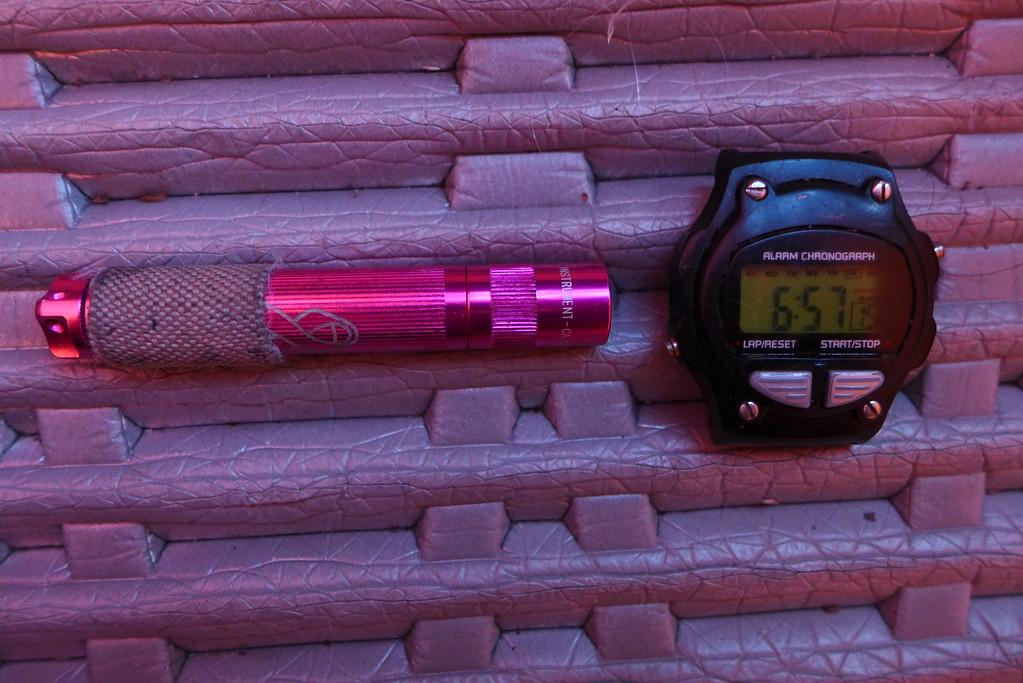
I carry this micro-mag flashlight in case my Nitecore headlamp dies—it sits in my ditty bag without a battery which can be scarfed from a dead headlamp if needed.

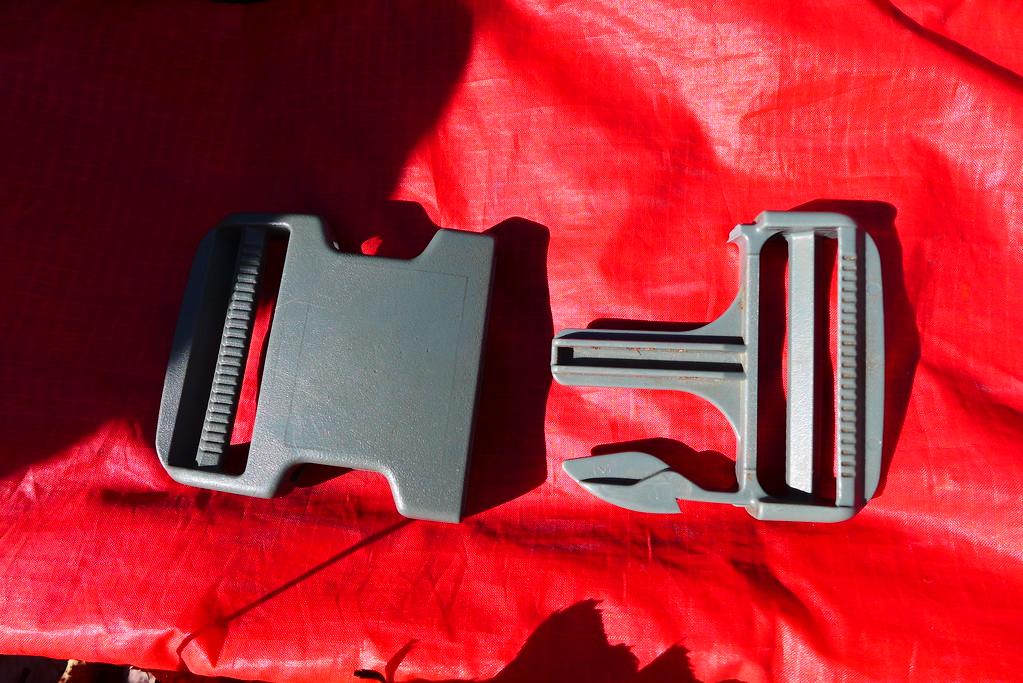
On my Mystery Ranch packs I carried a spare hipbelt buckle cuz one time I stepped on it and this happened.  When I upgraded to my McHale pack he uses two smaller buckles and I always carry a spare.

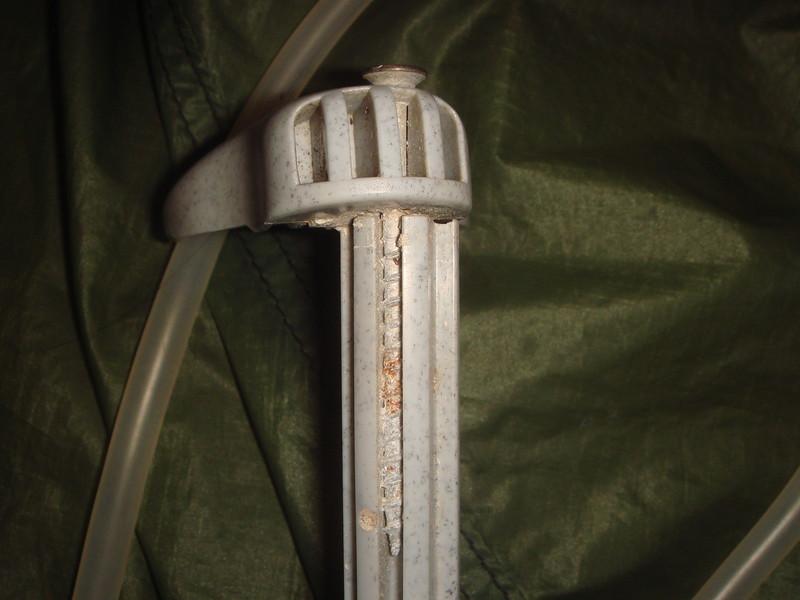
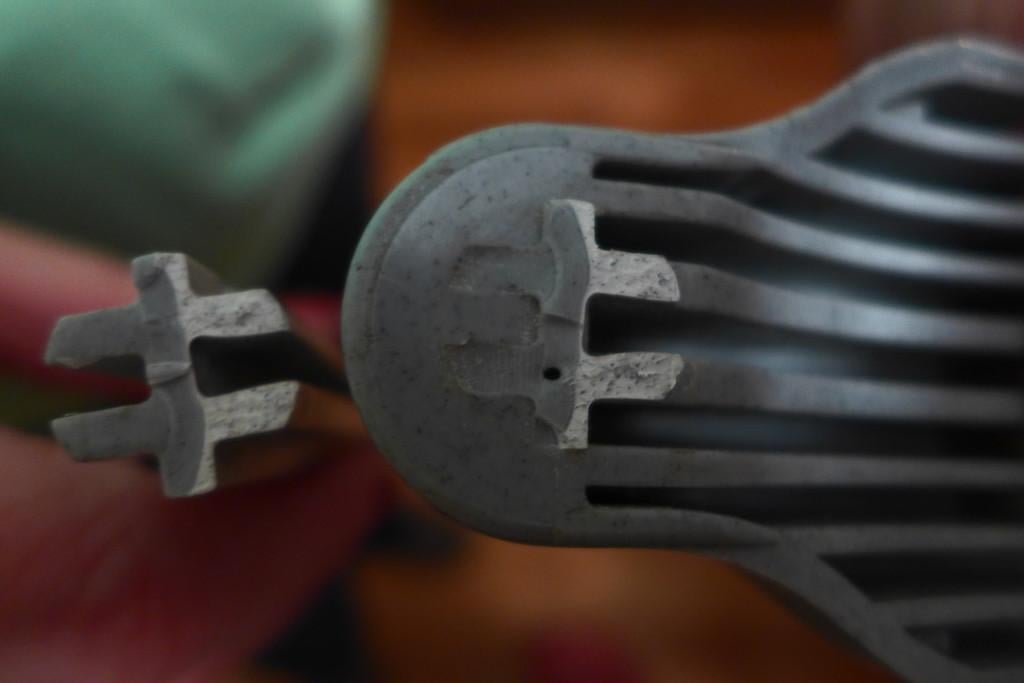
I use an old PUR Hiker filter and it has an engineering flaw whereby the palm pump handle usually snaps off at the worst time—so before a trip I inspect it and add a screw thru the handle down in to the snap to prevent this hassle.  See next pic on how badly the plastic weld of the handle is engineered—

Alot of pressure is placed on this tiny weld.

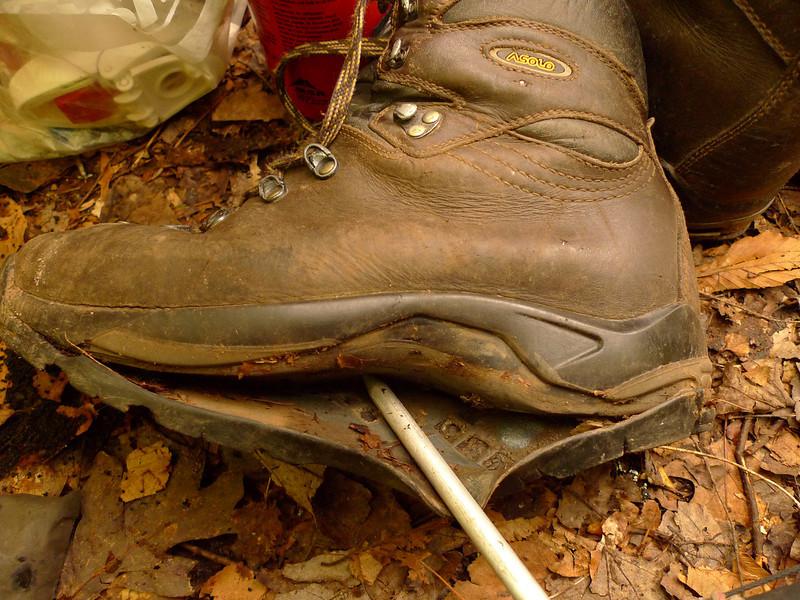
Finally, there’s no backup to boots unless I want to use my croc water shoes for the rest of the trip.  This kind of failure has happened to me three times on various trips—Asolo 520s—a common failure.  Boot inspection before a trip can really help.  The above happend on a 19 day trip to Mt Rogers.


PostedOct 13, 2026 at 3:46 pm

My approach is reliability rather than redundancy. The only redundant items I bring are very light: a spare pair of glove liners, and extra sunglasses. I lost a glove liner once, they are very light and easy to lose out of a pocket, plus it has been useful in the past to have the spares if the main pair gets wet. The sunglasses are because they are light, and on the snow at altitude they are critical.  I could do the cardboard with slits emergency thing , but that cardboard would weigh just about as much as the spare pair of shades, and the spares are slightly different, not quite as good for the super bright situations but better in flat light, so they are not simply redundant. Actually I bring goggles also, because in storm conditions they are a godsend.  All my other gear is time tested, and checked before every trip. I do bring a bit more fuel than I expect to need, but not much. I used to do the closed cell plus inflatable pad thing, but now I just bring the inflatable, and check it out out before the trip. If I were mountaineering, and had sharp pointy stuff hanging around the tent all the time, I’d consider just bringing two closed cell pads and deal with the bulk so that there was no worry about punctures. I like synthetic puffy layers for snow camping because I’ve had stuff get damp in the past and a little extra bulk and weight is worth the peace of mind for me.

Viewing 23 posts - 1 through 23 (of 23 total)
Loading...