


I need boots for off-trail bush wacking on very unstable ground with multiple creek and river crossings. I want them to support my ankles and dry quickly. Suggestions? So far I’m considering the SALOMON ULTRA MID 3 AERO.
Topic
Become a member to post in the forums.
.
I need boots for off-trail bush wacking on very unstable ground with multiple creek and river crossings. I want them to support my ankles and dry quickly. Suggestions? So far I’m considering the SALOMON ULTRA MID 3 AERO.
I have done a lot of bushwhacking including a 14 day fly in trip in Wrangell St. Elias NP Alaska, a 11 day fly in trip in Brooks Range Alaska, the Wind River High Route, and several more off trail trips in WRR, Colorado, and the Sierra and I just wear trail runners. For most of those it was either the Salomon XA Pro 3D or the La Sprotiva Ultra Raptors both non GTX.
I’ve also done a trip in Cohutta Wilderness where we had one day that was 31.8 miles and had 84 creek crossings. It was on trail but I had no problems with my feet wearing Defeet socks and Salomon XA Pro 3D Ultras.

Unless you are wearing ski boots, I believe ankle support is largely a myth. I suspect any support is simply the result of the power of persuasion. Flex the top of a fabric boot. I’m literally doing it right now (Altra Lone Peak RSM). No way that flimsy stuff could stop the minute ankle roll that results in a sprain.
I believe the best protection for ankles is a light pack and perhaps trekking poles. I know the way to driest feet is trail runners.

I walk off trail on rough ground pretty much daily, and always use trail runners. Make sure the outsoles are designed for soft ground – this can make a big difference on slick mud and grass. Shoes designed for hard trails can get too sketchy on bad ground.
On multi-day trips avoid anything with a Goretex membrane – “waterproof” shoes tend to let water in but not out. Just use a fast-draining breathable shoe. This allows you to walk straight through creeks and rivers without any faff which saves a lot of time.
I have a bad ankle and have researched the issue of support quite carefully. Like Matt I’m not convinced that light boots give any useful protection. Even ski boots don’t really protect you – last time I had to see a physio he told me he’d had two patients who’d broken their ankles in downhill ski books that week alone. In his view, the only boots that protect your ankles to a nyuseful degree are paratroop-style military boots, but they are very much heavier than trail runners and often don’t have suitable outsoles. The latest research shows that balance training is the best protection, and obviously a light pack and poles will help.
Agreed: protection from a sprained ankle is a myth. A mid- or higher boot can protect your heels for getting banged up on rocks, but:
if it truly prevents your ankle from rolling over, you couldn’t walk in it (a la an Alpine ski boot) and
if it allows you walk (i.e. is flexible enough for you to walk uphill, downhill, and sidehill), it doesn’t restrict your ankle’s range of motion enough to provide any protection from a sprained ankle.
Get in condition before the trip. Consider trekking poles. Stay alert. In the dark, put your light at your waist so you can see the dips and bumps in the trail. On dodgy trails, don’t commit your weight until your foot has felt assessed the footing (I developed this odd, tentative pace while on staff at Scout Camp because we never carried lights but had to travel through camp in the dark and I switch back to that pace, with my forward foot a bit like a blind-man’s cane, in the dark or on loose rock). Lose weight from your pack. Lose weight from your body.
For a day in the Aleutians (seriously wet and off-trail), I use very breathable low-cut trail runners with wool socks if it’s not cold (i.e. above 40F) but neoprene works better when it is cold (most people’s threshold for “cold” is a lot warmer than mine). Wring the socks out at night and put them under your sleeping pad so they’ll be warm-ish the next morning.
I have been told and I believe that the best ankle protection is a very snugly fitting-around-the-ankle shoe that does not allow your foot to roll. It has not been an issue for me, but La Sportivas seem to work well. And yes, non-GTX for sure. It is so liberating to just walk across every creek and muddy trail, just charge on through.

In my experience, it is the boot that fits best that also works best on very rough and irregular terrain.
So the key is finding a boot that fits YOU. Never mind what works for others., But I’ve found the cheaper ones, like Merrell, sometimes fit OK in the store, but never in the field. Find a store that carries a variety of boots or trail shoes, whatever you prefer. Then compare how they feel. Move the feet around, up and down, side-to-side and rotationally, in the boots, especially the heels, and feel for slippage or rotation. Length is tricky, as too long will allow too much slippage, and too short will create hammer toes, even though the heels often fit more snugly on shorter sizes. And of course, walk around the store for a while in whatever seems to fit. Do it again and again at other such stores. In this region, because of the popularity of the White Mtns, we have a variety of such stores, both chains like REI and EMS, but also privately owned. After a while, you’ll start to get an idea of what brands and models conform best to your feet. If you’re lucky, the first purchase will be the right one.
For off-trail hiking on rough and irregular surfaces, consider a mid over a trail shoe, even though the latter are more popular. I’ve hiked many miles with dry feet wearing WPB mids and short gaiters in the rain, in conditions that would soak a trail shoe. Good mids will also provide more protection against abrasion, so check for material that is substantial is areas like over the toes. Can’t believe the number of mids on the market that have thin fabric or mesh in the area over and just above the toes. I have mids now that fit better than custom made boots and are much lighter, though it took a lot of hunting around. Some boots were too worn to be returned before it became clear they would not work. So they go on consignment in a local shop. I tell them I’m the Imelda Marcos of boots (spouse of a former president of the Philippines who had probably the world’s largest collection of shoes).
It’s been well worth the trouble, because I can backpack, both on and off-trail, with just a few pairs of boots that fit really well, perhaps using the slightly heavier ones for bushwhacking or boulder fields. One thing to watch out for though are changes in the lasts (foot shape) by manufacturers. Keen did this, and I was in denial about it, so kept trying different models before switching to another brand. So yet another trip to the consignment shop.

<p style=”padding-left: 30px;”>The X ultra is a great choice but they were a little narrow for my feet. The Solomon quest 4d is my current work/winter/hunting boot and I love them. If/when I want a lighter and softer hiking boot I’m going to try to Altra lone peak mids.</p>
I have waterproof boots made by Scarpa. I’ve worn these for years without ever getting a major ankle sprain. It prevents the ankle from rolling beyond a certain point. Unfortunately, they are heavy and I need something that drains water well. Otherwise, I’d be happy to keep wearing them.
Become a member to post in the forums.
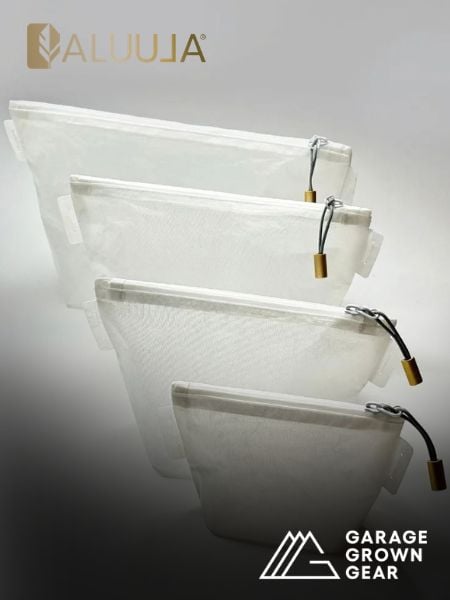 New Gear with Aluula FabricsLighter, stronger, more abrasion-resistant, and highly water-resistant - explore ultralight backpacking gear made with ALUULA Graflyte fabrics. Engineered for exceptional strength, durability, and lightweight performance, ALUULA Graflyte helps reduce pack weight without sacrificing reliability, making it ideal for demanding backcountry adventures.
 © Beartooth Media Group Inc.
 Loading...