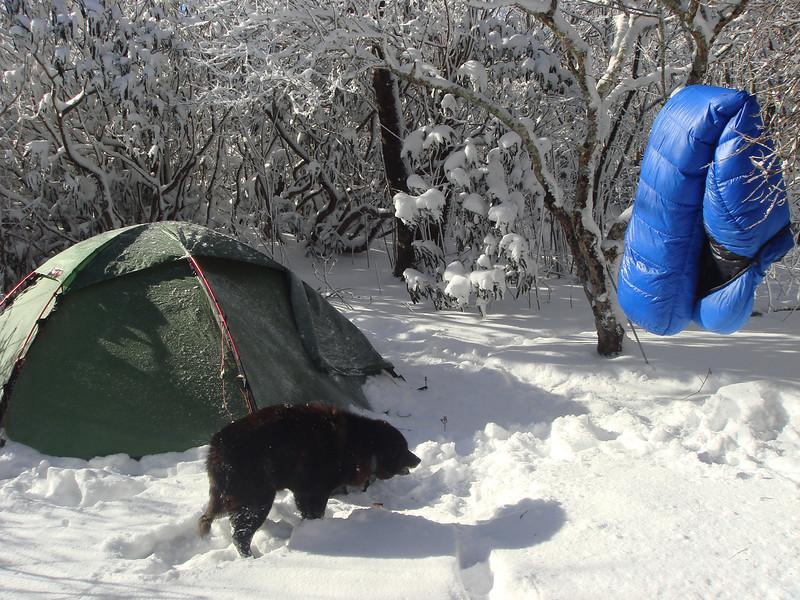
What is the deal with Hilleberg Tents? There are a total of 22 different tent names. Most are from the Sami language in Northern Scandinavia. They mostly make tunnel tents – but also have some freestanding models. For an American who uses inches – their spec diagrams are a confusing mix of cm and inches.
Basically their tents tend to be super heavy by the standards of most other brands. The justification is they are more durable and will last you a lifetime. So you can enjoy using an UL freestanding tent that weighs 3lbs from another brand for perhaps 5-10 years or a tank like 7lb tent from Hilleberg that you can enjoy lugging around for a lifetime.
But seriously, I think the value proposition is that they will literally not degrade or become unusable where most tents will after a decade or so. But for this benefit, you will also have to tolerate carrying a tent that is often twice the weight of a tent that provides comparable space.
Hilleberg is a Swedish company whose tents are built for colder climates and often very windy environments. The UK cut all it’s trees down so that English could be the language we are speaking and writing here now. Scandinavia never had so many trees. It’s long been a place of open wind swept spaces. The notion of an all mesh tent needed for summer heat and humidity is a fanciful fiction for them.
Hilleberg is all about them pole sleeves and inner pitch first. When you live in or near the arctic circle – keeping heat and humidity at bay is not your first priority. You want something built to keep wind and cold precipitation out and you want it go up as quickly as possible. If it does precipitate – it’s more likely to be in a frozen form than rain. We tend to think of freestanding tents as being stronger, but a Hilleberg tunnel tent (which is not freestanding) when fully guyed out is among the strongest tents you can buy.
Like Western Mountaineering does – the specific individual who was responsible for sewing each item is listed on the item itself. This shows pride in their craft and accountability. I’ve seen this in the WM bags I own so I do like knowing that Hilleberg does the same with their tents.
The company was founded in 1971 (early 70’s) – around the time so many other outdoor companies were (MSR, Marmot, Outdoor Research) – when it seemed humanity was getting fed up with the smokestacks of the 20th century. People were looking for ways to escape civilization to spend time in nature.
Tunnels tents tend to have a somewhat claustrophobic feeling since you can only enter/exit them from the head end (or sometimes the foot and head end). Most tent makers tend to go with side access pitches because most people find it easier to enter and exit a tent on a lengthwise side rather than thru a narrow end. So because Hilleberg tents prioritize strength in high winds – most of their designs are tunnels tents.
A tunnel tent will be superior in high winds – especially if pitched with the wind facing the head or foot instead of the sides. Being built for high winds is a function of being built for environments that often lack trees. Trees are your friend in high winds. To have no trees means not only can you not setup a hammock; It means you have no natural baffle from high winds – and you lack access to wood for a fire to keep you warm.
Their tent designs tend to look pretty tight for two people. They also tend to be lacking in peak height so as to better defend against high winds. And because they aim to be aerodynamic – you often lose much space because the ends quickly taper upward in order to diffuse the wind. This means their length can seem deceptively long when it is in fact not so long (especially their freestanding tents) because the ends plunge inward to protect from wind at the cost of livability.
I don’t doubt they are durable and likely awesome in extreme conditions. But I tend to think they are way too heavy for most people in most conditions – especially compared to the other tents on the market.
On top of these reservations – the company has the audacity to not list their prices until you add them to a virtual “backpack” and then and only then can you see what Hilleberg actually charges for them. The plethora of models in names that mean nothing in English with no prices (but you can be sure they are high), with metric centric designs and at weights that would be considered heavy for backpacking tents even 30 years ago – does not enamor the company to me.
I think if I were to move to somewhere extremely cold with no trees – Hilleberg would be among my choices for a tent. But otherwise – they make no sense for most people in most climates. Show me how I’m wrong?