Topic

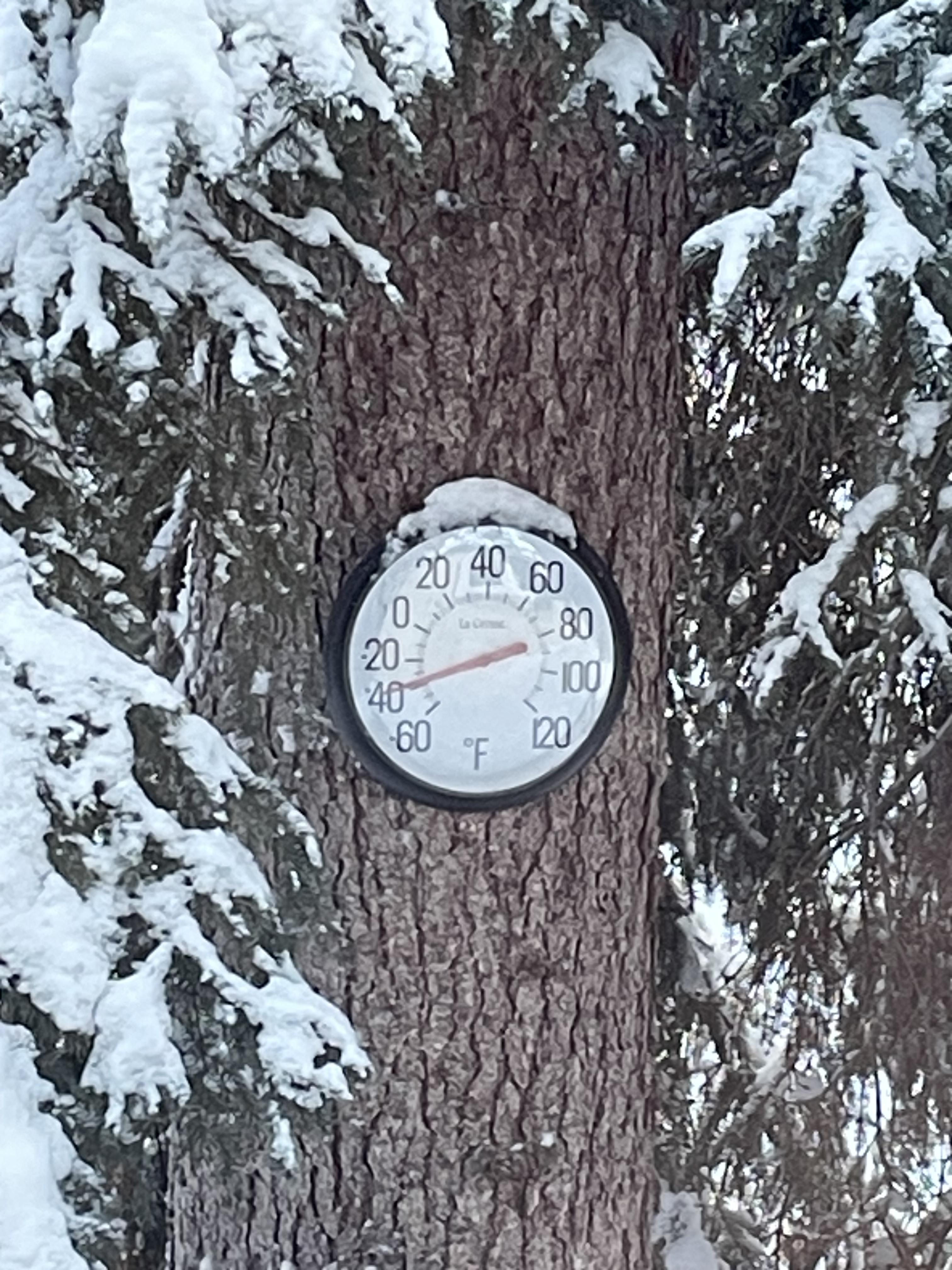
Weeks at minus 30-45F, going for a daily walk

Viewing 21 posts - 1 through 21 (of 21 total)
AK Granola BPL Member
PostedJan 1, 2026 at 8:02 pm

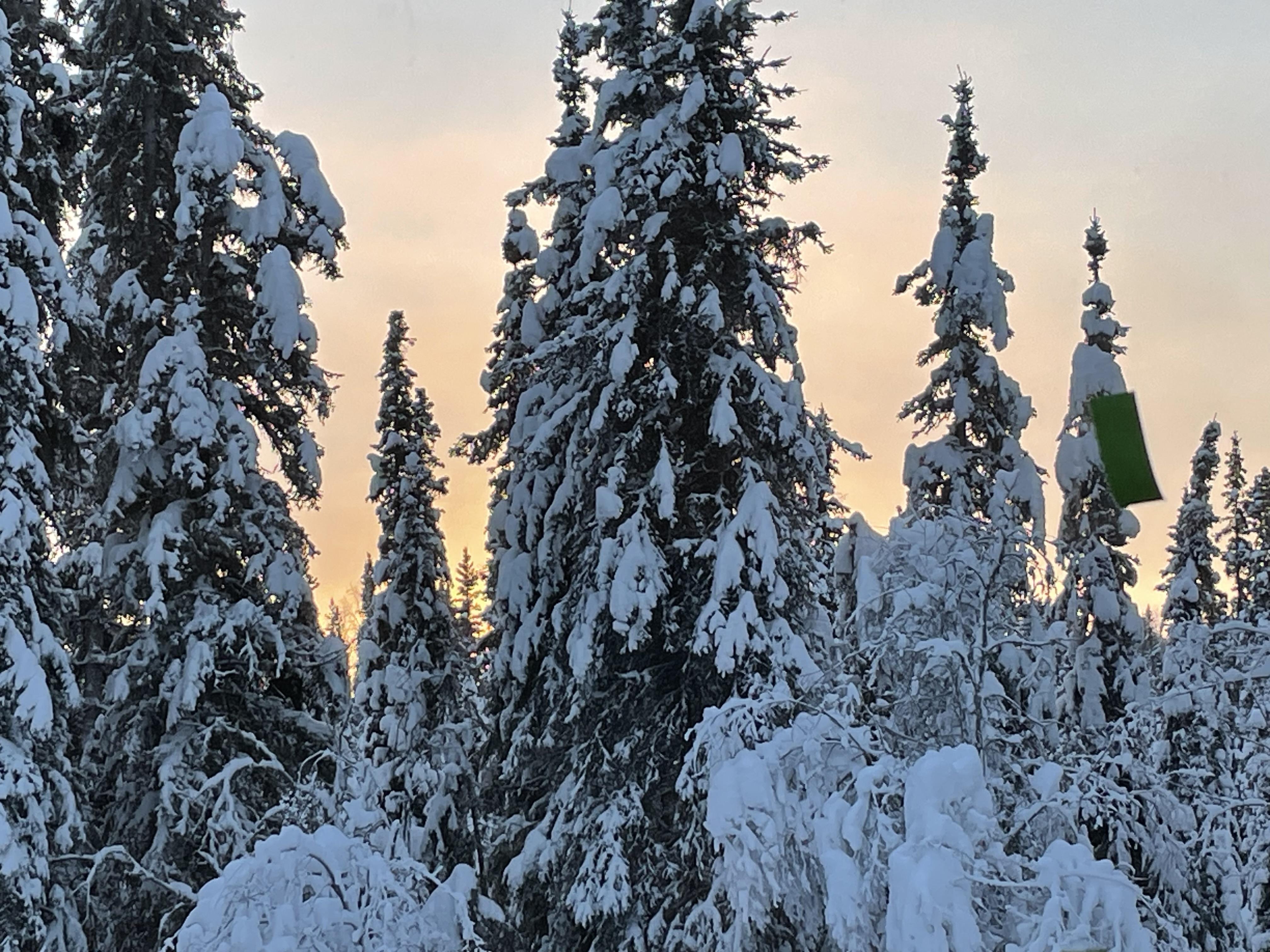
Even after living in Fairbanks Alaska for 30 years, I’m unused to 28 days in a row of below minus 20F. I go out every day, even lately when it’s been minus 40F at my house. The last week has been minus 35-45, with minus 50 in town. Today I drove up to a ridge where it was only minus 26F to do my daily hike.

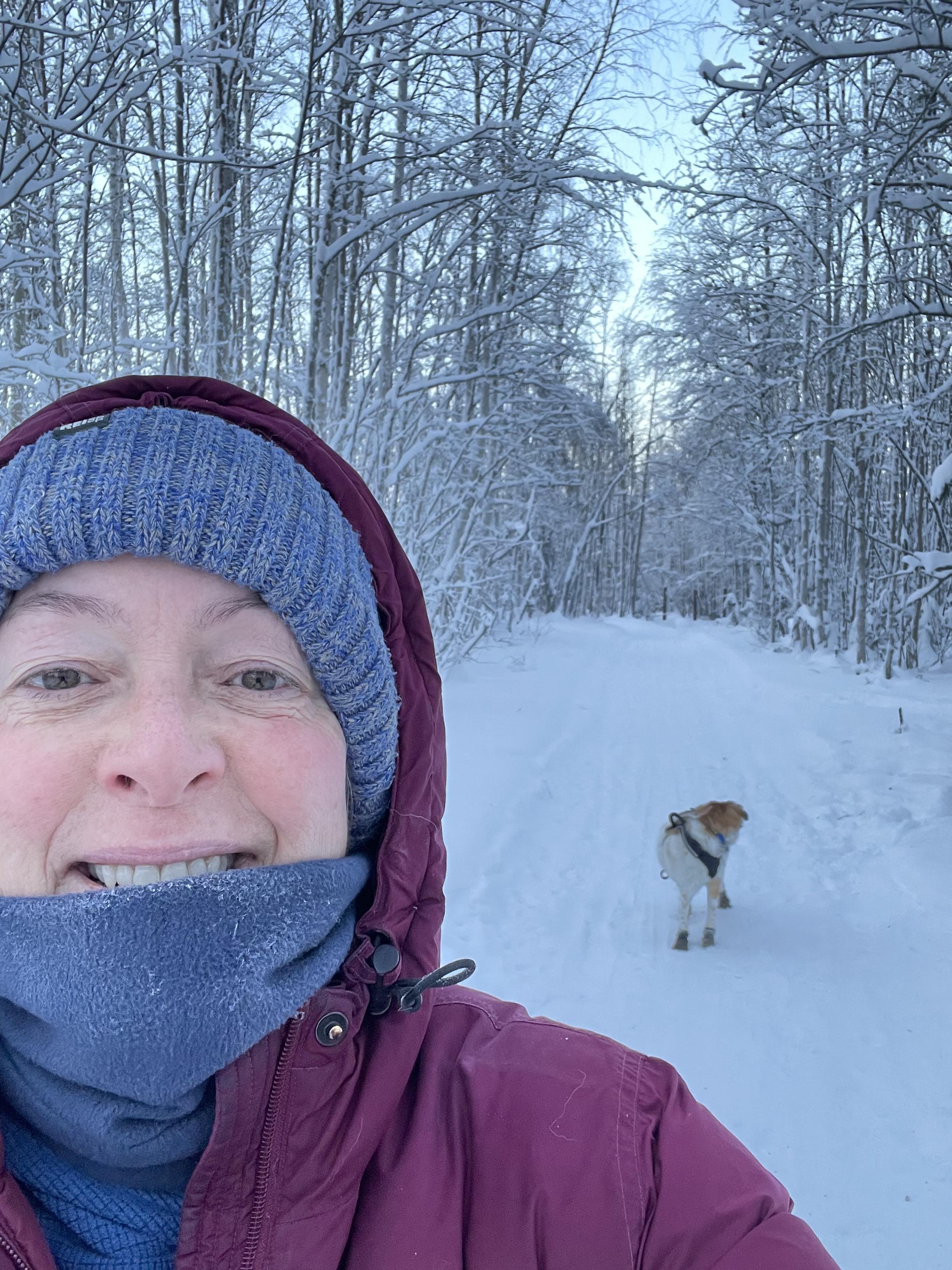
It’s still a challenge, after many years of experience, to dress for the entire excursion in a way that allows for active movement but stay warm at the same time. I can literally be sweating and feel my core quite chilled when I stop for 10 seconds. I often bring a large day pack with more layers, in case I get too damp, or end up getting injured and unable to get myself back to the trailhead. Today I had company, so I had no extras.

Today I wore:

  • Salomon Toundra boots [I’m never sure how to pronounce that – is it a misspelling of tundra?]
  • Darn Tough wool boot socks
  • fleece pants
  • insulated bib overalls
  • medium weight Icebreaker wool long sleeve shirt
  • North Face quarter zip fleece
  • Patagonia Houdini
  • cheap Lands End down parka (mid thigh length)
  • Turtle fur neck gaiter
  • thick fleece-lined wool cap
  • Gordini down gloves.

My hands and feet stayed warm throughout, even removing my gloves to replace my dog’s booties a couple of times. I carry chemical hand warmers just in case, always. Have used them many times, sometimes for others. I had both my Houdini and parka hoods up over my cap.  Sometimes I use a different coat that has a fur ruff; that’s vital in windy conditions which we didn’t encounter today in the woods.

That’s more or less my getup until it rises to about minus 15, when I switch caps, neck gaiter, and sometimes boots for lighter weight gear. “Be bold start cold” is a given at minus 26; removing anything and I’d be shivering in a minute or two. Standing still in all that gear I was cold. We started our walk on a trail through snowy woods, downhill for at least a mile, maybe 1.5 miles. I was sweating a little, but it was too cold to remove anything.

Then we walked level for 1/4 mile, then started up the ridge a different direction. Steady uphill the whole way, steep at the end, about another mile. I warmed up quickly on this leg, and thought about removing a layer, but if I did it wouldn’t be the parka, so I’d have to undress on trail and carry something to put back on later, which would be cold after 20 minutes in a pack. By the time we got to the top of the ridge I was pretty sweaty. All the outside moisture freezes instantly, so I could just shake my hat and neck gaiter to remove the frost. But the down parka kept me warm, despite the damp. The damp was contained in my first wool layer, not even reaching the fleece. If I had taken off the parka I’d have been way too cold. Maybe if I had instead two more lighter layers, I could have removed one going uphill, and put it on to go downhill. But again, how to keep the layer warm when it’s not on my body?

And ultimately when you are living, working and playing at these temperatures for an entire month or more, you kind of get tired of ever being cold at all. I want all my layers on! Even with a little perspiration. My son pointed out when it was minus 30 recently that there was a 100 degree difference between outside and inside with the woodstove going. This weather has me reciting The Cremation of Sam McGee!

The last section of trail was another mile, gradual uphill. The temperature had dropped a few degrees since we started, with the last rays of setting sun (which add little warmth anyway!). I stayed warm in the parka though.

Backpacking will have to wait another 25-30 degrees greater warmth. I don’t need to be that tough.
Dan BPL Member
PostedJan 1, 2026 at 9:25 pm

That sounds brutal. You and your dog are both impressively hardy.

David D BPL Member
PostedJan 1, 2026 at 10:08 pm

That’s seriously rough weather, with no margin for error.   I did a 23km hike a few days back at just 3f and didn’t take the wind shell and paid for it with a bright red belly and stiff biceps for 30mins after getting home.

I wonder if the Houdini is making you sweat?  I sometimes wear mine below 0F but have to slow down to avoid sweating too much.  I usually use a much more breathable dooy unless I know I’ll have no cover for long periods.

Even though I only get down to -25F or so (and even that’s rare), the hard part for me is keeping my nose and cheeks warm.  Buffs and balaclavas freeze up.  A covid mask works but fogs up glasses.  This claims to not fog goggles but I can’t see how it won’t freeze up.  I’m tempted to try the nosehat.

What’s the go-to solution in Alaska for longer jaunts?


PostedJan 2, 2026 at 5:04 am

I admire your grit and determination, but I’d consider a heated gym with treadmill, elliptical and stair stepper for the winter. However you do of course have to drive to the gym (on a snowmobile perhaps).

Jerry Adams BPL Member
PostedJan 2, 2026 at 8:20 am

that’s a great report.  That is cold : )

when it’s just 20 F I’ll sometimes get sweaty underneath without realizing it, be hot and cold at the same time.

didn’t Jack London write a book about someone getting sweaty, and then dying?

Brad W BPL Member
PostedJan 2, 2026 at 9:48 am

That is incredible! I struggle with temps in the teens let alone -40!

I am with David, have you considered swapping out the Houdini for a Kor Airshell? It breathes considerably better while still trapping a decent amount of heat. I have not worn my beloved Houdini once since getting the Airshell.


AK Granola BPL Member
PostedJan 2, 2026 at 11:19 am

I’ll check out that Airshell. I love my Houdini, but yes, it might be trapping too much moisture.

PostedJan 3, 2026 at 6:42 am

I had a pair of Salomon Toundra boots split a seam in the upper during a subzero winter trip, which resulted in snow entry and a very uncomfortable / cold foot. I’ve used insulated hunting boots for mountain terrain (generally more comfortable than insulated mountaineering boots), but they are heavy. For lower-angle terrain (esp with snowshoes), I like GTX uninsulated trail running shoes or mid-tops with Forty Below Gaiters, and then use a VB sock liner for extreme cold. It’s still all very challenging at these temps, especially when camping.

MJ H BPL Member
PostedJan 3, 2026 at 9:20 pm

didn’t Jack London write a book about someone getting sweaty, and then dying?

He wrote a short story about a guy who fell through ice and got his feet/legs wet and then died after failing to start/maintain a fire.  The guy had a dog and he was going to kill the dog to use its innards for warmth, but he frozen too fast and the dog just walked back home.

Richard Nisley BPL Member
PostedJan 3, 2026 at 9:44 pm

The Houdini is only one of two problems

Merino + Fleece + Houdini + Down parka

For reference a air permeable Gore Tex or  eVent shell has a MVTR (B1) in the 25,00 g/m2 24 hr > 25,000

Your ensemble:

Ret_total = 4 + 3 + 7 + 15 = 29
MVTR_total ≈ 150 000 / 29 ≈ 5 200 g m-² 24 h-¹

Same stack, without the Houdini
Ret_total = 4 + 3 + 15 = 22
MVTR_total ≈ 150 000 / 22 ≈ 6 800 g m-² 24 h-¹

What the numbers mean:

• The cheap down parka is the chief bottleneck; even with the very breathable inner layers you only get ~5–7 k g m-² 24 h-¹ overall.
• Removing the Houdini improves whole-system breathability by roughly 30 % (~1 600 g m-² 24 h-¹), but you still sit far below the individual capabilities of the wool or fleece.
• If you need both warmth and high moisture transport, swapping the parka’s shell for a higher-MVTR fabric  gives a much bigger gain than tweaking the inner layers.

Remember: these are approximate laboratory numbers.

Jerry Adams BPL Member
PostedJan 4, 2026 at 7:13 am

“the dog just walked back home”

oh yeah, I remember that, maybe he should have just followed the dog back, but then I’ve never been to -30F before : )

as I remember he got a fire started, but then it melted some snow up above which fell onto the fire putting it out.  Another lesson to learn.

David D BPL Member
PostedJan 4, 2026 at 11:55 am

@richard295

I wonder if that is the Ret for the old Houdini?  The current version is practically a garbage bag.  I like mine for static or slow moving use but can’t wear it if there’s much chance that I’ll be sweating.

NJGB BPL Member
PostedJan 4, 2026 at 6:02 pm

The short story by J London is called To Light a Fire. We suggest reading it

MJ H BPL Member
PostedJan 4, 2026 at 7:42 pm

It must have been pretty good, since I remember it almost forty years after high school.  The main point was don’t travel outside when it gets too cold, but I think that was colder than in the original post.

PostedJan 4, 2026 at 11:50 pm

I also live in Fairbanks and have since 1981. At our current temps I wear some type of poly pants and old Walls brand insulated bibs with full zips. Some thin poly or wool baselayer with a fleece jacket or wool sweater, a really old Gerry down parka with hood, thick fleece neck gaiter and fleece trapper hat, some sort of medium/thick wool socks (Icebreaker or Smartwool) and pack boots that have wool liners like Sorrels or sometimes Steger mukluks or even Icebreaker boots if im not going too far. Always wear mittens-double fleece.

When it gets near zero i swap out the down jacket for an old school Patagonia anorak wind breaker.

Haakon R BPL Member
PostedJan 5, 2026 at 3:49 am

Wow, that’s cold.
Hats off to your persistence.

I don’t remember ever experiencing temps as low as -40F/C, but mid 30’s aren’t unheard of around here. Wouldn’t say it’s common though.

One winter I backpacked in Børgefjell national park we had 14 days with temperatures consistently in the -20 to -35F range. Night time temps possibly even lover.
It’s blistering cold, but I don’t remember it as very challenging. At that temp the air is bone dry, there wasn’t even a hint of wind and snow don’t easily transform into water, so while cold there’s not a lot of variables to account for. Ice crystals formed on everything and stayed there due to the lack of wind. The whole landscape looked like a fairytale. Really a  beautiful and memorable experience.

It was a while ago, I was a bit younger and I believe my tolerance for cold was a bit higher. I don’t really seek out that type of adventures anymore and expect I would suffer more if I did something similar today. And while the cold was tolerable back then, I do remember appreciating the luxury of getting back home and not being cold, so I can see how long time exposure to this level of cold can take its toll.

Seems like you’re satisfied with your footwear and that’s no small feat. It’s where I struggle the most. I’ve tried some of the US/Canadian winter shoes like Sorel and Kamik, but was not impressed. My current favorite are Lundhags winter boots, like the Skare Expedition boot and the equivalent cross country version; Guide Expedition.
Jörnkängan Antifreeze are a similar construction, but supposedly even better, though I’ve never tried them myself.

As far as clothing for the main body, I’ve long since stopped buying anything that’s specifically made for extreme cold. It’s usually crazy expensive and lacks versatility. Translating to a lot of money locked up in gear that see very little use due to the narrow operating window.
Instead I layer everything. Two sleeping bags, two puffy jackets, two puffy pants etc.
I usually don’t need two puffy pants though, but for my upper body I’ll wear a suitably thick and breathable active insulation jacket as my primary outer layer, but also have a oversized down jacket/parka that can go on top. Base layer, mid layer and the active insulation should be enough to keep you warm during normal to high intensity, whereas the down/outer puffy can be worn during breaks, low intensity and initially while you work up some heat to avoid starting bold/cold.
In very cold weather with variable intensity activity I prefer fishnet base layers, for my upper body I tend to prefer polypropylene/synthetic and for my legs I tend to favor wool fishnet, but it depends on what I’m doing and the difference isn’t huge.
One or more mid layers. Can be wool or fleece, again it depends.
When wearing more than one mid layer I’ve recently rediscovered the Patagonia Synchilla snap-T original weight. This was my favorite sweater in the early 90’s and I wore it to bits. When it finally wore out, the boxy construction wasn’t so much in vogue anymore, so I moved on to more modern fleece’s. But a few years ago I did a sentimental purchase when I came across an almost new one for a reasonable price.
On paper it can’t hold it’s own against something like Polartec Alpha, but the boxy construction and more rigid fleece weave traps a lot of air and don’t compress as much under other layers. A second mid layer, and especially the Synchilla adds another level of adjustability and can be worn under just a wind shell in quite cold temperatures, which is much preferable to wearing puffy layers during periods of high excursion.

For my legs I usually wear normal, but slightly oversized outdoor pants. Often cotton or poly-cotton for day hikes in really cold weather. If it’s too cold for just a fishnet base layer I add a mid layer.
I will bring a pair of puffy pants or 3/4 length “knickers”, but rarely need them beyond static activity like breaks, ice fishing etc.

I also like to bring overshoes to add insulation and snow protection for static activity (I almost always move around on cross country skis in the winter, and during breaks or whenever I take my skis off, my feet will sink further down in the snow. In this situation overshoes will protect both my shoes and pant legs from snow exposure).

Final tip; take a look at Matti and Stina’s YouTube channel. They’re outdoor guides in northern Sweden and offer dog sled tours among other things and offer lots of tricks and recommendations for staying comfortable at varying activity levels where winter temperatures are comparable to the OP’s
https://www.youtube.com/@JOKKMOKKGUIDERNA/videos

PostedJan 31, 2026 at 9:27 pm

AK, Your clothing list is pretty good. I would make only a few suggestions. And BTW, as a ski patroller I have experienced -40 F.

1.) Buy a pair of BRYNJE brand Norwegian fishnet polypropylene base layer (pricey but you will lose the sweaty feeling when exerting.)

2.) HOLLOW brand alpaca crew socks (again pricey but these are the warmest socks you will ever wear B/C alpaca wool fibers are hollow like deer and caribou hair.)

3.) For long days with insulated boots, especially felt pacs, wear 3 mm or 5 mm closed cell neoprene foam divers socks over thin polyester liner socks as a nicely warm Vapor Barrier Layer (VBL). These VBLs keep all your sweat out of the insulation thus keeping your feet warm ALL day. US Divers brand is the best. Yes  your liner socks will be wet with sweat, as will be the fabric lining inside of the divers socks. Use a clean, dry set of liner socks each day. Turn the divers socks inside-out to dry.


David Thomas BPL Member
PostedFeb 1, 2026 at 12:50 pm

You’re tougher than I am.  Maybe that’s why you’re in Fairbanks, while I’m in Kenai.  My first winter up here, 1998-99, we had -40 and -41 for three days during two weeks below -20F, but haven’t seen -40F here since (once while driving up the Alcan in January, it was -44F during which I found that Camry did NOT have the winter package with a bigger heater core).  That first winter I determined the bottom of my fun meter was -15F.  I can survive lower – have the gear and knowledge, but only do so for work.  To get my steps in those days, I walk every aisle at Home Depot (which can get expensive).

My strongest memories of “To Build a Fire” are: One’s spit freezing before it hits the ground, opting to risk striking the entire bundle of matches to get the fire going, but then the fire causing snow on a tree to fall from above.  Here are a few passages:

“He knew that at 50 below zero water from the mouth made a noise when it hit the snow. But this had done that in the air. Undoubtedly it was colder than 50 below. ”

“Following at the man’s heels was a big native dog. It was a wolf dog, gray-coated and not noticeably different from its brother, the wild wolf. The animal was worried by the great cold. It knew that this was no time for traveling. Its own feeling was closer to the truth than the man’s judgment. In reality, it was not merely colder than 50 below zero; it was colder than 60 below, than 70 below. It was 75 below zero.”

The entire short story can be found here: https://americanenglish.state.gov/files/ae/resource_files/to-build-a-fire.pdf

Joey G BPL Member
PostedFeb 8, 2026 at 6:45 pm

Damn, I didn’t do my hike today because it was high 50s here in Texas with an overcast.

Viewing 21 posts - 1 through 21 (of 21 total)
Loading...