@ Jamie
There is a lot of good advice above. To be somewhat repetitive but also to raise some new points.
You can get a good estimation of how much water your crew needs for meals in the shake down hikes, especially if you order some of last years’ Philmont meals to practice with. What changes at Philmont is personal needs of each crew member.
You can have the cooked dinner at the last camp with a water source on your way to the dry camp and eat the lunch for dinner at your dry camp. This conserves water since the dinner meal needs more water than the lunch meal. AFAIK Philmont policy still allows you if you want, to skip having breakfast at your dry camp and have breakfast at the next camp with a water source.
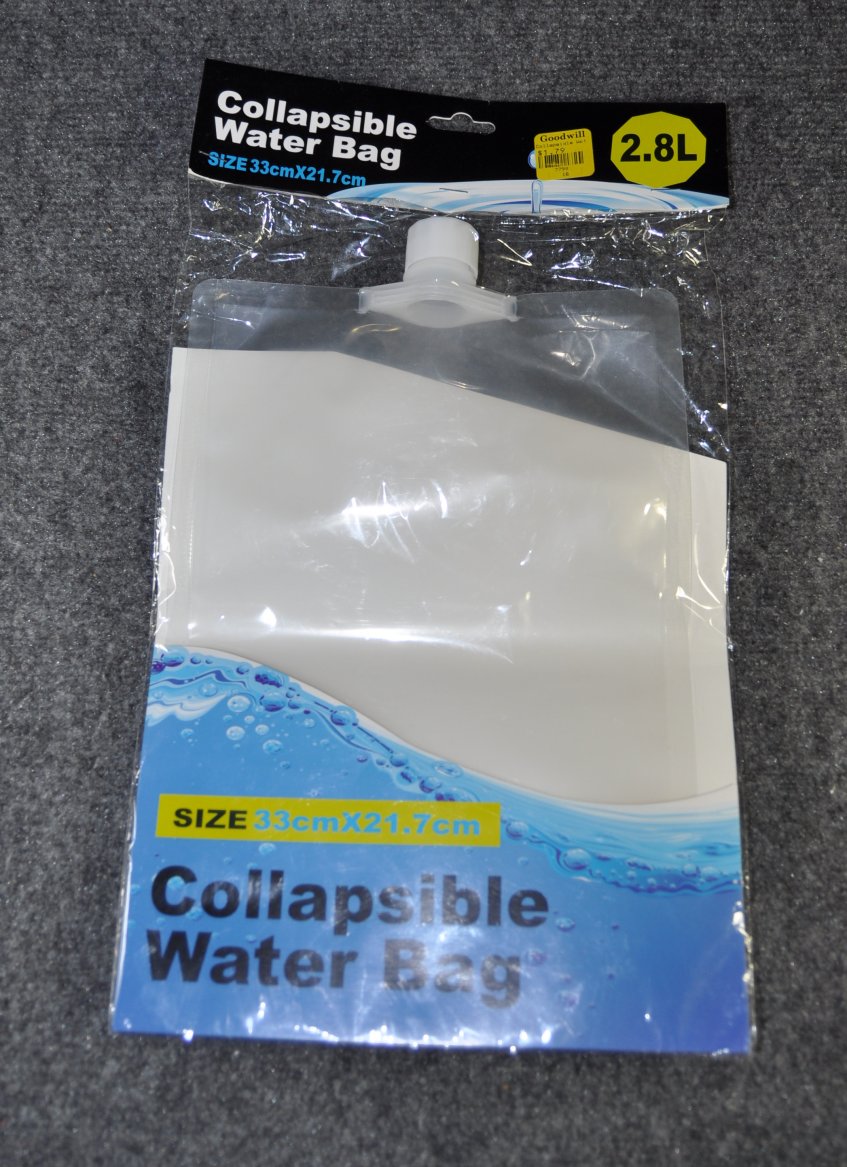
The MSR dromolite bags are heavier than their Platypus 2 and 3 liter equivalents. I think the suggestion above to have each Scout carry *group* water storage of 1 to 2 liters is the right advice. To ask one person to carry 12 liters (26.4 lbs) is a bit extreme in my opinion. For each camp, my crew had a “water quartermaster” to make sure all the water bottles were filled. I also would recommend against attaching water bottles to the outside of any pack. They should as close to the center of gravity as possible. Many of the new Osprey packs have a sleeve accessible from the outside now expressly for this purpose.
My crew found the water board to be not 100% reliable. So there might be times when the crew has to hike further than planned to fetch water.
You can attach some 3 mm cord to the DromoLites and the Platypus 2L and 3L platypuses. Note that the larger platypuses with the zip lock closures and handles tend to open when stuffed too tightly in a pack. If you want larger but lightweight water bottles, check out the Nalgene water carriers. If you happen to choose a Platypus gravity filtration system you will have a 4 liter container that locks tightly.