Topic

Variance in EN ratings on same sleeping bag? (Mountain Hardwear Phantom 45)

Viewing 25 posts - 1 through 25 (of 31 total)
Joel C BPL Member
PostedJul 4, 2016 at 4:01 pm

Hi,

I’m doing some research on the Mountain Hardwear Phantom 45 and the specs on the older version show an EN rating of 32 degrees F while the newer version is rated to 40 degrees (even though there were no significant changes in construction). I emailed MH about this and here was their response:

“Thank you for contacting Mountain Hardwear. The older version of the Phantom 45 that is EN rated as 32F didn’t undergo any big changes to the newer Phantom 45 version that is EN rated as 40F. They have the same fill and baffling so it is hard to say why the newer version is rated at a higher temperature other than that is where it tested. It could have been that a couple of benchmarks changed in the EN rating system which caused it to rate at a higher temperature so I would say that either rating is correct for its production year.”

Is it normal for EN ratings to fluctuate this much between versions of bags? And on another note, how is it that a 45 degree bag would be EN rated to 32 in the first place? That’s a pretty significant difference.

Any thoughts?

robert k BPL Member
PostedJul 4, 2016 at 4:42 pm

Hi Joel, I have some thoughts, and I’ll qualify this by saying I’ve seen and felt all the MH bags and owned and used the Phantom 32. First, AFIAK, the Phantom 45 never had a temp rating of 32 degrees, unless what was published was in error. And it seems that whomever responded to your inquiry was wrong in stating that the “45” ever had an EN rating of 32 degrees. It is , at best, a 45 degree bag. My experience with the Phantom 32 was that it kept me, a skinny guy, warm to the high 30’s.
My $.02.

Rob

PostedJul 4, 2016 at 5:36 pm

There are different EN ratings.

The current Phantom 45 bag I see it rated at 45f for comfort and 40f for lower limit for a fit man.

As pointed out there was a Phantom 32, rated at 28f limit and 37f for comfort.

PostedJul 4, 2016 at 5:39 pm

The Phantom 45 was indeed once rated at 32° to EN but it surely must have been a mistake. Is funny though that MHW claims that the fillweight hasn’t changed as that is not what I read; it has rissen a bit (in grams as in oz. it do has remained the same).

James holden BPL Member
PostedJul 5, 2016 at 12:52 am

i suspect the old rating was 13537:2002 (2002 standard), and the new one is 13537:2012 (2012 standard)…

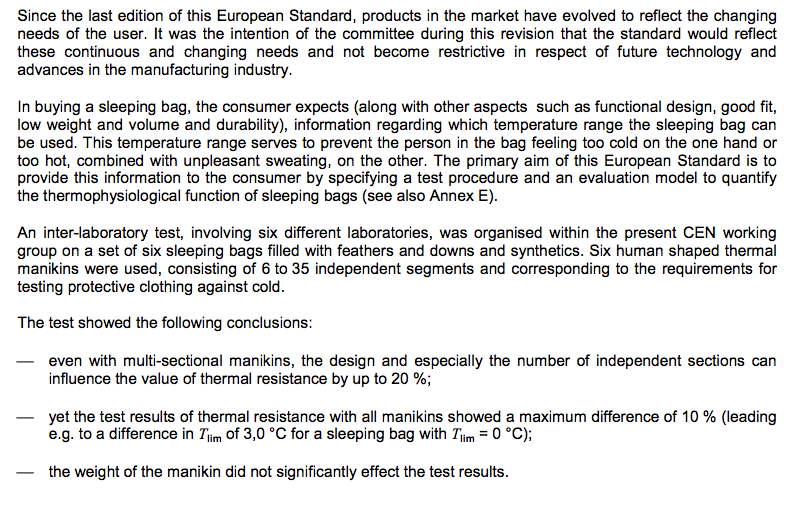
they tightened up the standard for less variance between labs and more accuracy

the cats meow for example was rated 19F LL (2002) and 24F LL (2012)

the good news is that the en-ratings are constantly evolving to make the more “accurate” … through scientific research and consensus

unlike folks who look simply at loft, down fill and name brands

;)


PostedJul 5, 2016 at 4:15 am

While the EN-system is evolving, I wont take it as my only source and will look at their ratings with a critical eye. E.g., you have the MHW Phantom 32 and the e.g. the Lightwave Firelight 350 which are both rated the same at 37° comfort and 28° comfort limit, yet the Phantom 32 has ‘only’ 10,05 oz. of 800 FP down while the Firelight has 12,34 oz. of 970 FP down. Yet, another bag, the Valandre Mirage (the 1st generation with the short zip): also 12,34 oz. of down but this time with 850 FP down. The comfort and comfort limit ratings must have been a bit below the ratings above.

James Marco BPL Member
PostedJul 5, 2016 at 4:24 am

Yes, the new standard is much better. Some sites said as much as 20C difference for the old standard. About 10C is the new standard: best to worst case rounding of all specs or about a 5C difference between mean.

I still use the old loft methode. This is tried and true. Down fill power doesn’t really matter. 3″(~7.75cm) of loft will always be around 40F. 4″ around 35F and 5″ around 30F. 6″ around 25F.  These numbers will always keep you warm enough at those temps.

Features and shell fabric can add another couple degrees IF you use them. Tight hoods, closed ventilation zips, etc can make up to a 10F degree difference.


James holden BPL Member
PostedJul 5, 2016 at 8:34 am

The amount of down and loft isnt the whole story

for example what is the girth of the lightwave bag? it says “internal width” of 32″ … the phantom 32 has a girth of 59″, it is a somewhat narrow bag which is more efficient

the valandre mirage (current) is a LL 22F (2012) bag with ~13 oz of 850 fill down … with a 62″ girth … just looking at the pics it looks like the lower half is snugger than the lightwave

over and over again richard has show on BPL that loft is a fairly inaccurate measurement

just as some down jackets use their down poorly, especially in terms of fit … Sleeping bags may as well

you wont find a 10c (20f) variance in the new 2012 en ratings on the same bags

every other product is being optimized through better scientific design (cars and gas mileage for example) … There absolutely no reason why sleeping bags cant be as well

;)

James Marco BPL Member
PostedJul 5, 2016 at 9:55 am

Eric, all insulation values, except pads, given in the standard are plus or minus 10%. Pads are 7%. To a 100 degree decimal system, this means that it is possible for one to have a 9 or 10degree temperature difference and still be rated the same. For Fahrenheit temps this means around 16-18F.


James holden BPL Member
PostedJul 5, 2016 at 10:10 am

james … the goal of EN-ratings was always to provide a 1C variance between labs

the reason they updated it in 2012 is that they they did some testing  years ago and found ~2C variance which was more than what they expected …

there is no way on god green earth that there will be a 10C difference between 2 labs under the newer 2012 standard … and very likely not even the old one

;)

jimmy b BPL Member
PostedJul 5, 2016 at 10:34 am

Wow, 1 deg C. Not doubting either side of this discussion but that seems like a tall order. I could fart in my bag a couple times and ruin that degree of error :)

Bob Moulder BPL Member
PostedJul 5, 2016 at 10:48 am

It comes down to how closely the labs are able to duplicate the test protocols. Absolute adherence would result in even smaller discrepancies.

And after that it’s a free-for-all depending upon variations among people and sleep mats and environmental factors, etc. :^)

James holden BPL Member
PostedJul 5, 2016 at 11:07 am

jimmy ,,, these are under controlled conditions … no PHARTS !!!

here was the original issue with 2002 …. they found ~3C difference between labs (another test showed +- 1.8C variance  or ~4C difference with the old standard) … not a 10C or 20C difference …


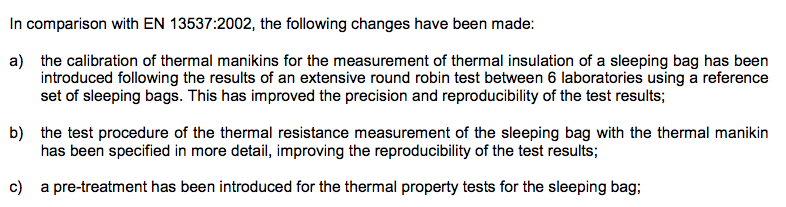
so they introduces the following changes to reduce it ….


the thing about those science folks is that its not based on opinions or intrawebs hearsay … or old loft calculations that may or may not correlate well …

its direct measurements

now the rating does have some issues (as with any rating and testing system) … but most folks agree that its the best there is at the moment …

which is why those eurobums introduced it and are constantly updating it …. and why REI adopted it even though they dont sell in euroland

as have major american manufacturers such as marmot, kelty, sierra designs, TNF, thermarest, etc … in fact almost every major sleeping bag manufacturer … even WM has some bags tested to en-ratings

;)

PostedJul 5, 2016 at 11:47 am

Eric,

the upper of the Mirage is indeed cut wide to accomodate for layering while the lower is cut very snug.


BTW, I compared two Phantom 45 models, one from 2015 and one from 2012 and found at least these differences:

  • the 2015-model has 7 grams more of 800 FP down than the 2012-model
  • the total weight is 10 grams more
  • the shoulder girth is 1 inch smaller
  • hip girth is 3 inch smaller

So far a bag that is claimed to be unchanged, it has in reality surprisingly quite a few changes. :)

jimmy b BPL Member
PostedJul 5, 2016 at 12:27 pm

I would certainly agree its the best we have for now but I would also consider where humans are involved you can expect human error. Just my opinion scientific or not. It may sound a bit like a doubting Thomas, us old folks call it wisdom.

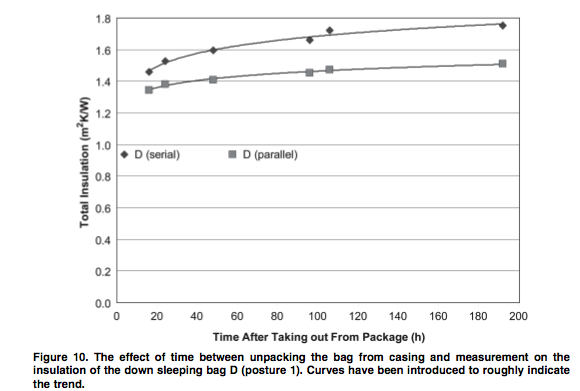
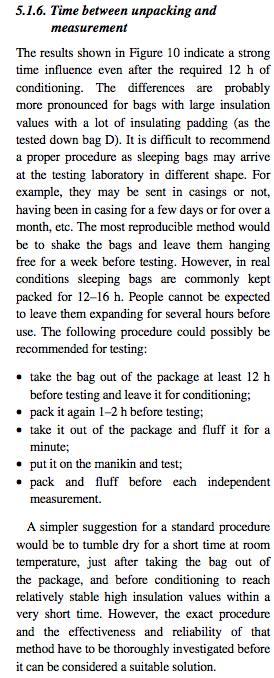
As Bob says its in the integrity of testing (as well as proper scientific procedure) as well as a good working knowledge of the items being tested that will determine accurate results. While reading the last few posts I thought of my WM Versalite continuous baffled bag and how I use it. For maximum loft (and I believe warmth) I will move the down around from the bottom to the top. In stuffing and removal from sacks be it the home storage or stuff it does migrate back to a more even distribution. If the testers are knowledgeable she/he can prep the bag for its maximum potential. If the item for testing is simply unpackaged and let to loft haphazardly it possibly could have some negative influence on the results. Also potential may be different than actual in that say a bag has excellent insulating value but may be slightly roomy. In actual use this can be overcome by folding over the foot box for a shorter person or adding in items to reduce vacant spaces ect. Going in the opposite direction, a slim cut bag on a larger framed person could result in insulation compromise by down compression. So for scientific testing would you not have to have multiple sized mannequins to maintain a constant or equal value of vacant volume inside the bags. Maybe they already take these scenarios into consideration. I may also be really out to lunch as well but these are all the issues that get endlessly discussed here on BPL and IMO they are very valuable considerations. I’m just trying to point out that real science resulting in absolute results can be incredibly exhausting.

On a side note- in the time it took to write this post science has determined butter is better for us than margarine and have also in that time reversed their findings :)

James holden BPL Member
PostedJul 5, 2016 at 12:52 pm

jimmy …

theres so many body types out there that you cant account for every variation … which is why they use a “standard (euro white) man/woman)” …

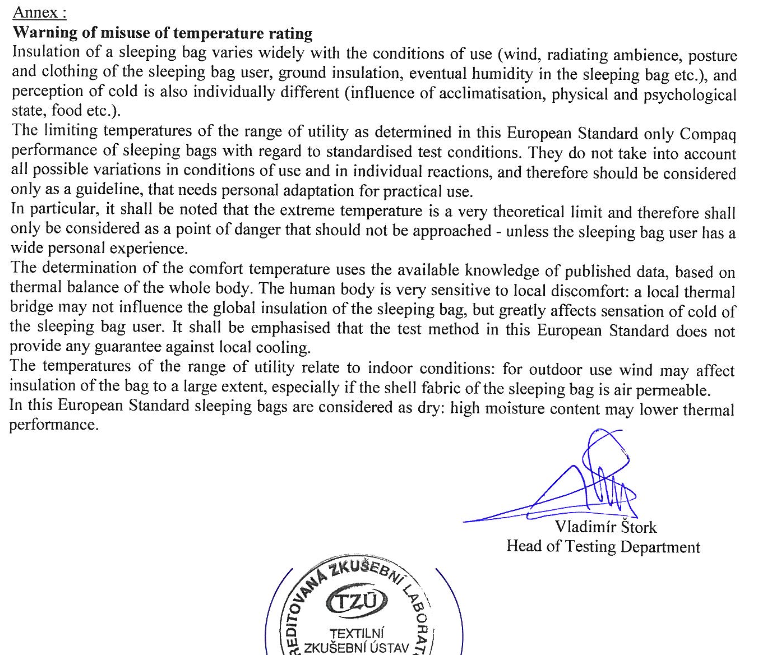
in short the en-rating is an apples to apples comparison … its a guideline and as various documents have stated (and the disclaimers themselves), needs to be adjusted if one varies significantly from the standard

theres many tricks or tips one can use to increase a bags warmth … weve all posted up about those on BPL over the years … but the en-rating isnt meant to measure that …

its simply meant so that you can take one bag and compare it to another to see if the “warmth” is comparable … and to give a decent idea if the average person will sleep comfortably in the bag

heres is the usual disclaimer on actual tests …


as to the variations in the conditioning of the bag prior to measurement, this has an effect which is why the 2012 standard addresses that

in real life BPLers know that fluffing up your down is quite important to achieving the full thermal efficiency of the bag … as well as warming it up prior … we do this anyways as standard

at the end of the day its similar to the fill power testing … while theres variation (EU vs US) in some testing, really all youre doing is measuring a number

the real question is how it relates in the real world ….

;)

James Marco BPL Member
PostedJul 5, 2016 at 1:13 pm

Eric, I still maintain that a ten percent variance in testing methodology/materials will yield a 10% variation in the final result.  Yes, testing is SUPPOSED to eliminate variables. But, 10% is a LOT. If one company uses a -10% long john and another uses a +10% long john, you can get an easy 5C difference. As the standard says, it is only a test. In and of itself it is relatively meaningless, except to keep manufacturors honest. As it relates to real world, is always debatable. This is like debating color. Everyone see’s color differently. The actual test becomes meaningless, except to duplicate it.


James holden BPL Member
PostedJul 5, 2016 at 1:40 pm

james one can argue these things all they want ….everyone is free to argue GMO, climate change, vaccines  … its a free country

however while there are issues with en-testing … it is continually being updated to make it more reliable … basically its THE standard by which modern bags are measured by

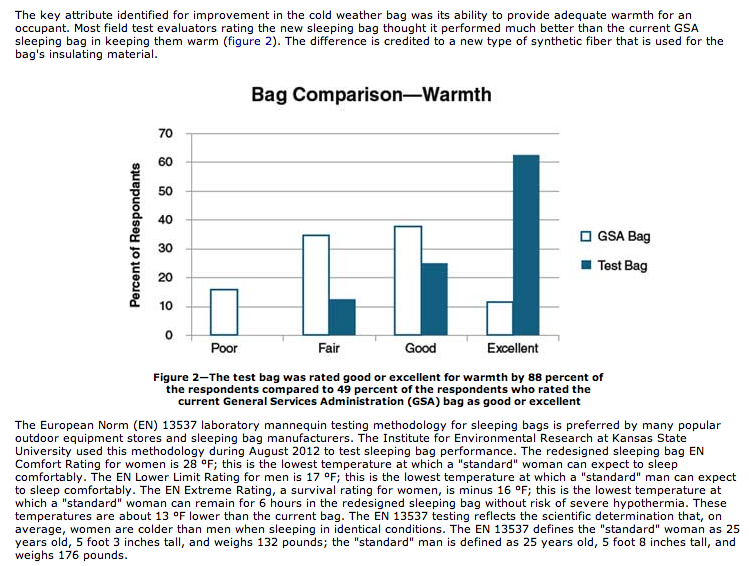
for example when the US forestry service (which has no marketing need) was seeking to replace their old bags, they tested the new bags with the en-standard


http://www.fs.fed.us/t-d/pubs/htmlpubs/htm12512301/index.htm

;)


Roger Caffin BPL Member
PostedJul 5, 2016 at 4:15 pm

May I add a few comments here?

First, one of the key differences between ‘science’ and other areas such as religion and marketing is that real science results come with what we might term ‘error bars’. That is, science not only quotes a nominal value for something, but also the expected limits of error in that measurement.

This has certain consequences. If one measurement gives a value of -5 C +-3 C and another measurement gives -7 C +-3C, a scientist would not claim any significant difference between the two results. Marketing departments on the other hand …

As for saying that science has determined butter is better for us than margarine and have also in that time reversed their findings , this is wrong for very similar reasons. ‘Science’ said nothing of the sort, but a few people with very limited science training and possibly vested interests in one side or the other made such a claim.Dieticians and medicos rarely have any science training (and no statistics knowledge at all), and they come up with some very silly ideas at times.

Cheers

jimmy b BPL Member
PostedJul 5, 2016 at 5:20 pm

As for saying that science has determined butter is better for us than margarine and have also in that time reversed their findings , this is wrong for very similar reasons. ‘Science’ said nothing of the sort, but a few people with very limited science training and possibly vested interests in one side or the other made such a claim.Dieticians and medicos rarely have any science training (and no statistics knowledge at all), and they come up with some very silly ideas at times.

Yes, it was really just an attempt at humor on my part, maybe a failure in that regard but my point was that there remains not so great science out there with poor experimental design offering very vague answers at best. In the end we all have to be diligent not to buy into everything that comes down the road, or trail if you please. Some areas of scientific discovery may be a bit more challenged. Take the pharmaceutical business, science IMO cannot afford to run the criteria long enough over a wide enough test population to assure accurate let alone safe results. Also seems quite unscientific to expect to select a decent controlled group dealing with human genetic variables and behaviors. IMO this accounts for many of the drugs on the market being pulled or restricted in use after a few years of their release after longer term negatives are discovered. As doctors will tell you they “practice medicine” so should the pharma co.’s tell you they are “practicing pharmaceutical mfg.”

Of course I feel obligated to say this post is in no way a knock on the skilled and conscientious members of the scientific community and I don’t throw the baby out with the bathwater either I am living proof of a life saving pharma discovery.

PostedJul 6, 2016 at 3:39 am

Indeed, there are many experiments that are so-called ‘(really) scientific’ with all sorts of outcome and stats and they may impress then many people, but unfortunately for them not me as I most likely have a bigger scientific background than them.

James Marco BPL Member
PostedJul 6, 2016 at 4:26 am

Eric, You start at with a 10% variance in materials. Simple chi square analysis will show that adding a second variable of the same precision will alter the result by up to 20% of it’s effect. And it will show how the effect is distributed. With the EN testing we have a pad (7% variance allowed,) Long Johns (10% variance allowed,) Socks (10% variance allowed) and hood (10%? allowed.) Then we have the things that are not measured by EN testing: Wind resistance of fabrics(a slight breeze is allowed,) of zippers and other accessories that do not effect a stationary manikin, IR reflection from a tent or other close “roof”, etc. (things I do not know about.)

If the new standard is within 10% at the end of a test, I would be amazed. Note that this is really good compared with the Old Standard. Tolerances were not even specified. One person would test with a bikers suit, one would use heavy duty long johns and still remain within test parameters.  Each percentage point is roughly 1C degree. To say the new test is within 10C degrees is fairly accurate. Or you could say it is “off” by as much as 10C degrees. But, it would still be self consistent. If they tested the same bag again, they would get the same results within the test tolerances: a good guide line.

Jerry Adams BPL Member
PostedJul 6, 2016 at 8:17 am

10% variance in thermal efficiency would result in a 10% change in the comfortable temperature relative to a skin temp of 92 F, so at 32 F, there would be a 6 F difference, 2 F = 9 F.

The OP was an 8 F difference which is a little more than 10% but close.

With my down bag, sometimes I’m a little cold at 32 F, other times I can do 20 F.  10% or 8 F difference in rating would be difficult to notice.  Although 5% would be a better value.  More accuracy than that would be un-noticeable.

Once I noticed I was cold at 35 F, and then refluffed my quilt and it was much better.  With synthetic you don’t have to worry about that.  That’s a characteristic of down.  Especially if the temperature is going to be at the low end of what my quilt is rated for, I’ll go to extra effort to fluff it.  Get the down to be evenly distributed in all baffles.

James holden BPL Member
PostedJul 6, 2016 at 8:19 am

No james

there are actual tests out they did to compare the difference between labs … Not WAG

i posted them above

its not a 10C or 20C difference …. Even under the 2002 standard it is a +- 1.5C to 1.8C variance

Which is why they updated it with the 2012 standard

as to “wind” … I have no clue why you would want to assume wind resistance in a sleeping bag rating … Thats what things like tents and bivies are for

the basic idea of any science 101 measurement is to isolate the variable you want to measure …. In this case thermal resistance …

Its not like we demand cottage quilt makers build in windspeed calculations into their ratings

i have no idea why we would want en-ratings to

;)


Jerry Adams BPL Member
PostedJul 6, 2016 at 8:37 am

I think EN was well intentioned.  Otherwise, manufactures would exaggerate rating of a bag to sell more.  EN allows us to compare bags.

But it’s too expensive to test each manufacturer, each model, each size.  Especially small manufacturers can’t afford it.

It would be better to do EN type testing of a bunch of bags and determine a calculation based on loft, amount of down, and whether it’s a rectangular or mummy bag.  Maybe some other factors.  Then it would be cheap to rate a bag.

Viewing 25 posts - 1 through 25 (of 31 total)
Loading...