Hello guys,
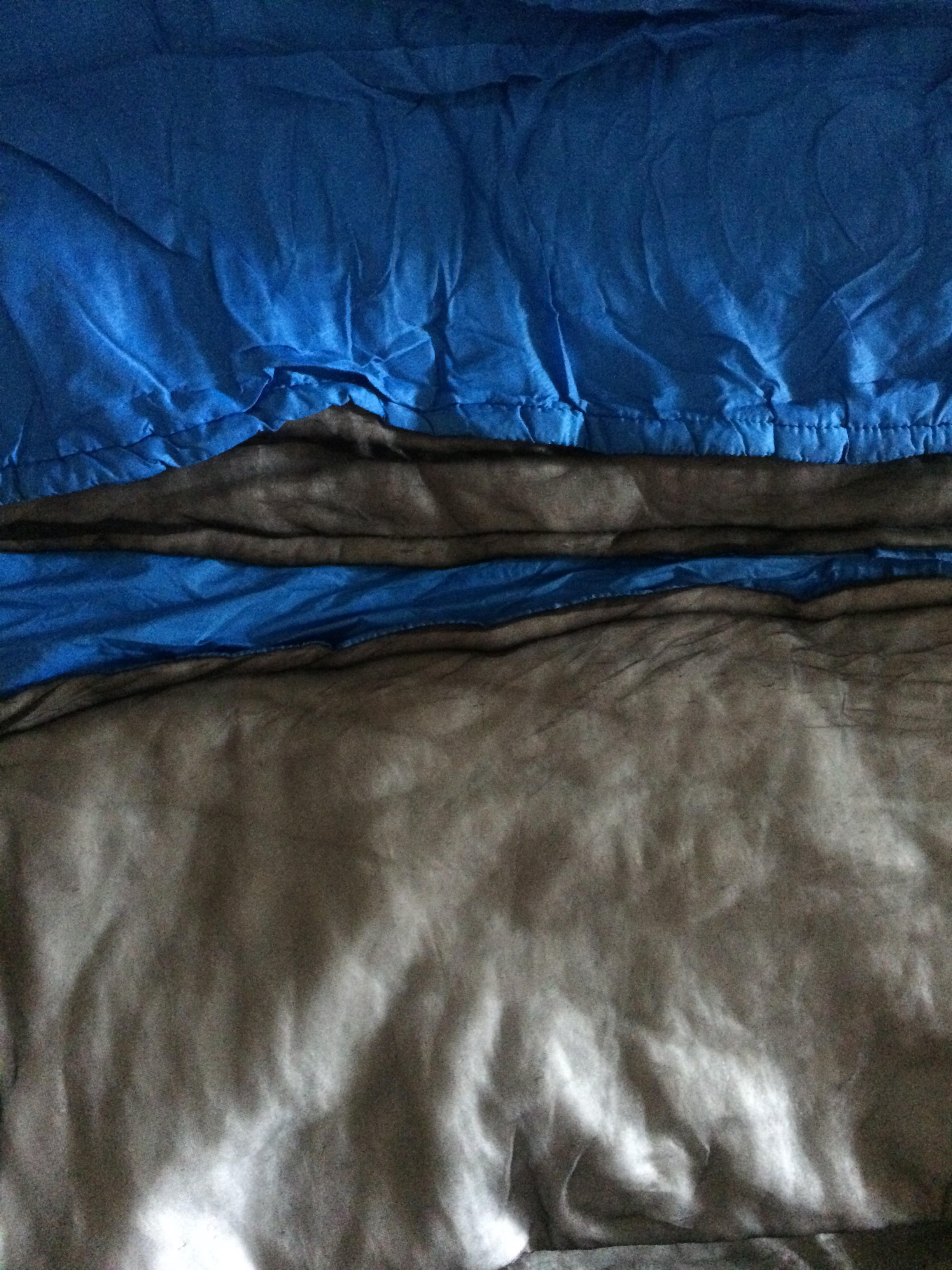
I am excited to share my latest project, a Climashield Apex quilt with 0.5oz mesh as inner (!!) and uncalendered 1oz nylon as outer (!)
**I have explained calendering process in the final comments below.
I was quite anxious to find out how mesh would work out as a liner. After using it for past 4 months across Asia, it is holding up well. The lowest temperature I used the quilt in was 40F in May over a 13000ft pass in India and I was cozy.
This combination of fabric offers some obvious advantages over regular calendered ultra light fabrics:
- Mesh is softer and less clammy against the skin
- Both mesh and uncalendered hyperD are a lot more breathable then standard calendered nylon used by most manufacturers.
- Quilt dries significantly faster.
- Reduced condensation.
Design
This is a oversized rectangular quilt (59″ x 90″) similar to a comforter at home and it works well for me and my partner. There is no foot box, zipper, or hood and none is needed; it works so well without it.
I think there are 2 reasons for this:
- The mesh inner is not slippery (unlike light nylon fabrics) and therefore we both can grip the edge surprisingly well under our feet.
- The extra length and full width is sufficient for tucking and covering 2 heads.
This quilt is comfortable over a very wide range of temperature. Since it has no foot box, it is really easy to vent.
The size is good for solo or couple (works for us).
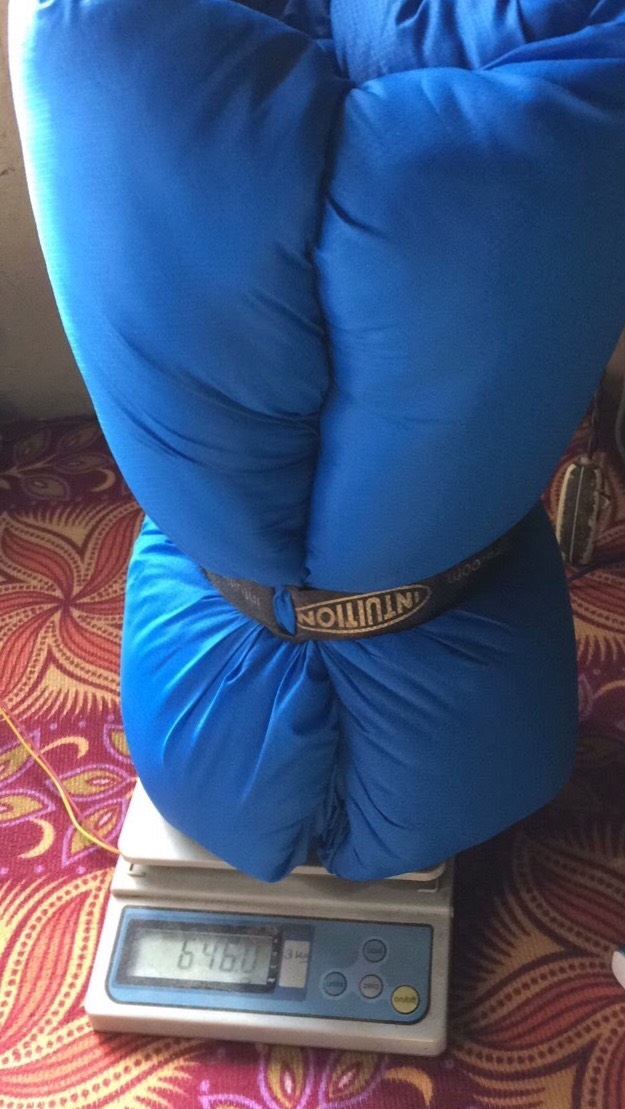
Instead of using a stuff sack, I am folding it then using Velcro to compress it. This is very convenient and quick method. See pics below.
Specs
- Weight: 23oz / 650g
- Dimensions: 59″ X 90″
- Outer: 1oz HyperD uncalendared
- Inner: .5 oz mesh
- Insulation: 5oz Climashield Apex
(All from ripstopbytheroll)
Construction
The construction is as simple as it gets.
- Cut the fabrics and insulation to size.
- Sew the inner and outer together on the edges but leave 12″ unstitched. There is no right or wrong side.
- Sew the insulation with the inner+outer but leave the 12″ unstitched.
- Now use the unstitched hole to pull out the quilt inside out.
- Sew along all sides with 1cm margin.
Further thoughts:
If you have worked with fabrics which have a shiny side and matt side, then you have seen a calendered fabric. This fabric has been passed through rollers which fuses yarn on one side and creates the shiny effect. This process significantly reduces the breathability of the fabric which is necessary trade off to get a downproof fabric. You can try blowing through calendered and uncalendered fabric and compare to see the difference. I bet you will be surprised!
With uncalendered outer and mesh liner, it’s possible to achieve unprecedented breathability and fast drying. Combined this with Climashield which doesn’t require any stitching on the outer side for stabilisation, we have here truly superior water resistance compared to anything that is available in the market currently.
Looking back now, I am surprised that most manufacturers are still using calendered fabrics for making quilt with apex insulation. I think it is one of the reasons for mass spread condensation issues and has been holding back the synthetics from a fair fight against down.
I would love to see and hear from more people making their own gear with this combo.
Also, I would like to add that I am considering getting a batch of quilt for sale. So if anyone wants to get one, you can talk to me by sending me a PM or contacting me at huzefasid(at)gmail(dot)com
I am looking forward to hearing your thoughts!
HS
[edited by MK]