Gentlemen:
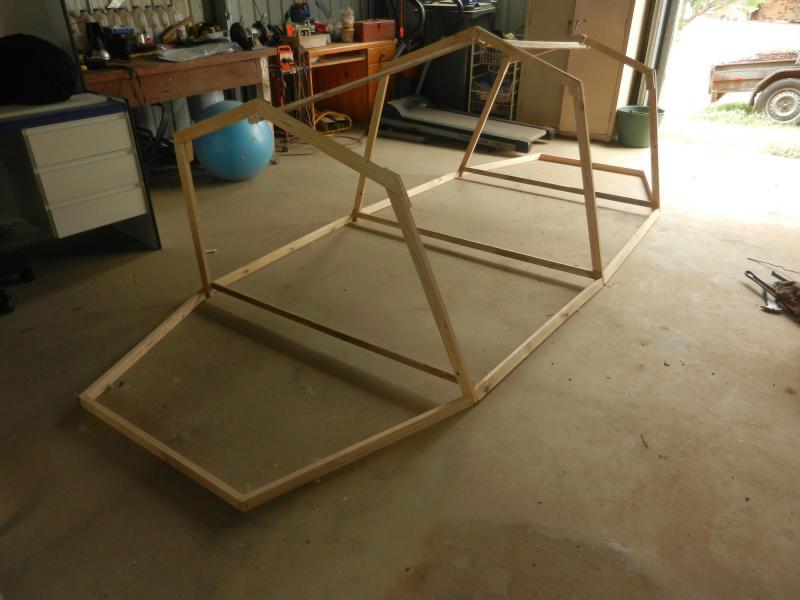
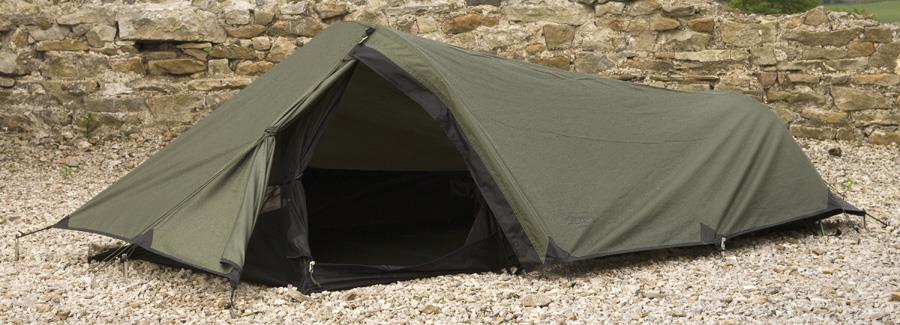
Different tents for different folks. Let’s not lose sight of what I started this thread with: a plan to build what is literally, as in Roger’s words, a glorified bivvy tent.
For my money, the best tent is: a) The one that gets carried, and b) The one that gets erected.
I signed up for BPL thinking the name “Moab Randy” would appear as my screen name and somehow my full name came up. But that should tell you something: most of my backpacking now is in deserts and the Sierra. I am not a mountaineer and I don’t snow camp, although severe thunderstorms are a concern. While it would be great to have an affordable, ultralight, ultracompact, ultra-easy-quick-pitch, ultra-ventilated tent that is also bombproof in a blizzard on an alpine ridge, that’s an animal I haven’t seen yet. So I will have fun making something full of compromises but which, if I can pull it off with a reasonably taut form, will not doubt still serve most of my needs quite well. If not, I guess it’s the Copper Spur?
The main reason I carry a tent is because it might rain (or maybe an unseasonable snow in the Sierras), or, occasionally because the mosquitoes are extreme. Otherwise, I’m outside, mosquitoes and wind be damned. Unless I need some otherwise unobtainable shade (for which reason I make my tents of the most opaque material, not one to give a bright, cheery interior). (Anybody know of a source for ultralight aluminized fabric aside from Warmlite?).
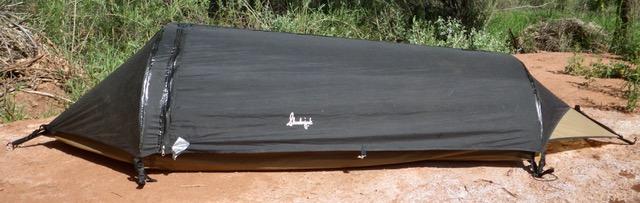
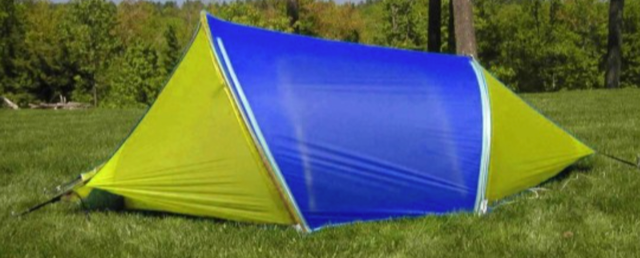
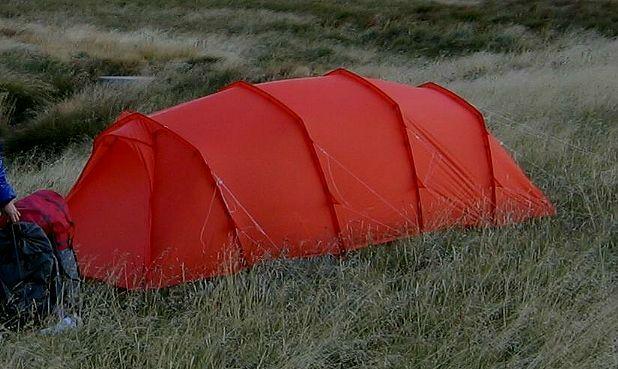
Adding a third pole to my tunnel tent would defeat the plan for a side entrance that doubles as a massive window. So I will live with a ridge span of 70”, twice Roger’s recommendation. I’m also not willing to carry the extra pole or to erect it. In my time in the Slumberjack, the span was never a problem. The span of the Warmlite is a problem in strong sidewinds, but more of a nuisance for the intrusion into space, not a threat to the tent’s integrity in the conditions I have used it in. (They do offer a third pole option, as well as internal guys, and, I seem to remember, even might put external guys on if you insist.) The fewer the poles to fiddle with in the dark and wind the better. Yes, three poles is stronger, four poles are stronger yet, but I’m drawing the line at two because of my other priorities.
Quick, easy pitch is a high priority for me. I hike until dark or after. I camp in places where almost no one goes, so there are no established sites. First, that means compact, because literally my most frequent problem is finding a flatish, levelish place large enough to put up a tent without being in the sticker bushes or on top of the cryptogamic soil. Compact is also cozier (sleeping in the Slumberjack is very calming) and also decidedly warmer.
Second, the fewer the stakes to fiddle with, the better. Six or eight guys plus four stakes for corners and maybe more for the ends?—ain’t going to happen. Where I go, as often as not stakes won’t hold without rocks on top and believe it or not, a lot of the time in the desert it’s hard to find rocks, especially ones without creatures residing underneath. My tarptent, even with needing only one stake for the rear, is a pain to put up at six stakes (with side guys).
I’m saving weight and overcoming some of the objections to one-person tunnel tents being unstable in high winds by sacrificing height (30” total height, vs. about 41 for the Warmlite) (plus, I’ll throw in internal guys for the heck of it; because the body of the tent is between the poles, they won’t get in my way). I don’t cook. I’m not sitting around a pot of hot food and playing cards. Once you give up the height, possibilities open up. Of course, I’ll be sorry if an unseasonal blizzard sets in. (Heck, we’ll be lucky to get any snow now days, as the West enters the megadrought.)
Sam—I haven’t seen any other tent for which the poles stay in the sleeves, and maybe it won’t work for most designs, but for my needs, it’s a big improvement. No lost poles, no poles stepped upon, no tent blowing away while assembling separate poles. The biggest PITA with the Warmlite is assembling those long pre-bent poles and stuffing them all the way down those long, tight sleeves and shoving them tightly in place, especially since it can only be done from one side, and I often forget which side that is. On my tarptent, I’ve avoided the problem by leaving the poles in and making my sleeve longer than the pole on one end. That gives enough room to pull the sections apart inside the (baggy) sleeve. Then just fold one section back against the next, and roll up the tent. To assemble, fiddle with the sections to assemble in the sleeve, shove the pole to the closed end of the sleeve, and clip a small buckle under the floor. Works for me and I won’t be going back.
Thank you all for being you.
******************************************************************
In defense of the Warmlite (not that it’s relevant to this thread):
• The erection of the inner layer simultaneously with the outer layer is a HUGE advantage compared to my experience with other tents.
• Never had occasion to notice sag with the inner layer.
• As mentioned, a third pole option is available for you high mountaineers, but I have never felt the need.
• As far as “no vestiblule,” compare the area to other tents—it’s pretty huge. The vestibule area has just been converted to floored area. If you don’t like that, cut a hole in the floor and sew up a bathtub. I’ll take the floored area.
• If you want more space, just get the model 3 (model 2 has large pole in front, small pole in tapered rear; model 3 has large poles front and rear, and the tent does not taper).
• The tent does not “sag” in the wind. Sideways deflection, yes (so maybe order the third pole sleeve if you’re worried), but lengthwise tension has never been a problem, even with nylon fabric. Set the stakes tight, then you can retighten the front two tensioners without leaving the tent.
• The single stake in the rear of the model 2 is, in my opinion, a major strength of the tent. I have never had a problem with that. You only have find or create one good anchor instead of multiple ones. If you’re still worried, daisychain a couple of more stakes behind it. My problem has been with the front—because it has two stakes that have to both be secure and equally tensioned (I’ve added cords to extend the staking range or to tie onto rocks). (A two-stake tent will be the easiest I believe. Anchor the first one in a bomber spot, then swing the tent around until you find a suitable location for the second. Two stakes and you’re in. Tighten one internal tensioner if necessary. Add side guys to improve airflow or wind tension if you like.)
• Yes, they do include a heavier outer zipper on the door, and a lighter one just inside. I think the lighter one may be to channel any water that leaks through the outer zipper; also serves as a backup zipper. If you don’t like it, tell them to leave it out. Or just cut if off.
• I’ve never had a problem with a pole, but I’m not a mountaineer. The poles on the new tents are supplied by tentpoletechnolgies.com, which I know to be heavier than what I have, so they are at least as good as what other people are using.
• I added two superb options: the large side windows, plus a special request that they both have zippers to open completely. Tie out the side flaps for shade and you have flow-through air like a tarp, or two big side doors. A great riverrunning/sea kayaking tent.
• My 1980 version, with the old PU fabric, delaminated after 20 years. I’ve never had a problem with silnylon fabric or a zipper with the 2005 version. So much for fragility. I can’t speak to quality of current manufacture.