Mole J,
Thank you for that clarification. I would agree that silnylon, or PUnylon for that matter, is fine in the conditions that you describe. And in those conditions, your long time approach makes perfect sense.
However, it is the extreme weather conditions that are my concern, even though they are not likely to occur often, although hikes that run for weeks, not days, make extreme conditions more likely. And climate change adds to that to some degree. I’ve found that when going out for a couple weeks, for example, in Colorado or northern New England, there have been instances of severe weather with heavy rain and winds that last at least from later in the day to most of the night. And have noticed over the years a gradual increase in such weather.
During such events, it is necessary to get the tent up quickly, fill a couple water bottles, and get and stay under cover in order to stay dry for meals and for the night. This is where a good tent shines, and makes a big difference compared to average tents and tarps. It means not having to go out into heavy rain to tighten a loose canopy, and in the worst case, using one of the emptied bottles when nature calls.
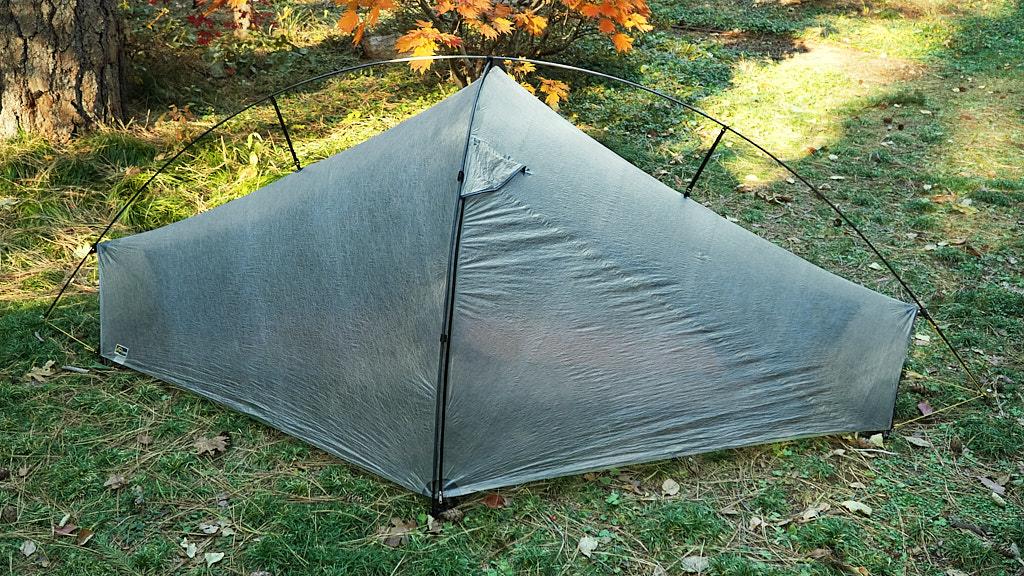
Some of the best tents follow variations of a Skurka design developed for hikes lasting months. However, they present fairly long expanses of fabric from pole down to stake, and as such present a problem when nylon fabric gets saturated and loses its taut shape. In testing both sil and PU coated nylons in heavy rain, the nylon expanded to different degrees, but none competed with silpoly, which remained taut, and did not require re-entry into a rain storm.
In such situations, heavy winds can blow over a tent that is not tautly secured, blow water all over the place, and one can get soaked. Especially above 11-12 thousand feet elevation, hypothermia can be life threatening. Knowing that such situations can and will inevitably arise, is what attracts me to silpoly.
Also note that in testing silnylon prototype canopies at lower elevations and protected from high winds, I found that silnylon canopies that were drum tight indoors became loose and unsuited for high winds, and remained so until the fabric dried out, usually not until the next day. The silnylon tested was first quality 30 denier from Quest Outfitters in Florida. And a number of other silnylons drawn tight in plastic embroidery loops, exhibited the same amount of expansion when placed behind window screens next to heavy rain on a deck. Those silnylons included so-called 6,6.
Whether DCF or Silpoly prevail in the tent market vs silnylon remains to be seen. But now that a number of companies are offering silpoly, backpackers will have a choice.