This has been on my calendar since 1979 – the last total solar eclipse in the contiguous USA. I’ve seen a bunch of amazing things and spectacular places, and that total solar eclipse still stands out in my mind.
During totality, it is darker than a full moon. The stars “come out”. You’d want a headlamp to walk around. But you won’t be walking around. You’ll be staring at the sun’s corona and the stars and stuff.
Roughly, you’ve got an hour of partial eclipse, then 1-6 minutes of total eclipse, and then an hour of partial eclipse afterwards. Prior to the total eclipse, you can walk on trails, find a street address or read a book by the diminishing light of the sun. I found it interesting that the “color” of the light was full-spectrum although the intensity of the light was akin to a heavily-cluoded day or sunlight or during a huge forest fire – all of which give the light a different color. In short, I’d never sent that combination of light color and intensity making it seem stranger than when I’d been in the midst of a huge (big chunk of AK or YT burning) forest fire.
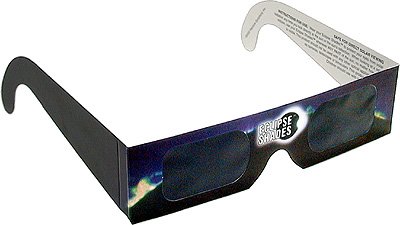
Good eclipse-viewing glasses are damn dark. Like tripping-over-your-feet dark. But those are for partial eclipses as you approach totality. Practice in advance with a pair of binocular and a white board projecting the sun’s image. It will a boring circle except at sunset. During an eclipse, it will project a crescent shape and you can safely track the progress of the eclipse by the crescent shape (although you can also just check you watch versus your lat/long). When totality approaches and the “diamond ring” and “Bailey’s beads” effects occur, you’ll want to be looking directly at the eclipse. At that point, you’re getting less than 1% of full sun and only for a few seconds.
I highly encourage you going. I vividly remember my total solar eclipse viewing 37 years later. I’d suggest you frequently check weather forecasts and be mobile that day so you can get a few hundred miles east or west to the most likely clear skies.