


What do you think of this product on Kickstarter:
The video of the water beading is very impressive for something made only of merino wool (no DWR); I wonder if it would perform as well in real life
Topic
Become a member to post in the forums.
 .
.
What do you think of this product on Kickstarter:
The video of the water beading is very impressive for something made only of merino wool (no DWR); I wonder if it would perform as well in real life
Merino sheep do well in the rain.
However they use lanolin as water repellent.
This is a fisherman sweater, also known as an Aran sweater
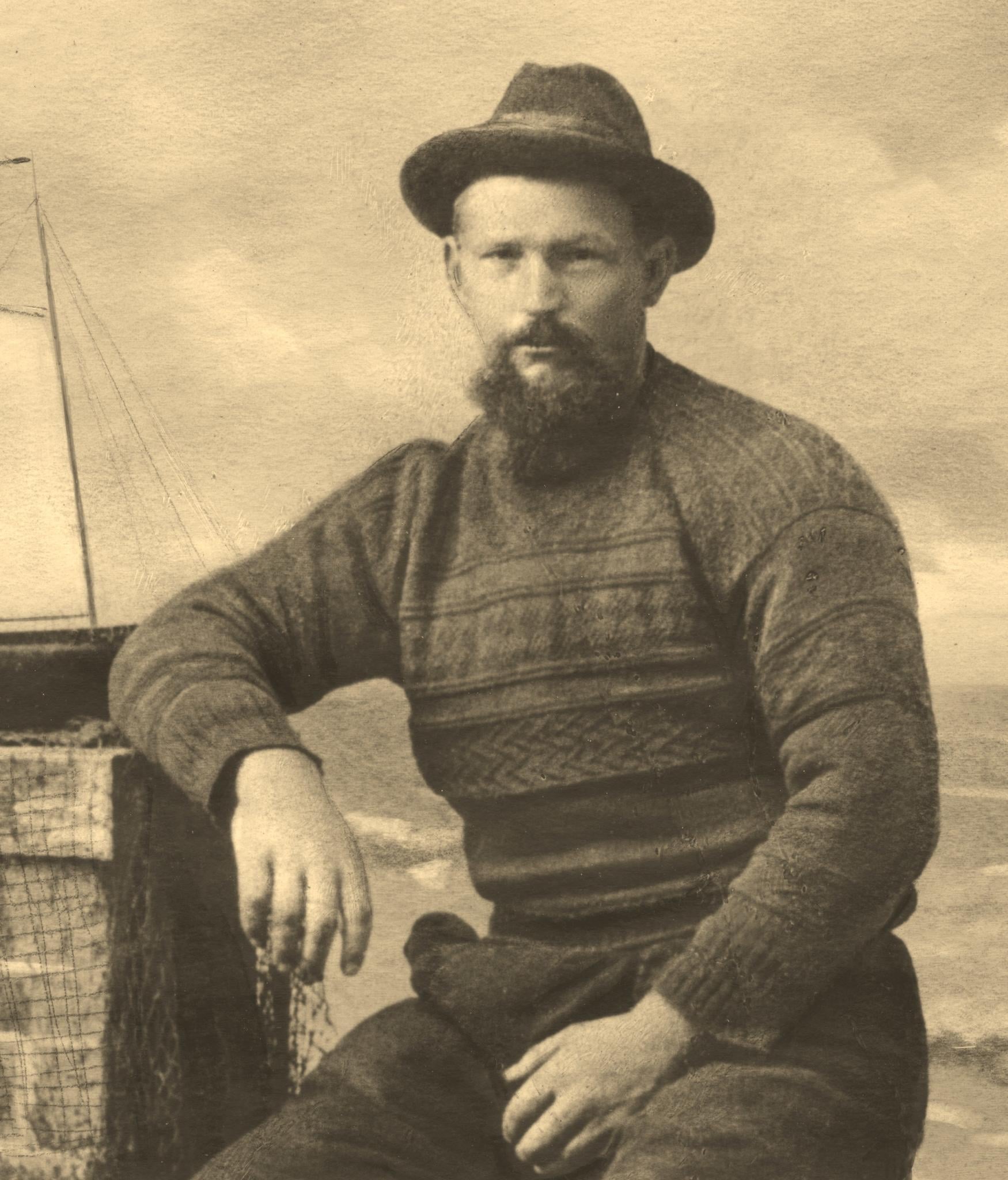
they were made with untreated wool so were very much water resistant.
I had the natural wool colour version as worn by shepherds . Heavy and ,to some people, itchy (not for me) but very warm , protected against wind and rain.
So we are going back to how wool used to work.
I would love it if it worked, but would not get my hopes up. I’ve always wanted a wool garment that would protect from wind and rain. You can see in the bit where he’s splashed with water that the fabric starts to wet out. I would think maybe it would be fine for light rain, like a wind shirt, then wet out; there’s no mention of DWR, and lanolin is only going to work so long. Unlike a windshirt made of nylon or poly, once wet out it would absorb quite a lot of water and become very heavy. Yeah, wet wool is not as cold as some other wet fabrics, but it’s still not ideal. But I could be wrong about this thing. If it is waterproof, it might be cuz the tightly woven wool yarns become saturated with water, swell, and then the pores between the yarns shrink to nothing, like cotton Ventile stuff.
I find that wet wool actually stretches unless already felted but Melton cloth and its ilk are very very heavy and only get heavier when wet and so not anywhere near UL. If you Nikwax treat tightly woven woollens like gabardine it is OK but so was the old fashioned treatment with alum and adding lots of lanolin afterwards and there were reasons we stopped using them
“there were reasons we stopped using them”
But what were these reasons really? A lot of money has been invested in synthetics, a lot of marketing claims have been made, not a lot of side by side comparisons have been done; especially outside of laboratories.
I’ve been researching the hypothesis that high quality naturals can out perform certain aspects of certain synthetics, but synthetic quality is more consistent from a consumer perspective. And high quality naturals are becoming a thing of the past…
I’ve seen Icewear’s hand-knit Icelandic wool sweaters outperform technical polyester shells in Icelandic highland spring weather. On the other hand the advantage synthetics have given modern military forces is very real; most of these advantages rely on a soldier’s endurance to dry their clothes with body heat. Interestingly the development of modern soft shell synthetics has been influenced by the traditional north/ northwestern European wool outer garments; see Patagonia’s new recycled wool sweaters for example.
Watching the kickstarter video, it looks to perform at least as well as many fleeces to me.
If it has similar weight / breathability /packability, then I’d much rather not have micro polluting fleeces.
I’m on their mailing list because I bought some shirts. I thought it was interesting enough to buy in, so I guess I can report back in 2021 assuming I remember and the world doesn’t keep getting worse before somebody can make a jacket. There’s no weight listed, but I wasn’t thinking of a backpacking jacket. I was thinking mainly for town or day hiking. The FAQ says it’s not going to hold up to hard, extended rain, but unless I’m backpacking, if it keeps raining for a very long time, I tend to go home. It would be nice to have a natural fiber option for rain gear.
I wonder if such a tight weave + a lanolin treatment would be a nice natural alternative to the nylon shell + DWR
A super thin (for mininal water absorbtion and quick drying) but also super tight weave merino with added lanolin could work? Maybe buying a merino XXXL base layer and shrinking it in the drier to tighten the weave, then using something like this: https://www.amazon.ca/Now-Foods-7725-Lanolin-7-Ounce/dp/B000I1OYNK would be yield interesting results.
Well the main reasons I personally stopped using woollen as my primary insulation layers were weight and drying time.
I still wear woollens from time to time, merino and cashmere jumpers mainly and I do wear wool for hunting because it is quiet and if it was really cold then woollen pants might be worn but not in the rain.
I have done the lanolin treatment on old army battledress serge, also ditto with the alum and soft soap treatment and it simply isn’t as good for my purposes.
it would be fine for light rain, …then wet out;
Just like a DWR jacket!
weight and drying time.
Those things plus cost are the only downsides to wool. Oh, and scratchiness. And (lack of) packability. And shrinkage in the laundry. It always amazes me how long wool’s list of disadvantages is, yet it’s still a preferred material in many cases. There’s just something about natural materials…wool, down, cotton, hemp…where they shine they really shine.
Todd, you’re right. I personally do not like DWR because they do not last long enough and also because of the health/environmental concerns. It’s true that wool in its « classic » state is not an optimal fabric. But I wondered if doing some kind of magic to make the weave super tight (like I said, XXXXL merino base layer, shrunk in the dryer) and adding lanolin (not as a wash in treatment but directly immersing the garment in a tub of lanolin) would work. My idea would be that that very thin but very dense layer would always be in a « wet from the oil » state so the water could not enter its fiber. Maybe my idea would work instead with a polypropylene tight weave full of oil (mineral oil? Or maybe something that would become solid when cold like coconut oil?) as PP is extremely hydrophobic and oleophilic. Next time I see a 2-3$ polyester t-shirt I’ll try immersing it in coconut oil. If it yield something usefull I’ll buy a polypro top and do the same. I’ll also try with lanolin and the drier shrunk merino but the price is prohibitive
What makes you think that any fabric that is literally soaked in oil would be at all comfortable to wear? If you soak a jacket in coconut oil, what you are going to have is an oily jacket. I’m not sure who would want to actually wear a jacket that is such an oily mess?
The solution is the three layer aproach.
First lanolin, then coconut oil and a final coating of bees wax.
That should do it.
Derek, you are right, I just supposed that all surplus oil would drip out and I would be left with a oil-stained garment. In my experience, a stain don’t feel uncomfortable on skin. A stain is oil in the fibber but that oil never flow out.
Oil will flow out and stain whatever you are wearing. Been there and done that as a 13/17 YO
Lanolin works differently because it isn’t an oil but is a wax. Replacing wools natural lanolin isn’t exactly environmentally friendly tho as you need to dissolve the lanolin in a solvent which is then evaporated away, as a kid we used petrol because it was cheap, nowadays I would use natural gum turpentine as an alternative
I got my jacket. It’s a nice jacket, just as a jacket. I tried it out by walking in a steady, but very light, rain for over an hour last night. It held up for waterproof under those conditions but I need to try it in a heavier rain. It is heavy (1 pound 14 ounces for a large). It wouldn’t be hard to make a lighter one because this was fully lined and had a hood big enough for cyclist wearing a helmet, but I’m sure it would still be heavy. It only picked up five ounces in water weight, which was less than I expected.

“Unlike a windshirt made of nylon or poly, once wet out it would absorb quite a lot of water and become very heavy.” And Edward John’s comments to similar effect.
Eons ago bought a polypropylene sweater knitted of yarn made with that fiber. But it is a loose knit, nothing that will stop rain. Maybe useful under a light WPB jacket.
I’ve yet to find a woolen top that resists saturation like the unprocessed ones Franco mentioned and pictured. So the result in heavy rain is even worse than the polypro; a big heavy wet garment that takes forever to dry out. Useless.
I had thought that with some of the more recent fleece weight soft shells, lovers of a one layer solution to raingear/insulation would be satisfied. But no one has been heard from yet on this thread with a satisfactory product, and previous threads on BPL about paramo garments and the like sounded literally all wet.
And never found out for myself, because was forever happy with a light WPB top, backed up by a grid fleece sweater underneath if things got too chilly. This worked well even on lake & river trips in a kayak in heavy rain all day, which were more of a soaker and a chiller than backpacking on land (These were loop trips that were half on land, half on water.)
But there is nothing wrong with nostalgia or chasing a dream, if you have the time. It can be a long chase, though. The best answer I saw on those other threads were Roger Caffin’s short and well ventilated ponchos with the insulation of your choice underneath if needed. A knit polypro sweater might work well with that – much lighter when wet and much easier to dry out.
I’ve recently been checking out the European brand Ortovox and their line of products. They utilize a combination of swiss wool and synthetics to create a best of both worlds scenario. I just received a pair of base layer bottoms from them. Anybody experienced with this line?
Become a member to post in the forums.
 New Gear with Aluula FabricsLighter, stronger, more abrasion-resistant, and highly water-resistant - explore ultralight backpacking gear made with ALUULA Graflyte fabrics. Engineered for exceptional strength, durability, and lightweight performance, ALUULA Graflyte helps reduce pack weight without sacrificing reliability, making it ideal for demanding backcountry adventures.
 © Beartooth Media Group Inc.
 Loading...