Topic

The sweats

Viewing 17 posts - 1 through 17 (of 17 total)
PostedJan 26, 2019 at 8:29 pm

when hiking I sweat a lot.This is fine if it’s fairly warm out and even then stopping past 5 minutes and I can get the chills.Consequently once I put the pack on it’s often time means I hike straight thru until camp unless I want to carry so much dry clothes it becomes impractical.Too many times I just resolve myself to putting on wet clothes in the am.I have every “wick the moisture away” clothing in all layers and still a problem.Sleeping with wet cloths in the quilt helps but not the answer? Suggestions?

Ozzie


Jim C BPL Member
PostedJan 26, 2019 at 9:20 pm

It won’t stop you from sweating, but a wind jacket will keep you from getting the chills when you do stop.

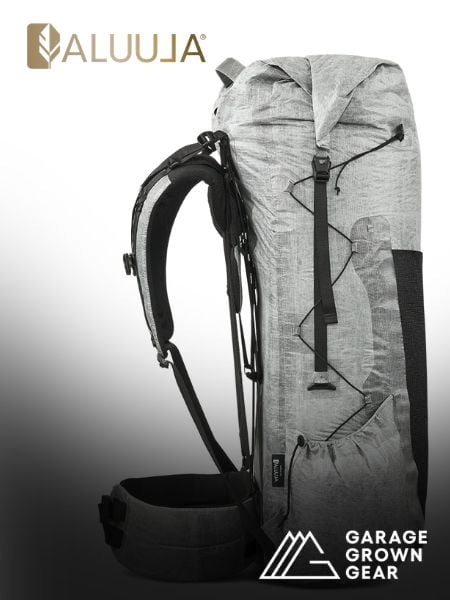
Where does your sweat accumulate the most? If it’s your back (as it is for me), a backpack with better ventilation might also help.

Todd T BPL Member
PostedJan 26, 2019 at 10:03 pm

I always sweat, even at sub-freezing temperatures.  Not profusely, but enough that my clothes are always wet or at least damp.  As mentioned above, a lightweight wind jacket is wonderful for keeping the chill off during trail stops.  My habit when it’s cold is to set up camp ASAP when I stop, then immediately change into my dry camp clothes.  Wet hiking clothes in the morning is a fact of life.

Stephen Seeber BPL Member
PostedJan 26, 2019 at 10:18 pm

What are you wearing?  What type of terrain is making you sweat?  I hike the CO mountains constantly and in very cold, windy conditions.  When ascending, I start with a Power Dry heavyweight base layer and a windshirt.  Down to single digits, within a half mile or so,  I will begin to sweat.  I then remove the Houdini, change to a very light hat and open the ventilation zippers on my pants.  The shirt has a 1/4 zip, which I also must sometimes open.    This will always get me above tree line, where, depending on the wind levels, I will add layers back as needed.

PostedJan 26, 2019 at 11:41 pm

Yes,my wind shirt is a god send,that with a base layer tee covers most situations and usually drop the Houdini with in 10 minutes.J7st trying to figure out some why not to be whet

ozzie

PostedJan 27, 2019 at 2:48 am

I wear a closed cell foam float coat like boaters use.  I can justify the weight because I also use it as a sleeping pad.

Jerry Adams BPL Member
PostedJan 27, 2019 at 3:03 am

If all you’re wearing is a base layer, and it gets wet, then there’s only that one piece of wet clothing.

When I stop, if I just leave on my damp base layer, with enough other clothes over the top, the base layer will dry out after an hour or two.

When you’re done hiking for the day you could take off your damp base layer, and put on a dry camp base layer.  When you start out the next day, put back on the damp base layer.  That requires a second base layer which violates a UL rule, but rules are to be broken when needed : )

PostedJan 27, 2019 at 5:45 am

I’m much like you Tom, I sweat pretty profusely regardless of temp. No mitigating it really. But what I do find helps is to slow down for the last hour of hiking, then, when arriving in camp, throw on a jacket of appropriate temp rating. Often, by the time I’ve set up my shelter and cooked my food and had dinner, my clothes are fairly, if not completely, dry. Works about 95% of the time for me.

Geoff Caplan BPL Member
PostedJan 27, 2019 at 10:40 am

Well sir, I think I can offer you an answer. Let me introduce you to the Brynje mesh baselayer:

Once you’ve stopped laughing, take a moment to understand the concept. To quote Brynje:

The concept is incredibly simple, and is based on the most efficient material you can use … air! Nothing breathes, insulates or dries like air!  The secret to the high performance of Brynje mesh clothing is that it draws excess moisture away from the skin while maintaining a warm regulated cushion of air next to the body. With conventional solid knit underwear the perspiration cannot escape quickly enough through the fabric so the fabric next to your skin becomes sodden and you quickly become cold. With the Brynje Super Thermo the air pockets in between the mesh allow the body to “breathe” more easily and naturally, while maintaining the trapped air for insulation. This allows for superb body temperature regulation.

Developed in Norway for arctic travel, users include Hillary and Tensing on Everest, Lance Armstrong on the Grand Tours, and Norwegian and UK special forces.

I’ve used it for years and it makes a striking difference. Cap it with a tight-fitting, fast-wicking half-zipped T and you have a protective cushion of air that doesn’t flash-chill when you stop. And if you overheat, open the zips on your capping layer and mid-layer and dump the heat in moments. In the summer, I wear it with a looser shirt that allows air circulation over the skin and enables fast evaporation of the sweat without the damp shirt clinging to my skin and causing chafing.

The mesh itself dries on your body in minutes, so on the trail I rarely take it off. Waking up with warm, dry mesh against the skin greatly improves the experience of putting on my chilly, damp outer layers.

It’s available from Brynje in synthetic and merino, and Aclima, another Norwegian company, offers a competitive range in merino.

These days I’m using the Rab Alpha Flux jacket as my mid-layer over the mesh and T. The innovative Polartec Alpha Direct 90 insulation wicks remarkably well. Topped with a featherweight windshirt, I’ve never been so dry and comfortable on the hill.

Highly recommended – few people go back to conventional layering once they’ve tried it.

PostedJan 27, 2019 at 3:27 pm

Geoff,

I think fishnet probably works for most people.  I’ve tried Brynje and others however and it doesn’t work for me.  I quickly soak it with sweat and stay/get cold regardless of my efforts to avoid doing so.

I’ve  experimented with this process every decade or so. Last time I experimented it went something like this:

Temperature in upper 30sF.  Wearing fishnet + Houdini.  Am uncomfortably cold at start of hike and get colder as I sweat.  Hands are cold.  Fishnet soaked with sweat within 20-30 minutes as I hike.  I never do  reach “operating” temperature but I don’t add clothing.  Got to camp in about 2 hours.  Very cold.  Hard to manipulate things with my hands.  I abort experiment, change into dry clothes, eat warm food, get in tent.  Took me a couple of hours to warm up.


D M BPL Member
PostedJan 27, 2019 at 8:54 pm

It’s pricey but Yak wool base layers (Kora) are what I’ve been using for over a year and a half in all conditions including on the PCT and the CDT in cold windy rain and snow when I had to keep moving and as a sleeping layer as well. Of course we all know that it is impossible to stay completely dry while moving in hypothermia type conditions, but I have noticed that my “wet” areas from either rain or sweat are much quicker to dry and are definitely warmer than ANY merino out there, and an added bonus is they also breathe better, which I believe leads to yak wool drying out faster from my body heat. I’ve got drawers full of all the merino products and used them for 50 years. And I treat my merino very well, ph balanced soaps, use lanolin oil for periodic treatments to extend the life of the wool since washing and use remove the natural oils. Never going back to merino, the yak wool is such a better performance fabric it’s worth every penny. I use a ph balanced soap (Orvus) to clean the Kora base layers and they are getting softer and softer as time goes on, really nice!

PostedJan 28, 2019 at 1:33 am

Where does your sweat accumulate the most? If it’s your back (as it is for me), a backpack with better ventilation might also help.

I agree, I much prefer a pack with a trampoline suspension so that air can flow across your back. Similarly, I sweat a lot from my head, and every hat, no matter how lightweight or moisture wicking, traps in heat for me and quickly gets soaked and salt-crusted. Then I started using a chrome trekking umbrella with a hands-free attachment I rigged and go without a hat even above treeline, allowing my scalp to get the ventilation it needs, feels much cooler.

EDIT: yes, I’m wearing a hat in my little photo. That was pre-umbrella days.

Geoff Caplan BPL Member
PostedJan 28, 2019 at 8:45 am

Daryl

With the grid base layer, it really is important to cap it with a tight, athletic-fit T so you form stable air pockets. I don’t own a Houdini, but from the pics it looks far too loose to do the job. If all you were wearing was the grid and the Houdini, I can see why you would get cold, as the air would be circulating far too quickly.


PostedJan 28, 2019 at 4:50 pm

Geoff,

“If all you were wearing was the grid and the Houdini, I can see why you would get cold.”

I agree with your observation. In this experiment I was trying to keep cool enough so I wouldn’t sweat. No luck.  I also was trying to wear as little as possible so I’d have fewer garments to dry later.

“it really is important to cap it with a tight, athletic-fit T so you form stable air pockets.”

I agree.  If I wasn’t experimenting I would have done this at the beginning of the hike for sure.  As I walked and sweated I would have added more clothing to maintain warmth.  When I reached camp I would have replaced this soaked pile of garments with dry ones.

Herein lies the problem and I think this is the problem Tom described.   For heavy sweaters the choice is to be cold or to wet out a lot of clothing.  Yesterday I walked around town with friends for several hours.  I’m wearing a polypro base layer, a light fiberfill parka, stocking cap, hat, hood and a nylon windbreaker.  Temps in the 40s.  I’m wet and uncomfortably cool within 15 minutes and stay that way for 3 hours.  My walking partners are wearing cotton t shirts under long sleeve shirts.  They are cool but comfortable.

So for backpacking my primary garment is a closed cell foam float coat.  The foam retains insulating value when wet.   I can justify the weight because I use it as a sleeping pad and it eliminates the need for a raincoat.


Stephen Seeber BPL Member
PostedJan 29, 2019 at 2:43 am

When all else fails, you can try this:  https://www.rbhdesigns.com/

Vapor barrier clothing prevents sweat from touching your garments.  Could be a solution.

PostedJan 29, 2019 at 3:16 am

Stephen,

Good point on the vapor barrier.  In concept it is the same as a closed cell foam float coat.

Maintaining a reliable waterproof layer on the inside (for sweat) and outside (for rain) of an insulating layer (say a fiberfill jacket) is not an easy task.

The Military Korean Boots did it with, I believe , rubber as the inside/outside layer and and wool felt as the insulator.  Later on I think they switched to closed cell foam (ensolite?) for the insulator.

Have you tried any of the vapor barrier garments at the link you gave?  They might have worked out the details well enough to be worth a try?


Viewing 17 posts - 1 through 17 (of 17 total)
Loading...