Topic

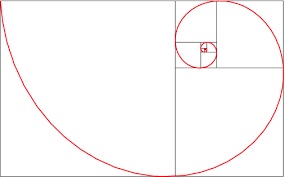
The Golden Rectangle.

Viewing 10 posts - 1 through 10 (of 10 total)
PostedJan 11, 2017 at 9:34 am

Why no use of it in tarps?

I’m designing a 1 man flat tarp and looking at sizes; 8 x 10 is too big of a footprint, 7 x 9 feels a hair too short (I have a long bag).  I need a little more length; it happens that a golden rectangle would be ~9.71 x 6.  Which seems to actually be perfect for the 1 man size I’m looking for, especially giving a good length to width ratio for my preferred half pyramid pitch.

As an artist I like the idea of incorporating it.

Just a thought.

Matthew / BPL Moderator
PostedJan 11, 2017 at 9:51 am

Interesting insight. Fibonacci numbers are how nature works. I love the idea.

MJ H BPL Member
PostedJan 11, 2017 at 10:38 am

I’ve never sewed anything but a button in my life, but the math seems pretty set against a tarp with the short dimension being 6′.  It’s too wide for a 60″ roll of fabric, so you’ve got to use another length of fabric just to get 12″ (after trimming and all).

Art … BPL Member
PostedJan 11, 2017 at 10:45 am

… been a devoted follower of Fibonacci for many years, but mostly in the world of finance.

I don’t do tarps, so can’t speak to its benefits there, good luck with it.

bjc BPL Member
PostedJan 11, 2017 at 11:53 am

Oware seam solution for width of fabric:

“One seam along the center running the short distance (side to side lying underneath.”


David Thomas BPL Member
PostedJan 11, 2017 at 1:24 pm

“been a devoted follower of Fibonacci “

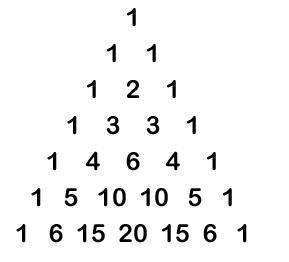
I’m much more of a Pascal’s Triangle guy, myself.  Comes up all the time in probability, statistics, decision making, etc.

(And, yes, I know, you can find the Fibonacci Series within Pascal’s Triangle).

rmeurant BPL Member
PostedJan 11, 2017 at 10:11 pm

You had best use pentagonal or decagonal geometries to design your tarp to get the full benefits of the Golden Section.

And/or use (portions of) 3D geometries with icosidodecahedral symmetry.

Also, the mid tarp I showed in a separate thread recently has a variety of Pythagorean Triangles woven through its proportions. This was for at least two reasons – firstly pragmatic, to get integer proportions by rectifying different Pythag Triangles to one another, and eventually converting to dimensions. This facilitated the design process (when not proving a complete distraction); I developed various Excel programs to help matters. Secondly, it was for reasons of symbolism, to incorporate cosmic proportions into the design, given my lengthy interest in Sacred Art and Architecture. Very challenging and satisfying, providing you don’t let the geometry take over; and of course respect the pragmatic relation to user needs and characteristics, and material/structural/functional constraints.

As is well known, da Vinci, Palladio, and Le Corbusier, among many others, used the Golden Proportion very effectively to relate architecture to the human dimension. Robert Lawlor’s book on Sacred Geometry (Thames and Hudson) is not a bad introduction to the noble art. Or anything by Keith Critchlow.

I’m sure some clever designer could exploit fractals to offer some sophisticated advantages to tarps (probably have already done so).

I have also been interested in the intentional use of asymmetry in tents and tarps to provide enhanced facility, must post about that soon.

James Marco BPL Member
PostedJan 12, 2017 at 6:04 am

Well, I’m not sure how you would implement this. There are two possible modes: erected tarp, flat tarp. Since the average wind driven rain is 45 degrees, this leaves you with some decisions. Of course, it is possible to simply double up on the “Golden Rectangle” to achieve a decent sleep area.

rmeurant BPL Member
PostedJan 12, 2017 at 6:12 am

More subtlety is possible. You might start with a double square tarp, and locate ties at golden proportion points both ways on the long edges, then explore some of the possible forms from making folds along the various diagonals.

It might be worth checking out origami that exploits golden section. Experimental geometry is called for, there are profound natural spatial relationships to be (re)discovered and exploited.

Viewing 10 posts - 1 through 10 (of 10 total)
Loading...