


Mjh that’s true but only for absolute stinkiosity. For relative, it’s still interesting that Brynje smells more than Lifa to me but opposite probably for Tjaard
Topic
Become a member to post in the forums.
 .
.
Mjh that’s true but only for absolute stinkiosity. For relative, it’s still interesting that Brynje smells more than Lifa to me but opposite probably for Tjaard

But is there an Absolute Stinkiosity Threshold that might come into play? I think that could be the case, based on . . . umm, things I’ve heard. Like where the Significant Other (well known to have an olfactory sense much more sensitive to objectionable odors than that of Oneself) has an Absolute Stinkiosity Threshold of 2.5, whereas Oneself has an AST of nearly 7. If it’s a logarithmic score, that’s a pretty incredible difference in detectable stinkiosity.

To come at the taint issue from another direction. I use a product called nuud rather than deodorants. It works by eliminating the bacteria that cause smell. I normally apply every 3 days, so on a longer hike will take an application worth in a cut off sealed straw. Having said that my preferred choice of next to skin is merino. When cool but wet I happily wear my macpac nitro as a base and find that covers a wide range of conditions if combined with windshirt (I stuff mine in shorts pocket which makes it a very quick to layer up or down) or rain shell. I only reach for brynje in freezing conditions but love it then. The challenge with lower half layering is getting on and off over footwear. For most Australian conditions I use a rain kilt over shorts and use gaiters if bushwhacking.
Looking to upgrade my rain shell and having a difficult time finding any shakedry shell, what is the recommended shell since it appears Gore Shakedry is no longer available ? Thanks
@Nick_Garcia: Seems like a potentially complicated question. I’m not an expert on all the WPB fabrics by any means, but there are lots of factors in play: Weight of fabric, degree of permeability, associated DWR treatments, PFAS use (though not for long, if I understand correctly), and more. I have been told by people who claim to know that Gore-Tex will be ditching almost all of their fabrics in the near future, largely because of the ‘forever chemical’ problem. (Which, IIUC, was the cause of the demise of Shakedry.) But they’ll allegedly be replacing those fabrics with new ones made from frog hair, unicorn oil, and phoenix feathers.
My own thought is that it’s all going to be even more of a “pick your poison” sort of affair. Weight v. wetting out v. water permeability v. dry time v. breathability v. price v. ventilation v. fair-trade labor practices v. personal biases, etc., etc.
what is the recommended shell since it appears Gore Shakedry is no longer available ?
Outdry for cool weather and lots of rain. EE Visp if you want a lighter jacket. Poncho or Packa for varied conditions, higher humidity, and better ventilation over a pack. Umbrella or umbrella hat for warm weather and low wind.
https://backpackinglight.com/rain-wind-jackets-testing-shell-game/
Wow, the R7 Shakedry was still available in all sizes up until recently and since I was on their mailing list received a 30% off coupon and bought a couple at $168 apiece, glad I did.
@MJ my “smell rating” is indeed self assessed. however, I don’t think that really matters, since I am comparing various garments/fabrics in the same way.
@Ryan, WBill or others using the R7, how has durability been for you?
wildsnow reviewed a Norrøna Jacket that combined GORE-TEX Active on the exposed parts, with Shakedry, which seemed like the perfect combo to me, but even that they said wasn’t durable enough.
https://wildsnow.com/34241/good-and-bad-of-an-experimental-touring-shell-from-norrona/
Duplicate
@Ryan, so you find it useful to bring both a windstorm and a WPB jacket on the same (short) trip?
I used to do so in the past, but more recently, at least for cool-cold trips, used only a WPB jacket.
My thought and experience, being that with the more breathable jackets, and especially with lots of venting:
If it’s calm and dry, I don’t need a shell. If there’s enough wind to warrant a wind shell, a highly vented WPB shell can vent enough heat and moisture to stay comfortable.
Part of that is that I’ve never thought to wear a windshell under a WPB shell. Doesn’t that reduce the total system breathability too much?
Ryan, Bill, or others using the R7, how has durability been for you?
I haven’t had major durability problems with any rain jackets, perhaps because it is my least-commonly-used layer. People who wear ShakeDry as a windshirt have sometimes reported buying several while they were available. Now that Outdry is all that is left in the membrane-on-the-outside category, I don’t worry about durability at all (because Outdry is thicker/stronger/heavier than ShakeDry).
I think we all wish for a lighter Outdry, even if it might trade off some durability for lighter weight.
more recently, at least for cool-cold trips, [I] used only a WPB jacket.
Many people make similar choices. I think the decision depends very much on ventilation (as you say), personal preference (weight vs comfort), and climate (frequent rain vs occasional rain).
Another factor is your active insulation. If it has some wind resistance (such as grid fleece), then a wind shell is much less important. Extremely permeable layers (Alpha Direct or Teijin Octa/Airmesh) benefit more from a wind shell.
Yet another factor is that “wind shells” need only a small amount of wind resistance to be effective, especially during high output activity. A sun shirt over AD/Airmesh is often all that it takes. If you were already carrying a sun shirt anyway, then you might never miss a wind shell. Rain gear is more comfortable in high wind than it is when calm.
wear a windshell under a WPB shell. Doesn’t that reduce the total system breathability too much?
Yes and no. WPB over wind shell is an edge case — an infrequent combination for specific conditions. Mark Twight proposed it when developing his seven-layer system for (almost) all weather conditions. He already recommends the WPB layer mostly for static use (or very cold weather), so the wind shell is mostly an extra layer of insulation that you may already have with you. His wind shells were DWR-coated and tightly woven, so they also added an extra layer of protection from water ingress and condensation.
In warm weather, the combination would certainly be too much. In cold, continuous, rain, then it could be a nice addition. It isn’t necessary, though. You can achieve a similar effect with an emergency poncho over a WPB, or with another layer of fleece (instead of the wind shell) under the WPB.
Thanks Bill, and apologies for the typos!
Funny, I haven’t thought about Marc Twight’s advice for years. 20± years ago, his book was the first time I heard anything else than the old “baselayer, fleece, WPB” system, and even the concept of looking at systems and real world use, like over layering a parka for breaks.
Re. Wind shells:
For example, on the last trip cold weather trip I did ( Hut-to Hut in March in Switzerland), I did bring a very thin sun shirt, to layer over my Brynje, either in the huts for warmth and modesty, or while skiing uphill if the weather turned hot.
So yes, if it becomes so hot that my WPB jacket unzipped over fishnet is too hot, I planned to use that.
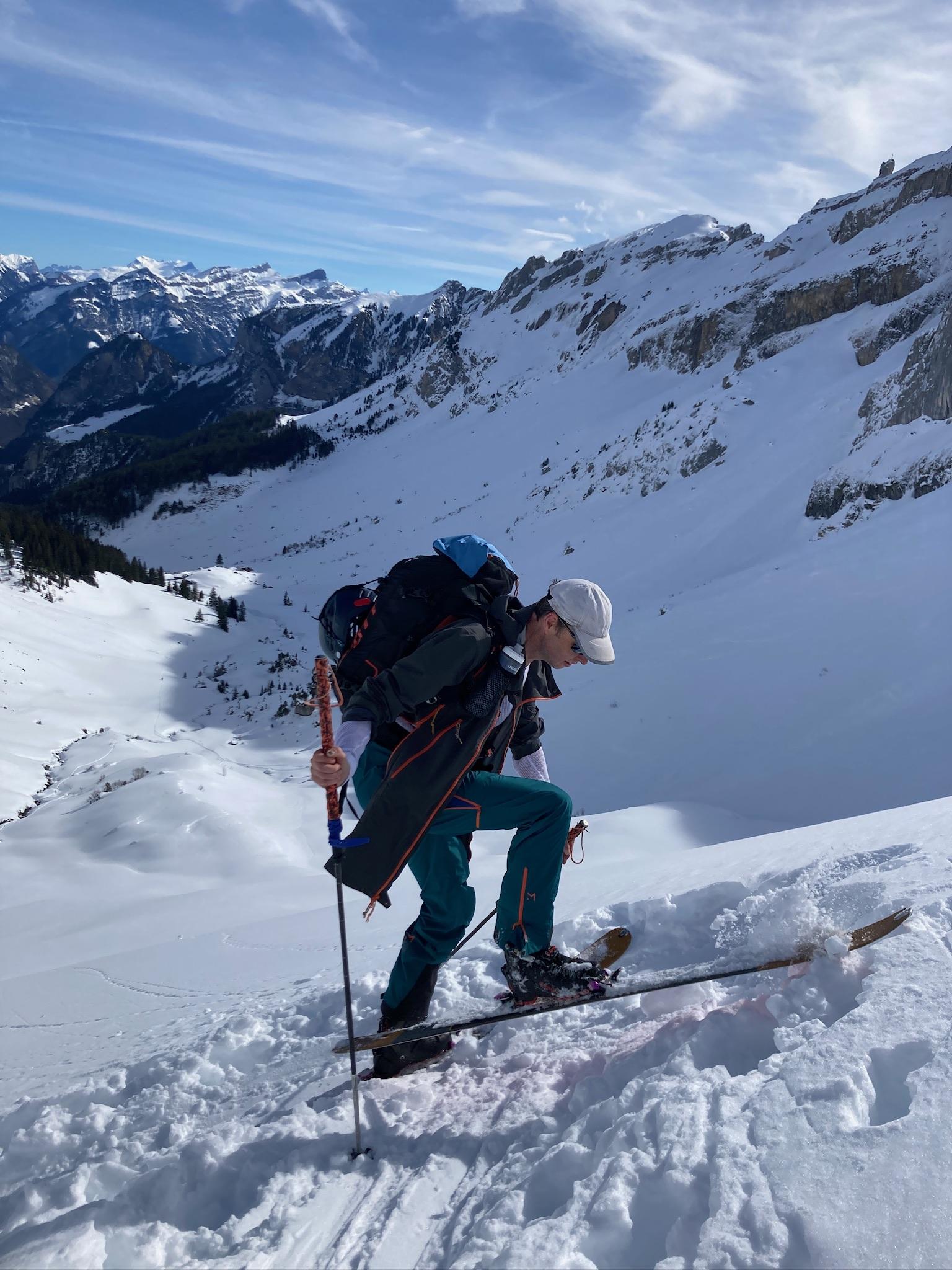
But it seems like Ryan is advocating for a windshell with more wind resistance, in addition to a WPB jacket, and I was curious to hear more about the use of that system.
I am not Ryan, but here is my interpretation of what Ryan said in the article.
Ryan: As conditions get stormier and colder, I opt for a 2-shell system (wind shirt + rain jacket). This adds a touch of warmth in the air layer trapped between the two shells, and much better storm protection in very heavy rain and high winds.
The wind layer has several possible functions when used underneath a rain layer:
1) It is an extra layer of insulation. It is not better than Alpha or some other insulator, but if you are carrying a wind layer then it is insulation that you have with you.
2) In prolonged rain people usually get wet. They often blame “leaks”, although I suspect that a more common culprit is condensation. Another hypothetical way for water to ingress is by overpowering the hydrostatic head of the membrane. This has been discussed on BPL in the past. The short version is that it depends on the wind and the size of the raindrops, which vary, as well as the specific membrane. There are many anecdotal “suspicions” of this kind of water ingress, especially with electrospun membranes. I have not been able to replicate it underneath a shower, but that does not mean that it can never happen.
Inside of a waterproof layer, you will get condensation for sure. Inside of a WPB, once the DWR wets out, then you will get condensation as well — possibly more than with a straight waterproof because the wet-out layer is cold.
In a perfect combination of weather and low output, you might stay dry inside of Outdry/ShakeDry that cannot wet out, but only if the outside vapor pressure is lower than inside, which requires some luck.
At minimum, it is nearly impossible to avoid avoid some condensation while active.
One way to deal with water under the rain layer is to wear insulation that works when damp, such as fleece (especially Alpha Direct or Octa/Airmesh which retain little moisture). You will still be damp, but you will be warm, and your body heat will eventually move the moisture away from you. Eventually, after the rain stops, your body heat will “cook” the system dry.
In warmer weather I like to wear just Brynje under a WPB, at least when I am not around other people.
Another way to deal with condensation or water ingress is to wear a DWR layer inside of your rain layer. With any luck, condensation that forms inside the rain shell will roll off of the wind shell. The wind shell may also provide some defense against rain driven through the rain layer (if such a thing really happens). So there is a possibility that a wind shell inside of a rain shell MIGHT BE dryer.
In any case, a wind shell won’t be any worse than wearing fleece under your rain shell.
3) One more advantage is that, when the rain stops, you can take off your rain shell and still be protected from wind. This is valuable if you are wearing only Brynje or AD/Octa under your shell(s).
All of these effects are subtle, and may occur only in specific conditions, which is probably why you don’t see the advice more often. Some people switch back and forth between wind and rain shells. Others wear only a rain shell and skip the wind shell completely. Still others wear two layers of rain gear in heavy conditions: WPB (for comfort and versatility) with a poncho (maybe an emergency poncho) over it for the cold/driven rain that Ryan describes.
TLDR: Wearing a two-shell system is an interesting alternative for cold/driven rain.
Choose what you like for the conditions you face, and be aware that other combinations may be possible.

something that happens to me is that I wear too much and sweat. Then, even if I have breathability the sweat will overwhelm it
so, take everything off except lightweight base layer and rain jacket
even then I might sweat but at least only the base layer gets wet, and if I stop, it’ll dry in an hour or so

Excellent write up! I was hiking in Northern Maine for three weeks in November (AT SoBo hike) and this type of layering worked exceptionally well for me. I found the Brynje / REI Flash combo indispensable. Another modulating factor I found was hat on / off and over / above ears. Zip up / down, hood on / off. As I hiked up / down, and rest, I found myself making many subtle changes to stay actively cool/warm and dry. Addition of the Versalite over the whole thing while above treeline in poor conditions was awesome. I found the REI flash material pilled up under the rub points with my pack – when I went to replace it this week I sadly found it had been discontinued. I ended up replacing it with a Janji Zephyrunner – no experience with it yet, but seems functionally similar (breathability and pockets) although a smidge heavier. Any other suggestions on a good replacement for the Flash?
Ryan, This layering concept is very helpful! REI no longer sells the Flash jacket, what would you recommend in its place that would be similarly breathable?
This piece was linked to in today’s email (“Choose layers for your slowest miles”) on Sept 27 2026, but at least one of the key pieces is no longer available — the Gorewear R7 Shakedry. Any suggestions on replacements?
Ryan, great article helping to clarify this topic, especially viewing from a layering system point of view. Hiking at higher elevations I often deal with very windy conditions; I always assumed I should “block” the wind. I’m confused about high-permeability fabric recommendations; won’t that allow the body envelope too much exposure to wind for optimal comfort? What am I missing? Appreciate you thought on this factor.
Most of the talk here is for mountain or desert adventures with low humidity but I would like to talk about the Midwest and start where it is hot and humid.
In the summer where it is 80F+ with full sun and high humidity, I start with a LS or hoody Echo depending on if I want to wear a hat. For more sun protection I move up to the OR Activeice Spectrum LS or Hoody which is like a thicker, less breathable Echo but still does a pretty good job (but I usually don’t need it). For bottoms I wear a pair of Ex Officio Boxers in black that are roomy, breathe well and still look halfway decent in public if the Echo is covering part of them.
For bug protection you can apply your favorite bug repellant to either shirt but be aware that you may sweat it off over time. I also move up to my REI Sahara hiking pants from the 2000’s that have a crotch gusset that makes them roomy and the material is fast drying and durable unlike some hiking pants that are too thick or shred easy.
For rain protection I go with a poncho or another type system that covers my upper arms, upper legs and torso and add a rain skirt if I think it is needed.
When it starts going into the shoulder season I reach for a Polartec Alpha or a Mountain Hardwear AirMesh hoody. You can wear it by itself or pair it with the Echo. I find that once it starts to cool down there is usually always a slight breeze so to keep warm and for around camp you want a wind or rain jacket that stops it and keeps you warm while also having a full zip, pit zips, and/or mesh pockets that can be opened up to regulate your temperature. For bottoms I add some Polartec Alpha leggings and some wind or rain pants depending. If it gets even colder add the puffy of your choice.
In the Midwest things have changed so that mainly you get these storms that are pretty rough for up to two hours but then they move on. If it does rain for a day it comes in waves with decent breaks. I have been using the new OR Helium Rain Pants made out of Toray and they seem up to the job in cold weather. For a jacket I have an OR Foray 3L Goretex and an OR Ascent Shell both with TorsoFlo.
Since you asked for our personal updates: I find your article is still largely current. Not a lot has changed (except for the PFAS laws screwing up WPBs for everyone).
ZPacks and North Face make 83 and 133gsm Octa garments with half and full-length zippers, which I find more comfortable for dumping heat rather than pullovers.
I still like windshirts, but sometimes a sunshirt does the job over AD/Octa/Evolve.
Maybe one thing that has changed is the understanding that WPBs are not all the same: Some are more Breathable and less WaterProof, while others are vice versa. That dovetails with your remark a while back that you were giving up on lightweight WPBs for the mountains — most of those are in the “high B, low WP” category.
Your idea of heavier mountaineering jackets that are lightweight by minimal features is a good alternative. But even those are in a state of flux right now: The Alpha SL appears to be discontinued, and the Beta SL weighs 50% more. Columbia Cassiar Pro is an Outdry Extreme jacket in the same weight class as the Beta SL, about 12 oz.
While these jackets give up some MVTR, their more-waterproof and stiffer fabrics are more reliably warm and dry in cold, windy rain (which is when it matters most).
Become a member to post in the forums.
 New Gear with Aluula FabricsLighter, stronger, more abrasion-resistant, and highly water-resistant - explore ultralight backpacking gear made with ALUULA Graflyte fabrics. Engineered for exceptional strength, durability, and lightweight performance, ALUULA Graflyte helps reduce pack weight without sacrificing reliability, making it ideal for demanding backcountry adventures.
 © Beartooth Media Group Inc.
 Loading...