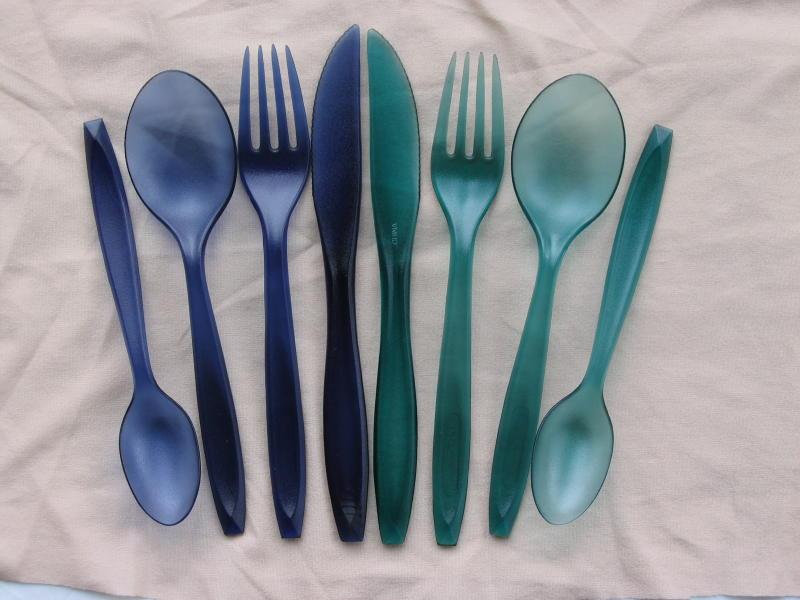
You can’t really stab your food with it like a real fork, and you can’t really scoop your soup
Ken Albala
Courtesy The Guardian 09:32 6/12/2024
edited RNC, FYI, YMMV
Since Auguste Comte, philosophers have assumed that progress is an inevitable feature of history. As the father of positivism, Comte argued that the human condition always improves as science and technology advance.
A single commonplace object proves Comte’s assertion absurd and fallacious: the spork.
The spork is a prime example of the debasement of our species. Everyone who has ever tried to use it realizes the idiocy of the contraption. Its design – a shallow bowl with small projecting truncated tines – precludes any effective use as either a spoon or a fork.
Instead, it combines the worst features of both utensils: liquid spills through the diminutive tines before soup hits the lips, and the tines themselves are too blunt to easily puncture and convey to the mouth anything that might be considered solid food.
Why then are we subjected to this disaster on a regular basis? And what could set us free from its poorly manufactured grip?
The origins of this utensil date back to 1874, when a doctor and inventor named Samuel W Francis was awarded the first US patent for a knife-fork-spoon hybrid. Made of metal and designed to pierce solid foods, it was never intended for people able to use cutlery in each hand. Rather, Francis designed his new utensil so that a mother with a baby in her arms, or a person with only one functioning limb, could manage to eat without difficulty.
The term “spork” was first trademarked in 1951 by Hyde W Ballard, and the well-known plastic version appeared on the market in 1970, at which point it began to proliferate in every takeout and fast-food establishment in the nation.
Obviously, the quintessentially American fast foods – hamburgers and fries, pizza, and sandwiches – need no utensils at all; their informality and portability appeal to our sense of speed and convenience. But for any food that does require a utensil, the spork costs businesses exactly half as much as supplying customers with a spoon and fork. That’s how this patently absurd excuse for hybrid cutlery insinuated itself into our dining space, forcing us to abandon the efficiency of an array of silverware to tackle every possible shape and consistency we want to cross our lips.
The spork that’s become ubiquitous over the last few decades – the plastic version – deserves the full brunt of our opprobrium. Pre-eminently disposable, destined for landfills and the stomachs of defenseless sea creatures, plastic is the single most heinous material humans have ever invented. This is not only because of its detrimental environmental effects but from a purely gastronomic point of view. It is the taste of industrial waste.