Topic

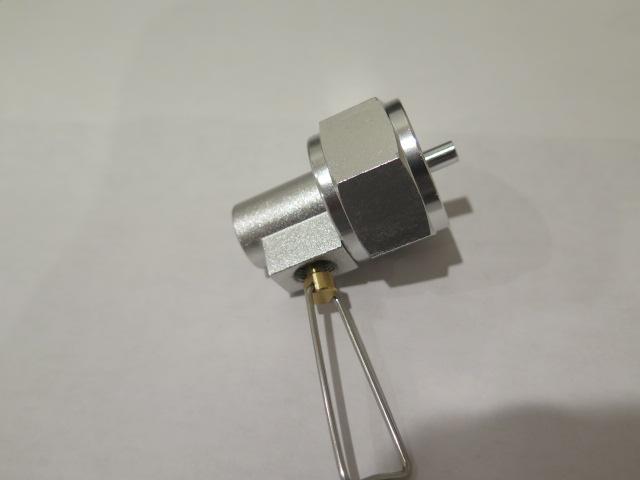
Someone tell me again why this is bad.

Viewing 5 posts - 1 through 5 (of 5 total)
stephan q BPL Member
PostedMar 16, 2021 at 11:28 pm

Howdy,

Years ago I posted about the common refilling of Lindal/butane canisters being refilled with propane. This was in scenarios above 5000m. What are the scientific realities of using propane in these canisters at lower elevations?  These  refill devices are readily available. Wouldn’t the valve fail before the canister? As in- the valve would leak/fail before usage. Thanks


Michael B BPL Member
PostedMar 16, 2021 at 11:49 pm

I don’t get exactly what you are asking. The scientific reality associated with this topic (putting propane in a canister designed to hold butane mixes) is that propane has a higher vapor pressure than what the butane canister was designed for. You risk damaging the canister and possibly injuring yourself if your math isn’t right. Idk the math required to safely put propane in an isobutane canister – Roger or some other stove buff will likely comment. I am not sure what the valve has to do with it, is the valve on these canisters (lindal) designed to provide over-pressure protection?

Jerry Adams BPL Member
PostedMar 17, 2021 at 8:10 am

the canister bursts before the valve

then, maybe there’s a fire or explosion, or if you’re lucky, you just have no fuel to burn

5000m?  where could you be going that’s 5000m?  you are very adventurous.  That makes things worse, more likely to burst.

Michael B BPL Member
PostedMar 17, 2021 at 12:01 pm

whether at 5000m or sea level, the bigger affect will be the ambient temperature, ambient pressure only swings by a few psi relative to the immense increase in vapor pressure as ambient temps increase. It is likely to be colder at altitude, depending on the season and location, so you actually may be better off at high altitude, but it is still a big risk – Is a nearly empty can less likely to burst than one which has been filled? I would guess most definitely yes, but I would not know by how much. I’d have to whip out my thermodynamic textbook or some other resource which has vapor tables in order to understand % of vapor inside the canister, and how that % of vapor and the pressure of that known quantity of vapor at a given temperature range compare to the canister burst strength. I am sure I could probably look most of this up, maybe not the canister specs, but I am sure someone here knows that too :)


Roger Caffin BPL Member
PostedMar 17, 2021 at 10:49 pm

What are the scientific realities of using propane in these canisters at lower elevations?
As Michael wrote:
The scientific reality associated with this topic (putting propane in a canister designed to hold butane mixes) is that propane has a higher vapor pressure than what the butane canister was designed for. You risk damaging the canister and possibly injuring yourself if your math isn’t right.
The canisters are generally very well-made. If you only do this in the winter (like, <0 C), the VP may stay low enough that you can get away with it. On a hot sunny day under the back window of a car, expect explosions.

Is a nearly empty can less likely to burst than one which has been filled?
In practice with b/p contents, yes, because most of the propane will have preferentially evaporated off due to use.
For a canister refilled with just propane, no. The amount of liquid gas in the canister has zero effect on the pressure. Physics.

These refill devices are readily available. Wouldn’t the valve fail before the canister?
No, the valve is probably the safest part of the canisters. Usually, the bottom of the canister blows out. We have an article here about that:
https://backpackinglight.com/exploding_gas_canisters_the_hazard_of_overheating/

Cheers

Viewing 5 posts - 1 through 5 (of 5 total)
Loading...