I did it in 2014. 2016 is looking like it may be at least a “normal” snow year, so July is quite early. You will need crampons at least; ice axe and self arrest skills might be prudent. August or September would be safer, especially solo.
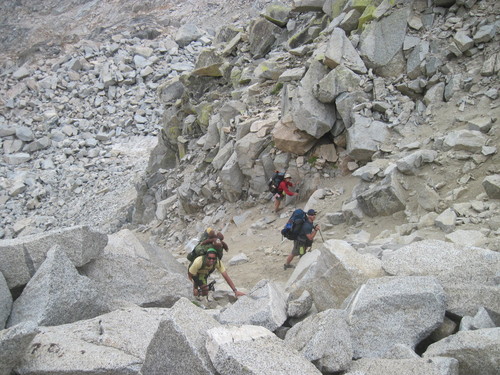
The occasional spots of actual class 3 (i.e. climbing, both hands on rock) are not particularly daunting or exposed. The bigger difficulties are negotiating steep loose sections, generally with one pole dug into loose dirt or rubble and one hand looking for holds; and keeping concentration hopping across extensive talus fields, where a slip down a gap could spell disaster. Setting aside snow/ice considerations, the north side (descent) of Snow Tongue Pass was by some margin the most dangerous part of the whole Route – very steep, very loose. This photo gives an accurate feel (from http://www.summitpost.org/mid-snow-tongue/815572):

In combination with the Skurka maps, you should get the Roper book – you can download the Kindle version to your phone.
If solo, I’d strongly recommend getting a SPOT device or satellite phone if you don’t already have one.
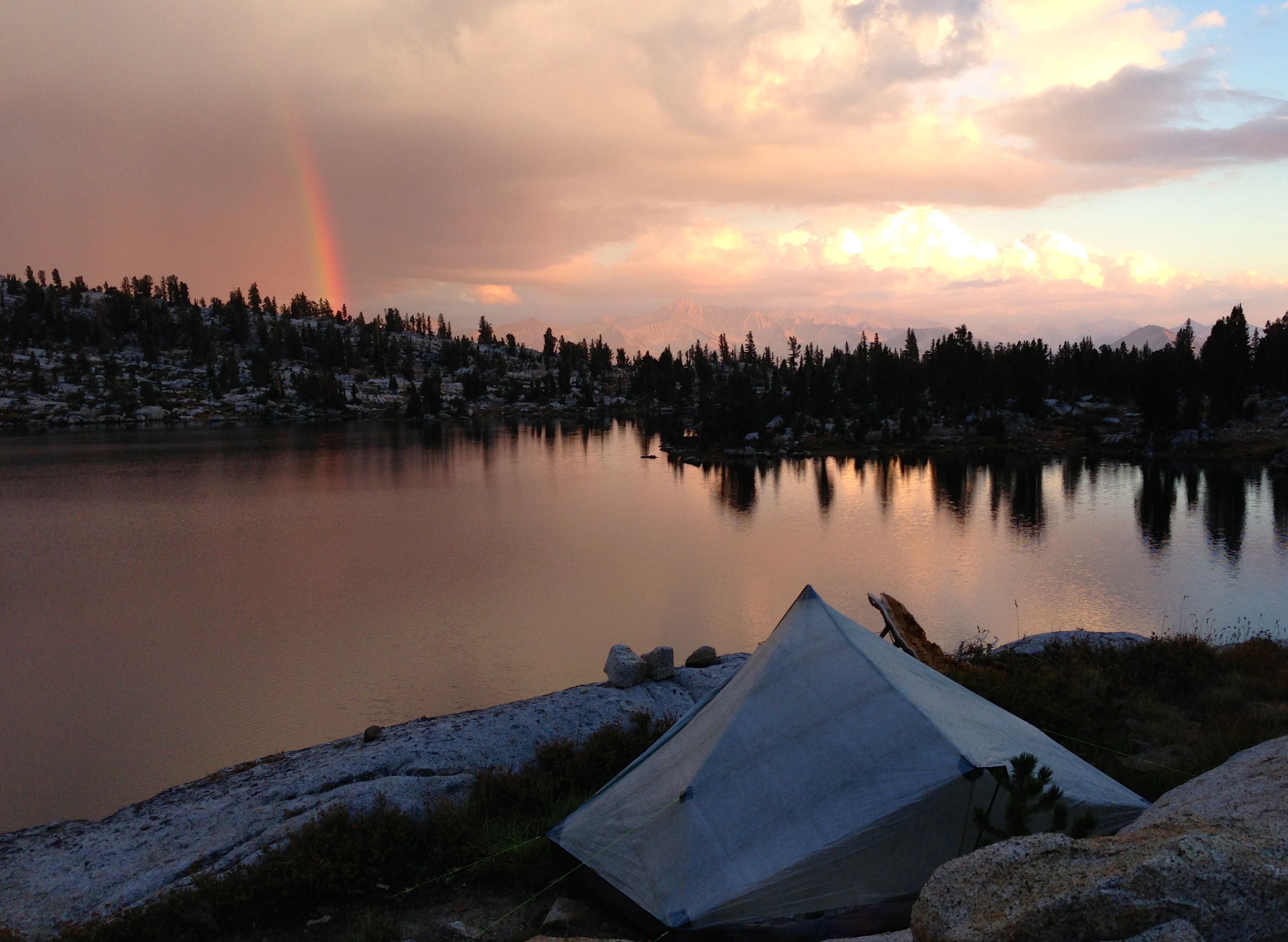
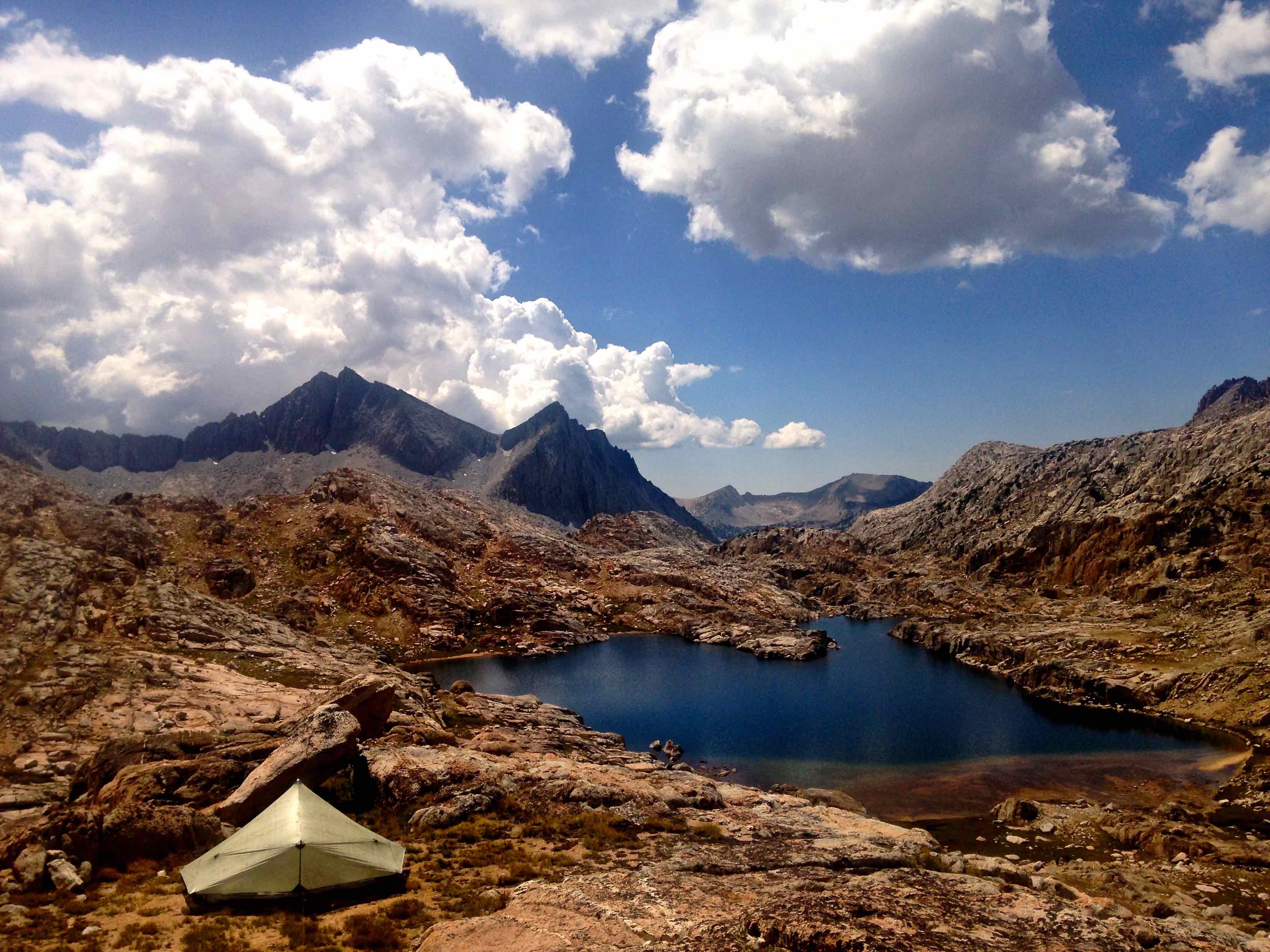
Grouse Lake is a gorgeous spot to aim for on your first night if you get an early start. Later in the trip, my favorite place to linger would be the Bear Lakes & Seven Gables area. Also Minaret Lake to Thousand Island Lake – that is busier, but you can find solitude wandering away from the main trails up the back of the lakes there.
Parcher’s Resort (via Bishop Pass) is a good resupply option.
Grouse Lake
Big Bear Lake, Seven Gables