Topic

Solid Advice for Skiing & Backpacking?


Forum Posting

A Membership is required to post in the forums. Login or become a member to post in the member forums!

Home Forums General Forums Winter Hiking Solid Advice for Skiing & Backpacking?

Viewing 17 posts - 1 through 17 (of 17 total)
  • Author
    Posts
  • #3846259
    Zachary
    BPL Member

    @tropicalzach

    Locale: Pacific Northwest

    I have started to get into hot-tenting and bush-crafting as a supplement to my winter backpacking with long nights, but find that the weight is too much for comfortable hiking even with good snowshoes so I will be using a pulk.  I am interested in winter backpacking where I can use a combination of skis, snowshoes and boots-only (in camp or when snow is not deep). Most of my winter backpacking is in a mixture of broken trails and off-trail exploration of the Cascades in the PNW, but not in technically challenging areas.  Overall, I want to keep my gear to a minimum while still being very effective in various snow conditions. That being said, I’d like to explore the backcountry using a combination of nordic ski equipment for general long-distance travel with a pulk, and switching over to snowshoes when traveling in dense forests or steep terrain, then use boots-only when in camp or when traveling on groomed trails that are not fully snow-covered.

    I am seeking recommendations from the BPL Community for a good ski system to supplement my snowshoe equipment and campsite boot.  What is a good ski for this type of travel?  Is there a recommendation for a boot that I can use for nordic skiing, snowshoeing and campsite work without having to change out to a different boot?  For the boot, is it better to have an insulated unit or use insulated socks, or both?

    I am not an inexperienced winter backpacker or downhill skier, but am looking for some outside guidance. Essentially, I am knowledgeable enough to know that I don’t have enough knowledge.  Looking forward to some guidance.  Thanks.

    #3846263
    Ryan Jordan
    Admin

    @ryan

    Locale: Central Rockies

    For low-angle terrain and touring, I use a BC NNN (manual) setup with leather, insulated boots (Alpina Alaska) and reasonably wide (83/62/70) metal-edged skis (Madshus). The skis have a herringbone texture on the bottom for rolling terrain. I almost always bring kicker skins, and on steeper routes, full skins. On some trips, I’ve *also* had to bring snowshoes for bushwhacks where skis are a huge pain, and the Alpina Alaska boots are comfortable for walking. In addition, the Alaskas do well with crampons, which I may take to cross passes, etc. In extreme cold, I have a pair of Forty Below Neoprene overboots that I wear over the Alaskas. I’ve been very happy with this system, and have used it for the past several winters.

    The only caveat is that if you’re going to do any carve-turning with this system on “steeper” terrain, it takes a bit more free-heel ski experience to drive a BC NNN system, and the manual bindings are a little bit risky since they don’t release easily.

    #3846269
    Zachary
    BPL Member

    @tropicalzach

    Locale: Pacific Northwest

    Ryan, thank you for this advice. Makes a good place for me to start this journey.

    Also, thank you for BPL…one of the most valuable memberships and resources I’ve ever experienced.

    #3846284
    GW Hayduke
    Spectator

    @unworhty

    The NNN-BC standard Ryan mentions is affordable and common and a good starting point.

    But since this is a UL centric forum where people generally do not mind spending a good amount of cash saving grams, I should mention that Skimo gear is far, far lighter and ski better in all terrain, arguably even on the flats, than NNN-BC. Boots are equally comfy for walking, at least in my experience. But the price of admission is steep, even if shopping used.

    This also used to be called AT or Randonnee, but due the current popularity of racing on this type of gear the weight has gone way down and the quality of some boutique components is just incredible.

    Ignore the super pricy Skimo racing setups, as the skis are too short and skinny for generally messing around in the mountains. The old Voile Objective with a pair of mid level Dynafit two buckle boots is my go-to and has been amazing with a pulk, even in steep trees. To the point actually where I would skip the snowshoe transition you are talking about. The Objective also comes with or without scales – but I recommend skins in the pack always, because steep happens.

    #3846292
    Haakon R
    BPL Member

    @aico

    My setup is quite similar to Ryan’s.
    BC NNN with regular leather boots in temps down to around 10F, and Lundhags Guide Extreme in lower temps.

    I have a pair of snowshoes, but I never use them. Well.. I used them for backcountry snowboarding before split boards were a thing.
    I generally find the experience inferior to skis in any terrain. I do have quite a broad selection of skis, so I can usually adapt quite well to the terrain I’ll be moving through.

    That leaves me with just the skis and shoes to consider. And with the need to walk on foot being almost none existent, walking comfort isn’t really part of my selection criteria. But from what I’ve heard, the new Xplore system is generally considered to provide better walking comfort than similar boots for BC NNN. More expensive also, so there’s that.

    For camp I have slew of options, and just pick what makes sense for each trip.
    I have two different overboots, but neither accommodates the massive Lundhags Guide boots, but the Guide boots will handle very low temps on their own and the overboots do fit the inner felt boot of the Lundhags if I want to slip into something more comfortable. I also have down booties and/or something we call ullkartanker in the Nordics (very thick felted wool socks) I can use instead if the felt inners need to dry out.
    My largest overboots fit over my regular leather ski boots, which is a great combo if I need to wear something more sturdy than overboots with just down booties around camp.

    Winter backpacking with skis is a great way to experience nature and if you progress slowly I think you can enjoy it without too much upfront investment. I’m still adapting and adjusting after doing it for almost 30 years :)

    #3846294
    Zachary
    BPL Member

    @tropicalzach

    Locale: Pacific Northwest

    Thanks for the feedback GW, I appreciate it. This looks like an amazing system, but may be a bit more of an advanced system than I need. I am not opposed to paying for the good stuff up front since it is often better to feel the pain once and pay for a good solid system vs. paying several times to upgrade.

    My question is that that the system I think I am looking for is more for casual traveling to a backcountry camp and spending time there, over long distance backcountry exploration of the mountains.  The skis look fine, but the boots look like they may be a bit too stiff for campsite.  I am a bit ignorant of this so I’ll do more research, but is the system you recommend more for the pleasure of getting to the top of a hill for a fun ski down, or for traveling through backcountry and hanging out at a deep winter camp?  Maybe I am not asking the right questions, so please forgive my ignorance.

    #3846295
    Zachary
    BPL Member

    @tropicalzach

    Locale: Pacific Northwest

    Helpful advice Haakon. When I look online, it seems like there are a couple of options for “Xplore”; will you narrow down what you are referring to, please.

    Sounds like the overboot for camp is a key component.  Ryan recommend the Forty Below, do you agree?

    #3846301
    GW Hayduke
    Spectator

    @unworhty

    I have skied for a long time and done winter touring for just as long. I’m also Scandinavian but live in Colorado these days. When I tour it’s not for sick downhills; it’s for the winter scenery, the quiet, and the unique challenges of comfort and survival

    Having used all the systems I am currently convinced light Skimo with slightly wider/longer skis than the racers use is the best all round setup. Maybe except for Scandinavian ski touring trips where unique terrain with groomed, gentle, long ups and downs calls for longer skinnier skis with BC or Xplore boots.

    But in Colorado, and the Cascades as far as I remember, the flats aren’t all day affairs while steepness is pretty much unavoidable. For a skier of average ability like myself I feel much safer with Skimo boots than Alpina Alaskas on any downhill, especially with a pulk. Now a died-in-the-wool veteran telemarker would of course scoff at such gear, but that’s not me.

    Any ski boot is not ideal for camp. They will be damp and cold after all day use, and need gaiters for sure. I use knee high mukluk style down booties with 9mm ccf insoles if I’m just postholing around camp doing chores or sitting in the tent.

    Another advantage to most Skimo boots vs medium weight BC is you can remove the inner foam bootie and dry it in the bag overnight.

    #3846309
    Tom M
    BPL Member

    @twofeathers

    Locale: Kalispell

    Ive been using the NNN Bc paired with madshus (99-68-84) and Alaska boots forever. Last year i switched to the new xplore binding  on a rossi xp100 (100-80-90) with the Alaska boot and what a world of difference. I’m primarily using this for traverses in the Bob Marshall and the new xplore binding has more features that work well for me on that terrain. I’m toying with the idea to adapt the xplore binding to a snow shoe deck.

    #3846559
    Zachary
    BPL Member

    @tropicalzach

    Locale: Pacific Northwest

    Thanks for the feedback Tom.

    #3846570
    Ryan Jordan
    Admin

    @ryan

    Locale: Central Rockies

    Last year i switched to the new xplore binding

    This is the direction I’m heading as well for my (non-Dynafit) bc setup. I tested out an Xplore rig and was so impressed by the increase in downhill performance relative to NNN BC. It’s still really nimble and light and way more touring-comfortable than heavier tele/dynafit setups.

    #3846686
    AK Granola
    BPL Member

    @granolagirlak

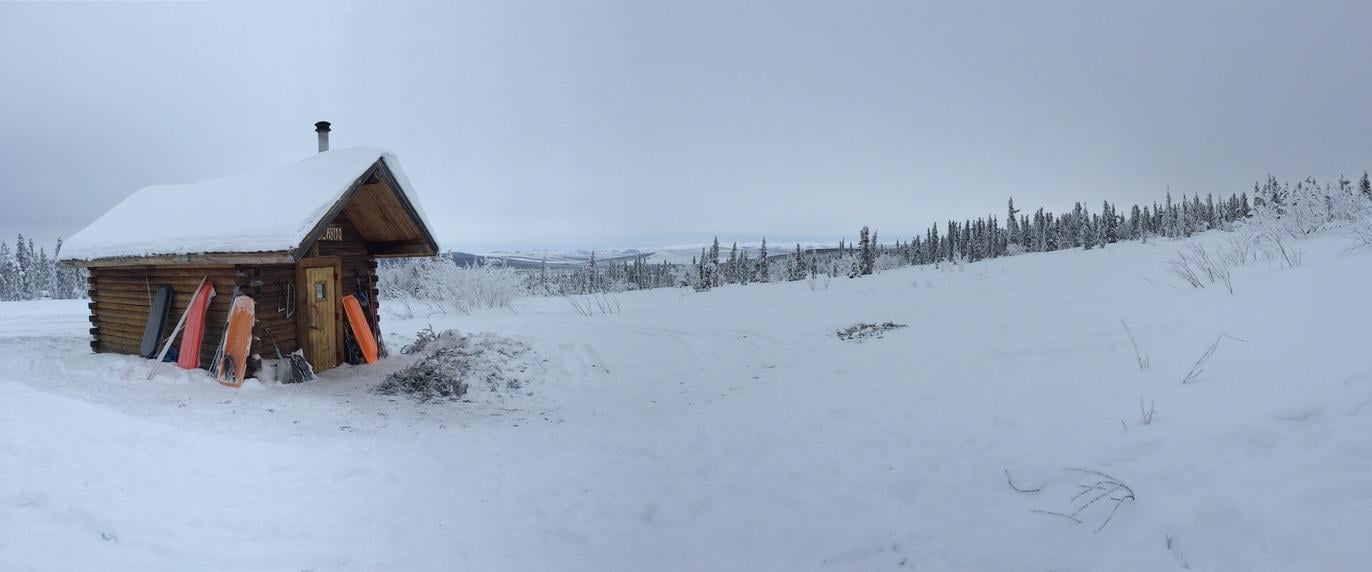
    I think your snow is usually quite wet, yes? very different from our snow, which will make all the difference in gear choice. Here we would never have only one boot for all the different activities you mention, because a x-country ski boot will never be warm enough for camp wear, and not tall enough for snowshoeing in really deep powder. Going to a backcountry cabin I would usually wear my Salomon toundras for hiking or snowshoeing, my ski boots for skiing – hard to walk in those with the binding, and mukluks for camp and cabin wear. Sometimes we do all three on a given weekend, like the attached pic, where there was a fair bit of fresh snow on a Friday making skiing laborious and slow. Snowshoes were the ticket both for travel that day and gathering firewood in the deep snow among the trees. Without them we’d have punched 4 feet down. But by Sunday, the snow on the trail had settled nicely, making a perfect skiable surface, so we were glad to have brought both snowshoes and skis and get some speed on the way out. We used the skis for short excursions too on the layover day.

    Do you have your pulk already? They are easy to make. If you’re a cheapo like all of us, you can make a nice one out of a Paris sled, some rope and pvc pipe, plus a couple of carabiners. Everything gets wrapped in a cheap tarp. Works as well as any fancy setup, but maybe not as pretty as a red and black slick number made to order.

    #3846844
    Steve S
    BPL Member

    @steve_s-2

    I do not know where you are in the Pacific Northwest, but if you are in the Cascades and not skiing along a road, you are likely to be near trees with large pits formed around them. The pits form because snow catches on needles above. The pits form early, and grow through the season as the snow deepens and melts back.

    The tree pits are not much of a problem when skiing with a pack, at least compared to the way they grab pulks. They cause the pulk to slide downhill sideways and greatly inconvenience the skier — even when the skier stays upright. This slows travel along many trails, especially later in the season.

    So, if you are going to pull a pulk, be sure the route is suitable. Or you can learn from personal experience.

    #3846912
    Michael Schlesselmann
    BPL Member

    @mschless

    Locale: Southern Los Padres National Forest

    This is such a timely post. I’ve been looking at branching out into a ski and pulk system for the Boundary Water Canoe Area of northern MN. I have a pair of skinny 59/55/51/55 x 193mm Salomon skis with no edge that I bought when I moved out here to use on tracked snow, and have used them with a lack of control on wild snow, which lead me down the rabbit hole.

    What width of skis are people using if primarily on flats/mild terrain? I see a wide range of snow conditions on the frozen lakes from deep powder to wind blown crust on variable snow. Ryan I see for rolling terrain you’re still using a relatively skinny ski underfoot. Does it provide enough float under a loaded pack? I’m 190lbs for reference.

    #3847220
    Eric Blumensaadt
    BPL Member

    @danepacker

    Locale: Mojave Desert

    My only advice on this topic regarding pulks is that I’ve found X’d poles turn much easier than parallel poles. I’ve used a large rubber/neoprene O ring at the X to hold the poles together and still give them room for movement. Likely webbing can do the same using a water knot.

    If you want, for safety, you can add a long aluminum hinge to the back of the pulk as an “emergency brake” so it will not slide backward on uphills when not attached to a skier. jus’sayin’

    #3847325
    Michael Schlesselmann
    BPL Member

    @mschless

    Locale: Southern Los Padres National Forest

    Eric, I totally agree. I built a pulk up last year using a paris sled, fiberglass landscaping “rebar” and skipulk hinges. The crossed poles are a MUST. Interesting idea on the hinge brake. I pretty much am just doing flat trips across frozen lakes in northern MN, but if I ever branch out into any level of topography that would be something easy to add on.

    #3847332
    Steve S
    BPL Member

    @steve_s-2

    The crossed poles work until the sled tries passing you on a downhill run. Slopes are also inconvenient. There’s a reason or two that the Norwegians traditionally don’t cross their poles.

Viewing 17 posts - 1 through 17 (of 17 total)
  • You must be logged in to reply to this topic.
Forum Posting

A Membership is required to post in the forums. Login or become a member to post in the member forums!

Loading...