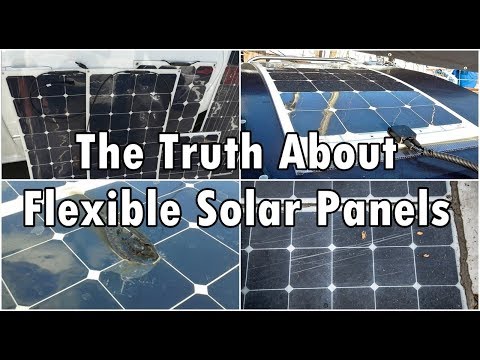
I have used solar panels extensively on long wilderness trips, with good success. However these ultralight solar panels always seem to lose power over time. I have mostly used the now defunct but once the “gold standard,” sChargers, and more recently Lixada or similar panels. After a few months they usually seem to lose 50% or more of their efficiency, say from 1 amp to .4 amps, slowly decreasing until they are nearly useless. (I consider an ammeter to be indispensable for use with solar panels while hiking.) This with no visible damage to the panels and a clean surface. If you use solar panels, have you noticed this loss of efficiency? If you’re not using an ammeter with your solar panels, I highly recommend it to see how much power they’re actually producing and to test the efficiency of your cables.
Topic
Solar panels slowly losing efficiency?
Become a member to post in the forums.
- This topic has 16 replies, 4 voices, and was last updated 3 days, 9 hours ago by .
I am curious about this. Lots of reviews online about new panels but no data about how it loses capacity over time.
I seem to recall a challenge with solar power in general being that the panels wear our and become a headache to dispose of. It would make sense that backpacking ones would wear out. They probably aren’t designing them to last super long. I’d guess Buck uses them a lot more than the average REI customer. Probably not a lot of feedback to the manufacturers saying “this is a problem.”
Pollen?
I suspect that it’s an extremely common issue that usually isn’t fully recognized. The panel starts out charging well and continues to charge so it doesn’t seem broken. The ammeter is the way to measure the efficiency and few people carry one.
Panels don’t go bad. They lose efficiency and may degrade to around 80% in twenty years or so. I mean possibly a panel might be constructed so poorly as to do so. Then across several brands, it kind of points to the environment.
With the low amperage, I doubt you’re getting much spark from your ammeter. It’s best to cover your panels or use a clamp meter when testing.
Are your meter wires in the correct ports? Are your connections tight and clean? I mention pollen because it can leave a thin coat of resin on everything.
Is there a resistor that limits the current?
Some more obvious reasons are shading and orientation.
solar panels on houses last 20 years, or 30 years. That is, they lose 20% of their capacity at that point.
solar panels for backpacking are different. They have plastic on the front instead of glass. They get flexed. It’s not necessarily the silicon that wears out.
wasting 5 minutes of my life looking on the internet, I can’t find any examples of long term use
maybe people only use solar panels for a short time and then quit using them???
lots of examples of people that find they don’t deliver anywhere near their spec because they’re not directly facing the sun in ideal conditions
Perovskite panels. Printed and subject to degradation if not encapsulated.
Flexible panels. I wasn’t thinking along those lines. I have some 200w portables, but they fold up and only the cloth is flexible.
The plastic can cloud or crack. Connections can degrade.
If I can’t find any lifetime data, then maybe people don’t care about that, so manufacturers wouldn’t prioritize improving that
Maybe people just want to create influencer videos showing them unbox it. Or in use, struggling to get the panel to directly face the sun and be in full sun.
Some devices will shut down if the panel doesn’t deliver enough current. The device will “try” to pull too much current so the voltage will drop below some threshold.
Lots of examples on the internet about that.
Hopefully someone will respond with long term usage information

Many good thoughts. I definitely know the panels are losing power. One manufacturer was skeptical and I sent an example back and it tested as I reported. They replaced it, and that one has since become nearly useless. Here’s one possible reason as explained by AI: “Series Connection: Solar cells inside a panel are connected in a chain. The weakest part dictates the current for the whole circuit.“ Maybe minor damage from flexing? Dust inside the outlet?
I think that Terran’s video explains at least part of it. The Lixada panels aren’t meant to be flexible, but it’s hard to avoid bending them on a long hike because they’re pretty wimpy. The Suntactics panels seemed to last a lot longer, maybe because they were made of much stiffer material.
Even if they worked good it’s hard to get the math to work. It weighs less to just have a power bank.
Maybe if you were at a Basecamp for weeks and could leave the panel in optimimum position charging a power bank it would work
Hi Jerry, You’re right that in most situations a power bank makes more sense, but I am sometimes in the wilderness for weeks at a time. On a three month trip in Alaska I powered my video camera and satellite phone with only a light solar panel and with no base camp and no power bank at all, so it can definitely work. Even on shorter hikes I find significant advantages where a solar panel saves hours of sitting in town charging my power bank and takes some of the pressure off on rationing electronics usage. I’ve had power banks fail completely at least three times too, and was glad to have a solar panel.
what do you do for food for three months. It’s not possible to carry it.
I had food caches dropped by plane, one placed along the Haul Road, one mailed to a village.
then it wouldn’t work very well to have a power bank for each food cache : )
Become a member to post in the forums.