Hello everyone,
I recently have become dissatisfied with the popular standby, Dr. Bronner’s soap, which I otherwise quite liked because it was available in bulk as compared to outdoor-marketed products. I did some reading on the chemistry of soaps, and think it’s likely that there’s nothing wrong with it in particular, except for the key thing: it is true soap, i.e. via saponification of fats. Some side effects, like some residues, skin drying from alkalinity, and interactions with hard water, are simply facts about soaps.
Syndets
I think that synthetic detergents (a.k.a. syndet, among ‘soap’ makers) are closer to what is desirable. These are familiar, for example, the rather expensive but classic Camp Suds and the well-reviewed Seventh Generation Dish Liquid use sodium lauryl sulfate (SLS) as the primary surfactant.
Both soap and syndets are dangerous to aquatic life before they are biodegraded, hence the usual rules about water disposal. But common syndets still in use in the United States all biodegrade rapidly: I don’t see any indication that true soaps are thought to be superior in this regard.
After the surfactant itself, there are other additives that are less important for the outdoor application: dyes, fragrances, viscosity modifiers, foaming agents, clarifiers. These might have a bigger impact on responsible outdoor use, and are too numerous to reckon with generally.
I did notice that The Seventh Generation dish liquid does have the EPA “Safer Choice” seal, which, with a fragrance-free filter, only applies to twenty-five products in the dish liquid category, a feasible number for investigation.
I think this dish liquid a viable and economical alternative for outdoor use.
Being even more minimal
There are but a handful of major surfactant compounds:
- Sodium Lauryl Sulfate (SLS)
- Sodium Laureth Sulfate (SLES)
- Sodium Cocoyl Isethionate (SCI)
- Sodium Lauroyl Methyl Isethionate (SLMI)
- Sodium Lauryl Sulfoacetate (SLSA)
Some are easier to find in small lots (often for soapmaker hobbyists) than others. The most common in mass-market products are the first two, though concerns about sulfate bio-availability and contaminants in SLES have lead to some consumer bias towards some of the latter compounds. SCI is common but has difficult marketing chemistry in liquid soaps because it tends to precipitate out of solution and yields a non-transparent product.
I figure that outdoorspeople are more likely to overlook some of those issues, like low suds, opacity, or a thin solution, and prefer higher concentrations with less (or no) water in them. On one hand, you can cut a bit of weight, on the other, you might have more detergent available in a smaller space for, say, refreshing clothes. The most important property that’s still murky to me is solubility in cold water. This may require some practical experimentation.
The logical next step was to look into powders. SLSA and SCI are relatively easy to get. The sulfates are a bit hazardous to handle in dry forms.
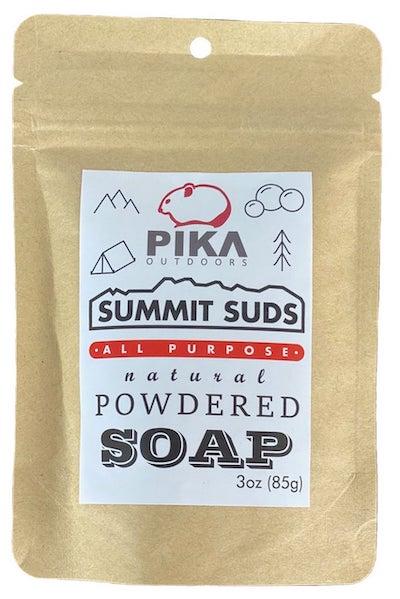
The other thing I looked for was a retail powder. Most were for laundry, and unfortunately, all that I reviewed contained additional ingredients not ideal for outdoor usage. However, there was an exception: I found a general purpose, biodegradable, and it so happens, outdoor-targeted powdered detergent. It is sold wholesale, based on SCI: EcoSuds. I presume there are true retail products using it that I have not seen. As it turns out, the formulator made a video and is an avid backpacker herself. I have bought three pound pack of it to try it out. Worst case, I think it’d do fine in the laundry.