“Can a physical model be made?”
I think the only outstanding question here is: What force is applied at the corner when wind hits the tent?
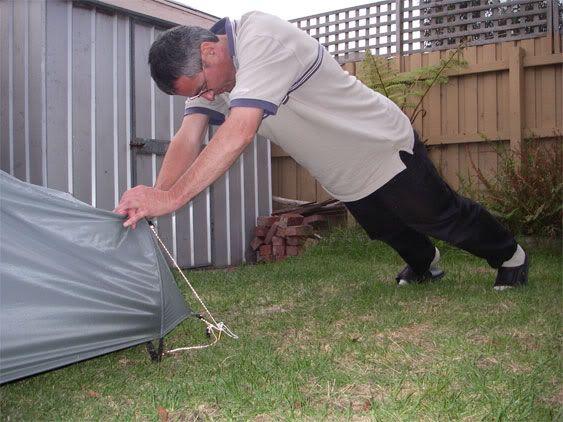
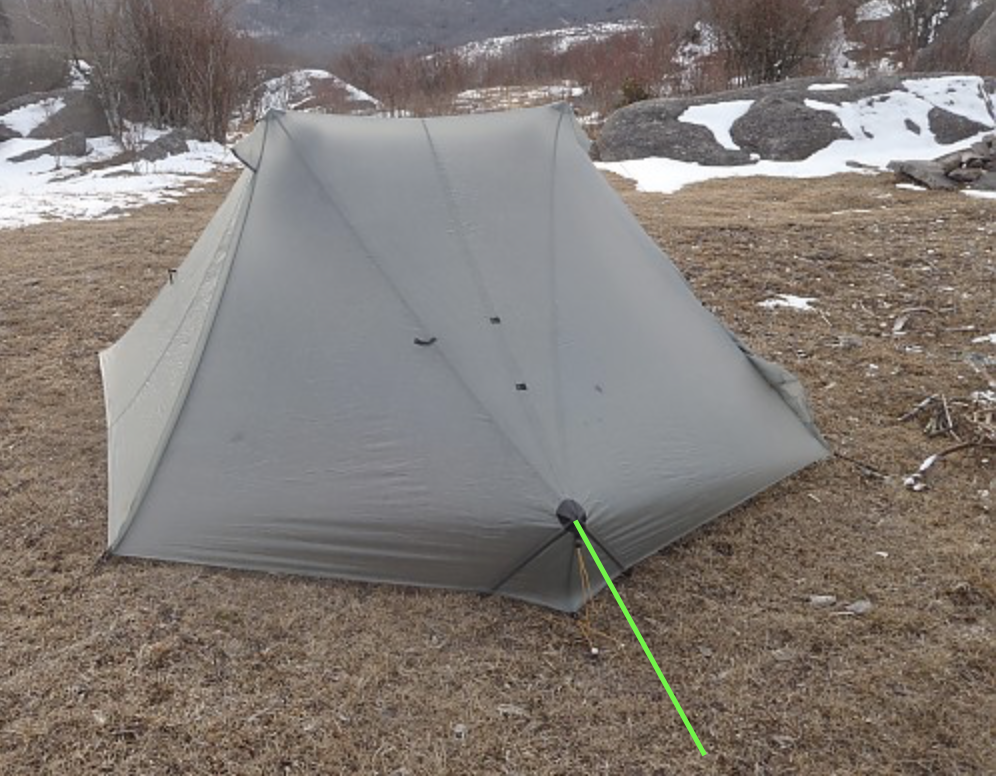
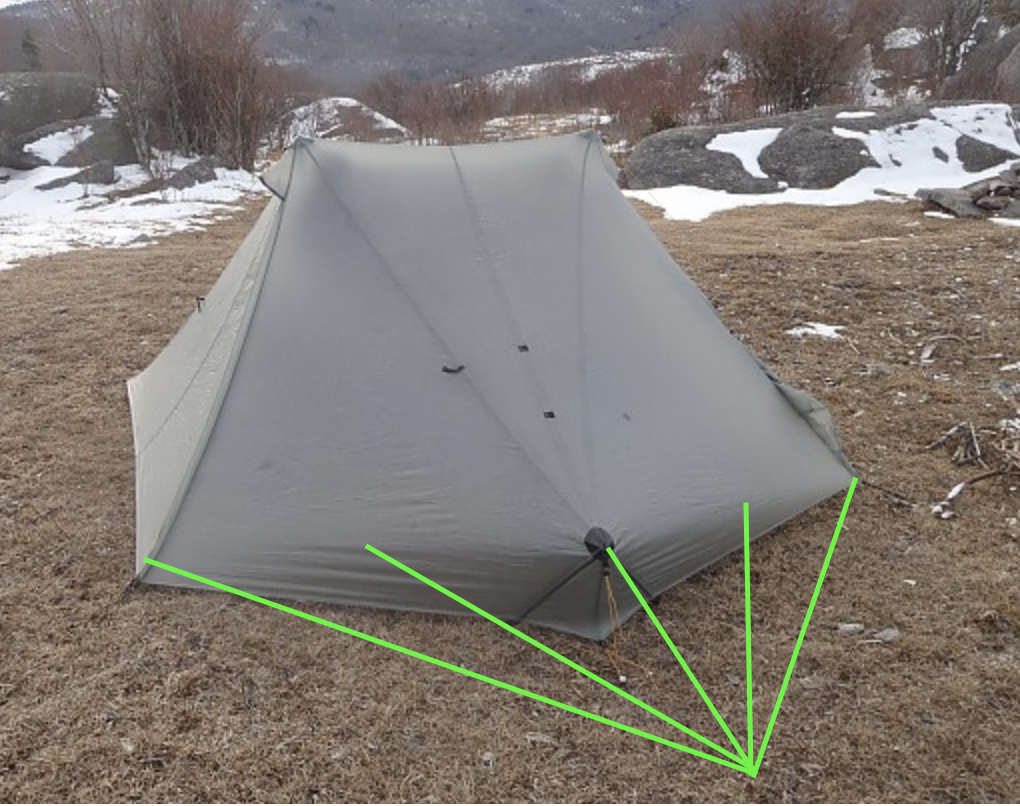
Is it perpendicular to the panel as Alexandre’s “wind” calculations assume, which would be downwards on the corner (as shown below) where the strut would take most of the stress off the stake:

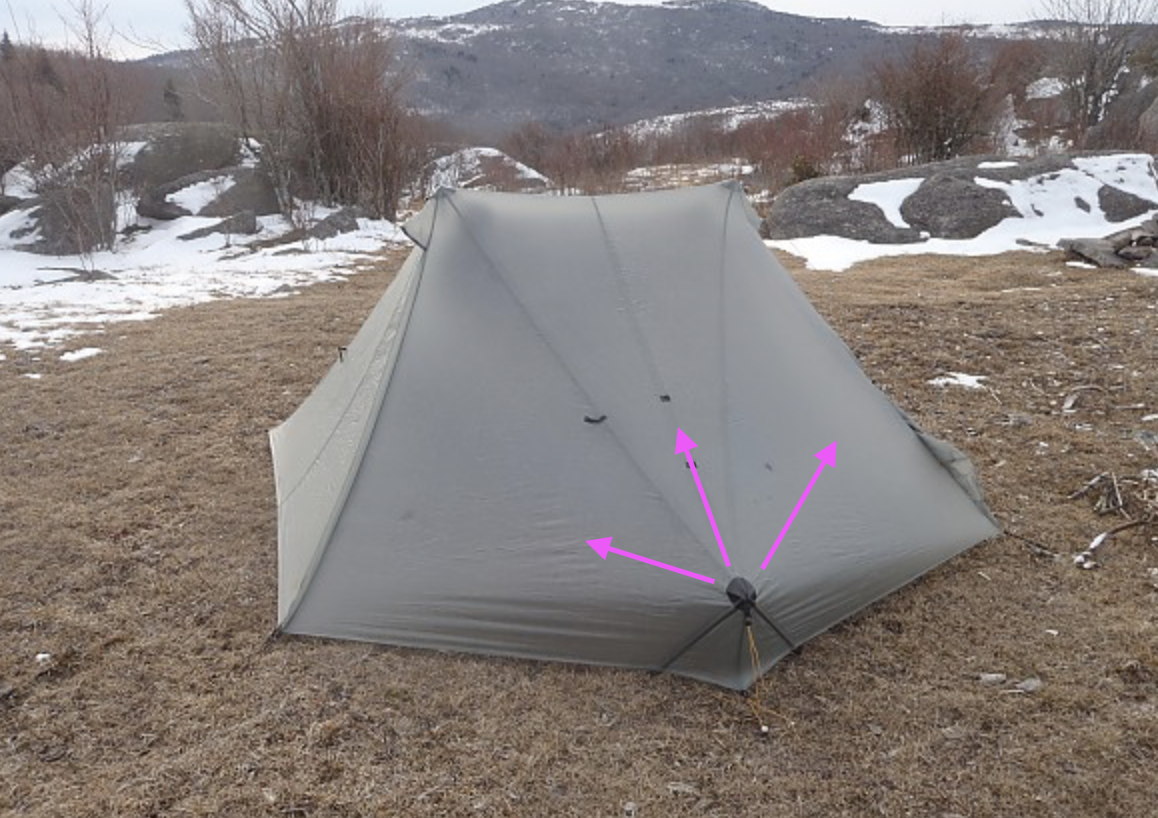
Or is it parallel to the panel, as I say, where struts would result in higher stress on the stake – potentially far higher if staked close to the strut – as Alexandre’s first “non wind” calculations show.
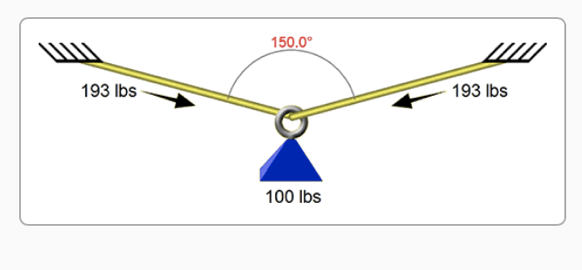
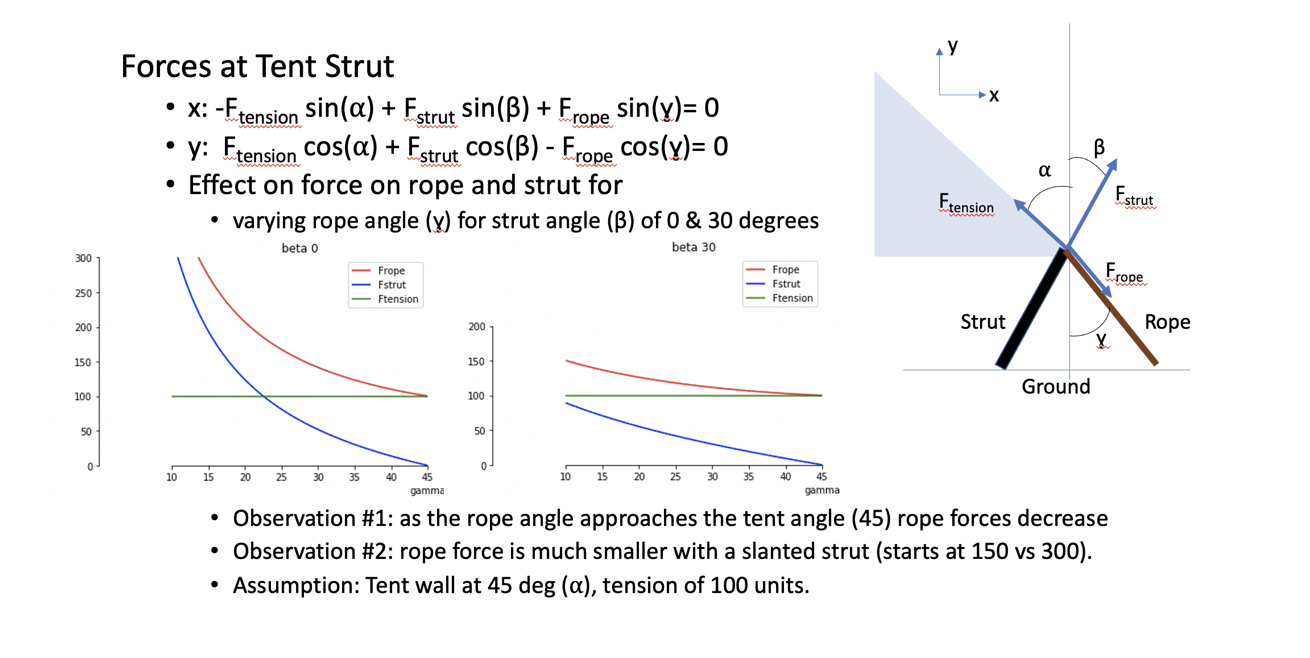
I think the latter is correct, as a force parallel to the fabric/rope is what force diagrams show:

And it’s I think obvious when you imagine tying a rope to something and pulling. Can you tie a rope to a cow and pull that cow in a direction that is not in line with the rope? No. You can only pull it towards you.
But yes we can easily test this with a physical model. Grab a strong rope and tie it between two sturdy chairs. Then step onto the rope and see what happens to those chairs (which are analogous to our corner and peak). If the force on the chairs is perpendicular to the rope it will be straight down on the chairs, so the chairs will not budge and you can stand on the rope just like if you put a board between the two chairs. But if the force is parallel to the rope then the chairs will be pulled inward where they will slide or topple towards the center. This is obviously the true outcome, which is why someone using a slack line has to tie it between two sturdy trees and not two chairs.
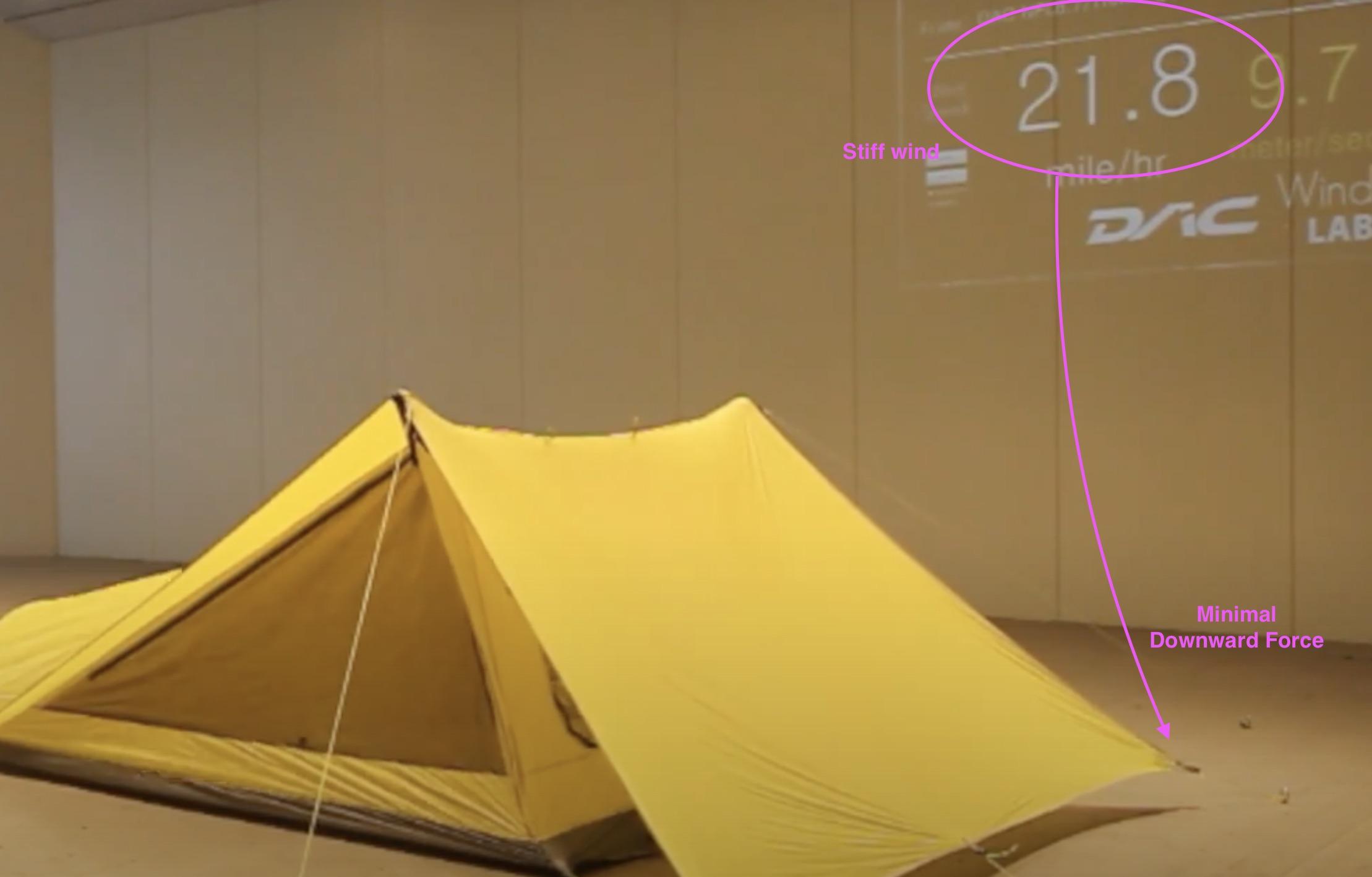
“Ideally we could put tents in a wind tunnel with load sensors all over the place, but I don’t see that happening”
Just look at wind tunnel videos on YouTube. It’s clear there is very little downward force on the corner when wind hits the side of the tent because these corners are easy to push to the ground yet don’t hit the ground until the tent is actually collapsing lower extreme winds.

“should I use the sil or dcf canopy?”
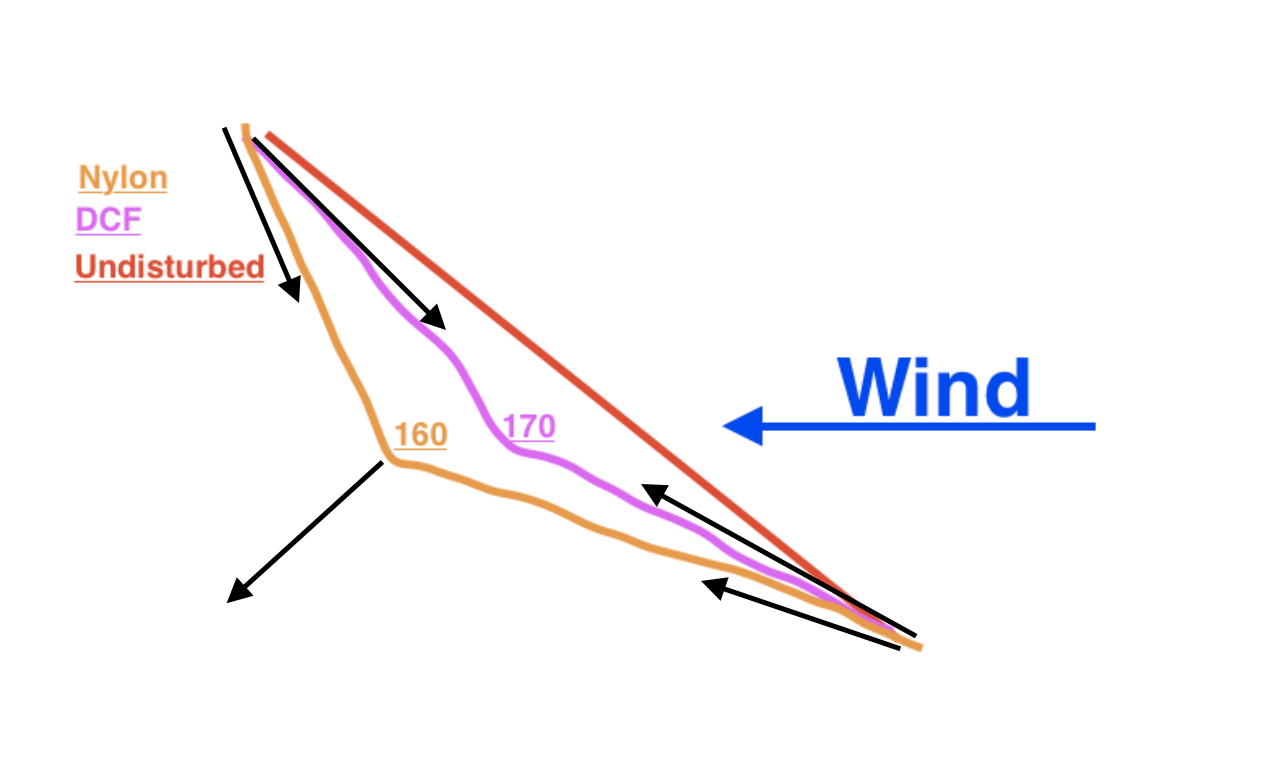
The answer to that is here:

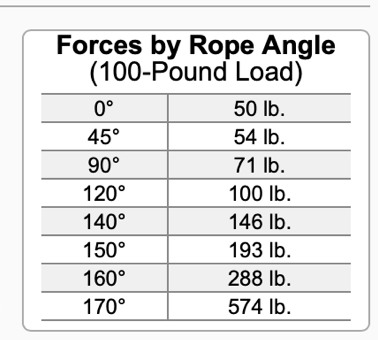
A DCF canopy will stretch/deflect less to stay closer to 180 degrees and thus put greater forces on the stake and peak, and in a worse direction.
It would look something like this

There wouldn’t actually be a sharp bend since the wind is hitting all over. There would be a curve (“scooping”) but the physics are the same where the deeper scoop creates less force on either end, and is pulling more horizontally on the stake. So DCF will give greater forces on the stake and at a more upward angle.