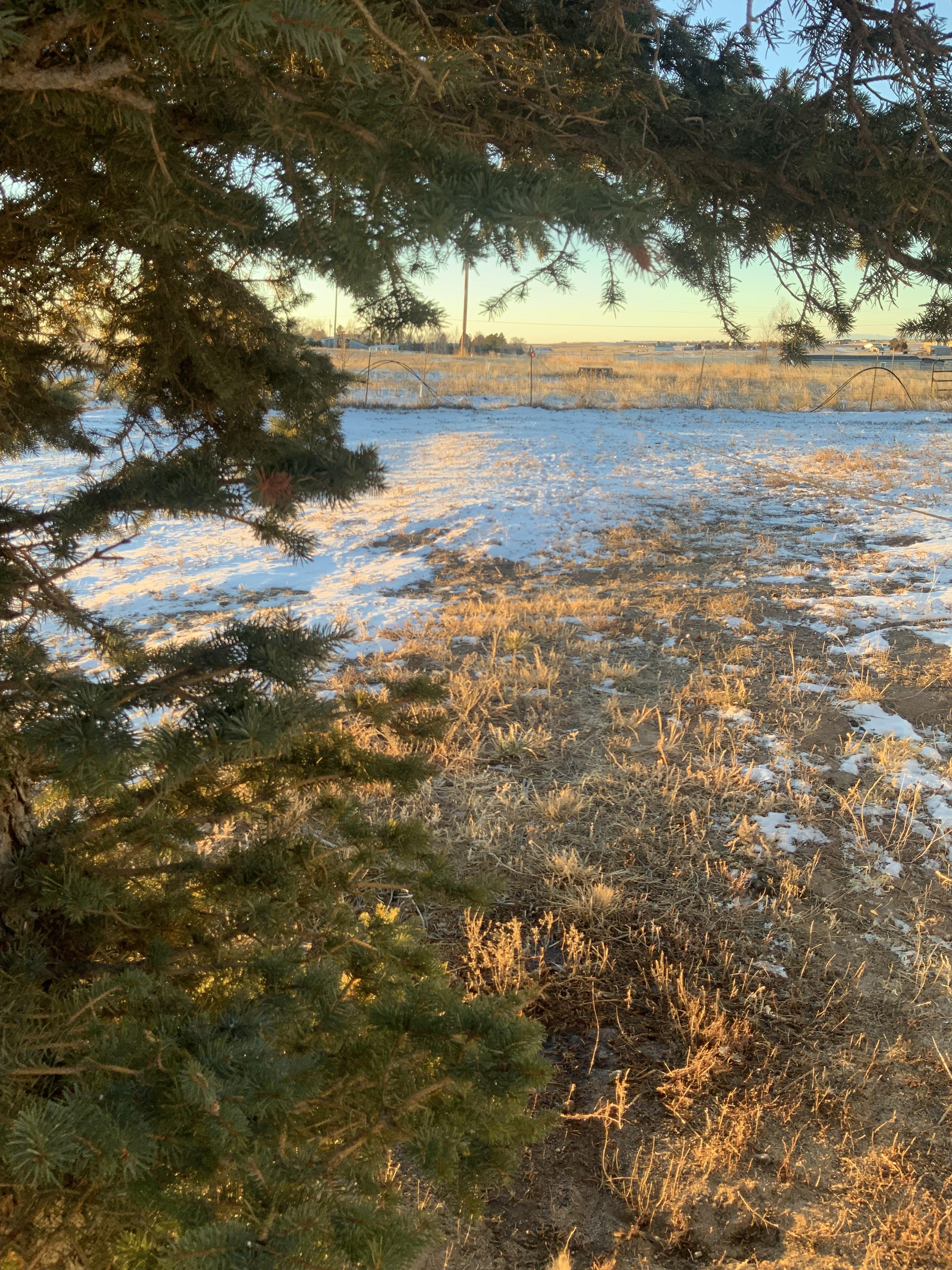
well of course the winds will blow snow around, even as the trunks of trees melt circles about themselves. And yes, winds and snow can overwhelm this warming action, for a time. It’s never a matter of ‘one thing or the other’ in nature. Look at the photo. there’s a clear circle around the trunk of the tree, despite the accumulation of snow on surrounding trees, caused by the wind. A whole variety of forces are at work at once, or have been, in this familiar scenario. It’s complex!
Here’s another quotation:
“Related
Why does snow not melt uniformly when the weather gets warmer?
This very question was asked by a fellow named James Watt who noted that even on very sunny days the snow didn’t melt. He did the experiments that showed that melting snow absorbs a lot more heat than could be accounted for by just heating water, and the same thing happens when you turn liquid water to steam.
For the most part, snow only melts on the surface and, when it does, it absorbs so much heat that it keeps the snow just underneath solid. Merely heating the environment to 1 degree Celsius won’t cut it, and the melting snow will actually absorb heat from the surrounding air as well, cooling it below snow’s melting point.
Since air is a fluid, this cooling starts air moving around the snow in a chaotic manner even in dead calm. Get a wind going (which will also cool the snow and keep it from melting) and the whole process gets very complicated. As the snowbank gets smaller, it also starts to have less surface area available to melt. Some of the melting ice will evaporate too, which will also cool down the remaining snow.
Let’s add to this sun and shade. Different parts of a snowbank will have different exposure to sunlight – the south facing side will have exposure, a north facing side won’t have any (in mountainous places with a lot of snow, it’s the north facing slopes that keep their snow the longest). The sun is also travelling east to west throughout the day.
This is why science had to develop Chaos theory – Wikipedia – which is why simple thermodynamic equations in theory become massive unpredictable problems in the real world.”