


I’m having a hard time deciding between a WM winter bag with GWS, or just MF.
I will use the bags in the alps during late autumn and winter.
I’ve got an Event bivy that I could use to protect the bag.
Would you go for MF or GWS?
Topic
Become a member to post in the forums.
.
I’m having a hard time deciding between a WM winter bag with GWS, or just MF.
I will use the bags in the alps during late autumn and winter.
I’ve got an Event bivy that I could use to protect the bag.
Would you go for MF or GWS?
Decided to go with MF, hopefully it’s the right choice – but I’m still unsure.

Hi all,
Can anyone speak to how and when to use these three moisture management techniques in cold, inclement conditions: VBL, synthetic outer layer of insulation (overbag), windproof sleeping bag shell.
My sense is that a windproof shell would be good when tarp camping in the winter, as drafts can be a serious problem, but you would want to add VB clothing/liner inside to manage moisture as breathability is minimal.
But if planning to use an overbag, would a windproof shell fabric on your bag be counter-productive? If using a VBL and overbag, windproof shell (such as gore windstopper) seems like dead weight.
What would be the best way to maximize these tools in an overall system? Why go for gorewindstopper vs. ultralight bivy, such as borah bivy (same weight as adding GWS, about 180g, and more versatile). Would love to hear some thoughts and people who have more experience with gore windstopper and similar fabrics.
I’ve been asking similar questions myself.
I did own a sleeping bag with a Gore shell years ago and my feeling was that it worked but made the bag slow to dry; although that may just have been the conditions at the time.
Become a member to post in the forums.
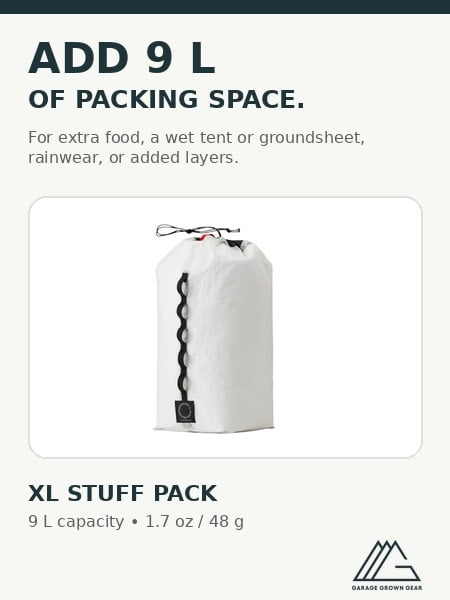 XL Stuff PackLightweight stuff pack designed to secure to the top of your backpack for carrying wet gear, extra food, rainwear, or layers.
 © Beartooth Media Group Inc.
 Loading...