


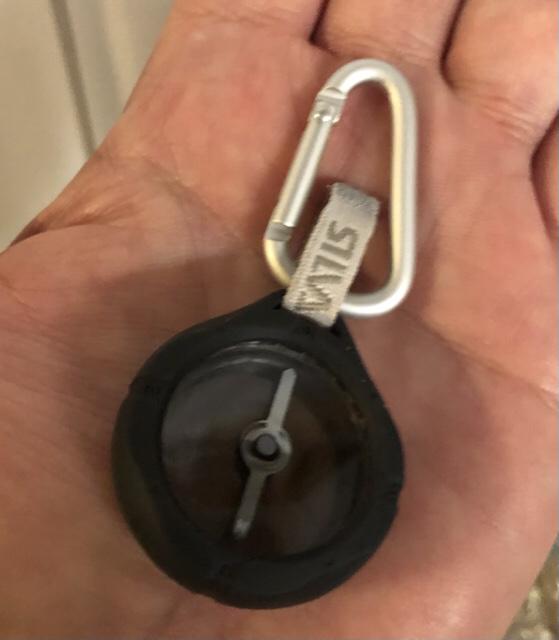
I found this tiny Siva Metro compass. As basic as can be with a rubber bumper case, webbing loop and a micro carabiner. 12.81 grams total on my jewelry scale. Liquid filled.
Topic
Become a member to post in the forums.
 .
.
I found this tiny Siva Metro compass. As basic as can be with a rubber bumper case, webbing loop and a micro carabiner. 12.81 grams total on my jewelry scale. Liquid filled.
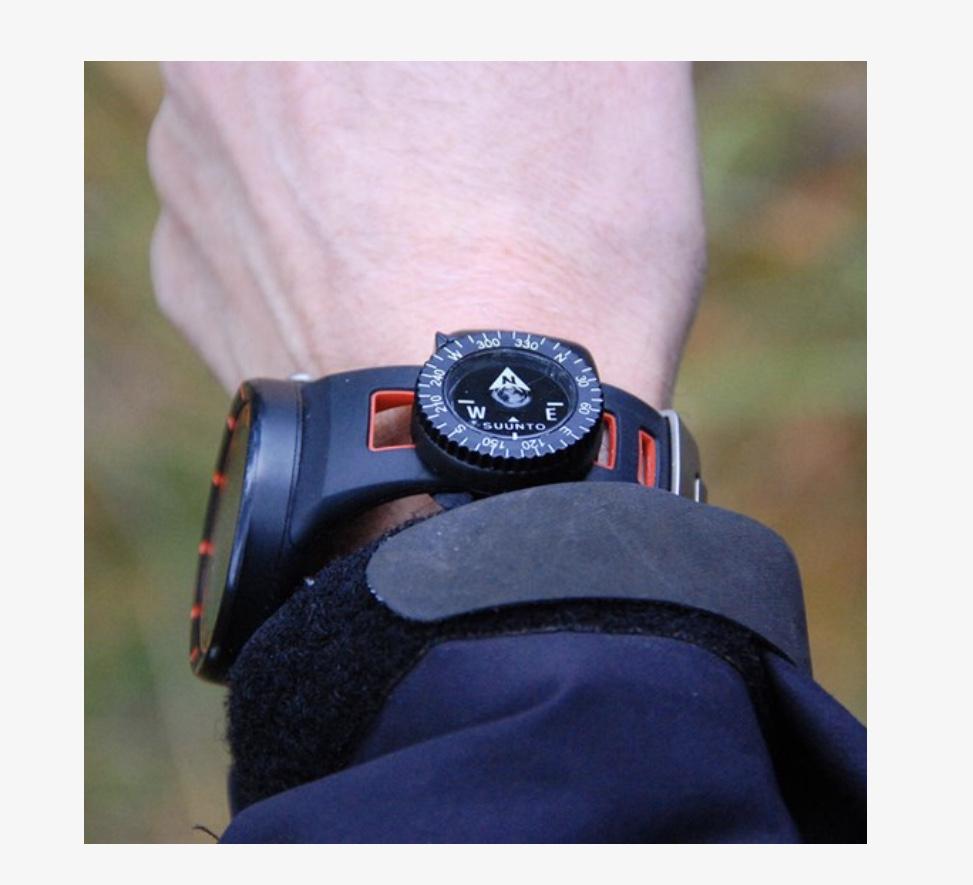
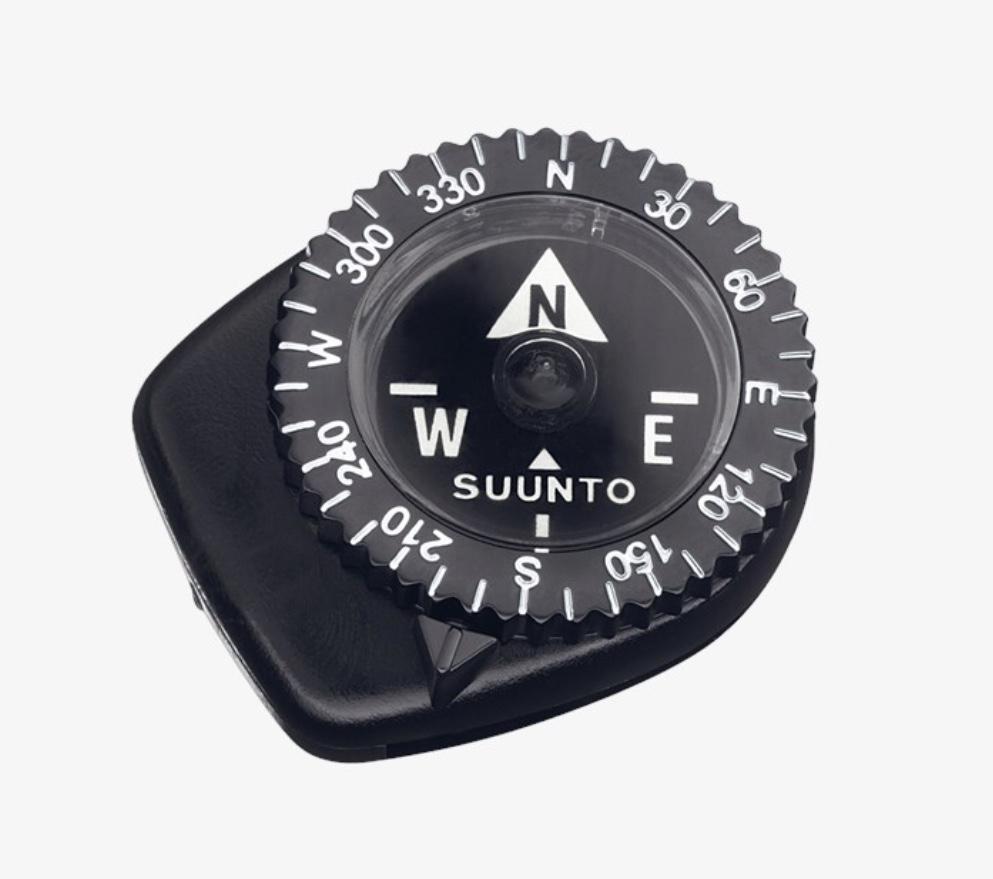
Even better, this Suunto Clipper watch strap compass, 5 gm with rotating bezel, good for bearings to nearest 5 degrees. Always on your wrist, and all I have used for thousands of miles of hiking:
(btw I drilled a tiny hole in the clip area and ran a piece of thin wire through it and round the first hole in my watch strap to stop it sliding off)
I have one those Clippers around somewhere. I don’t wear a watch often.
I always travel with a compass and have a couple “pocket” compasses. I liked this one for its basic design and the attachment. I can loop that little carabiner on a sternum strap or a buttonhole.
It’s amazingly easy to get turned around in a city, especially at night and in flat places like Florida. I’m used to hills, mountains in the distance, rivers, bays all around, etc. San Francisco is easy; Orlando, not so much. Like Daniel Boone said, “I’ve never been lost but I have been bewildered for a few days.”

It’s amazingly easy to get turned around in a city, especially at night and in flat places like Florida. I’m used to hills, mountains in the distance, rivers, bays all around, etc. San Francisco is easy; Orlando, not so much. Like Daniel Boone said, “I’ve never been lost but I have been bewildered for a few days.”
That exact thing happened to me in Germany. In Nürnburg or Heidelberg, it’s very difficult to get lost because they are small cities with quite a bit of topography to help guide you; the castle is at the top of the hill, the river is at the bottom. The older city is in the center, and the newer buildings are on the edges. Wide streets are the most likely to have an S-bahn entrance; narrow streets are likely to lead to wide streets. Simple!
Then I got to Berlin.
GPS and city-navigation apps usually work in Germany. Not in Berlin. I think the amount of concrete and steel just confuses them. You can walk out of the S-bahn station, look around, and not have a clue about where you are: unless it’s a clear day there aren’t even any shadows to help point the direction…and after 3:30 PM in the winter, you can forget that assistance, too: it’s already starting to get dark, and it seems to happen from all directions at once. We got turned around SO many times in that city, and there are plenty of places in Berlin where you absolutely don’t want to get turned around: it was the one place in all of Germany where we didn’t feel completely safe. After that experience, I decided to carry a magnetic compass with me from then on out, whether in city or wilderness.

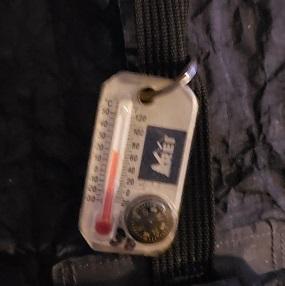
I carry that on outside of pack. 0.3 oz – 9 grams. Also a thermometer.
I calibrated it – when the actual temperature is freezing, the thermometer says it’s 30.
I had one of those thermometer/compasses, but the compass fell out. Worth checking and regluing if neccessary. Useful emergency kit, but hard to take bearings from. Mine had a similar temp error to yours.
Become a member to post in the forums.
 New Gear with ALUULA Graflyte FabricsLighter, stronger, more abrasion-resistant, and highly water-resistant - explore ultralight backpacking gear made with ALUULA Graflyte fabrics. Engineered for exceptional strength, durability, and lightweight performance, ALUULA Graflyte helps reduce pack weight without sacrificing reliability, making it ideal for demanding backcountry adventures.
 © Beartooth Media Group Inc.
 Loading...