


What’s your opinion of the accuracy of a bag that is rated at 20 degrees? Is it really going to be comfortable at 20?
Most of my mates swear that ISO ratings are 15 degrees too high. My experience is pretty close to that conclusion.
Your experience?
Topic
Become a member to post in the forums.
 .
.
What’s your opinion of the accuracy of a bag that is rated at 20 degrees? Is it really going to be comfortable at 20?
Most of my mates swear that ISO ratings are 15 degrees too high. My experience is pretty close to that conclusion.
Your experience?
Ever seen a couple having problems sleeping under the same blankets because one is too hot and the other is still cold ?
Or how about when you see someone wering a coat and next to him another one is walking around with shorts and T shirt ?
The idea is that you have a starting point. If an EN certified 20f bag is OK for you at that temp , than one from another brand probably will. If it is too warm for you , the other will also be.
BTW, I have had 3 WM bags, they were all about right for me .
My experience is that the ISO rating is just about spot on. It just shows that everyone is different.

what Franco said – EN rating is a relative rating – if one 20 degree bag is comfortable then another will also. If you are comfortable in a 20 degree bag, and you want to use it 20 degrees colder, then get a 0 degree bag,…
there’s a comfort limit which is good for a typical woman and a lower limit which is good for a typical man, you could choose either of those. If you know you’re warmer or colder than average you could make an adjustment for that.
I believe this testing is based on the EN 13537 standard, “Thermal properties of Sleeping Bags”.
It describes a testing scenario where a thermal manikin is used as a measuring device, positioned inside a sleeping bag and placed in controlled cold conditions. Heat loss is measured when stationary conditions are reached and a thermal insulation value for the sleeping bag is determined. A physiological model/formula is then applied which uses the measured thermal insulation value to calculate ambient conditions corresponding to a comfort/utility range for the sleeping bag….
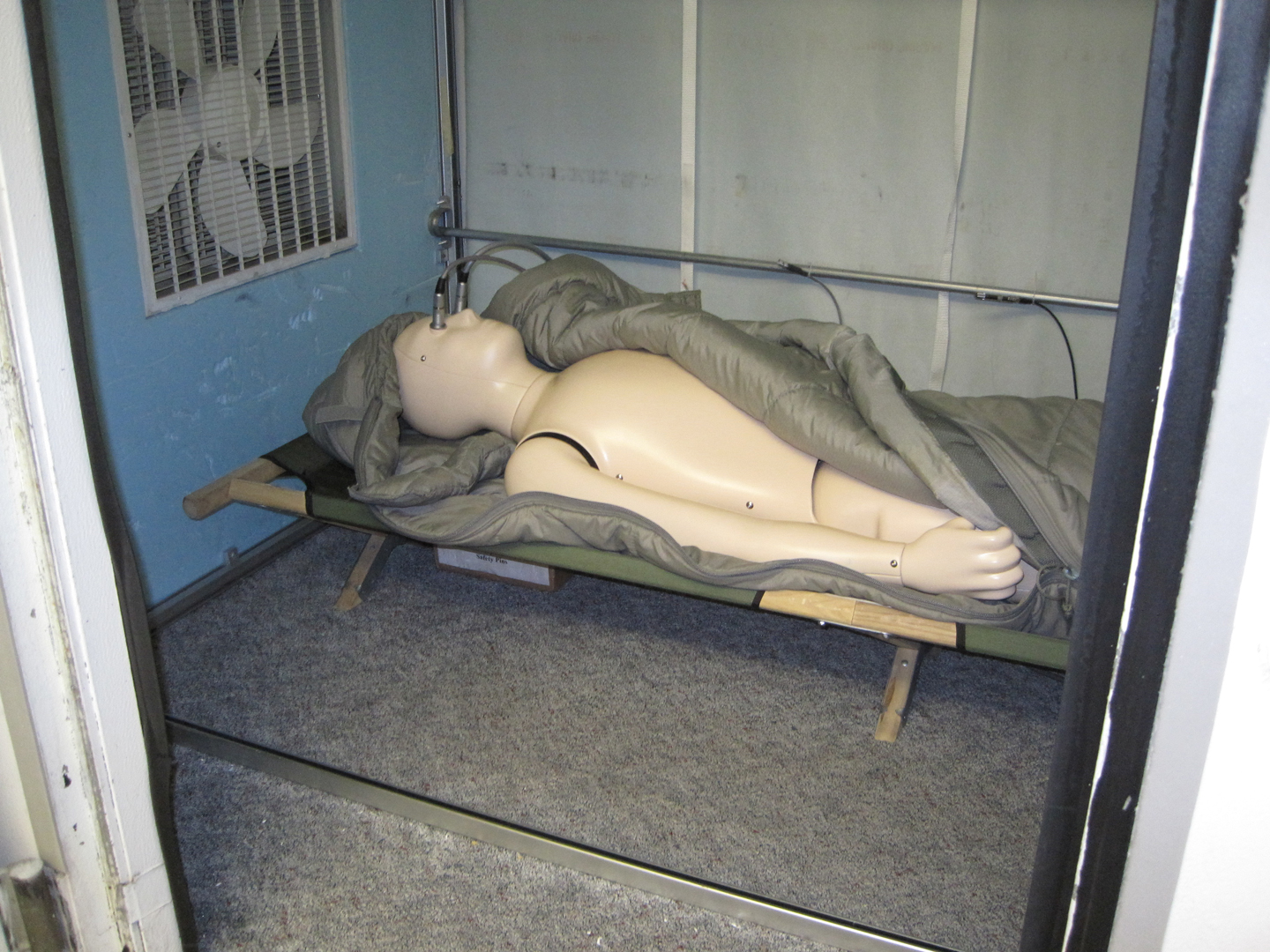
While human metabolism will vary from person to person and from day to day, thermal manikins do not vary and that makes them a very reliable and repeatable test instrument. As mentioned by other posters, if an EN rating for one sleeping bag turns out to be a good match for your metabolism, then other bags with the same EN rating will provide the same performance for you. BUT before you can make that leap you need to establish which EN rating compares best to your personal metabolism.

Maybe it’s the time of year, but I have to take into account not only the lower limit of the bag, but how comfortable it is on warmer nights. “a comfort/utility range for the sleeping bag….” does anyone bracket the range for a bag?
Is it just me, or have others noticed down has quite a wide range compared to synthetics? Toasty… I aim for toasty….
I don’t know if this is true, but I’ve always considered a 20 degree bag to be sufficient to keep you alive at 20 degrees, but not warm.
I freeze in 20 degree bags when it’s 20 degrees.
For this reason, I bring a second sleeping bag (a quilt actually) if it’s going to be colder than about 40. I’d rather be burning up and have to throw off a blanket or stick a leg out than shiver all night long waiting for morning.
Menopause has sort of changed the calculation, too. I still freeze in 20 degree bags when it’s 20 degrees, but now I know I can throw the bag off for a few minutes of relief during a hot flash. For this reason, I do not fear cold nights, I welcome them. But once the hot flash ends, I still need that second bag because I’ll be freezing and sweaty.
Quick refresher on sleeping bag temperature ratings:
Sleeping bag ratings will never match every night you spend outdoors. Ratings are good for comparing sleeping bags, but personal experience and sleeping skills are important, too.
-Rex
Become a member to post in the forums.
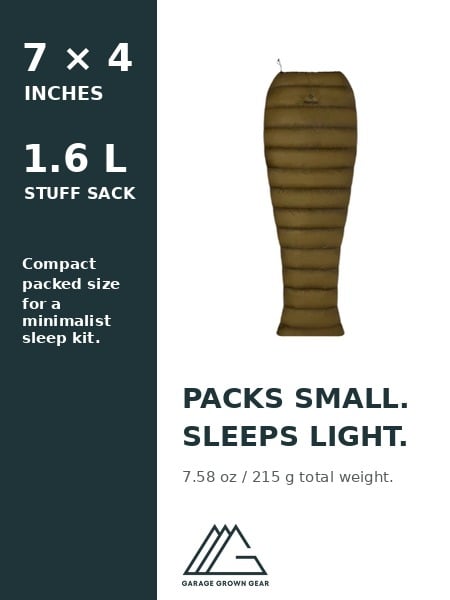 Magic 100 Sleeping BagMinimalist 900-fill-power down sleeping bag with a 55°F | 13°C comfort rating. Weighs 8.46oz | 240g
 © Beartooth Media Group Inc.
 Loading...