David, some notes on trip planning:
There’s no water anywhere down Tanner, but if you’re in reasonable shape it’s not too difficult to reach the River in a day. But you’ll want plenty of time to gawp and take everything in if this is your first trip to the GC, so make a dawn start and don’t forget how early it gets dark. After the long level traverse in mid-section of the trail, you come to a cairn marking where the trail turns right and cuts steeply down through the Redwall. Before heading down, continue straight ahead for another 50 yards to the head of the promontory, there’s a spectacular view. Best Tanner campsites are on the beach immediately W of the wash.
Easy camping at Cardenas beach, popular spot with boat trips (rare this time of year). No water between Cardenas and Escalante. Escalante Beach is small spit of land, but on your own there’s a beautiful spot to camp on golden sand. The long beach W of the mouth of 75-mile has easy camping, and if it rains there’s a site under an overhang at the back of the beach. I’ve never camped at Papago beach, but there are spots.
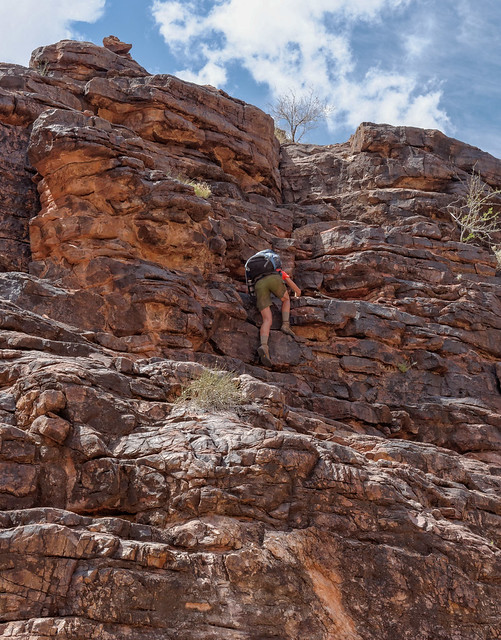
Papago is where that little climb through the ledges is in the photo I posted, followed by the “Papago slide”, where you have to work your way back down a moderately steep talus slope.
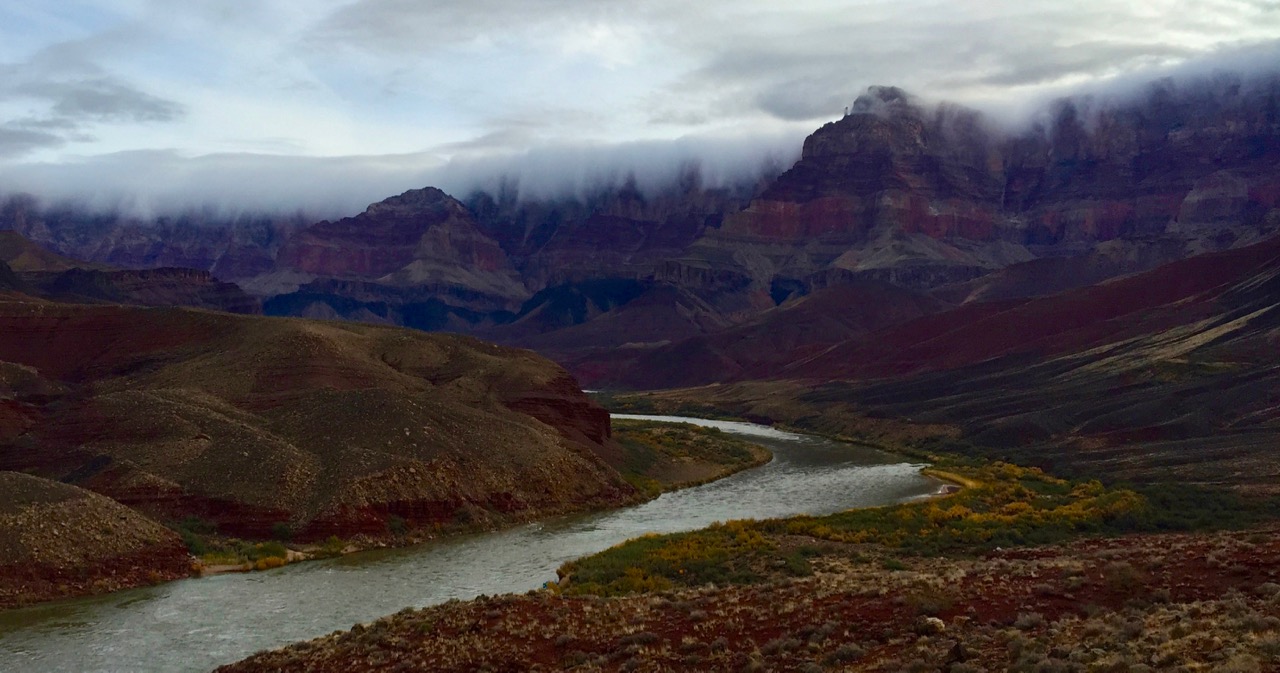
At Red Canyon (= Hance Rapids) the best campsites (with easy access to the river) are just to the E side of the mouth. Look across the Colorado here for one of the best examples of an intrusive dike in the world. Black igneous rock cutting diagonally through the bright red Hakatai sedimentary rock. It’s one of the images that pops up if you google “intrusive dike”!
Now you leave the river to climb to the Tonto level, and none of the side canyons west of here grant access to the Colorado for the rest of your hike, so you need to pay more attention to water sources.
Mineral is dry. Hance Creek has perennial flow at the trail crossing, many campsites here. A nice spot, I like camping lower down under the Cottonwoods, although they will have shed their leaves by now.
From here, you can either continue at the Tonto level out around the head of Horseshoe Mesa, or if you’re feeling energetic make the very steep climb up the Redwall to the top of the Mesa (possibly exploring or camping on the Mesa) before dropping back down the other side to Cottonwood Creek. There is perennial water at Miner’s Spring (aka Page Spring), well signposted on the trail up to the Mesa, but no water on the top of the Mesa.
Cottonwood Creek is a pleasant spot with good camping. There is sometimes water flowing at the Tonto Crossing, otherwise there is a spring further upcanyon that feeds water in from the W side, just above the highest campsites. I’m not 100% sure if this is perennial, and it has been so bone dry for the past two months that I would try to get up-to-date information on this from the backcountry office.
There is perennial flow in Grapevine at the trail crossing, and camping here.
You now have the only long dry section of your hike, where there is no reliable water between Grapevine and Pipe Spring (or Indian Garden). You may find a spring in Lonetree by walking downcanyon from the trail crossing, but I would not rely on it with the dry weather. In Cremation there are potholes that fill from rain, but no flow. So from Grapevine you should carry water assuming a dry camp, not too much of a hardship as you will have eaten most of your food by now.
South Kaibab trail is completely dry, so with a dry camp the prior night it’s logistically not such a great option, you’d have to carry even more water the prior day or detour west of S Kaibab to Page Spring to refill then backtrack, making for a long tough day to hike out. Camping your last night at Indian Garden is probably a better option. Indian Garden permits are usually difficult to get, but this time of year they are often available. Then a much easier few miles up Bright Angel to hike out.