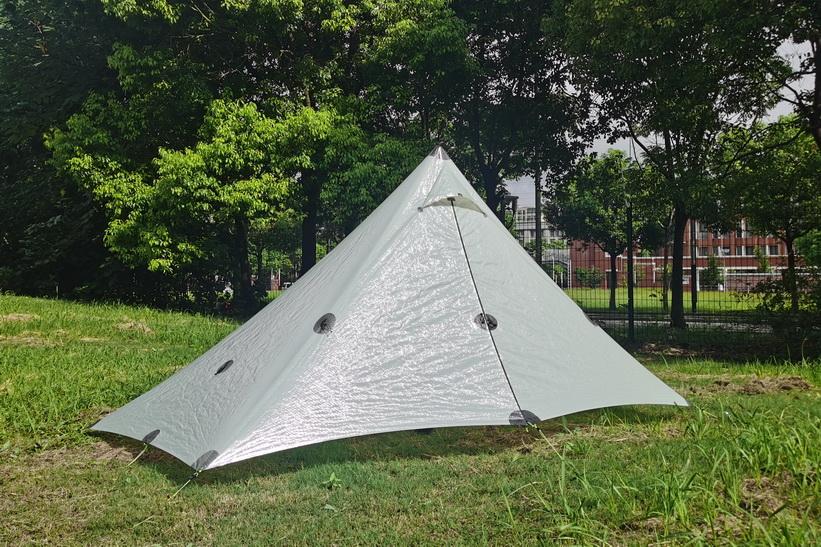
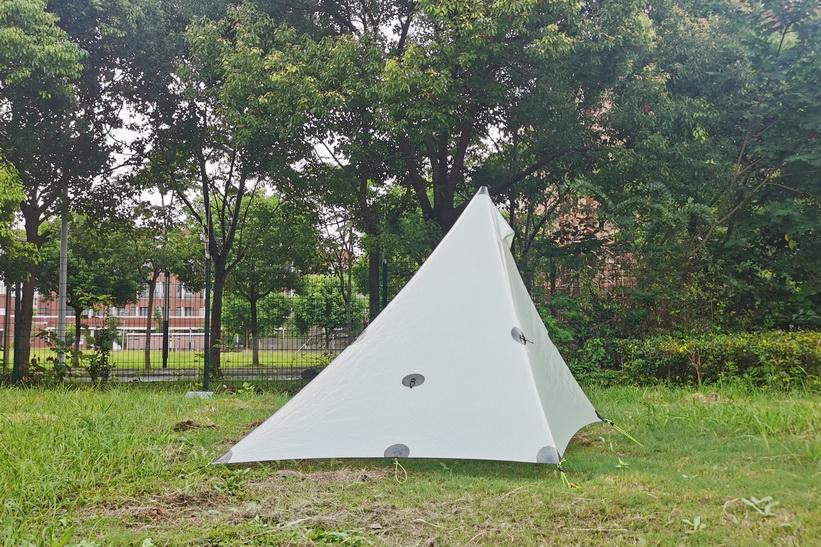
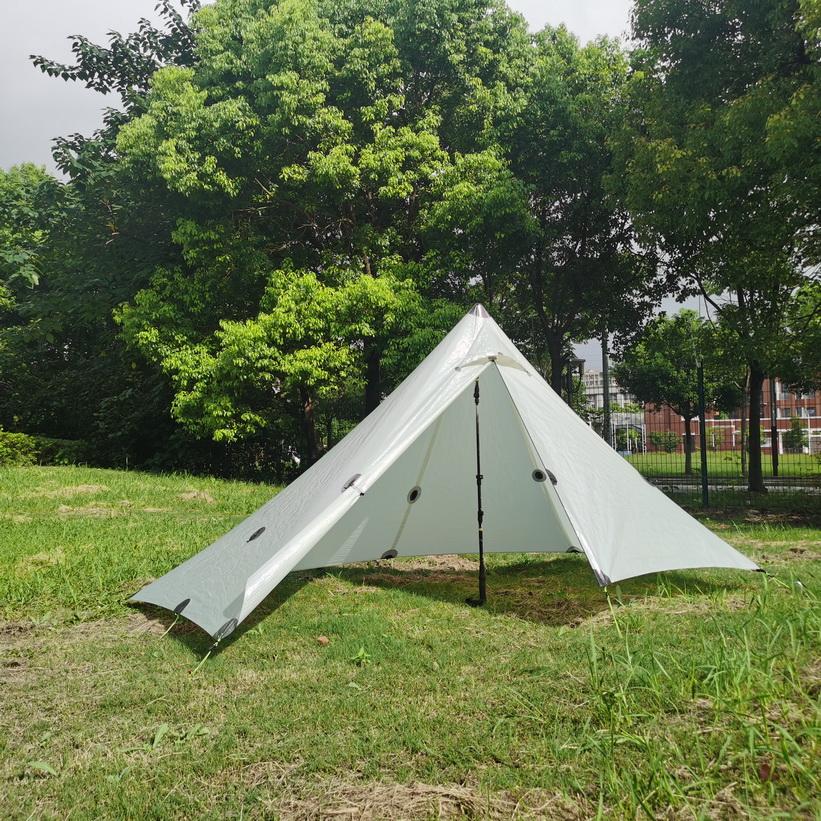
Maybe I could post another thread to introduce the pyramid, and here only to focus on the fabric. Actually, Henry/Tarptent stated most of the truths about this fabric, so I only have a few more comments.

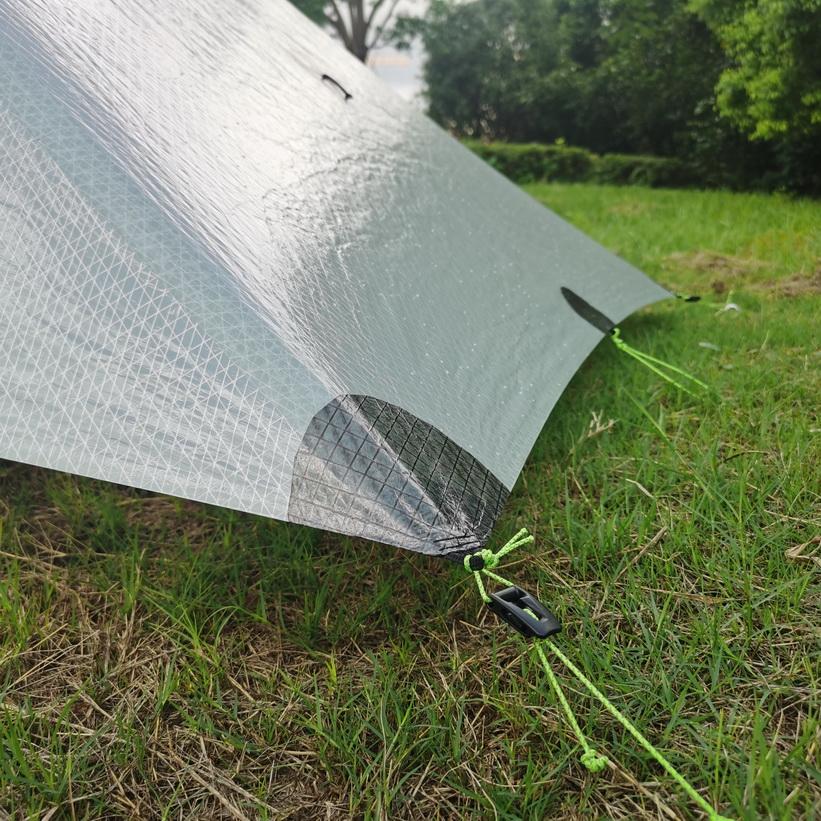
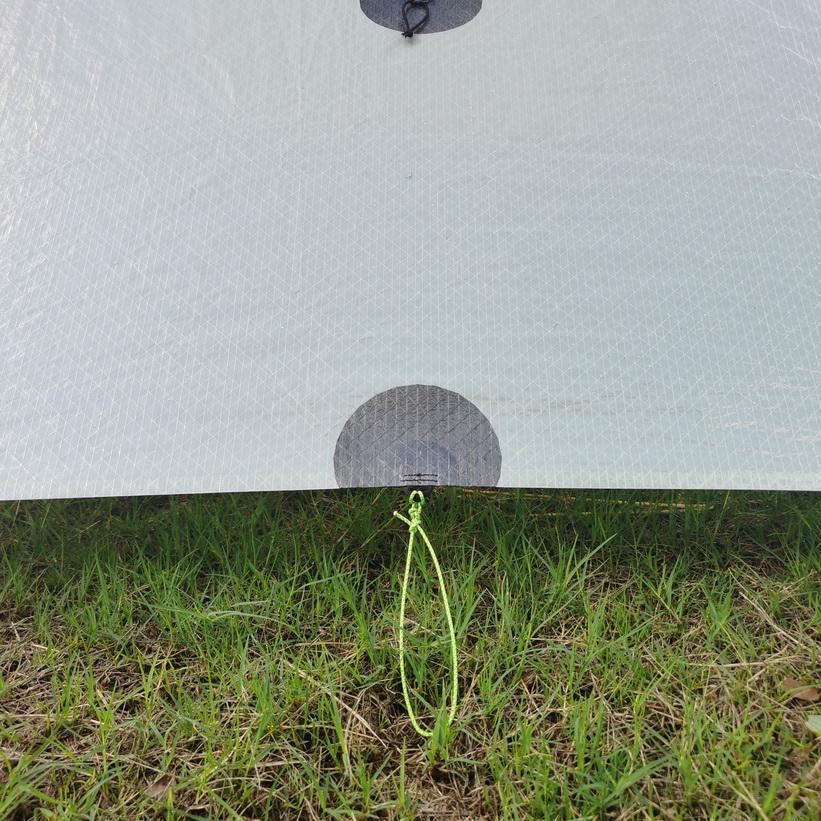
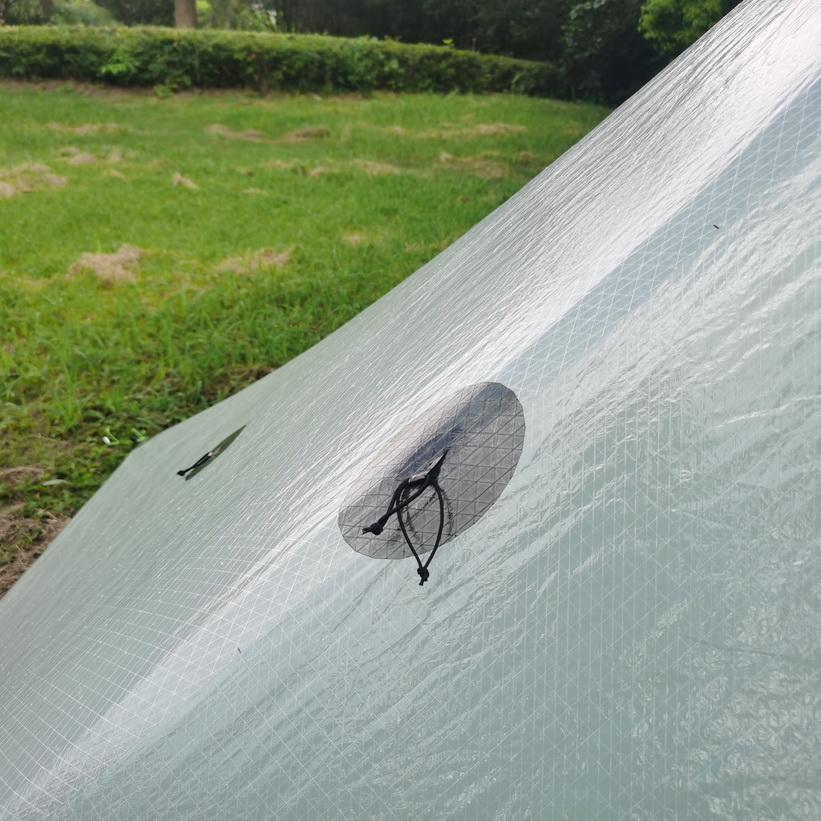
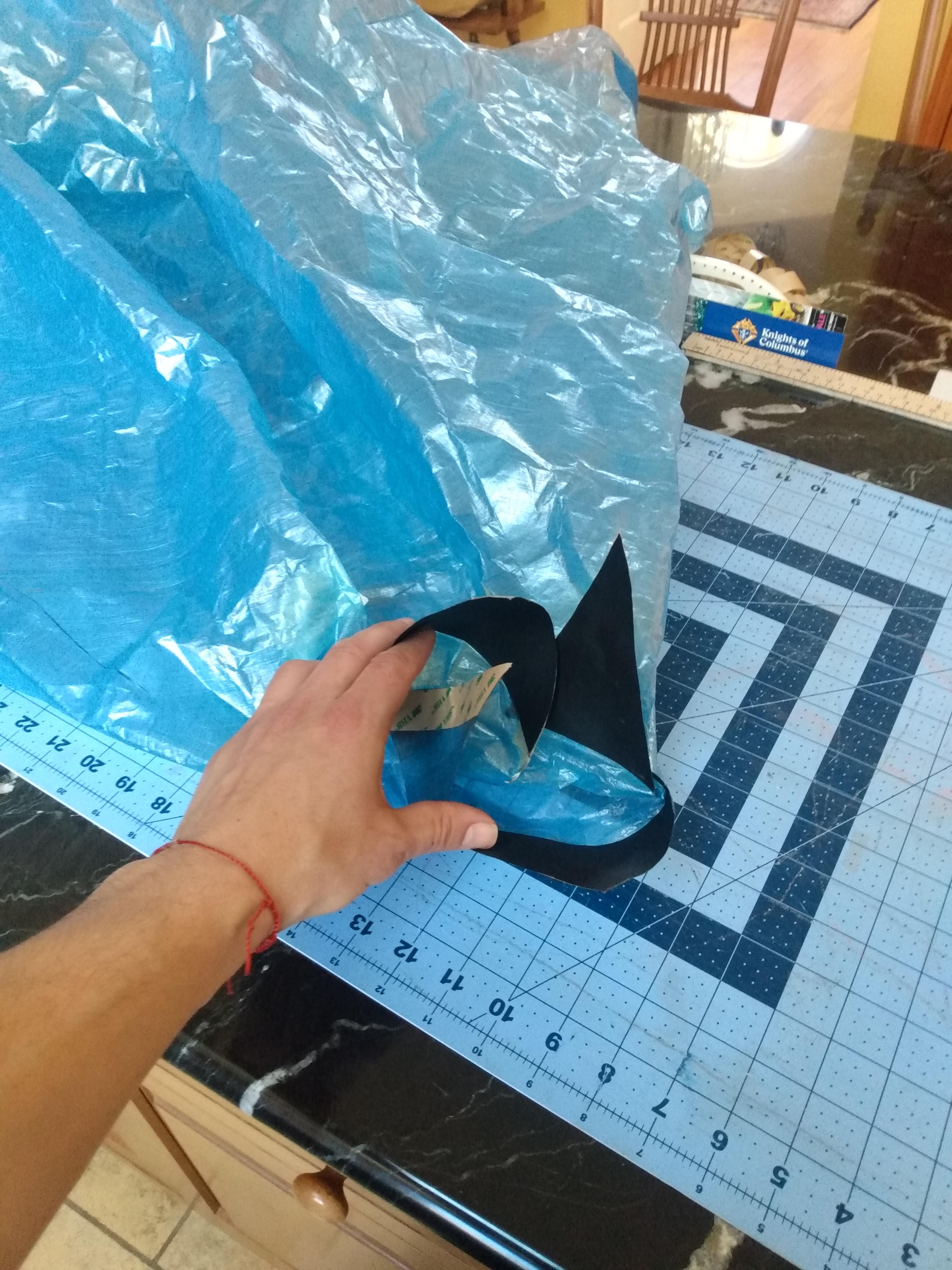
First of all, all sewing parts on TNT needs to accompanied/reinforced by something “more like a fabric”. It could be Ultra 100D, DCF 1.43oz, or DCF 50D. In my way of tieout making, this time, I printed the 1.1oz transparent TNT (the first batch from Challenge) into black and then use it as the first-level patch on the surface; on the backside of the tieout, I used Ultra100 as the second-level patch where the webbing is sewn. I promised to my friend, for whom I made this pyramid, only to use Challenge’s fabric this time, because in my last tarp I used DCF to patch the TNT tarp ;-)
In my words, TNT has not so good micro performance. By the word ”micro”, I mean those little places where the sewing work has to be done, because the e.g. 2.5mm stiches, in many cases, are very likely to fall into the gaps between UHMWPE fibers and easily tear apart the Mylar film.
Especially, I think the installation of a zipper to a TNT shelter needs to more carefully thought. A simple/single sewing of the zipper to TNT would not work (while the same method “might” work on 0.8oz DCF)!
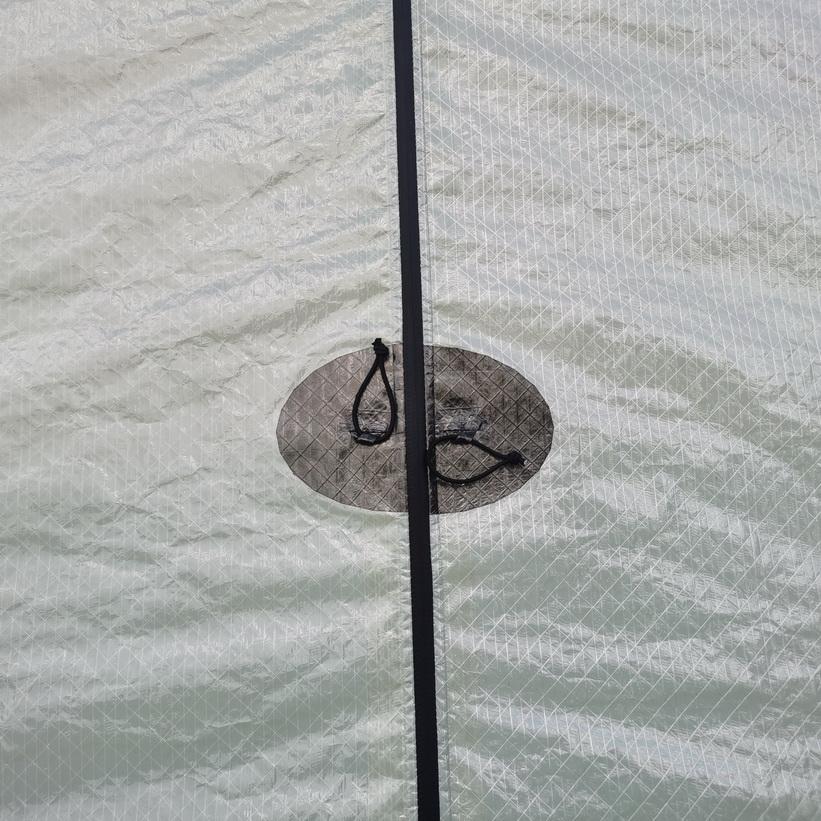
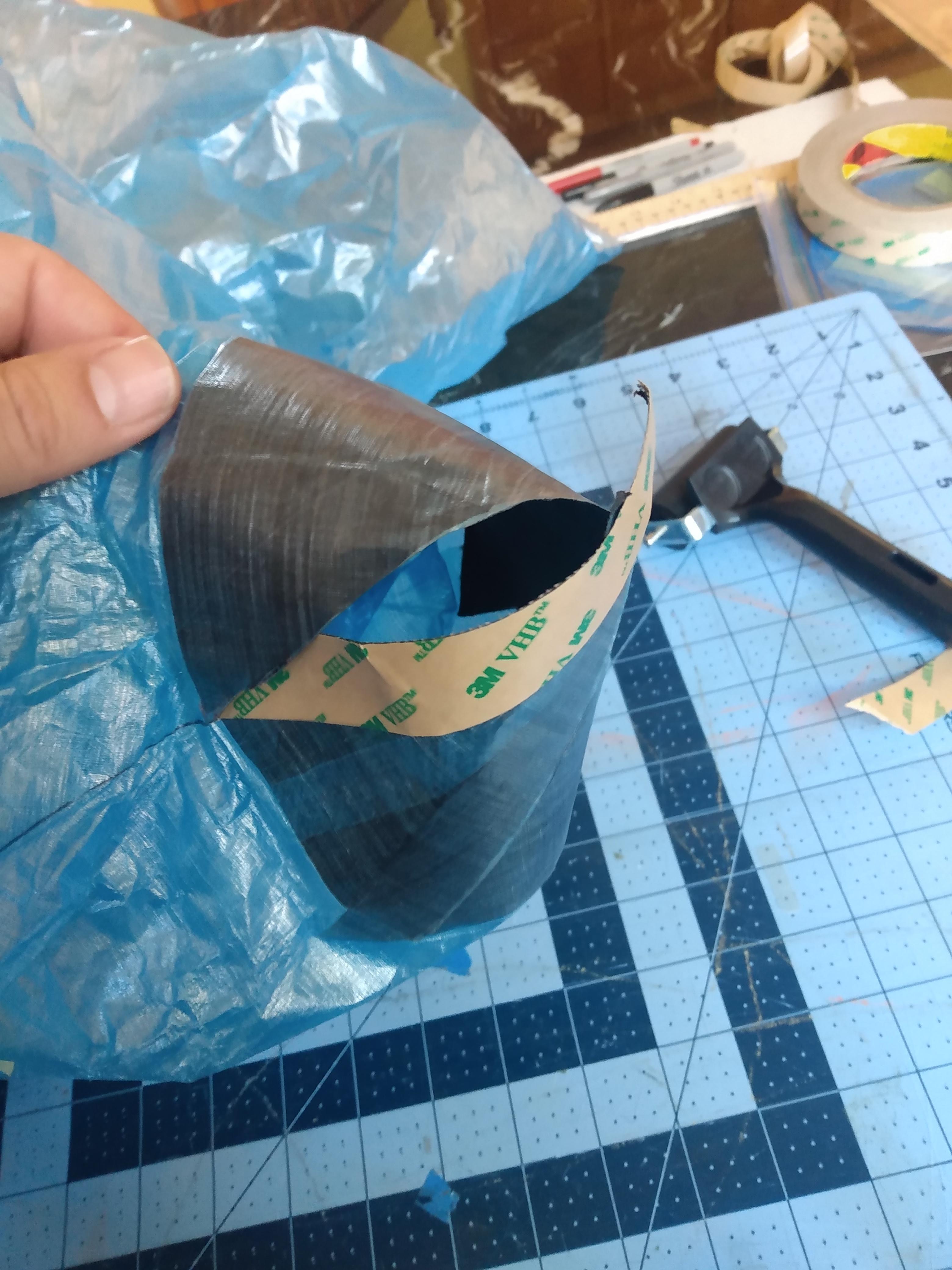
Another fun point is that the TNT is not identical on both faces. I noticed it only after I finished my work. In the follow photo of the two panels of the pyramid front side. You can notice that the UHMWPE threads look shiny on the right, and a little bit dark on the left. I’m not sure if Challenge officially stated what is the correct side.
In contrast to “micro”, better macro performance now seems to the best of TNT. A brand new TNT shelter is tight and surfaces are even like a mirror. And it’s expected to still keep this beautiful shape after years of use. This is theoretically correct due to TNT’s three dimensional stability, and we can observe it by real practice and use after some years. Meanwhile, note that nearly all DCF shelter will be kind of out of shape after long-term use, especially seen at the bottom edges that seem never can be back to tight again.
Price is of course another advantage, together with the fabric width. I actually thought of another possibility for TNT to act as a XL option to DCF. Taking my solo pyramid for example, my DCF version is 135cm width * 270 length, cleanest six cut panels (no horizontal seams), taking every bit of the 1.37M fabric width of a DCF roll.
By using TNT, for the same product of a solo pyramid, an XL version of perhaps 140CM*290CM is provided (TNT fabric width -> 150cm), without additional making complexity (still six panels, no horizontal seams, same layout, same making procedure). So smaller people take DCF, and taller people take TNT. Taller people can typically take a bit heavier. This is fairly reasonable. :-) it might be a way that TNT and DCF could coexist.