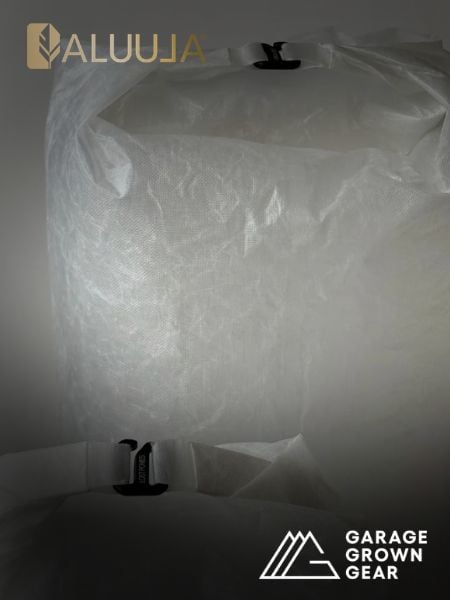
The full process we do is this:
- Sew Xpac strips over the seams (as if they are grosgrain binding – face side of Xpac on the INSIDE)
- Trim the Xpac strips down as close to the seam line as you can get
- Seam seal with Seam Grip or other urethane sealant
The strips of Xpac don’t add strength to the seam, but rather more water resistance. Basically they add a more labyrinthine path for water to have to take to get into the bag.
If you were to just leave the seams unbound and seal them, then water would sneak in between the layers of fabric and get into your bag very quickly. With the strips added, water has to pass into the bag, make a 180 degree turn when it hits the Xpac binding, and then has to pass through the edge of the binding where it’s covered with seam sealer. It’s not a perfect seal but in practice it works very well and I will happily stuff down sleeping bags in a bag sealed this way with no liner.
You are right that the french seam is tricky with many layers. It’s really best for simple bags with nothing sewn into the seams, like dry bags.
At some point I will write a blog post about this with pictures. There are far too many unsealed Xpac backpacks out there in the world, it’s really a fabric with unsung potential.
And I also like the VX21 better. The lining is aesthetically functional but also protects the waterproof membrane from inner abrasion. I don’t have any data on whether that actually improves the longevity of the waterproofness but I suspect it does.