Topic

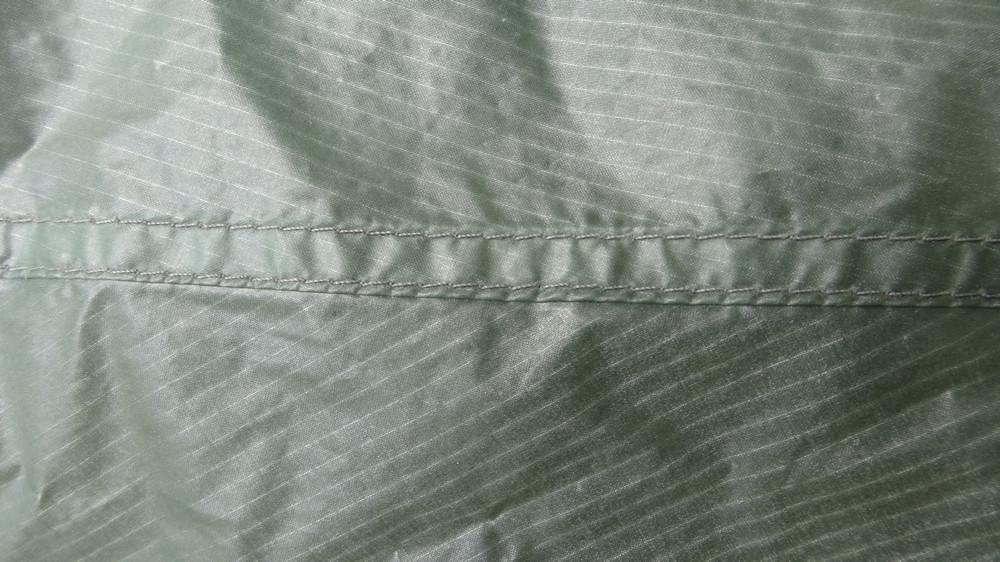
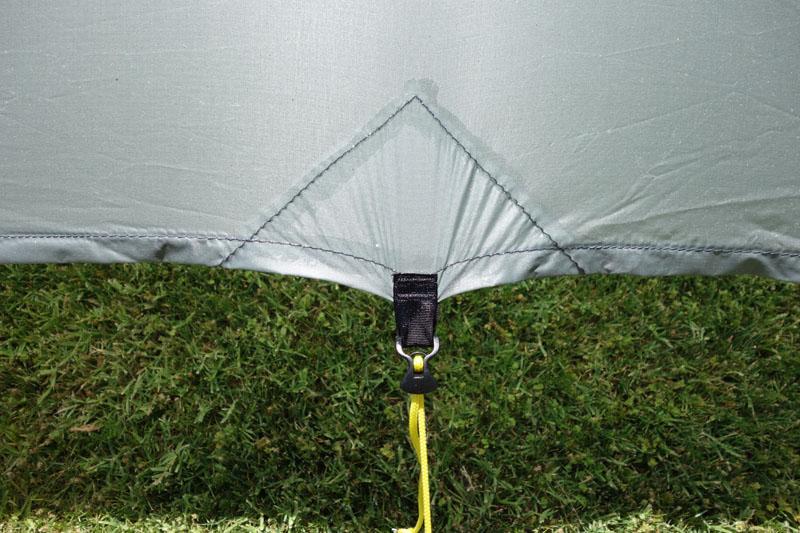
Sealing results. Is this what it should look like?

Viewing 25 posts - 1 through 25 (of 25 total)
Wayne BPL Member
PostedMay 29, 2020 at 11:16 am

Hi

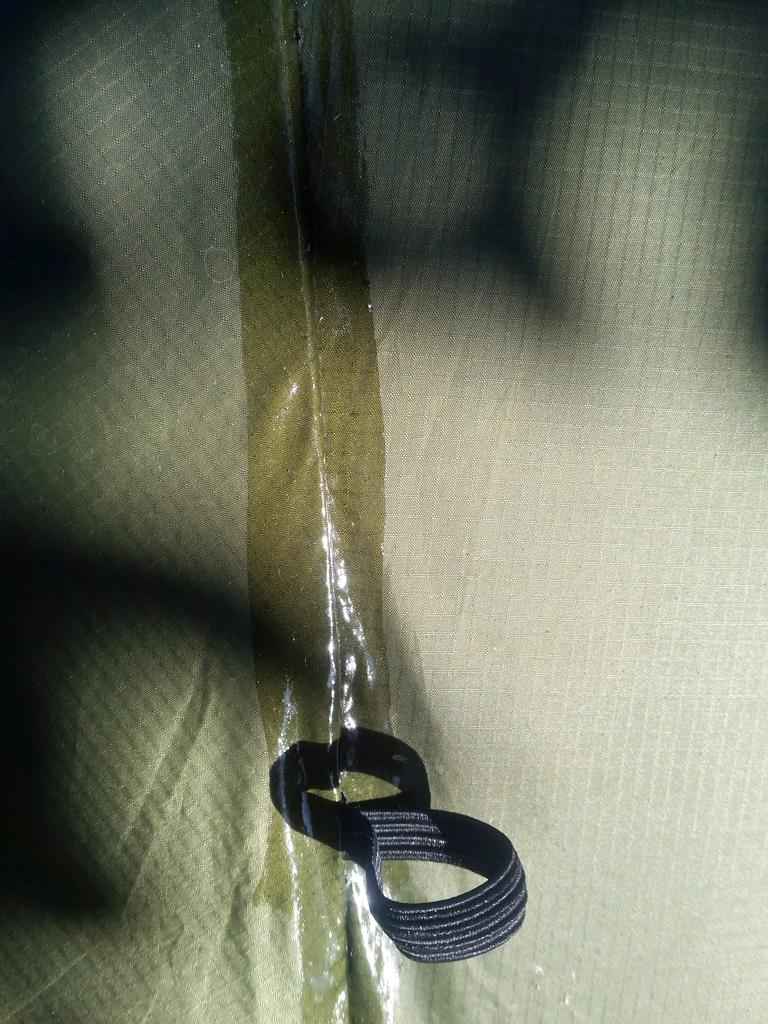
I’ve applied McNett Silnet to the seams of my new Lunar Solo and I’m disappointed with the end result, aesthetically. I diluted it with white spirit (It’s called that in the UK), so that the consistency was like ‘runny honey’, as shown on YouTube vids. But it’s a really glossy end result, especially against the attractive muted green of the tent.

Have I made a pig’s ear of it? Or am I being too fussy about aesthetics. I really thought it would dry clear and non-glossy. Feeling a bit annoyed with myself as the glossy lines really stand out. :(
MJ H BPL Member
PostedMay 29, 2020 at 11:40 am

Better than I did, neatness-wise.

Wayne BPL Member
PostedMay 29, 2020 at 11:43 am

It’s not quite as straight as that everywhere. That’s a ‘good’ bit. :/

PostedMay 29, 2020 at 12:05 pm

I’ve used the Tarptent procedure (silicone and mineral spirits) for seam sealing on several tents and don’t really see any before/after difference.

How to Seam Seal Your Tarptent

Youtube video

Wayne BPL Member
PostedMay 29, 2020 at 12:10 pm

I must have blundered somewhere then, perhaps

J-L BPL Member
PostedMay 29, 2020 at 12:46 pm

That’s kind of what it always looks like when I’ve used McNett Silnet. It dulls with use though.

The GE Silicone II stuff diluted with mineral spirits does come out less shiny.

Derek M. BPL Member
PostedMay 29, 2020 at 3:02 pm

The key is to wipe off the excess (that isn’t in the seams) shortly after applying it.

In effect, the process of seam sealing with diluted silicone is an incredibly wasteful process, as probably 90% of the silicone ends up in your wipe rag. Nevertheless, that is all you need. The silicone that is not in the seams isn’t actually doing anything for you except adding weight and bulk to your item.

It looks like the OP didn’t wipe much of the silicone off when applying.

I follow the Tarptent method and have never had any issues. I do a once over, spray test with a garden hose (or a shower for a garment), then double seal any places where I get any drips coming through. The seams come out very waterproof in the end.

jscott Blocked
PostedMay 29, 2020 at 7:58 pm

Your job looks better than any of mine. I always liked having the sealer be visible–it reassured me that I’d done a good job hitting the seams–and an area around them.

I don’t care at all how my seam sealer looks on my tents. I only care that it functions.

Wayne BPL Member
PostedMay 29, 2020 at 8:36 pm

Thanks both. I gave it a good soaking and it was good.

PostedMay 29, 2020 at 10:34 pm

I’m a bit of a stickler on aesthetics as well, Wayne. Welcome to the club of having that disease.

Here’s what I do now.

1. Use a first-aid irrigation syringe, which allows you to apply it just into the seam.

2. Get a really stiff, but narrow bristle brush, about 1/4″ wide and very thin, the kind used by artists. They’re a little expensive.

3. And then draw that brush down the seam line, in short strokes, to distribute the seam sealant well.

The result is very little seam sealant (adds less weight) that does the job without having to slop a bunch of the goop all over your tent.

You need less than you think, you’re just trying to plug seam holes and fabric joints.

Mole J BPL Member
PostedMay 30, 2020 at 12:26 am

Wayne.

If you don’t want to see the seam sealing, next time try plain clear builders silicone diluted with white spirit.. (I do about 1:5 – olive oily). It dries almost invisible.

Silnett always dries somewhat glossy.    Can be mitigated with careful application as described by Ryan above.  I use a similar art brush and snip the bristles shorter, so stiffer.

If applied less diluted as you did, I think Silnett possibly sticks better and may last longer than clear silicone.

Our Stratospire 2 needed resealing after about 100 nights out (3years use) when sealed with dilute silicone.


(I’ve sealed nearly 20 different shelters/tarps that I can recall over the last 12 years)


PostedMay 30, 2020 at 8:58 am

My 2 cents is that SilNet is way too thick to be useful for seam-sealing.  A much, much better product is Permatex Flowable Silicone Windshield and Glass Sealer. You can find it at hardware stores, auto-supply parts store and online.

-H

PostedMay 30, 2020 at 10:01 am

“Permatex Flowable Silicone Windshield and Glass Sealer.”

+1. Learned this from Ken T.

Matthew / BPL Moderator
PostedMay 30, 2020 at 10:14 am

I’ve used the published TarpTent routine and been happy with the results but I like Permatex Flowable Windshield material even better. I used a short artists brush with stiff bristles. I wish I’d known about using a syringe, that makes sense.

Question: I brush the Permatex onto the threads as well because I thought I was supposed to plug the thread holes. Is that not needed? Maybe it depends on the type of seam used when sewing…

Derek M. BPL Member
PostedMay 30, 2020 at 11:23 am

@matthewkphx

I think you are asking about seam sealing flat seams (where you see the threading) versus hidden seams (where you don’t)?

If so, then the answer for me is that I seam seal all the flat seam as well as the hidden seams. In some instances this is likely overkill, but once I’ve done it (at home), I never regret it (on trail), so why not if you have the patience and the energy? If you seam seal correctly, it adds very little weight and bulk.

For example, I have seam sealed the entire perimeter seaming of my Tarptent DR. On the seams that directly connect to the inner bathtub mesh, this makes functional sense. On the lower seams for the external vestibules, it’s probably overkill. Nevertheless, I feel that those seams will theoretically absorb less water once seam sealed with silicone, so why not do it (if time is no object)?

PostedMay 30, 2020 at 12:59 pm

How well does Permatex work for bonding reinforcement patches?

Roger Caffin BPL Member
PostedMay 30, 2020 at 5:22 pm

>> I don’t care at all how my seam sealer looks on my tents. I only care that it functions.
+1

>> Permatex Flowable Silicone Windshield and Glass Sealer.
+1

Anyhow, I thought those sealed seams looked good.

Cheers

Dan BPL Member
PostedMay 30, 2020 at 7:50 pm

Looks fine to me. Good job. :thumbsup:

Roger Caffin BPL Member
PostedMay 30, 2020 at 8:20 pm

>> How well does Permatex work for bonding reinforcement patches?
The Flowable Windscreen Sealant seems (to me) to work fine on silnylon. That said, you do need to give it 72 hours to cure – which is why the manufacturers don’t like applying it themselves.

However, as I have said elsewhere, as soon as I have mated the two layers together, I ALSO sew around the edges with na simple straight stitch. The needle may get a little wet or sticky, but the uncured sealant fills the holes quickly, with just a little help. Yeah, belt and braces. I’m the one the seam is protecting.

Cheers

Nick Gatel BPL Member
PostedJun 3, 2020 at 12:46 pm

Wayne your work looks fine to me!

Here’s my TrailStar using the Permatex product.

Wayne BPL Member
PostedJun 3, 2020 at 4:55 pm

Thanks folks. I’m learning to be a happy bunny. :)

todd BPL Member
PostedJun 3, 2020 at 5:28 pm

Silicone caulk, diluted w/mineral spirits, as stated above is my method of choice.  Jay Ham’s article  on this site about it was the prompt for me trying it years ago.

Dries invisible, not thick or gloppy.  You can feel it a little though, and there’s no need for “removing excess” , etc.

Viewing 25 posts - 1 through 25 (of 25 total)
Loading...