


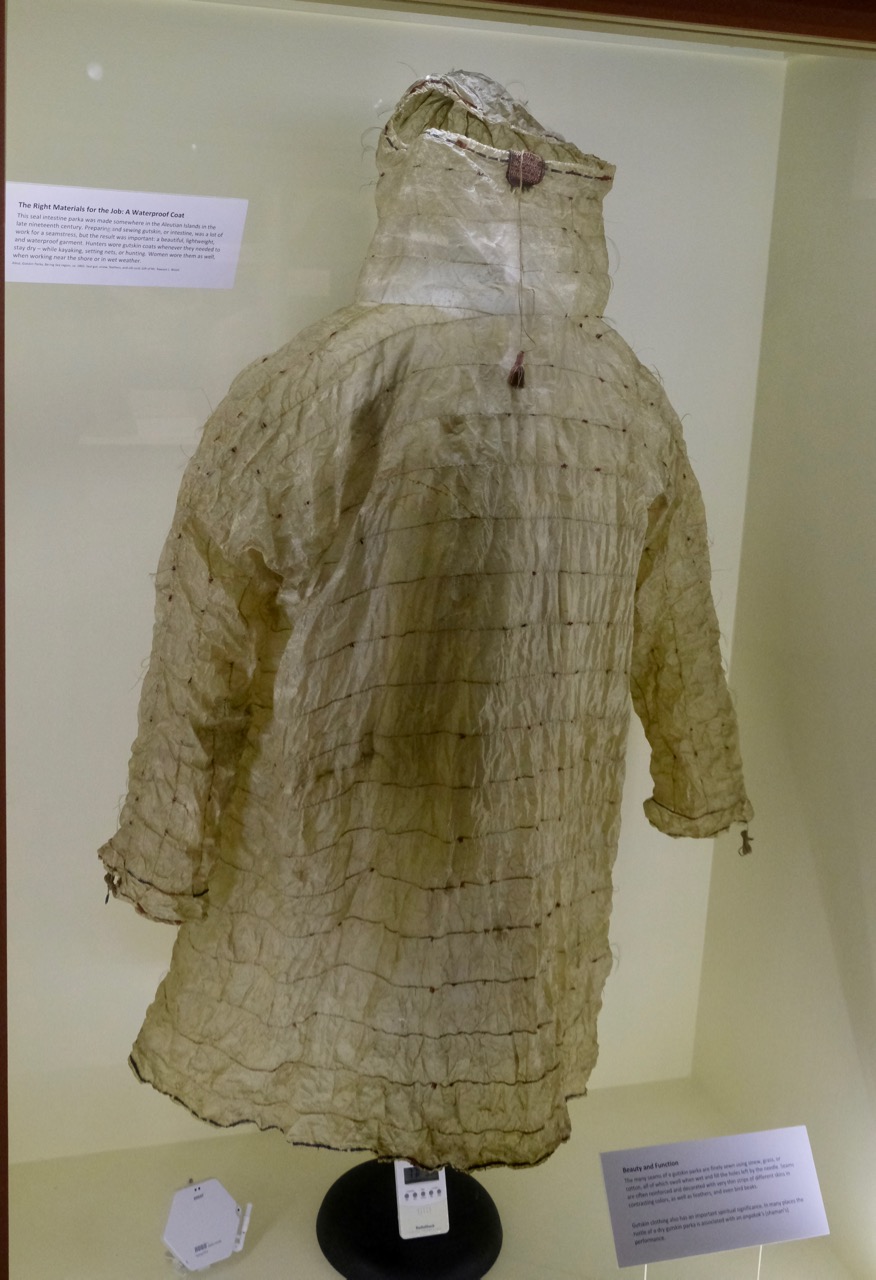
On display at the Peary-McMillan Arctic Museum (Bowdoin College, Maine). Within three years, every BPLer will have one of these :).

Topic
Become a member to post in the forums.
 .
On display at the Peary-McMillan Arctic Museum (Bowdoin College, Maine). Within three years, every BPLer will have one of these :).

A baby seal walks into a bar….
Nature provides
Interesting
85 feet of drying seal gut on a clothesline. Source: elfshot.
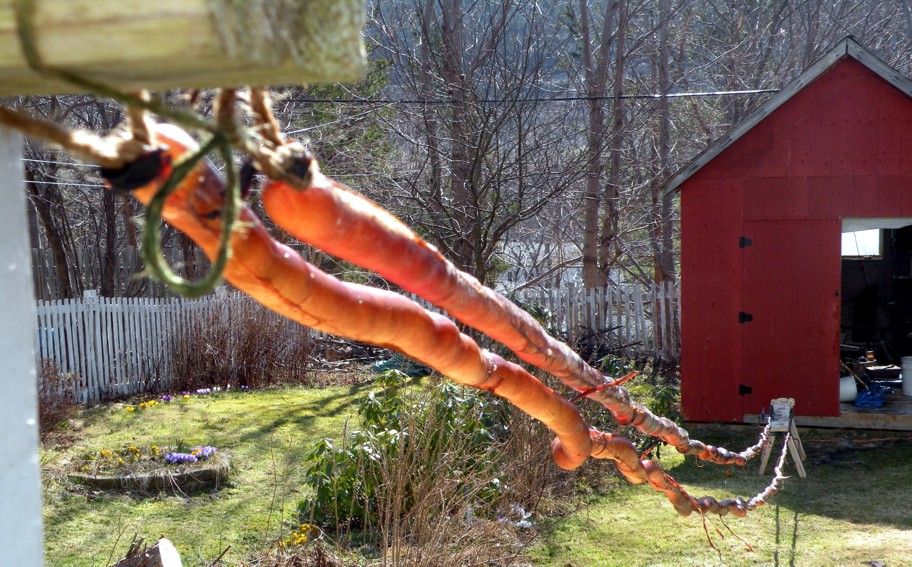
“”The dried intestines are carefully slit, and then sewed together in strips to make a raincoat.” Source: ADA

Alaskan woman carrying dried, inflated walrus intestines. Source: ADA.


How much does it weigh?
How much does it cost? : )
Can it be repaired with Tenacious Tape? :)
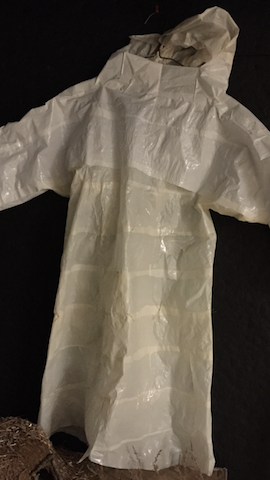
In 5th grade, my daughter’s class randomly selected an Alaskan Native group and a material (animal, plant, mineral) and then had to make a native craft from that material and that tribe. Her friend got “animal” and “Aleut” and made a seal-intestine anorak from used, white grocery-store bags. In addition to acing the project, she hoped it might be taught to homeless people so that they could make their own custom rain gear by dumpster-diving.
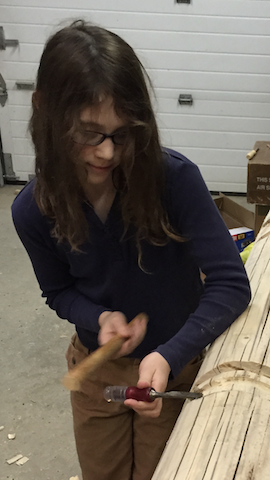
My daughter was hoping for “Klingt” and “plant (wood)” because she had something in mind and managed to get those. She’s never had a fear of power tools (while her older brother was scared he’d cut his hand off).

But a lot of it was just chiseling away:
And painting:

After being displayed at school, it’s been at start of our driveway for the last 4 years:
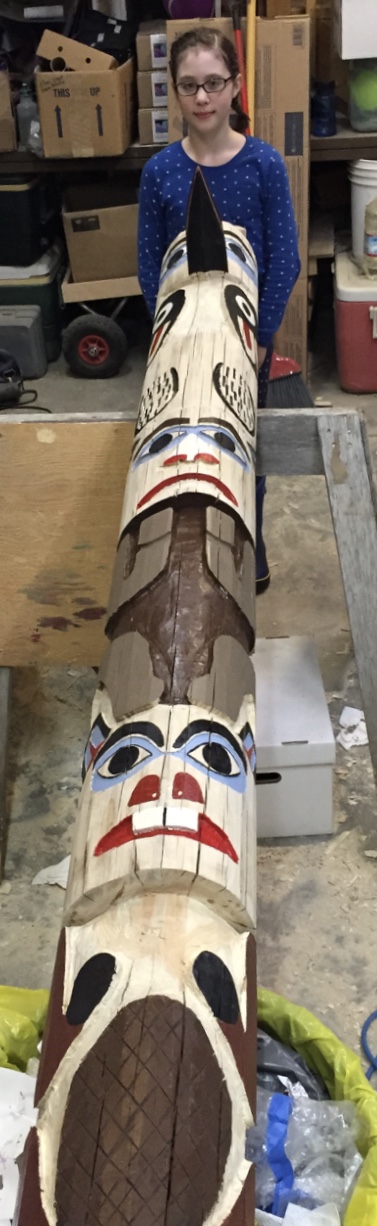
The function/weight was WAY higher in the grocery-bag anorak, for sure.

Weight, I dunno. But I was just reading an article about a woman who traveled to Greenland for the kayaking world championships and she quoted a seal-gut tuilik at about $3000 USD. But they are generally not sold.
Yeah, I would think at this point, gutskin anoraks would only be commissioned by museums or well-heeled collectors and done as custom work. I’ve seen Inupiat women in Utqiaġvik (Barrow) sewing seal skins on to the wooden frame of umiaks (an open boat used in the whale hunt) because it’s still a lighter-weight option compared to an aluminum skiff. There’s a collective of (I think, mostly native) women who weave qiviut (musk ox undercoat wool) into scarfs. And there’s a moderate use of caribou hides in leggings and moose skins as the soles of shoes in the villages and even white-boy mushers aspire to have beaver-fur gloves. Wolf, fox, and wolverine fur is valued for ruffs on parka hoods because it doesn’t ice up (the Chinese just use dog fur). Any musician who’s played an authentic medieval viol or hurdy-gurdy can appreciate how difficult it is to maintain the right humidity, storage conditions and keep animal guts safe from critters.

The seal skin raingeer would be practical for the Eskimo traveling the open sea in a kayak or walking in a treeless environment without bushes or shrubs to snag and tear. For the average Backpacker durability might be a problem.
Thank you David Thomas for your insight to the info provided.
Your daughter did an awesome job on the driveway greeting pole :-)

Always nice to see photos from the archives. Archives, libraries and museums are some of the first public goods to get cut during lean budget years. Now I can say that even backpackers need the inspiration an archives can provide!
There’s a collective of (I think, mostly native) women who weave qiviut (musk ox undercoat wool) into scarfs.
A few years ago I purchased 16oz. of qiviut so I could have it woven into socks. Never got toit :-(
An acquaintance has a vintage machine like the one in the video that she will use to make the socks.

Become a member to post in the forums.
 Brynje Mesh BaselayersBrynje baselayers use open mesh construction to move moisture away from the skin, create insulating air pockets, and help regulate body temperature across changing conditions and activity levels.
 © Beartooth Media Group Inc.
 Loading...