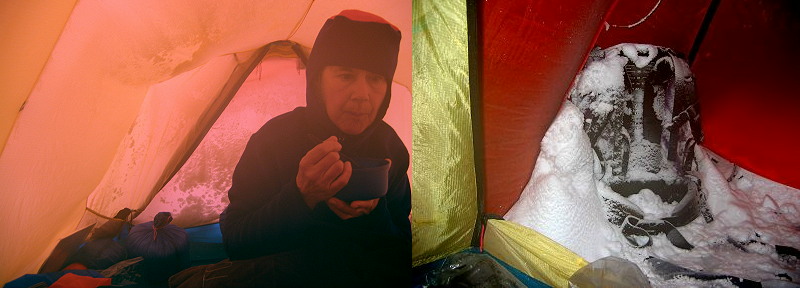
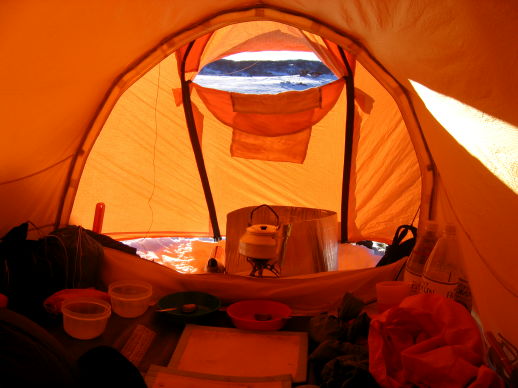
I always use a solid (breathable) inner tent plus fly when backpacking in the Pacific Northwest Cascade mountains. Night time temps are usually in the 30-50 F range because I try to avoid warm weather for backpacking.
The solid inner tent is warmer and less breezy than a net inner tent. While sleeping I can count on a 10 degree difference between the outside and inside air temperature. While moving around inside the tent the temporary inside/outside difference can be as great as 25 degrees in the upper portion of the tent.
It is the temporary 10-25 degree temperature difference that is the real plus for me. The difference between, say, a breezy, wet 40F outside environment and a calm, dry 60+F inside environment is huge. It allows me to change out of wet clothes in comfort. I’m on my knees when changing clothes so my temperature sensitive upper torso is in the warmest part of the tent while doing so.
I’ve found tents with pyramid or cheese-wedge shaped tops are best at giving me the temporary upper- tent heat increase. Their small volume and shape seem to trap or concentrate the warmth from my body better than dome or tunnel shaped tents.
Other things being equal, smaller tents get warmer faster than larger tents. Number of people in the tent is also a factor. Two people moving around inside a small tent will heat it up much faster than 1 person in a large tent. I recall a winter trip with temps around freezing where 4 of us slept in my 3 person tent with solid inner. While changing out of our wet clothes inside it was warm enough to sit around naked for awhile. Must have been around 70F.