Topic

Read your permit!

Viewing 25 posts - 1 through 25 (of 27 total)
Paul Wagner BPL Member
PostedAug 16, 2025 at 9:57 am

I spend much of my time as a wilderness volunteer “restoring” campsites. What does that mean? Campsites, in most areas, are required to be on durable srufaces, 100 feet from water, and 100 feet from the trail. There are numerous really good reasons for this, that include keeping water sources clean, allowing wildlife access to water, preventing destruction of the soil and flora, etc. When I find a campsite that does not meet those guidelines, I try to fill it with rocks, trees, brush, and other material to make it look less inviting, and harder to use.

And every time I revisit a location, I find that someone has gone to the trouble of removing all that material and debris to camp illegally yet again, Sigh.

When you see a place that looks like a perfect campsite except for those rocks…maybe stop for a moment and think: Who would have put these rocks in such a nice campsite, and why?

Better yet, always camp in an existing campsite more than 100 feet from water. You know, like it says on your permit!

Herer’s a link that includes a couple of photos to illustrate the point:

https://manage.wix.com/dashboard/d29568fa-4d12-4e32-8a0f-43c7a48bc603/blog/9d60481d-0972-446a-b7eb-63b82b27a844/edit

And here’s a larger photo log of the restored sites…and some logs we’ll get cut through.

https://photos.app.goo.gl/cSbNaPQoDGyd4EHn7

Jerry Adams BPL Member
PostedAug 16, 2025 at 10:43 am

I read a paper by a Forest Service biologist that advocated making designated sites that meet the requirements, with short side trails to them.

But the Forest Service is more into LNT – let people find their own sites.

That biologist said that if a site is camped on more than about once a year it won’t recover very good, so it’s better to have many people using the same site, so just one site is impacted, rather than everyone finding a different site which will only occasionally get re-used in the same year.

When people find their own site, they’ll often not be following those rules.  And they’ll tramp all over looking for a good site.

This would be for areas that are fairly heavily used.  If an area has only a few users then it’s best to let them find sites, and they’ll recover, no permanent human impacted sites.

Dan BPL Member
PostedAug 16, 2025 at 1:47 pm

Unlike the perennial toilet paper debate, I don’t think there’s much controversy about campsite rules, and I’m pretty certain that the (mostly experienced) people reading this forum know the rules well. They either choose to follow them, or are deliberate scofflaws who don’t care if you scold them.

And Jerry, there are certainly designated primitive campsites in various high-use places (e.g. RMNP), often with amenities like bear boxes. I avoid those places like the plague. However, the guidelines you mention are very relevant for delicate ecosystems like alpine tundra, not only for campsites but even trails/treads. If I see tundra tamped down, I walk or camp elsewhere.

jscott Blocked
PostedAug 16, 2025 at 2:14 pm

“And Jerry, there are certainly designated primitive campsites in various high-use places (e.g. RMNP), often with amenities like bear boxes. I avoid those places like the plague.”

I understand. but it’s more complex. Going out into pristine sites and camping there is more harmful to the wild than camping in designated sites. We can pretend that we’re hiking in pristine wilderness that’s never or rarely been visited before by trampling off into virgin territory a dozen feet off trail. Another strategy is to time your visits across higher density trails to off season, which is often the perfect season, if you know how to weather watch. for 25 years every early spring I hiked out of Yosemite Valley and back into Merced Lake, and then day hiked a mere 1,200 feet up through easy compact snow following a stupendous series of waterfalls and ever increasing views of the Clark Range and elsewhere.  After the initial hike early in the morning up to the top of Nevada falls,  I rarely saw anyone for the next four days. I did end up avoiding the high Sierra camp at lake Merced by camping at an ESTABLISHED but rarely used site a mile and a half below. Perfect solitude. and no trampling of the forest around. This trail is heavily travelled later in the season.

Even in mid summer I’ve found routes in Yosemite backcountry, even on trail, that are lonely and deserted and quite beautiful. No trampling required to avoid the crowds. And anyway, guess what, the masses have discovered the wilderness. we’re part of the masses, like it or not. No one can be Lewis and Clarke. Lewis and Clarke weren’t Lewis and Clarke. Native Americans were already there.

So find a way to camp alone by understanding the times of year and conditions.

Dan BPL Member
PostedAug 16, 2025 at 3:46 pm

Camping in pristine/isolated locations is more harmful to the wilderness than camping in heavily visited areas? Maybe, I don’t know. Most likely it depends on a lot of factors and it’s hard to generalize. I think that was Jerry’s point … it depends.

I was only saying that I don’t enjoy being in heavily traveled areas and so I choose to seek out obscure locations. I don’t know of any reliable studies saying that my preferred activities are particularly harmful to the environment, and certainly I follow the rules. Obscure and lightly used areas aren’t so available in national parks and maybe hard to find on the coasts in general. But isolation is still pretty easy to find in the Colorado high country if you’re willing to stray from the beaten path, and comfortable with navigation and isolation.  That’s what I like. Other people (e.g. many through hikers on the famous busy trails) enjoy the social aspect of backpacking. It’s just not for me. If my only option was to camp in designated sites, I’d probably just stop backpacking.

I have no illusions about being in virgin territory, but I often go whole days on a trip without seeing any other people. I’ve spent 25+ years learning my way around many of the more obscure wilderness areas in Colorado. A few of them (closer to population centers) are showing noticeable wear and tear, but most of them are still very lightly used. I strive to touch the wilderness lightly, and I think you (or local wildlife) would find very little impact of my campsites within a few hours of my departure. In fact, wildlife are frequently wandering through my campsite while I’m in my tent.

AK Granola BPL Member
PostedAug 16, 2025 at 5:42 pm

Paul, looking at your photos on Google (I cannot access the others) I only see one photo with a campsite that was next to water. Maybe it’s just the angle of the photos, and there’s water behind the photographer? I don’t see trails either, so I’m wondering what is wrong with those campsites that they needed restoration.

I’ll admit I have not always followed those rules to a T, especially when the *only* already used campsite is out of compliance, for example at Wilma (Wilmer) Lake in Yosemite. There are spaces for only four tents, all adjacent, and all close to the lake and directly off the trail. There is nothing else there that is not marshy or brushy; headed SOBO it’s all uphill and sloped for many miles. I thought about going back a mile NOBO and retracing my steps, re-crossing two deep creeks, and seeing if I could find a spot among the PCTers already along the creek, but I was exhausted at 8pm with a 16 mile day, and there were two Germans already camped right at Wilma, so I just camped with them. The sites are well used, marked on Farout, and marked on my National Geographic PCT atlas. But technically according to the specs, they’re not good campsites.

I also have set up and only later realized that I was too close to water, but by then there was a thunderstorm raging. I could have moved my camp later that evening after things calmed down, but there were tons of campers by then and hard to find a place; most people coming in were cowboy camping in the sand by that point, just trying to find anything. And in the end I was glad I set up where I did, because I was one of the few campers there that night that didn’t get frosted on. Most of the rest of the lakeshore was untrodden, so plenty of space for wildlife.

I’m sure everyone has an excuse, but I would bet that most violate the rules out of ignorance – yes, not reading the permit, or out of desperation. Or not understanding what 100 feet is. I watched a couple ladies set up a few feet from Showers Lake, and I gently reminded them and got some serious hostility back. Only the presence of another hiker kept one of the gals from unleashing her fury. I think they truly did not know how to measure 100 feet. There are probably 50 spots at Showers, well back in the trees, so it’s pretty darned easy to move one’s camp there. Maybe she had low blood sugar.

I would certainly not remake a campsite that was obviously intended by trail maintainers to be discontinued, just as I wouldn’t reassemble fire ring rocks (well I don’t have fires anyway while backpacking so…). I wouldn’t remove plant life. But I’m sure many people are like me and get desperate an hour before dark and take an obviously used but too close to the trail site. Is that really a big deal? I get the concern about wildlife access to water and I would never poop close to any drinking water (or on a berry patch!). But seeing a campsite from the trail doesn’t really wreck anyone’s day unless they require the illusion that they are in “wilderness” but honestly the existence of the trail itself should remind them that they are not.

I also have to wonder with busy trails like the PCT, if you don’t want people camping next to the trail, and you don’t want them trampling all the veg to find a site, you don’t leave many other options. If there aren’t social trails leading to campsites, and you can’t camp next to the trail, then you have to start stomping through the veg to find something. Or there has to be built campsites as with the Chilkoot.

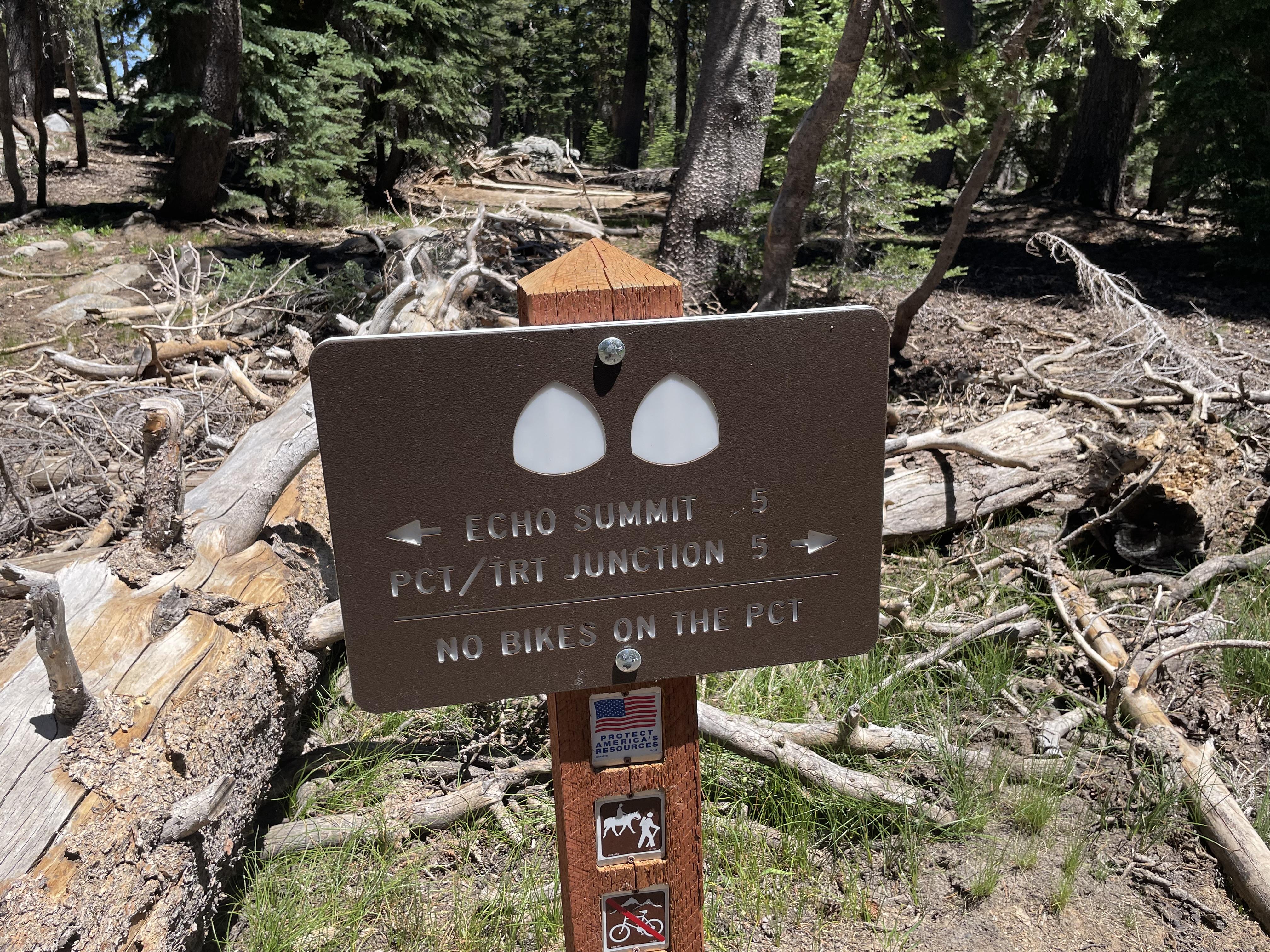
On a happy note, I found almost no trash along the two sections of the PCT I did this summer, I and J in California. I picked up one lip balm, a few of the plastic zip tops from snacks, and a hair tie. I think that was the sum total! I did see a sleeping bag hanging from a tree next to the trail at the top of a pass; that one I left in case the poor sucker that lost it came back for it! It was cold too. Oh and I meant to grab but forgot, a lady’s bathing suit hanging from a tree at Showers’ lake. Hopefully that got removed. But otherwise I found no poop piles, no TP, no other trash, and 99% of the people encountered were lovely. The only objectionable thing was the obvious theft of PCT emblems from trail signs and trees, especially from Carson Pass to Sonora. There were a lot of triangular shaped spaces that had no trail markers!  But most people are trying hard to leave it nice for the next hiker.

Jerry Adams BPL Member
PostedAug 16, 2025 at 6:52 pm

“Maybe she had low blood sugar.”

You are being kind : )

I prefer isolation.  I guess I just don’t like people?

Sometimes there are a lot of people and I just go with that.  Actually, people are usually pretty friendly.

Especially in the winter I can go for many days without seeing anyone.

When I’m in the wilderness, i hardly every see more than a rubber band or corner of a candy wrapper, which I pick up.  Occasionally I see TP – just bury it better.  Actually, I’m pretty impressed with how much people are into LNT.

jscott Blocked
PostedAug 16, 2025 at 7:39 pm

p.s.in early spring I often camped at the Yosemite high camp at Merced Lake, and rarely shared the site with any other person. and the two times that I did, it was always with a solo park ranger. But I came to prefer the site below the lake for its views. Not because there were “people” there spoiling my experience. there were none. Again, go early! Or perhaps late season.

Know your route! I’d climb three thousand feet up from the valley to Merced lake, and another thousand after that on a long day hike. And then take the “High Route” through a lot more packed, easily traversible snow back down to the valley. Most eople would encounter solid snow early on and assume it only got worse as one climbed. Not necessarily. Again, know the route!

Paul Wagner BPL Member
PostedAug 16, 2025 at 9:19 pm

Thanks for all the thoughtful replies here. I expected nothing less from these boards.

I think we’ve all learned, long ago, that trusting common sense just isn’t enough. As that ranger in Yosemite once said, the overlap between the smartest bear and the dumbest camper is bigger than you think. And yes, in many cases those photos were taken with my back to the water. They were all withing 25 feet of the lake.

Sadly, not all hikers have as much common sense as those here.  Every year I remove fire rings, over and over again, in drought/fire season in California. In Desolation Wilderness, campfires have been illegal since 1990. And yet every summer those who own cabins in the forest below can see the campfires lit on the granite peaks above them.

Common sense? I found a campsite this year which used a log to create seating around a fire ring.The log clearly labeled the area as closed to camping for restoration. I found a bag full of trash neatly tied up in a tree next to a pile of trash within fifteen feet of a lake. The bag had the name and address of the person who left it. Common sense? I’ve found food dumped diretly into the lake, poop unburied in plain site in a campsite, and last week i carried out a tent that had been abandoned because it had a broken tent pole–near a fire ring, within 30 feet of the only water in the area. I don’t think we can count on common sense for much.

I should point out that yes, wildlife does need access to the water. That is only one of many reasons that campsites should be away from water. there are also concerns about polluting the water, as well as the fact that soils near water tend to be moister, compact more readily, and end up in those heavioly impacted site in the backcountry we all dislike.

Yes, the USFS does allow many existing sites to continue to be used, primarily to limit the impact on the surrounding area. Your permit will always say–please use existing sites. I don’t think anyone should ever “build” a new campsite. The goal is to leave the wilderness as if you had never been there.

And yes, education is needed. That’s why I made the original post. And I hope you’ll share the ideas we’re discussing here, and keep the conversation going.

Jerry Adams BPL Member
PostedAug 16, 2025 at 10:17 pm

Thanks for cleaning that up and for reminding people to follow rules

PostedAug 18, 2025 at 7:33 am

Established vs pristine sites when dispersed camping in the back country.

When I took my Leave No Trace certification training, this was a topic that our instructor covered and it was worded this way:

It’s getting late in the day and it’s time for you to start looking for a place to camp.  The first place you come upon looks like a decent spot. It’s almost pristine except for the fact that it appears someone may have camped there very recently judging by some signs of trampled grass, etc.  You walk a little further and come upon a well used, heavily impacted site.   A little distance farther you come upon another good camping spot and it’s one where NO-ONE has camped before.  Assuming all three sites follow LNT guidelines about distance from water, trails, etc, in what order of preference should you choose a spot?

The answer was 1)  The heavily impacted site.  2)  The pristine site.  3)  The slightly used site.

jscott Blocked
PostedAug 18, 2025 at 1:24 pm

It is interesting that when bear canisters became required throughout the Sierra, many years ago, one ranger told me that their advantage was to get people to stop camping at established sites. The notion was that the thousands of hikers would all go off into woods and disperse their camp’s impact by spreading the wear out. The reality has turned out quite different.

Sure we all dislike being in a high impact site surrounded by 7 or 8 other tents. although actually a small attitudinal adjustment on my part has resolved this. I simply go off on a day hike and leave the others behind, etc,) In any case I plan my hikes where, after the first night, the issue of solitude is solved. Again, know your route! After my first night hiking in, I usually spend several days at least seeing no one; frankly I crave company at that point. More: in early spring and late summer, I often don’t see others even at these high usage sites.

We often have to launch our adventures out of backcountry sites we reach on the first night in, that are a magnet to overnighters. I have to drive six hours just to get into the nearest good wilderness. I’m coming from sea level to near 9,000 foot elevation. I’m not ready on day one to 100% escape other people. and anyway, for me, that’s never the point. Other people sharing the wilderness beauty with me doesn’t diminish it. Quite the contrary. This is the beauty of, well, beauty: it’s amplified, rather than diminished, by being shared.

PostedAug 18, 2025 at 1:58 pm

jscott,

I live in southeast Michigan so I similarly have to travel a long way, and from sea level, to reach remote back country destinations in the mountains.  I don’t mind seeing fellow hikers enjoying the wilderness so long as we’re all respectful of each other and follow the rules.  Like you there are times when I’ve enjoyed and appreciated seeing some friendly neighbors while camped for the night.   I’m grateful for those positive experiences with my fellow hikers.

I’m ruined on front country camping though.  Too many people have joined the vacationing outdoors craze who are disrespectful of their neighbors so I started to avoid front country camping.  I suspect there are many people here who share that sentiment.


Jerry Adams BPL Member
PostedAug 18, 2025 at 2:04 pm

One thing that biologist said (I should find that article) is it’s bad when you have a site with a broad flat area.  People start making spots all over.

She said it’s better to make a site on a sloped area.  Make a flat spot for the tent using the same technique as building a trail.  Then, it’s very difficult to spawn a bunch of places nearby.

A high impact area can have just one spot to place a tent.  The person camping there can still have some level of privacy.

I walk through the Green Lakes area occasionally.  In Three Sisters Wilderness.  They have designated sites.  But there’s no flat place to put a tent at most of them.  They should improve each designated site to have a flat spot for a tent.  Some sites could have several for a group.

PostedAug 18, 2025 at 2:16 pm

Green Lakes has designated sites with no flat space for a tent?  What sort of madness is that?

Jerry Adams BPL Member
PostedAug 18, 2025 at 2:19 pm

Regarding the video of the Enchantments being trashed

Whenever I go into the Wilderness, I find very little trash.  The last time I was in the Enchantments was a few years ago, but I doubt it’s suddenly worse.

Maybe I’m just not going to the trashed places or something.

Maybe it’s a characteristic of humans that we exaggerate problems and then propose drastic solutions, like closing it down.

They implemented strict limits and permits in the Three Sisters, on the grounds it was being trashed, large increase of usage.  I’ve been going there for many years and that’s just not what I saw.  Someone checked my permit once, but now there probably isn’t anyone doing that because of staff cuts, so I guess it’s all moot : )

Link . BPL Member
PostedAug 18, 2025 at 2:28 pm

I have hiked the Enchantments a fair amount and have not seen anything like is being described, I have not been this year but know people who have and agree it is horrible, they said it’s not like anything they have seen before up there. I have had my permit checked when hiking there but with only one person now and so many people showing up….

jscott Blocked
PostedAug 18, 2025 at 2:41 pm

“Too many people have joined the vacationing outdoors craze who are disrespectful of their neighbors so I started to avoid front country camping.”

I’m not sure what you mean by “front country camping”. Where I go I pretty much leave the tourists behind after about four miles. On some routes some few will overnight a bit further on. If I climb up a 1,000 feet, starting at 8200 feet, even on the first night, I’ve never run into campers with boom boxes howling it up. Except, with boy scout troops! God I hate them! Or anyway their sadistic troop leaders intent on making as much noise as possible after the sun has gone down. Sorry to well intentioned scout leaders with better practices than the one’s I’ve sometimes  run into.: twice, as far as I remember.

AK Granola BPL Member
PostedAug 18, 2025 at 2:54 pm

Interesting study, and sidehills sound great for sites with reservable spots.  It doesn’t seem so wonderful to eliminate larger spaces if many people are counting on it for the night; a big flat space can accommodate additional tents as needed.  I also wonder if they are planning for people to share tents, whereas most of the folks I go with now all use single person tents, which take more space. Sharing gear, generally speaking, sucks for so many reasons. But it’s still nice to put our tents in proximity to each other.

I’ve encountered good group backpackers and bad ones, so I sympathize with the boy scout comment. I don’t love noisy groups of any kind but I understand and accept that during daylight hours, they might be playing games, laughing loudly, or splashing around in the lake; they’re young and full of energy and that’s ok.  They still don’t have to scream and hoot like gorillas and curse, however. Nor do they need to allow the kids to roam through other people’s camping sites; they can learn boundaries. And at dinnertime and after, in the early evening and all night, they need to let their fellow campers listen to the sounds of nature and get some much needed rest.  I 100% blame incompetent adults for not teaching good values to their charges. Americans generally don’t have manners any more, so it doesn’t ever shock me.

Jerry Adams BPL Member
PostedAug 18, 2025 at 3:24 pm

yeah, I don’t see a problem with a site that has room for many tents.

although I went to Jefferson Park once and there was an area of many acres.  Many places where people camped.  I can see a problem with that.  Several acres of disrupted land.

I camped at a spot below the Zigzag ranger cabin.  All by myself.  Then, about 20 thru-hikers gradually accumulated.  I moved up the hill.  That spot isn’t too bad though, it’s pretty constrained, there are cliffs around it so there isn’t much area to expand beyond 20 tents.  I know not to camp there in the summer if I want privacy.

It just depends.

That seems like a good idea to make a side-hilled site if you want to limit growth.  Have it 100 feet from the trail and water.  Nice little side trail to it.  More likely for people to follow the rules.  People don’t have to tromp around looking for a good site.  Even though this violates the idea of untrammeled by man.

AK Granola BPL Member
PostedAug 19, 2025 at 11:41 am

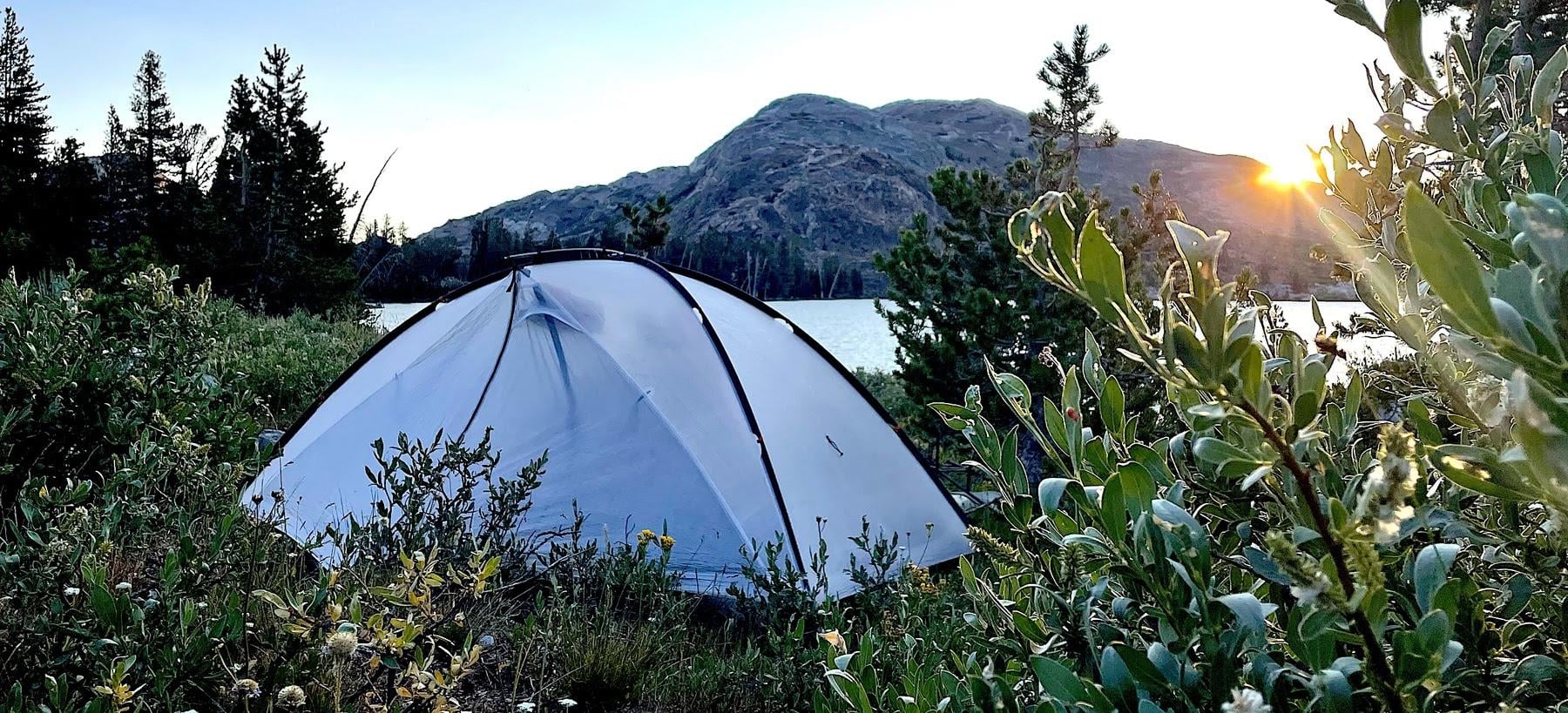
So just to poke a finger in the eye at BPL, but didn’t Ryan’s last post include a photo of a non-LNT campsite?  Maybe it just appears that way and it’s not plopped on top of fresh vegetation.

jscott Blocked
PostedAug 19, 2025 at 12:24 pm

the low brush and grass beneath Ryan’s tent will survive just fine. I’m not sure if LNT means, never sleep on vegetation, period. I think Ms. Crunchy Granola was being a little ironic here. Herds of elk and moose, 400 pound bears, coyotes who poop on LNT principles all populate the wild and the wild has somehow endured.

Sometimes to get 100 feet from water ya gotta camp on a non established site.

Viewing 25 posts - 1 through 25 (of 27 total)
Loading...