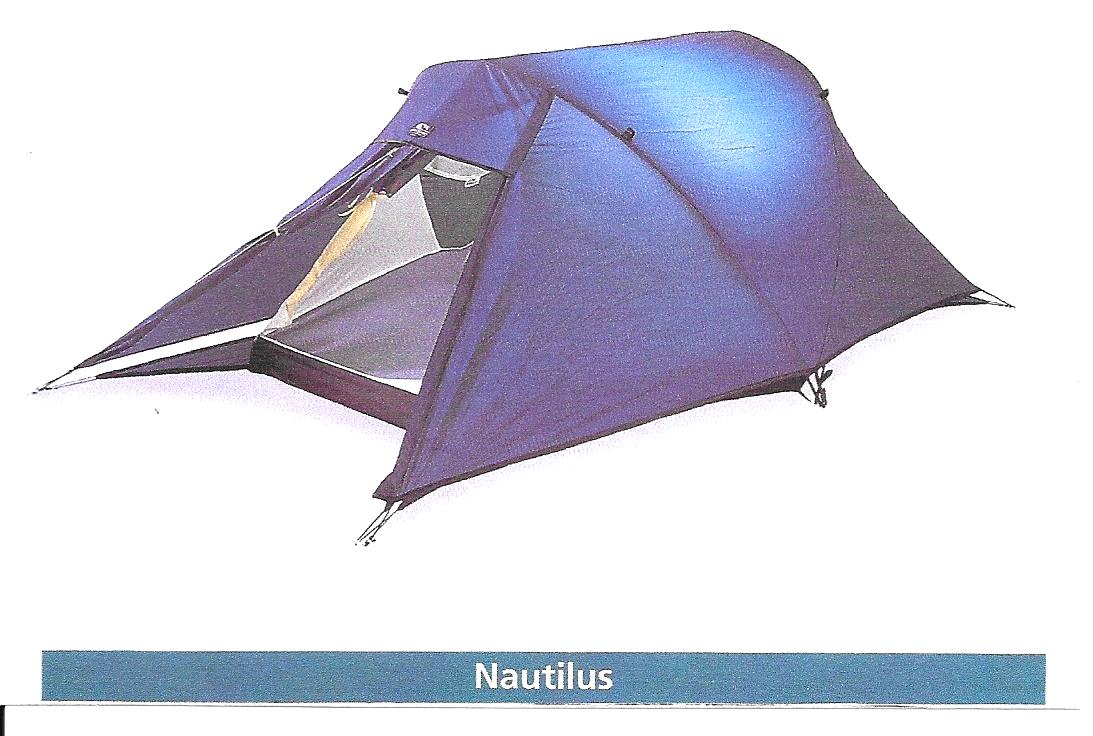
Franco, glad to hear that I’m not the only one. Will look for a six inch tall Barbie (or Ken) doll in the toy stores (6″ = 6′ on the scale of the model), cut out a 2 by 6 piece of thin foam to represent a pad, then take and post another picture with the camera at simulated ground level. Am pretty sure that will look better for taller folks.
Rene, it is below zero degrees F. here at the base of Mount Chocorua, and will get colder before the sun returns tomorrow, which is the prediction thank goodness.
Not wanting to get too deep into the weeds, did not mention that there will be a small triangle-shaped gusset sewn into the fly at each peak, to overlap the elbows and stabilize the fly with Velcro tabs, and also keep blowing rain from coming in between the fly and the poles at the break in the pole sleeves near the peaks. The break is to allow the poles to be loaded into the sleeves and inserted into the elbows from the peaks, and the theory is that 4 6′ poles will be easier to handle and load than two long 12′ ones. The gussets will keep the fly from lying completely flat on the ground, unless the fly is folded in half at the peaks, which should not be an issue I think.
Also, as hopefully shown on the front/back and side view diagrams in the OP, the fly will be secured over the sleeved poles by large triangle shaped projections whose points will be corded to the reinforcement patches at the four stake points. And of course, the fly will be buckled down where it meets the ground at the head and foot ends. I think this will keep it taut over the sleeved poles. It will also allow detaching the fly at the stake points on the windward side, and reattaching it to two additional stakes, to double the number of stakes resisting the wind. The shape of the fly will look a bit like the floor, a long rectangle with a triangle at each end, but longer since it has to go over the arches. I thought about putting a separate scale diagram of the fly on the diagram sheet, and probably should have.
Re: Gothic arches vs hoops, which are parabolas, unless you consider Roger Caffin’s
3-elbow poles as hoops. I like the one-elbow gothic arches vs hoops because arches present less vertical walls to the wind. They also require less fabric – so less weight. But true enough, they also provide less space at the head and foot ends of this tent. As mentioned, a marketable tent would have to increase the angle of the the elbows to provide more overhead space at head and foot; but compared with all the basically A-frame designs out there, I think the shallow arches will actually increase the ceiling height at toes and noggin, and even moreso nearer the peaks.
Agree that especially with the shallow gothic arch, the threat of the poles rotating and inverting in wind gusts must be considered. You’ve probably noted the video of the Warmlite tent pole rotating on its ferrule connections and inverting, with severe distortion of the tent. That was another reason for canting the poles forward and backward, to deter their being blown towards each other by wind pressure. So I’ve experimented with sectioned poles in shallow gothic arches. A tight connection at the elbows is a must, and is the case with plastic Wyes that taper to a very tight fit at their base, while being a little looser at their ends to allow the carbon poles a little give in extreme winds. I’ve found that once the pole sections in even the shallow arch are flexed, the sections do not rotate at the ferrules. Which makes the video of the rotation of the pole sections in the Warmlite video all the more mysterious. Possibly the poles were not fully inserted over the ferrules, or the pole bent. I picked up some pole sections for the lower hoop of a Warmlite, and discovered that the alloy is quite malleable. It may also help to be using carbon on carbon, or on plastic, with no metal ferrules or elbows that can turn into bearing surfaces. In any case, I’m comfortable enough with the sectioned shallow arches to proceed with the shallow arches without fear of a redo, but of course, nothing is certain. For anyone uncomfortable with the shallow arches, I would recommend redesigning with larger angled arches, creating an arch closer to a hoop shape, and as you note, more vertical room over the head and feet. In the final analysis, this is a tent supported by tension, not a free-standing frame, and its stability will depend a great deal on the reliability of the staking.
I appreciate the popularity of hooped tents vs the few with angled arches, but I’ve also read many reports, including here on BPL, of hooped tents blowing almost flat in strong winds. I suppose added guylines and stakes will hold up almost anything, but I’m trying for something less vulnerable to the wind – win or lose. I know my Goondie, basically a cross pole dome, would be a disaster without the built-in guylines angling from the poles. It turned out that the guylines put so much pressure holding the corners of the tent in place that I stopped staking the corners most of the time.
I don’t think you can go wrong with hooped tunnel tents – better space to weight, as you say, than most types. The problem is that most on the market are quite heavy, as Roger found in his article; but that is all the more reason for going MYOG using very lightweight fabrics and components that are now available.