An issue is that some of the finer features on USGS maps do not show up well on copies, at least with reasonably priced equipment.
Take the very pale green shading that shows the timberline where the forest ends and the tundra begins. The original maps are very useful when using the “handrail” technique of off-trail hiking. Many maps either do not have the shading, or it is not accurate. Surprisingly on USGS maps I’ve found it very accurate. So walking along in open country with the timberline, say, 50 yards to one side of me, the shape of the shading shows where I am. There are similar markings on the maps , like small streams, that are also helpful.
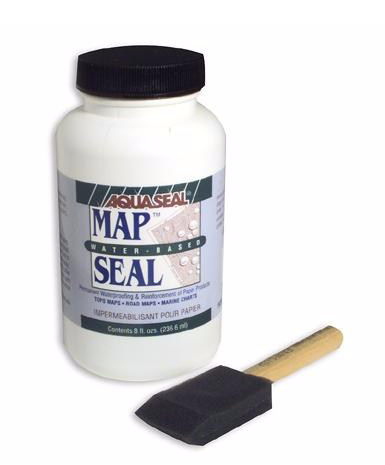
But was never able to get copies of those less distinct features; so to avoid carrying the bulky USGS maps, cut them down to letter size. For waterproofing, laminated 1.5 mil pouches over letter size sections. The pouches need to be protected by covers, or carriers, when going through the laminator, or they will melt. The pouches and carriers were made by GBC, and sold by SP Richards in E. Windsor CT. But they may have come through ULINE where I bought the laminator. It was a one-time investment that has lasted many years, so did not mind the price, which was less than a couple hundred.
It took a little practice to get the heat setting right on the laminator, but the end product did not stiffen the USGS paper, so it was easily foldable, and the creasing did less harm than it does with plastic maps, like Trails Illustrated maps, which are good for showing much larger areas, but not well. So one or two of those stayed in the pack for a week, just to provide a big picture if needed in an emergency. The maps actually used were the laminated letter sized ones. After a week, the maps were replaced by the next set of maps on the route.




 I like the way you think