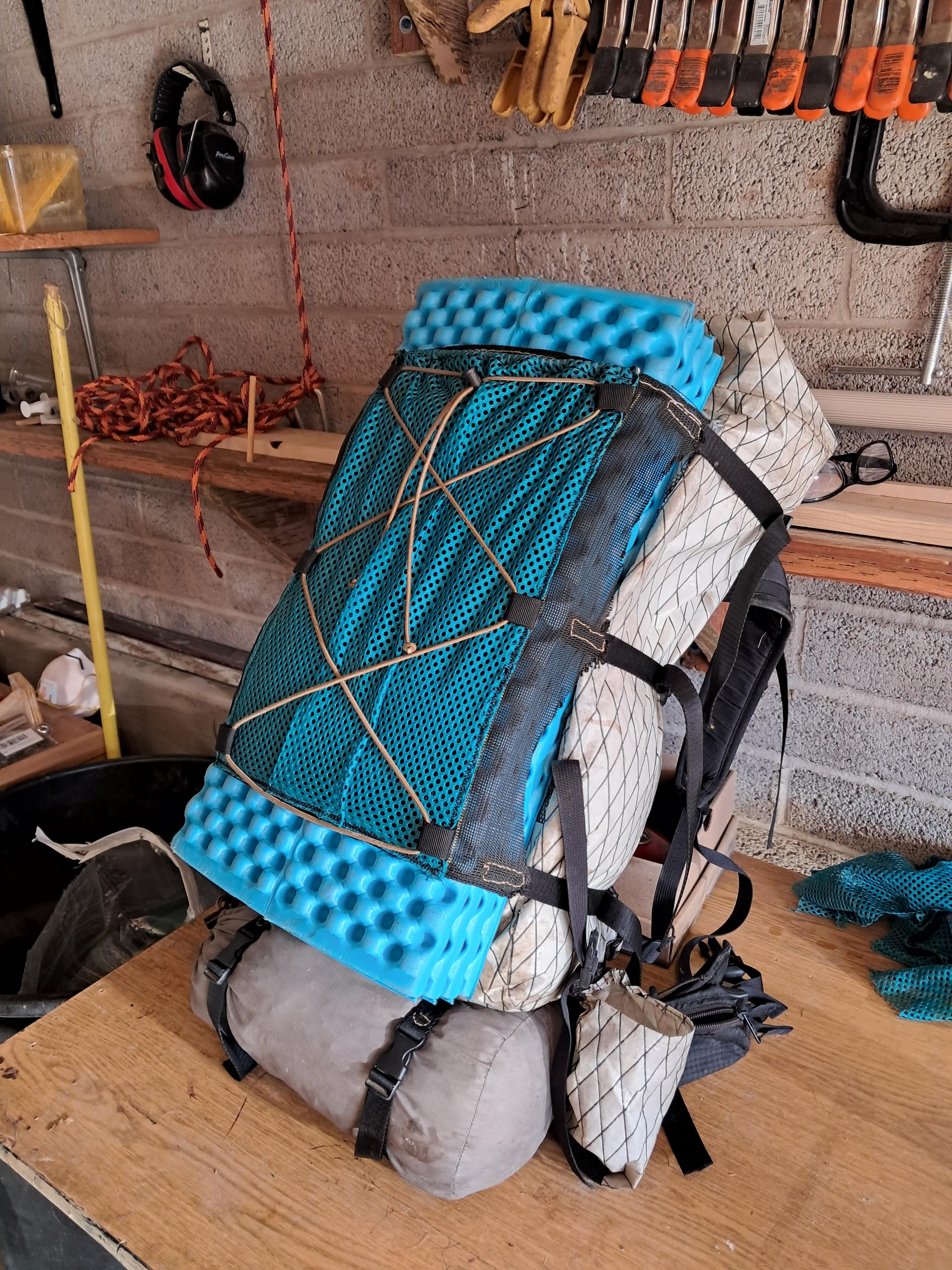
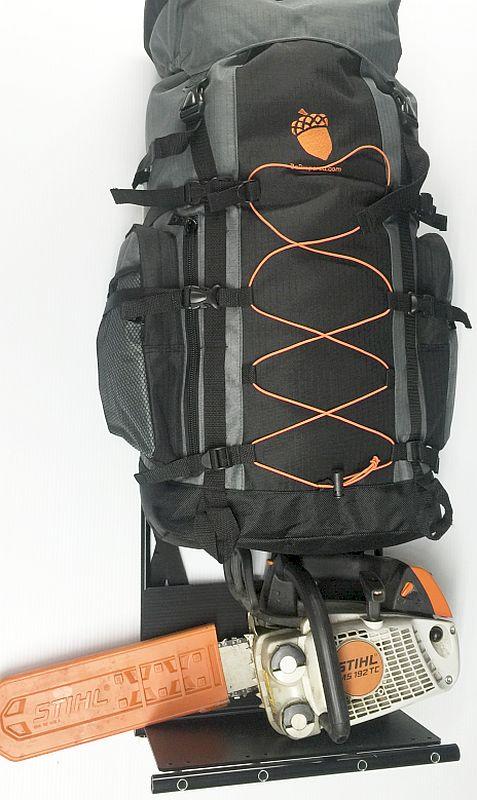
This is not in MYOG because it is not really about my project. This is a copy of a letter I sent to several pack manufacturers trying to get them to think outside the box. I thought I would post it here as well to get feedback from the community. What do you expect from a pack frame and how the pack is arranged on it?
One afternoon on my PCT thru in 2010, a few of us spent the afternoon miles talking about packs. We all loved our modern lightweight packs, but agreed that we missed one feature from classic external-frame packs like the old Keltys: the open space below the main bag for carrying a tent or shelter.
We bounced a lot of ideas around before reaching camp, and then the conversation moved on. But that one stayed with me.
I started wondering what would happen if you kept the basic feel of a modern lightweight pack, but let the frame continue down to the hipbelt while stopping the main bag several inches above it. Visually, it was almost like superimposing the layout of an old Kelty onto a modern pack.
I eventually built that pack.
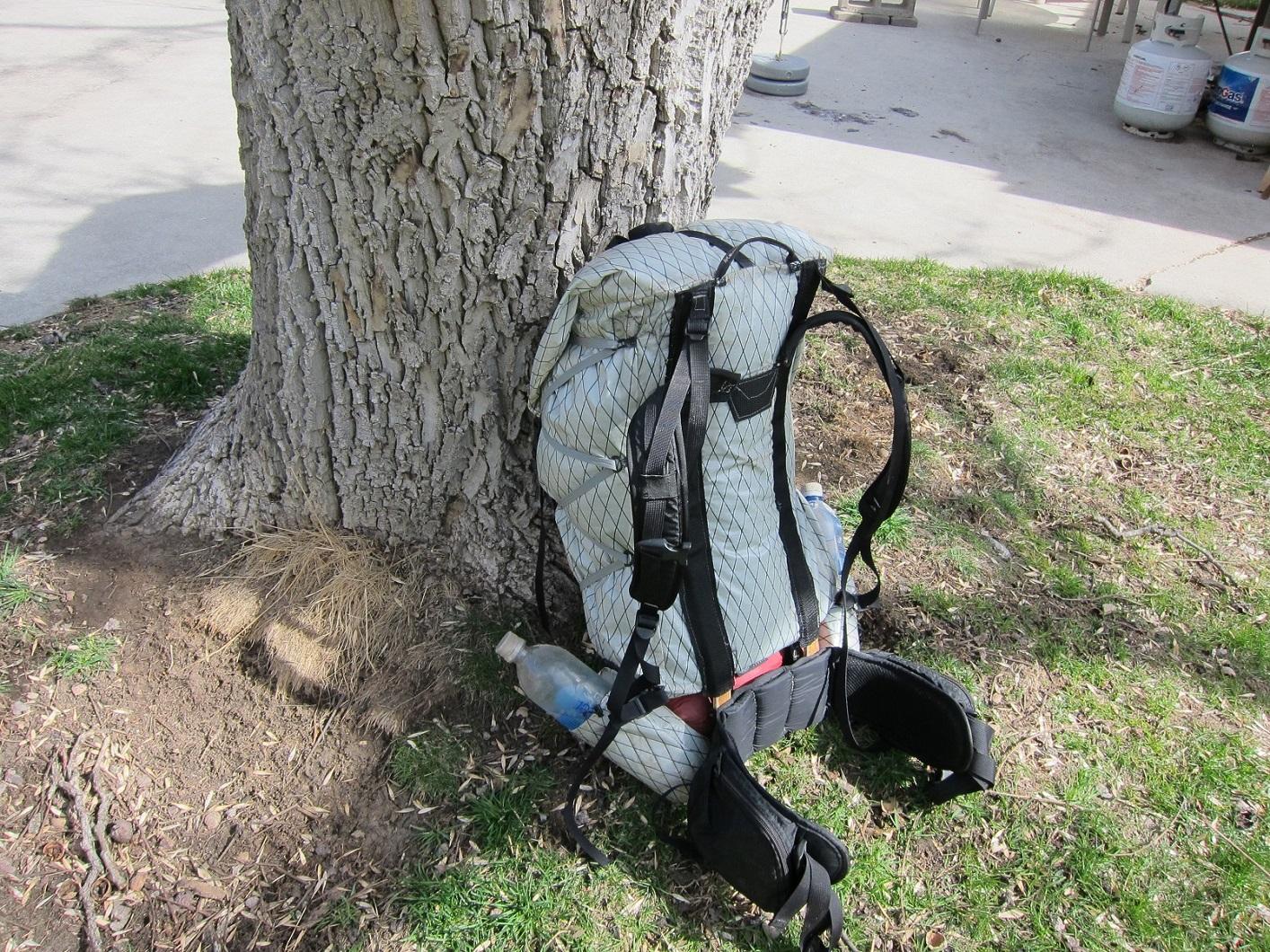
There are many great pack makers today, each with ideas and details that set their packs apart. Yet most modern lightweight packs are still very much the same in their basic architecture. There are good reasons they have settled into this general form. But once a design becomes standard, it is easy to keep improving it without questioning the basic layout.
Shelter storage was one of the main things we discussed that afternoon and an obvious goal of the project. The open space below the main bag gave the shelter its own place, quick to reach and separate from the rest of the gear when wet.
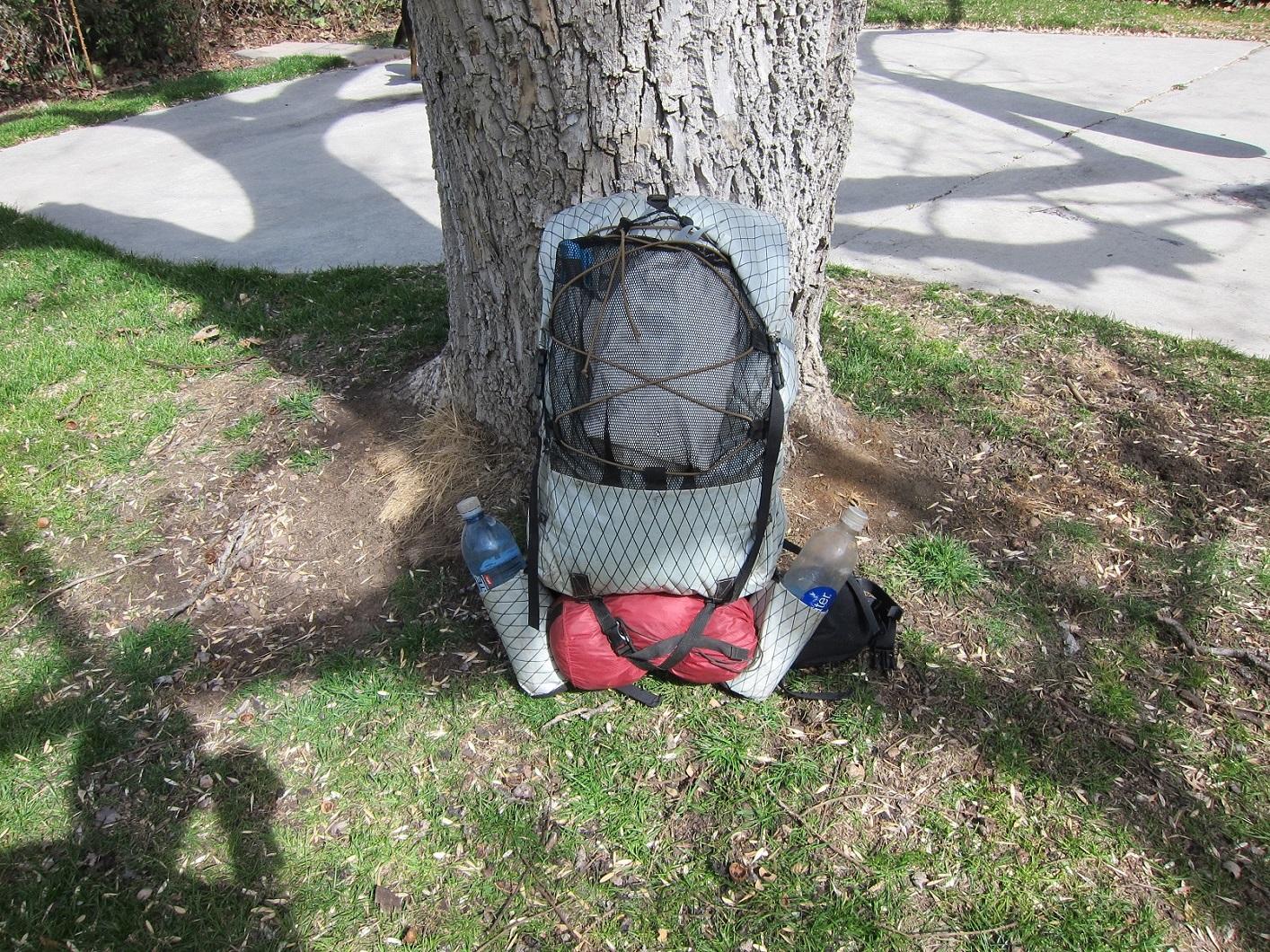
What surprised me was how well the suspension itself worked.
I was worried that having the pack sit above the hipbelt would cause sway, but it didn’t, even though my hips could move freely while walking. The upper bag had just enough flex for comfort while maintaining full control when bending, reaching, or moving over rough ground. The water bottles were incredibly easy to reach while hiking. What was intended as an experiment became my go-to pack.
After carrying it, I would describe its main advantages this way:
Efficient load carrying — extended stays transfer the load directly into the hipbelt, making for a balanced, comfortable carry.
Balanced control and flexibility — independent stays move naturally with the body without allowing the load to sway.
Dedicated shelter zone — answers the perennial backpacking question: “What do I do with my wet tent?”
Designed for putting in the miles — low, angled bottle pockets provide true on-the-move hydration, while frequently used gear stays readily accessible outside the main bag.
Minimal structure, low weight — two stays provide the frame and load transfer without a rigid back panel or permanent foam padding.
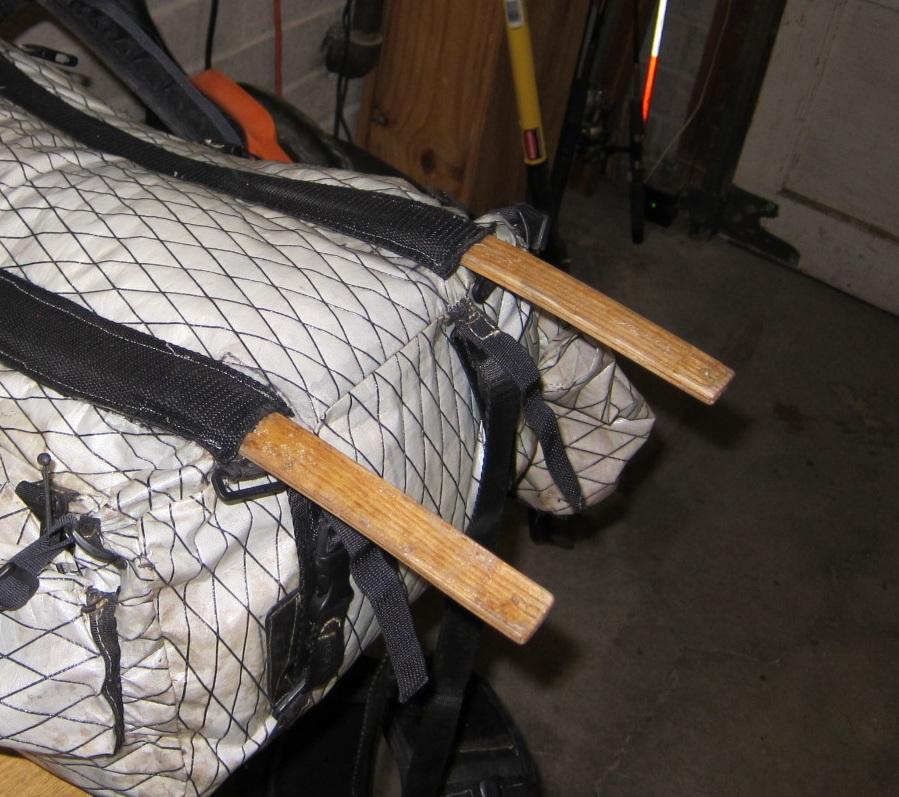
My stays are laminated wood because that was practical for me to work with. A modern version could likely use carbon, but simply making the stays as stiff as possible would miss part of what makes the design work. Ideally, they would have more flex near the shoulders and greater stiffness through the lower section where strength matters most.
I’m not trying to sell a design or argue that every pack should work this way. I’m simply putting the idea in front of people who think about backpacks for a living.
What happens if the bottom of the pack bag and the bottom of the suspension don’t have to be in the same place?
In this case, it worked surprisingly well.
George
p.s. It has been through some changes as I shifted from an UL air mattress to CCF foam coupled with a 1″ inflatable pad.