TLDR at the end :-D
Pertex Shield sucks – last material I would use for this honestly for a waterproof breathable material. I have experimented a lot with making my own bivies out of WPB textiles if you are ever interested in this route – keep in mind however it will drastically increase the production cost of your shelter. I could see it being a great value-added option though and you could have two lines of the same shelter with the same production people and different fly fabrics.
By far the best materials I have used in terms of condensation management (in order):
Best: Polartec Powershield Pro (same membrane as Neoshell but a a higher CFM and lower HH)
Good: eVent made by GE (the lighter weight one with less HH and slightly higher CFM / MVTR – GE makes many varieties of eVent)
Terrible: Goretex in comparison fared very poorly in condensation management compared to the two above. I was not at all surprised by this. I did not try other membranes.
For my own use I now only use air permeable membranes for both shelters and garments (with the exception of the DWR-less membranes like Outdry EX which I like a lot but are impossible to find actual fabric – if anyone ever sees overruns though I would love to experiment with it in a shelter!). I completely ignore the MVTR measurement as it seems like it is designed to tell you how much a fabric can “breathe” in fancy lab conditions only (breathe meaning pass water – not air – you literally cannot breathe through goretex at all). Instead of I have found that in the real world fabrics with a higher CFM out perform similar fabrics with a lower CFM in terms of condensation and comfort. Most electrospun PU membrane textiles are made for garment use and have a stretchy polyester type face fabric (usually pretty thick) but occasionally textiles that are designed to not stretch will popup that have something like a 100% nylon face or similar – this is exactly what I would use for a shelter.
In a garment this does indeed make a big difference ( I am WAY more comfortable in a powershield pro jacket than goretex even with zero mechanical ventillation ) but of course if I start working hard I can overcome (ie sweat a lot) even the best membranes quite easily. However for shelter use I have found the WPB fabrics an awesome choice as the requirements are not nearly as high – you are not going to be sweating like crazy inside your shelter vs running up a hill – and even in the worst conditions I almost never have condensation. All the fabric needs to do is pass the small amount of condensation your body produces as you sleep or rest. I do not recommend of course cooking inside a shelter but I have even tested bivies by putting a boiling stove inside (with precautions and without myself inside) to really produce a ton of moisture and the powershield pro bivy worked surprisingly well. It basically filled with water vapor/condensation and then vented that off fairly quickly even with it fully zipped up. The goretex bivy bv comparison turned into a little ice box with frozen water covering the walls and floor.
Most single skin tent manufacturers are moving to air permeable membranes (such as Neoshell and Powershield Pro) already. The new Pertex Shield Air (which Rab has switched to from eVent) is also air permeable and I suspect is just Neoshell relicensed to Pertex to use with their expertise in very light face fabrics. Rab now uses this fabric in their Latok line of tents and their 4 season bivies. TNF has switched to their own air permeable membrane for their mountaineering tents. Outdoor Research uses Ascentshell in their new bivies (another air permeable electrospun polyurethane membrane). etc etc.
I also have a bivy from Big Agnes called the Three Wire bivy that is amazing and has awesome condensation management – it uses the same fabric they use in their Shield line of single skin mountaineering tents. I confirmed that it is also an air permeable electrospun membrane (do not know why they dont advertise this – seems like a big miss on their part). It has a small little tag from a european company ( I think from Spain ) I had never heard of – I am guessing they must make a comparable electrospun membrane/textile to the above but more affordable – I can get you the name if your interested. Based on the fact that BA has such a massive discount for American Alpine club members this fabric must be significantly cheaper or they would be losing big money here.
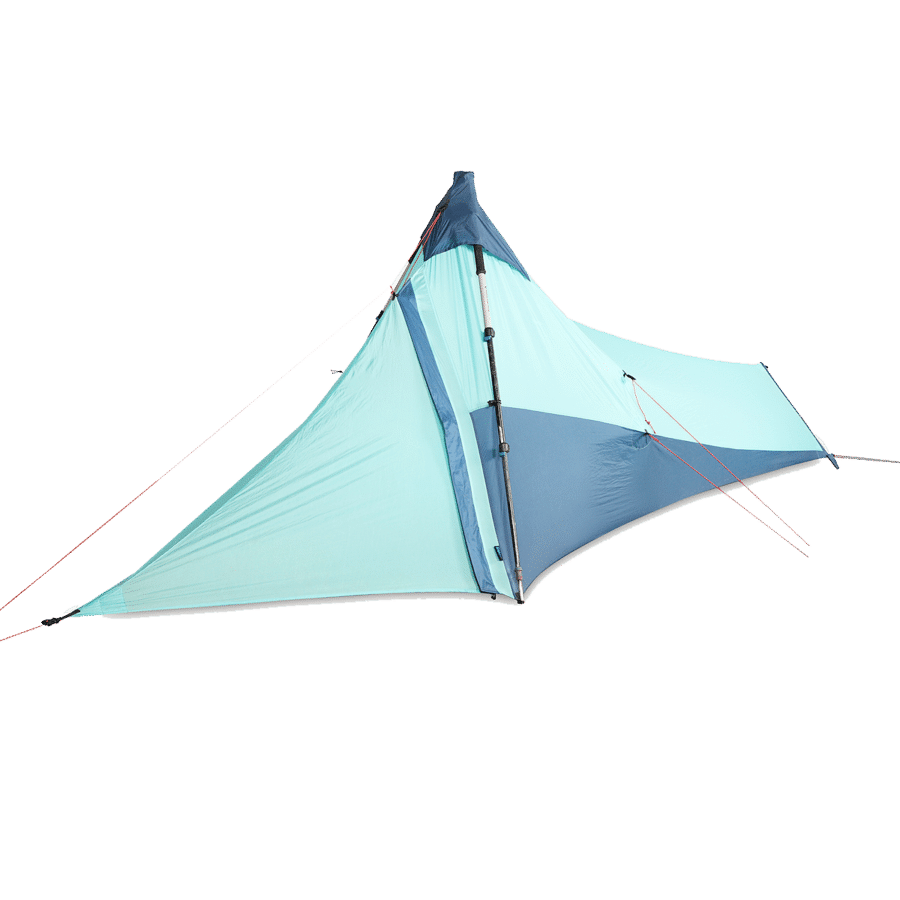
I would personally NOT recommend doing side venting at all near the floor like Monte is recommending (no offense) – that is a very bad idea for a 4 season shelter. It is obvious this thing is designed to account for wind blown snow and the Big Agnes tent linked above is not that style of tent. If anything I would add a traditional mountaineering style tunnel vent halfway up one of the outer fly sections – or even offer this as a custom option for more money. My main concern was actually the low vents at the ends (in terms of snow) and it sounds like one more more can be adjusted or closed. In addition the way they have angled the vent covers / sides reminds me a lot of very effective tunnel tent 4 season designs – very effective if you angle the tent in the right direction so that it slips through the wind instead of fighting it and you can “catch” a small amount of that same wind into the vents and get some nice cross ventilation going. Setting up the tent properly in these conditions is key (would be great actually if you had a video or instructions on how to do this in general – no manufacturers really talk about this – tunnel tents have a very specific orientation they are ideal in) as you can get some of that wind to help you ventilate your shelter but also angle it in a way that most wind blown snow is not flying inside.
I have also been experimenting with a new fabric called Monolite Mesh – would highly recommend checking this out – it is almost in between a solid fabric and a mesh. It is also very light and seems marketed toward hammocks but I overall like it much better than mesh and it seems significantly more durable. It still has what feels like a pretty high CFM but I bet would physically also block more crap than a true mesh (by block I mean a very small amount of snow – it is definitely not at all waterproof of course). Could be an interesting option for vents – especially if the vent had a zipper to go from fully open to fully monolite mesh closed to maybe even fully closed closed. In shit weather its nice to be able to customize the venting based on the amount of wind and amount of snow and ice blowing around trying its best to freeze you. More wind generally means more snow / precip and needing to really tighten everything down / close up vents but at the same time means more airflow that can be used creatively in a smaller vent for condensation / internal airflow.
Offering a premium guyline option would also be cool – I saw that Dan Durston seems to be doing this with his shelters now – in my opinion one of the best things you can do with a shelter is upgrade to really high quality cordage. Big difference in how easy things knot, especially when the conditions are bad and you are wearing thick gloves, and the cost and time is minimal. Lawson equipment line I have found just blows everyone else out of the water – I personally like the 2.5mm stuff the best along with the 3mm as it is the skinniest line I have found that still knots super easily even while wearing gloves. And of course some variety in stakes would be awesome too as when snow conditions vary the requirements change a lot. I personally really like DAC medium or large sized stakes for hard ground / ice + an aluminum deadman style stake (like a tiny snow fluke) for burying in soft snow. And then little strong metal rings for rigging multiple guylines to one extra strong anchor (such as a ski or snowshoe or ice axe) can also be nice in some conditions.
TLDR because I wrote a huge wall of text:
1. I like the design a lot – would be great to have more photos / videos on how to use it specifically in 4 season conditions. Manufacturers never give instructions on how to properly angle a tunnel tent.
2. Custom options for more money would be cool such as a mountaineering tunnel vent on the fly (or monolite mesh instead of noseeum) or halfmoon zippered mountaineering vents and increase your profits.
3. Much more expensive version would be cool with a fly made from any of the electrospun polyurethane membranes that are air permeable. Or if its cheaper then use eVent.
4. Your photography is not bad but could also be better – make this thing look cool! If you are ever in California would be happy to take some
5. Internal guylines are awesome – make every external guy out point also have a true internal loop – minimal weight increase for big benefits in shit weather – Slingfin does this and I love it.
6. Depending on the size/shape a detacheable strap system on the outside of the floor could be interesting for attaching a CCF pad to the outside bottom?
Overall though I like this project a lot and there is not enough similar stuff happening in the 4 season space!