In another thread, Daren and Joshua expressed interest in a container for alcohol fuel that was shorter and wider than commonly available (so it would fit nicely in a pot). I pointed out that you can weld HDPE with the drips from burning HDPE and I just found some time to putter in the garage.
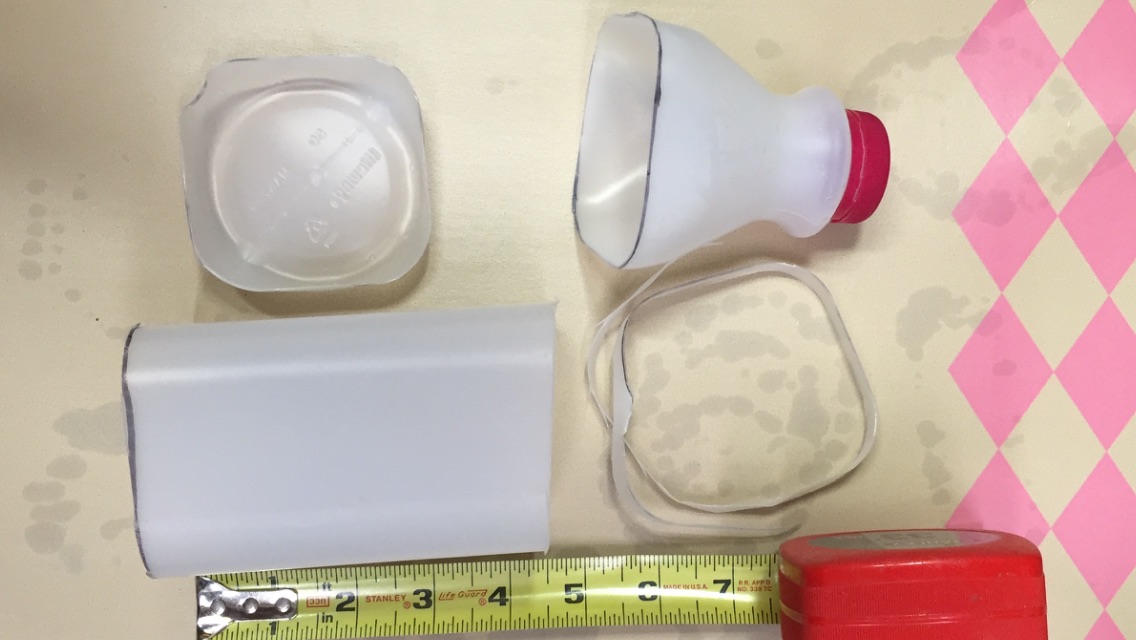
I used a very thin-walled drinkable yogurt “Kefir” container – tall and 1-liter capacity to start. I cut it down a LOT in height. It was close to gallon-milk-jug thickness and far thinner than gallon-windshield-washer-fluid containers. Mark your cut lines (wrapping a sheet of paper around the container gives a nice guide line). I use scissors, NOT a razor knife, for safety reasons. Then cut the discards into 1/4″ strips. You don’t need a lot of strips. I cut out almost all of the middle section, so the remaining pieces weren’t very flexible and I couldn’t jam one end totally inside the other (that would have been easier if I hadn’t cut it down so much). So I cut two slits, 180 degrees apart in the top section and one side of top went on the inside and the other side went on the outside of the bottom:
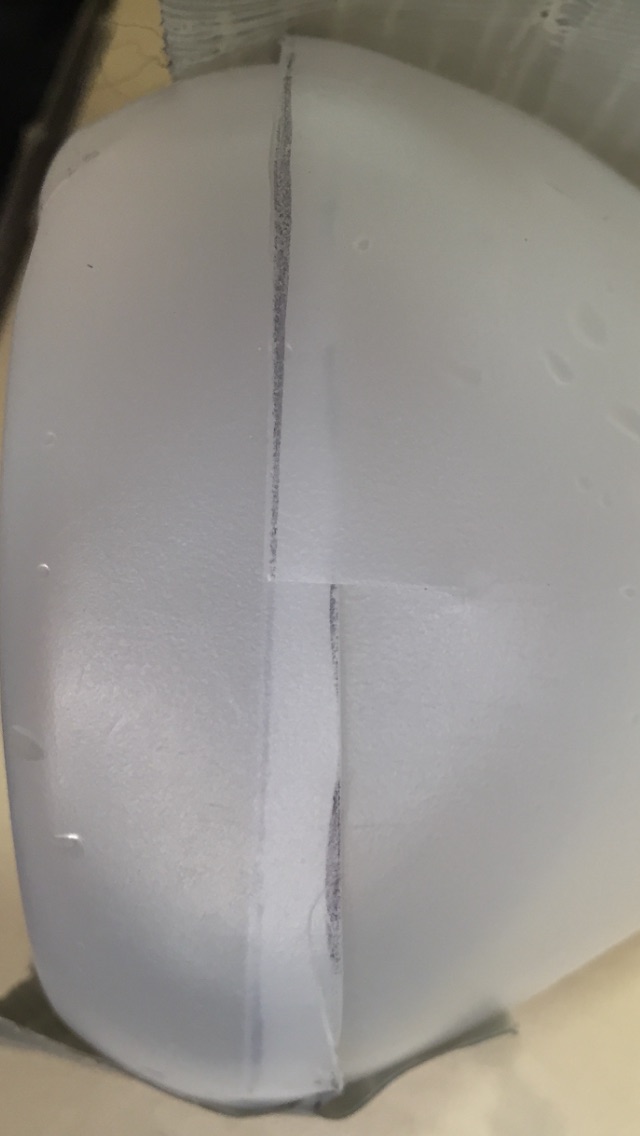
I secured two opposite sides with tape as I first welded the untaped sides. The strips are easy to light with a match or lighter and super easy to light if you taper the end. I mean, so super easy and it burns so well, keep this in mind if you’re ever desperate to start a fire and have any HDPE containers with you:
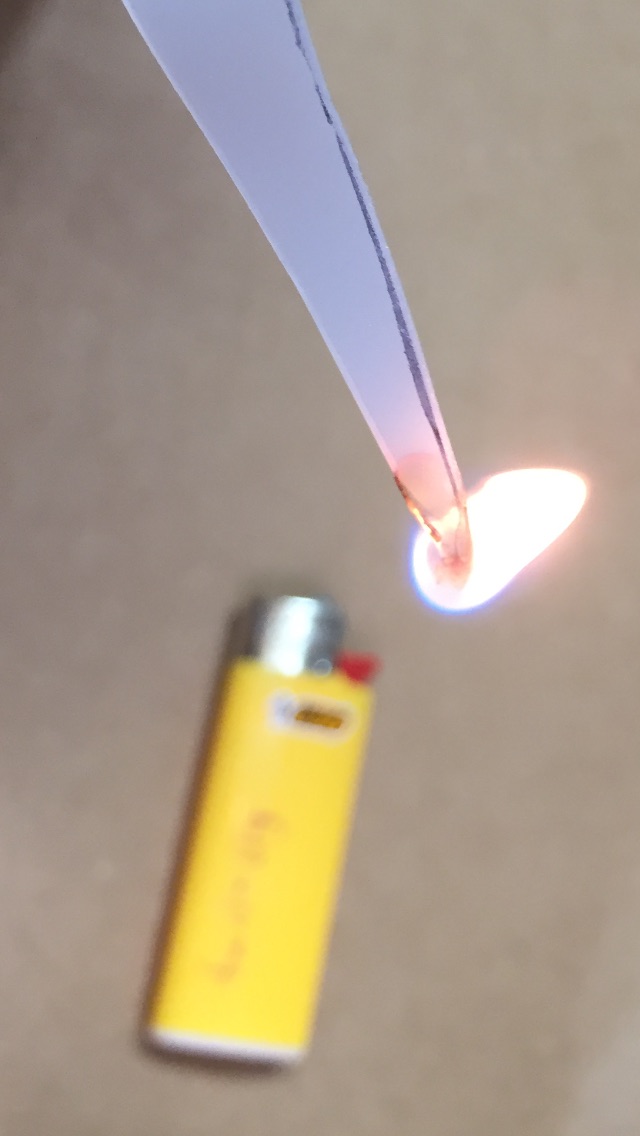
I did it barehanded no problem, but I’d recommended a leather glove to hold the container since there is the possibility of dripping molten, burning HDPE onto your skin. Don’t dribble a lot in one place or you can melt through the container (I never did, but I’ve been fixing ski bases and kayaks and Nalgene bottles like this for decades). I did a sequence of single drops as a rotated the container under the flaming strip and went around three times. Then I took it in the house, fill it with water and squeezed it a bit. There was one obvious leak that I could have found visually and another pinhole leak that both sealed up when I added some more drops of molten HDPE to those areas. Here’s the finished container:
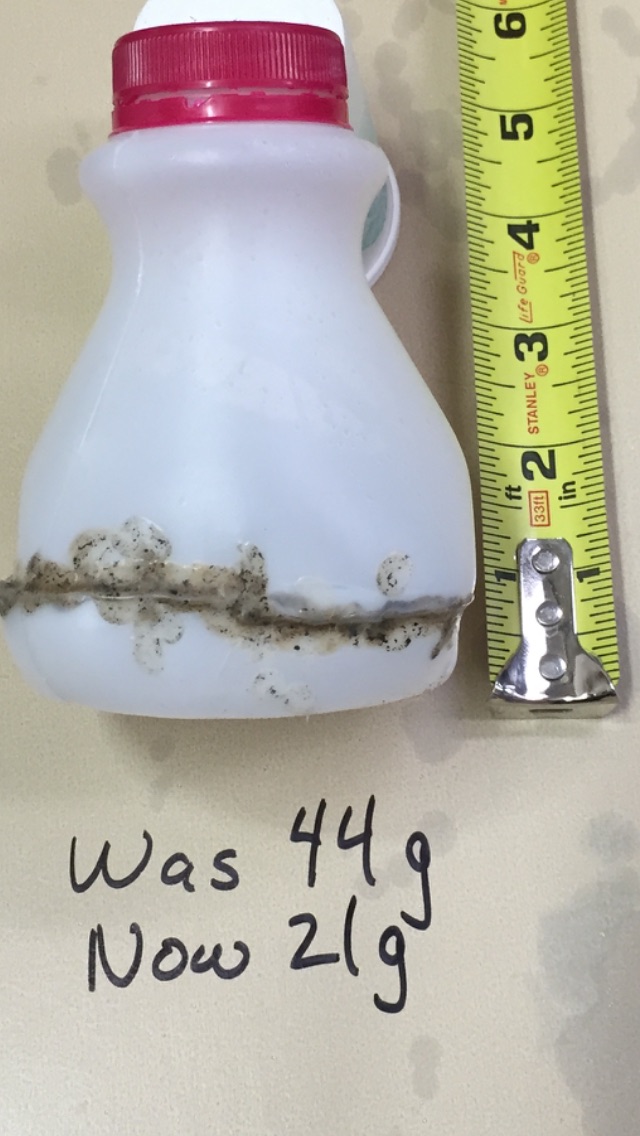
For OP’s application, I first thought, “hydrogen peroxide container” and I’m still thinking that. HDPE. A little thicker wall. Cheap (a loss-leader during hunting season at a buck each for the liter container). Tall, cylindrical, with a flatter top than most drink containers, so there is less wasted height. Or, of course, my favorite – dumpster-diving at the recycling center and seeing what catches your eye.
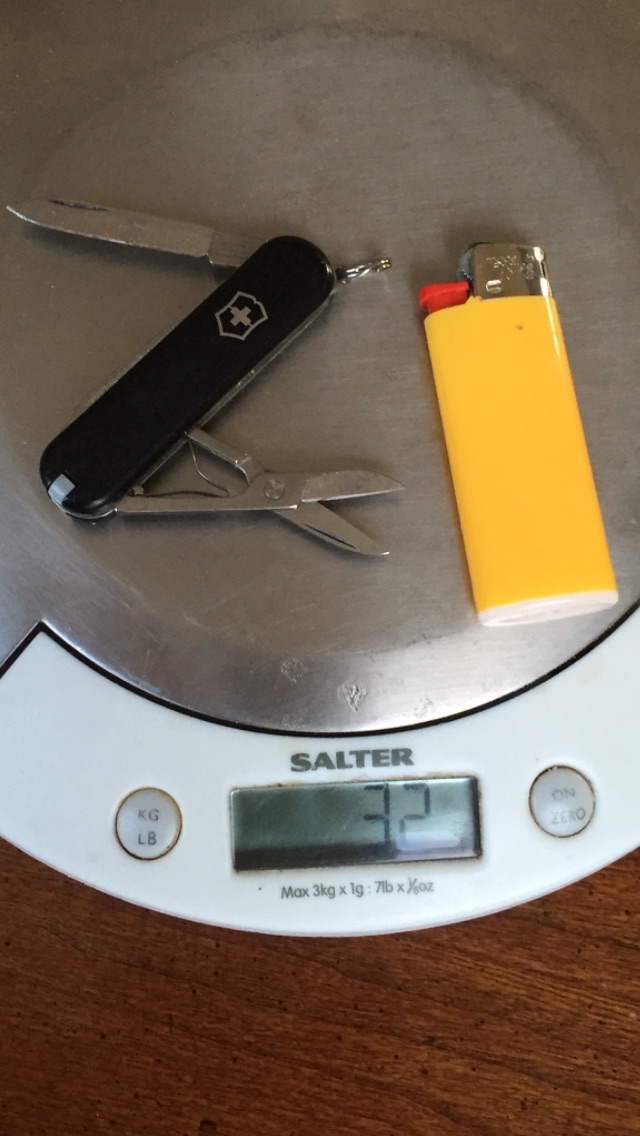
Note that everything needed for this project, other the donor container weighs 32 grams and is already in your pack:
Being all HDPE (original container and the new welded seam), you can still put the whole thing in the dishwasher and get it really clean after a trip).
Flame On!