- Hi,
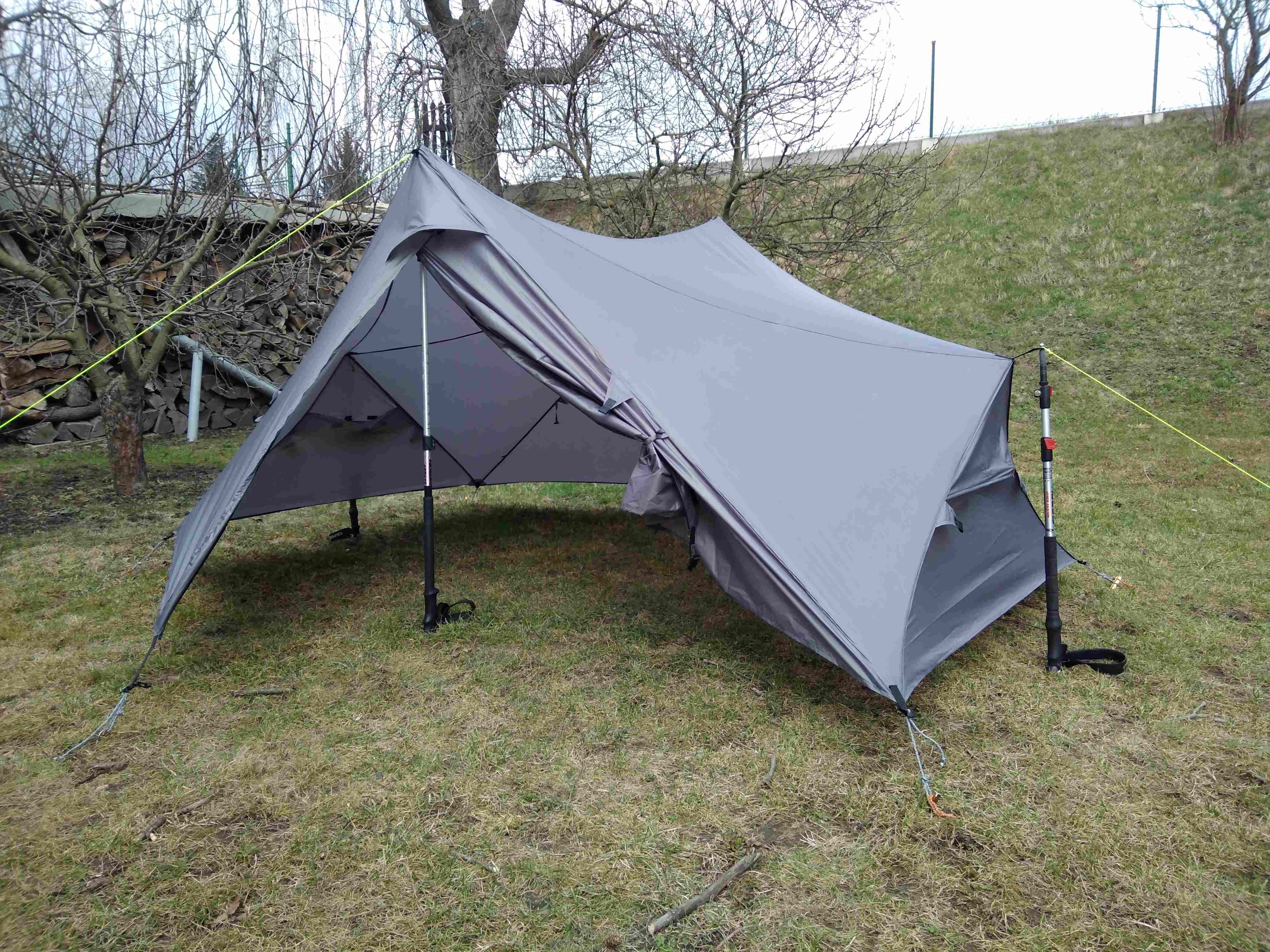
Warning, long post. The reason I want to post my new MYOG 2P shelter is its rather different design from most trekking pole supported tents here and used material. I hope that especially used deflection of cat curves for 20D Silpoly XL (RBTR) can help someone with their project.
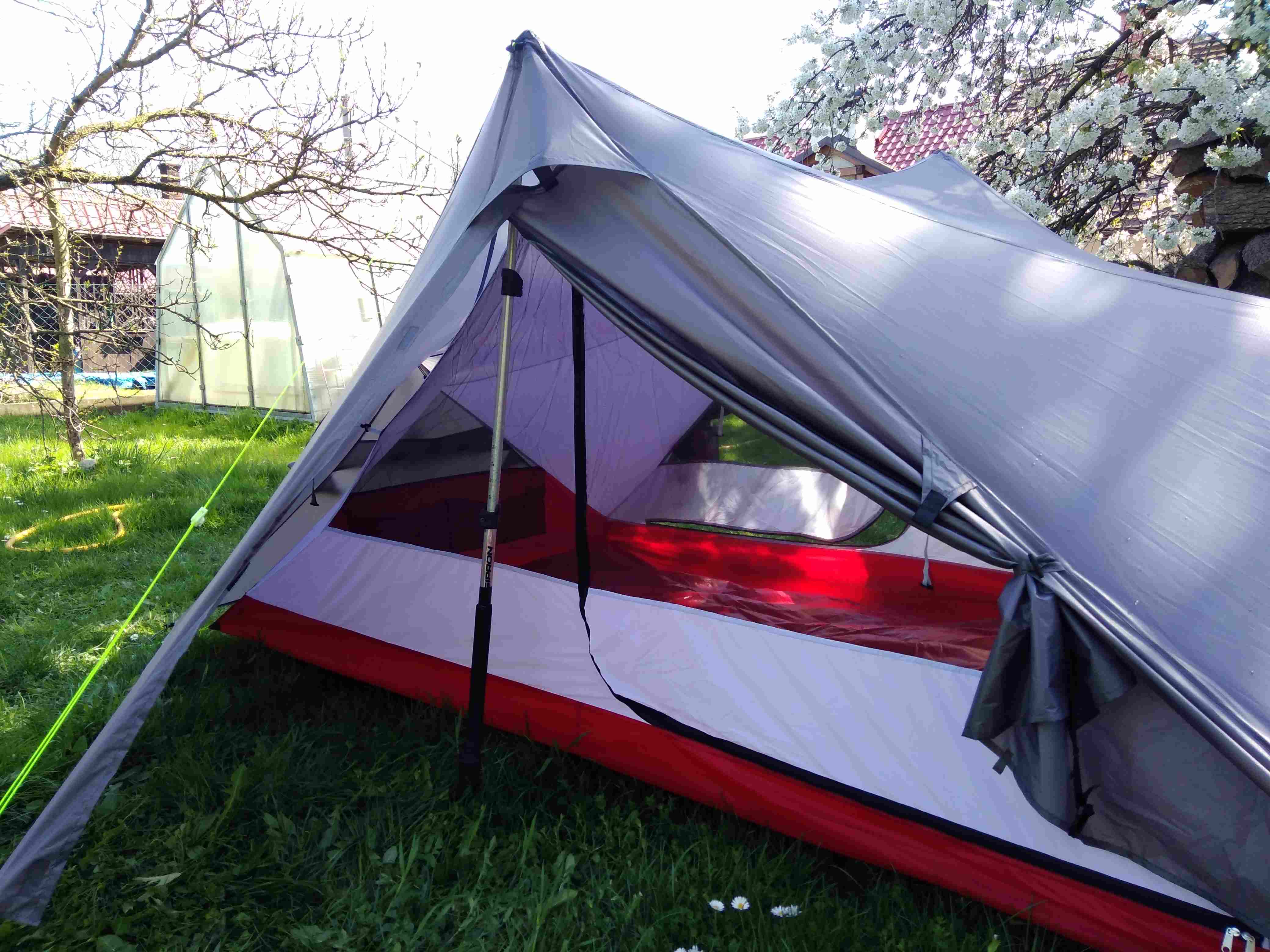
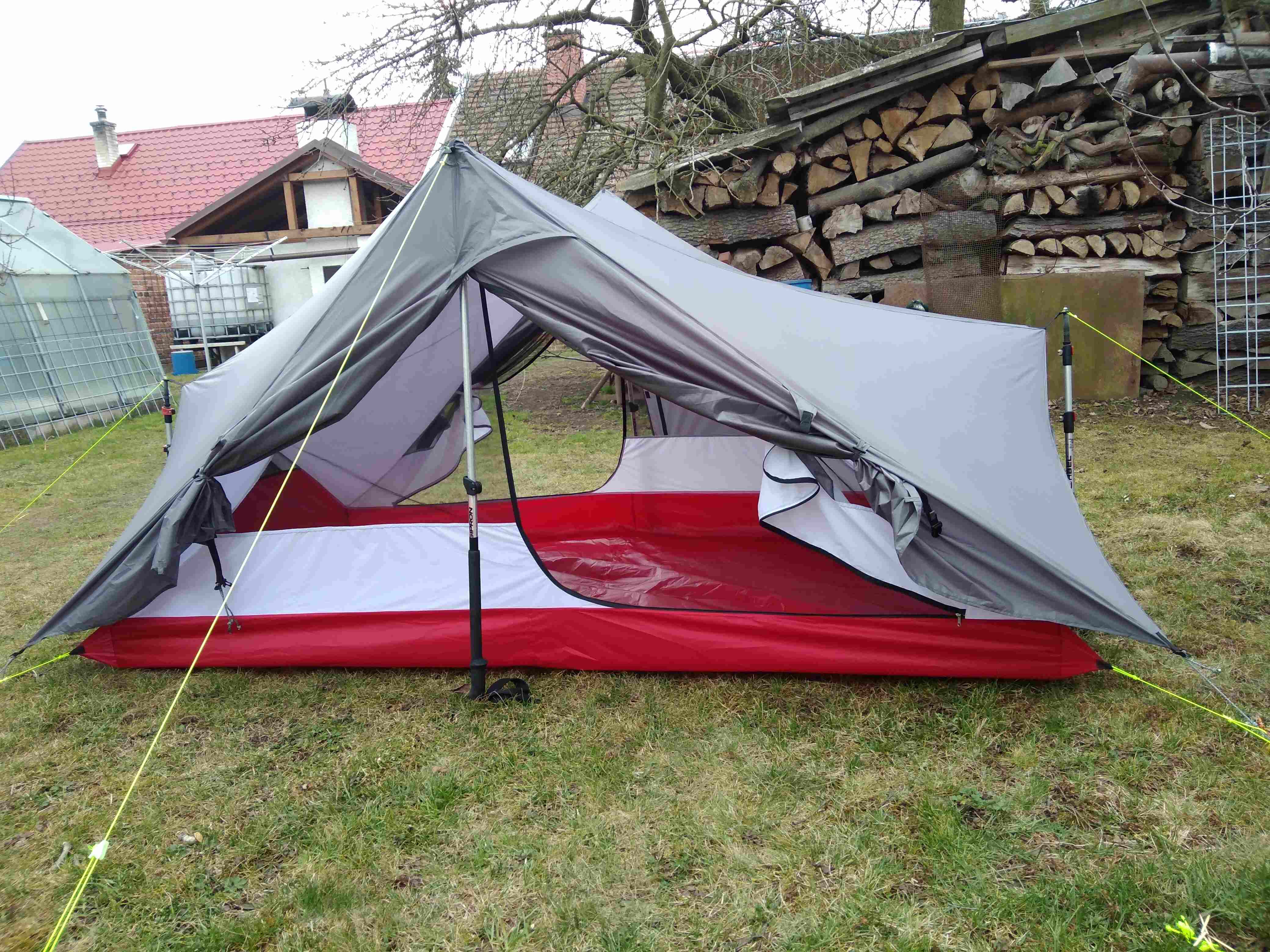
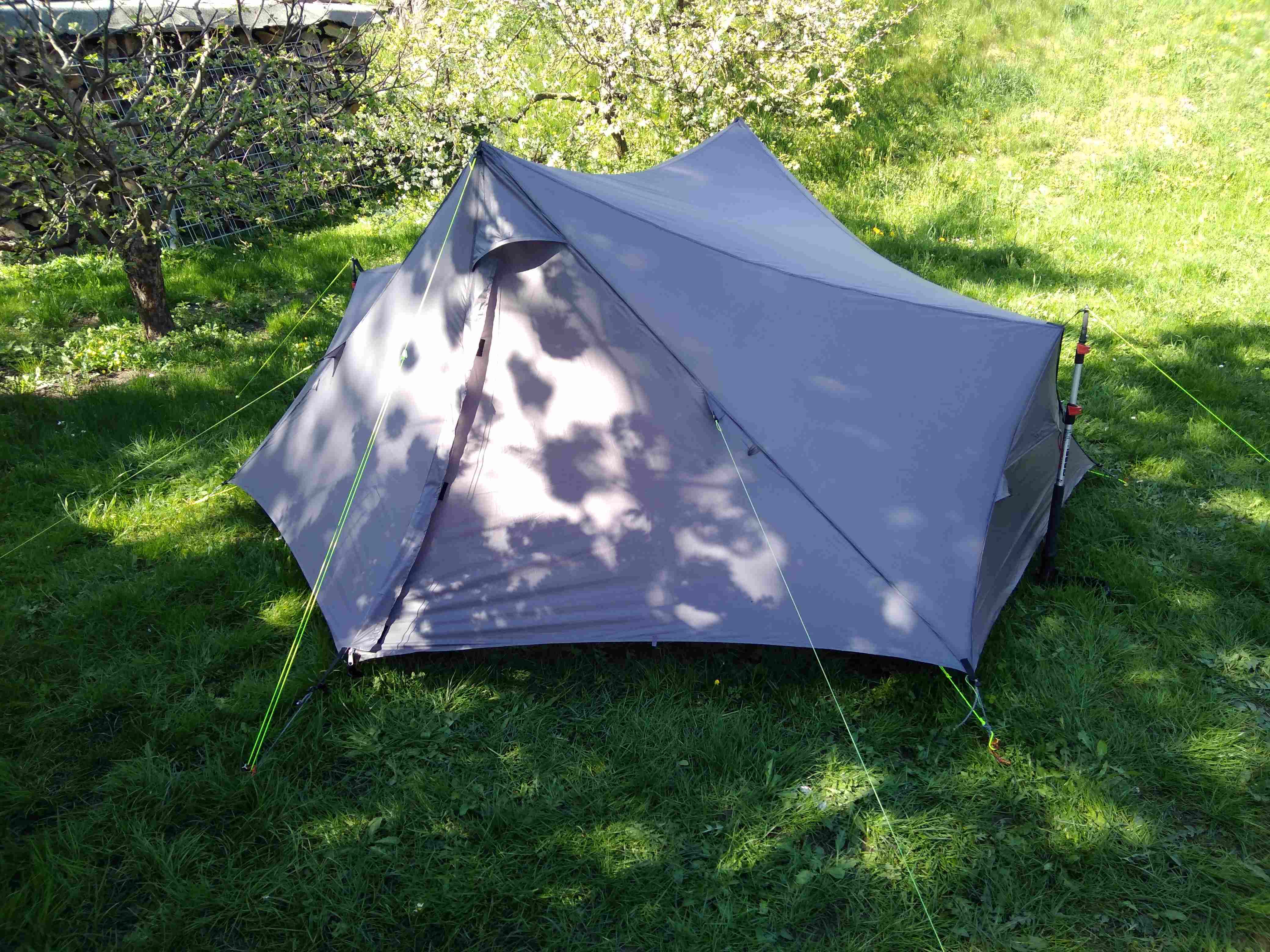
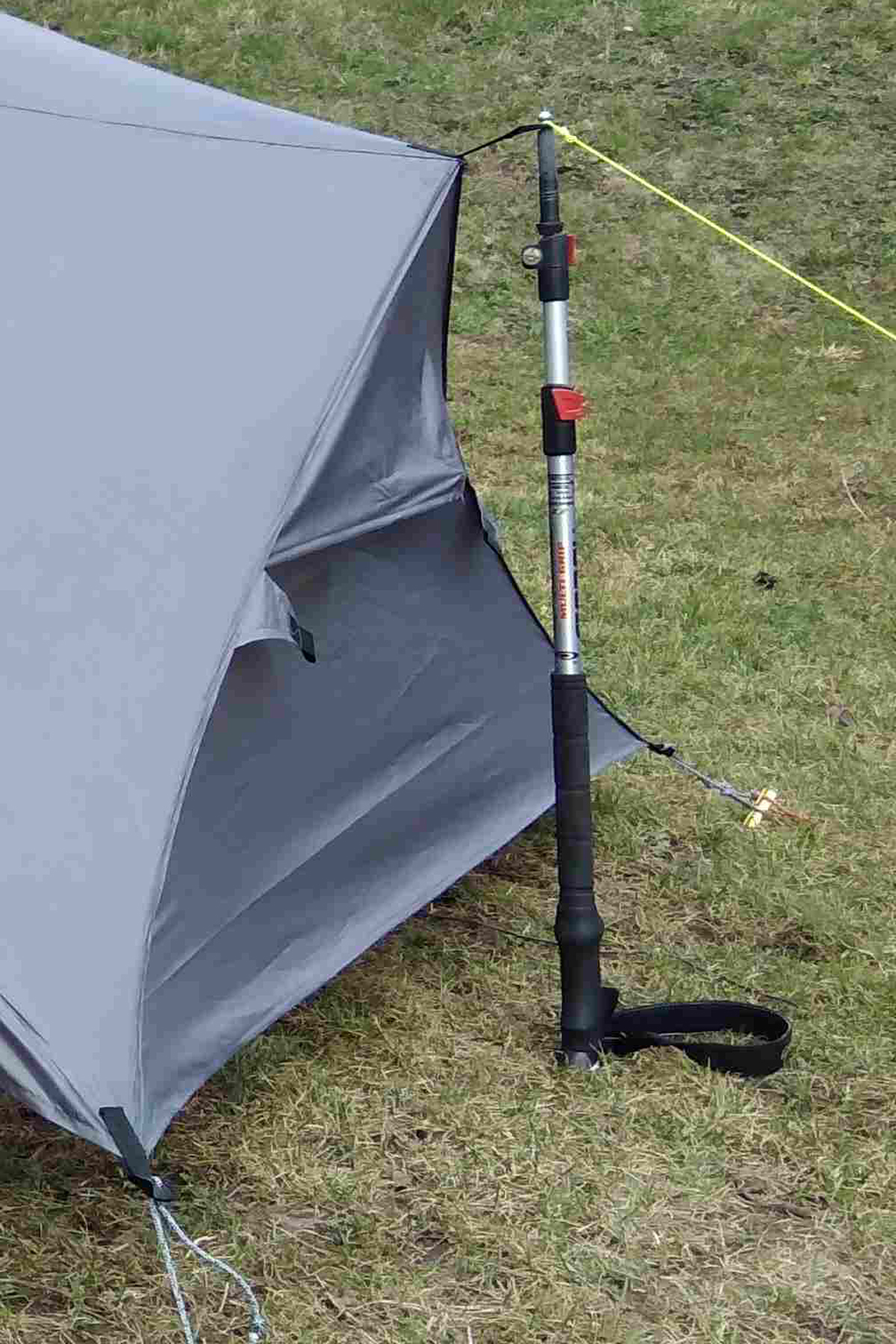
The tent is essentially a cross-breed of two shelters: TT Saddle and custom Tent from Trekkertent, photos recently deleted from their web-site. It uses 4 trekking poles as support to gain maximum stability in windy conditions and has additional tie-out points at side seams and front/rear seams. These are intended to be used in extreme conditions only.
It is important to point out that I have made a Pyramid shelter last year. I was quite convinced after reading a lot of posts here that it shall be sufficiently sturdy shelter for my needs. After 1 year of use I found out that it is not the case and I need more wind resistant shelter. Additional 2 end poles, lover profile, smaller panels and multiple angles all add together to its performance and its superior wind resistance compared to mid. I have made some small testing and am happy with its stability so far which seems far superior to large mid. I understand that it cannot compete to tunnel tents or other 4 season tents, but I hope that it can cope to above tree line 3 season conditions I need it to.
Basic information:
- (inner): 220 x 135 x 110 cm (86,6 x 50 x 43 inch);
- Size (fly): 245 x 148 x 115 cm (96,5 x 58 x 45 inch), porch 70 cm wide (28 inch);
- Materials: fly – 20D Silpoly XL from RBTR , Inner tent: 20D mosquito netting from Extremtextil (DE), 20D ripstop nylon from RBTR, 20D Silpoly PU4000 from RBTR;
- Whole tent incl. stuff sack, excluding stakes: 1135g (40 oz).
Main design features:
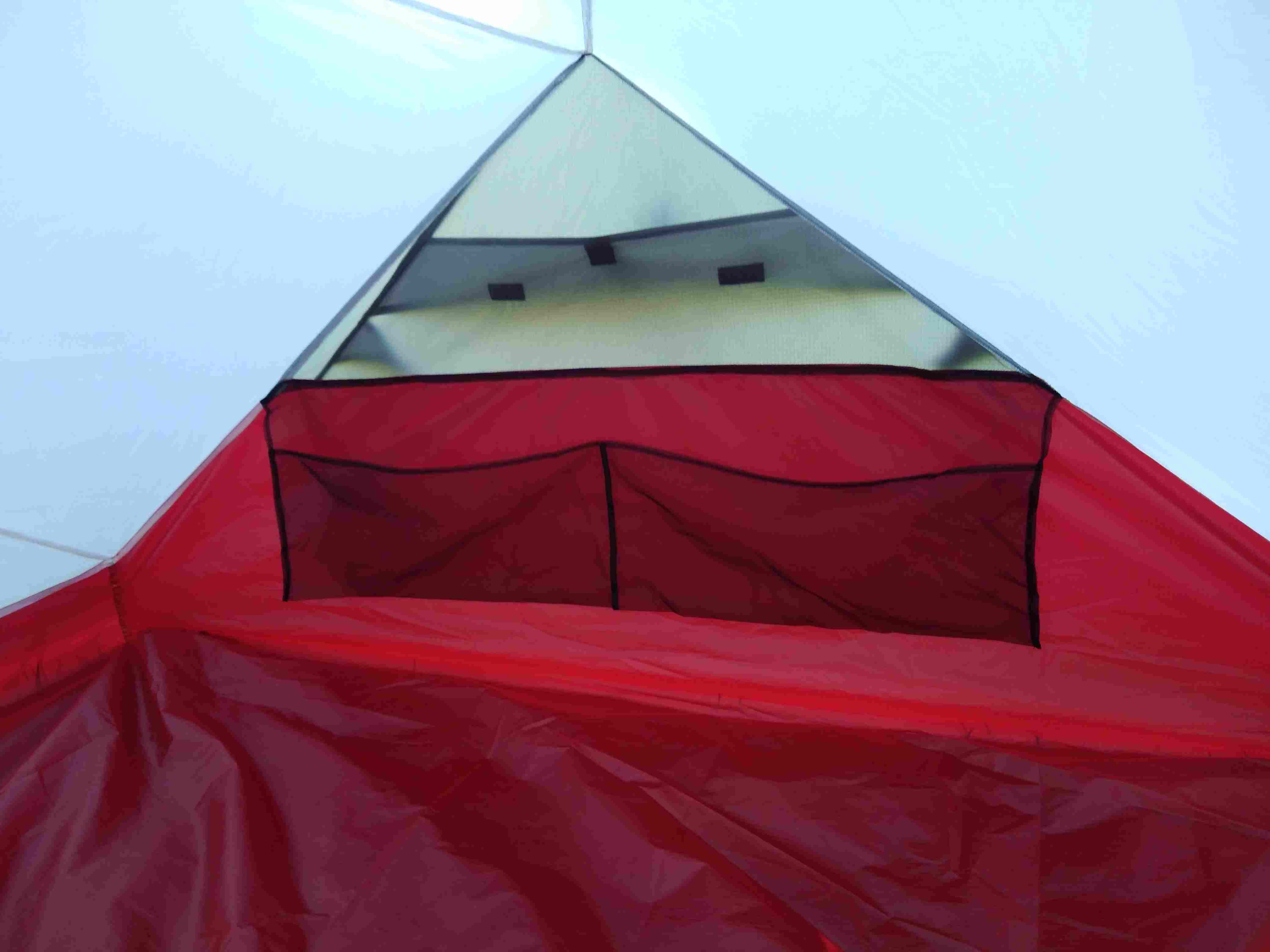
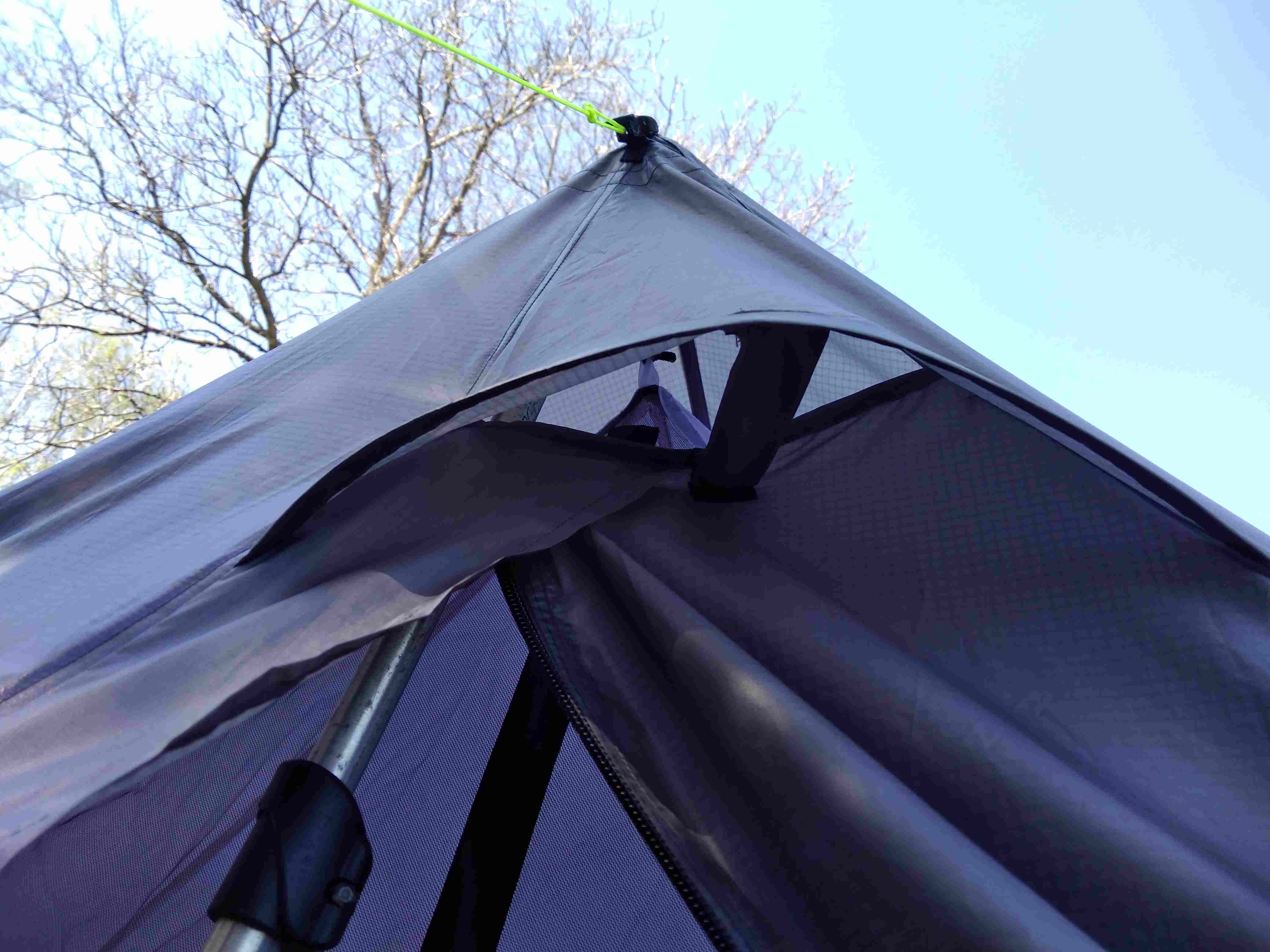
- Closed ends: open/close ends at TT saddle seem like obvious weakness for more demanding conditions. Therefore the ends are designed closed with closable ventilation at both ends;
- Additional triangle at fly roof: Adding additional seam (triangle piece) at tent roof the design avoids possible water dripping into inner tent, contrary to TT Saddle;
- Mostly solid inner tent: Due to intended use I wanted mostly solid inner to eliminate cold drafts. Moreover, due to more humid conditions single wall (hybrid) shelter was considered, but ruled out for time being. I have used this partly inner concept previously and am happy with it;
- Door vents: Used similar as for TT design;
- Cat cut deflection:
28 mm/ 1m length (about 1 inch / yard) on main seams
25 mm / 1m length (0,9 inch / yard) at doors bottoms
Due to relatively new fly material (SilPoly from RBTR) I did not manage to get any feedback on deflection per length for shelter cat-cuts. RBTR responded to my email, but with rather general recommendation that less of a deflection shall provide taught pitch compared to Silnylon. The material truly has much less of diagonal stretch than Silnylon I previously used. The deflection used provides quite taught pitch in my opinion. I am happy with the result considering the intended use;
Inner tent deflection: 25 mm / 1m length (0,9 inch/ yard)
- Zippers: 3C YKK for inner, 5C YKK for fly door for additional durability;
- Seam allowance: 15 mm (0,6 inch);
- Bathtub floor: 6 inch;
- Tie outs, loops: Rolled/sewn fly material except main tie outs (webbing). After using grosgrain ribbons before with the experience of water seeping into the seams along grosgrain ribbons and long drying time after rain I decided I will use Silpoly to eliminate this phenomenon. It was more time consuming, but I believe will have positive result.
A couple of pictures: