Easton used to sell some 7178 alloy poles, which I THINK were the scandium alloy. I took a set to the Pyrenees a long time ago. They work-hardened after some weeks and snapped, on the last day! I had to replace them with the more common 7075 T9 alloy poles, which are far more reliable.
Being able to flex and to bend, even wildly so, is the last line of defense for the hooped tunnel tent and its ultimate source of greatest strength.
I have to totally disagree here. My version of it all is that I do not let the poles flex and bend, not one inch, and certainly not ‘wildly’. By combining guy ropes and fabric panels I prevent the poles from flexing at all. Ah – plus the magic sauce: very high length-wise tension in the fabric.
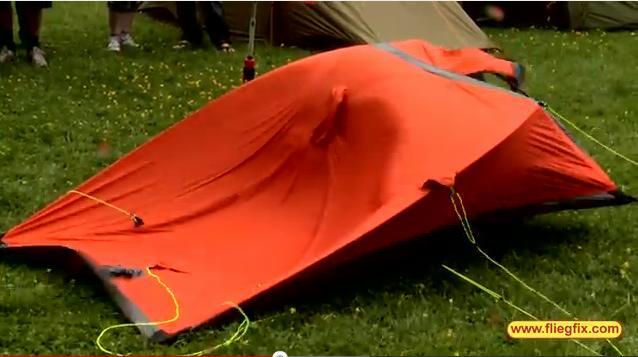
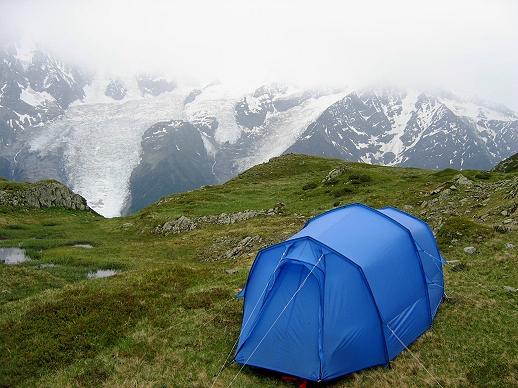
In my experience, most owners of tunnel tents do not pitch their tents with even 10% of the required tension. This leaves the fabric slack at times, and that leads to Bad Things (TM). Have a look here:

That was on a high pass opposite Mont Blanc in bad weather, but the tent was fine, all night. To see why, note carefully the very tight fabric: as tight as a drum. It was not going to move. The reason was that the bungee cord loops at the corners were stretched very tightly. You can see one of them (black) at the left front corner.
Could the fabric ‘burst’ at these high tensions? Not a chance: it was nowhere near its tear strength. By and large, synthettic fibre tent fabric rarely is in danger (barring tree branches etc). Nylon is especially good as it has inherent elasticity. I cannot say the same for DCF as I have seen failures there.
A note in passing about this. NEVER EVER put bungee cord at the windward end. You absolutely do NOT want the windward end to move one millimetre. I remember watching a video from inside a (3rd-party) tunnel of the windward end shaking fanatically: they had put bungee loops to windward, and they flexed. Very short loops of 3 mm nylon cord are excellent.
Cheers