“So checked the X-mid, which runs under four feet in peak height. Checked MLD, and the run is 55-59″ in peak height. So with a higher peak, and the same footprint, the walls would usually slope more, right?”
You also need to look at where the pole(s) are placed. One pole is usually in the center but can be off set (e.g. DuoMid XL) which gives a steeper side and a shallower side. A two pole shelter can use lower peaks and still have steeper walls by position a pole closer to each side.
As an example:
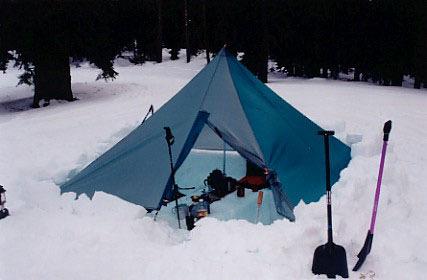
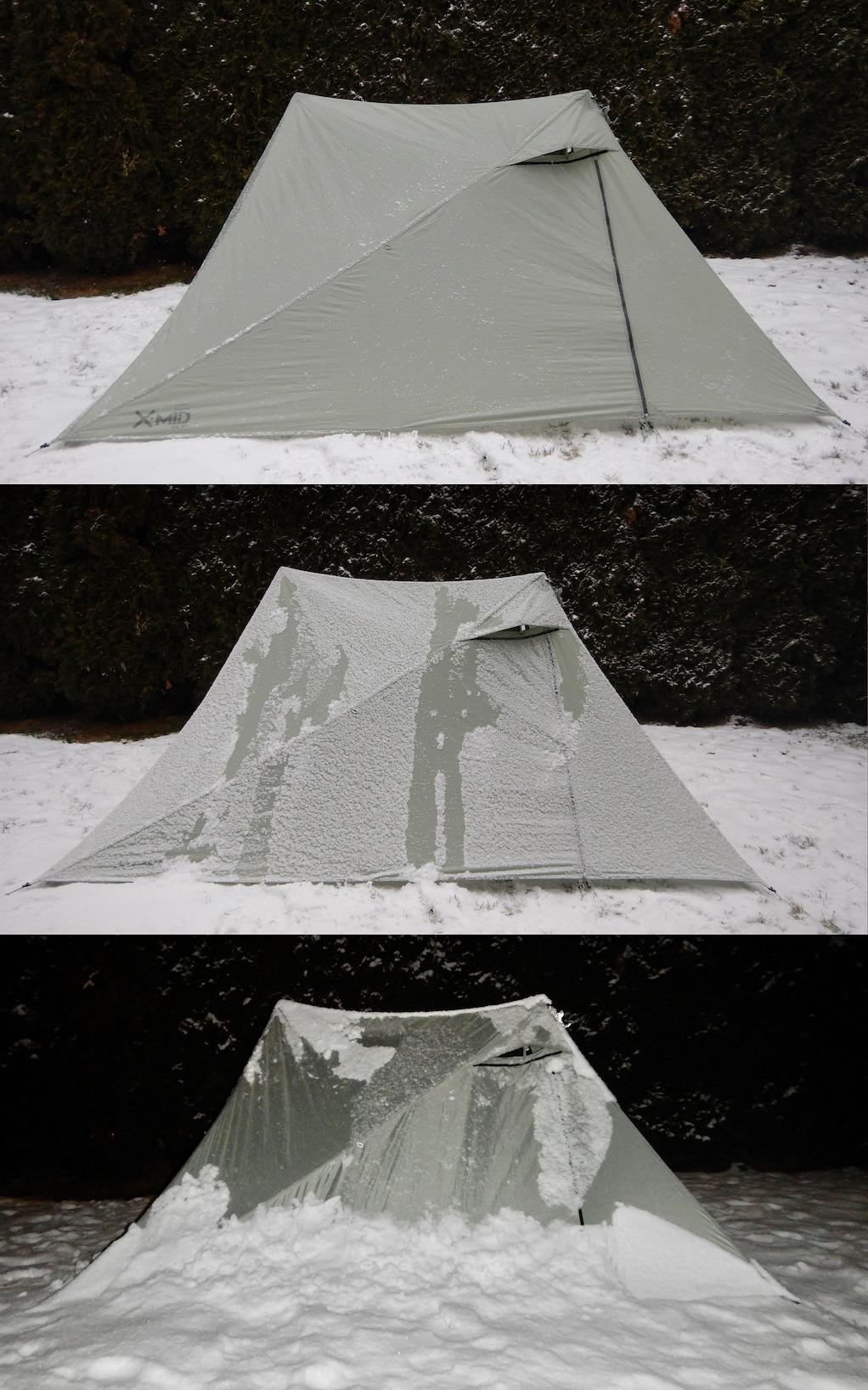
– X-Mid peaks are 47″ tall and set back 25″ from the edge on all four sides, so all four sidewalls are a 62 degree slope (calculated here).
– MLD DuoMid peak is taller (55″) but also set back further at 55″ (end walls) or 34″ (side walls). That gives slopes of 45 degrees (end walls) or 58 degrees (side walls). So the side walls are similar but the end walls on a DuoMid are substantially lower angled.
Single pole mids can have steep walls on all sides too, but the pretty much requires a pole taller than what a normal trekking pole can extend to (see some of the Seek Outside shelters).
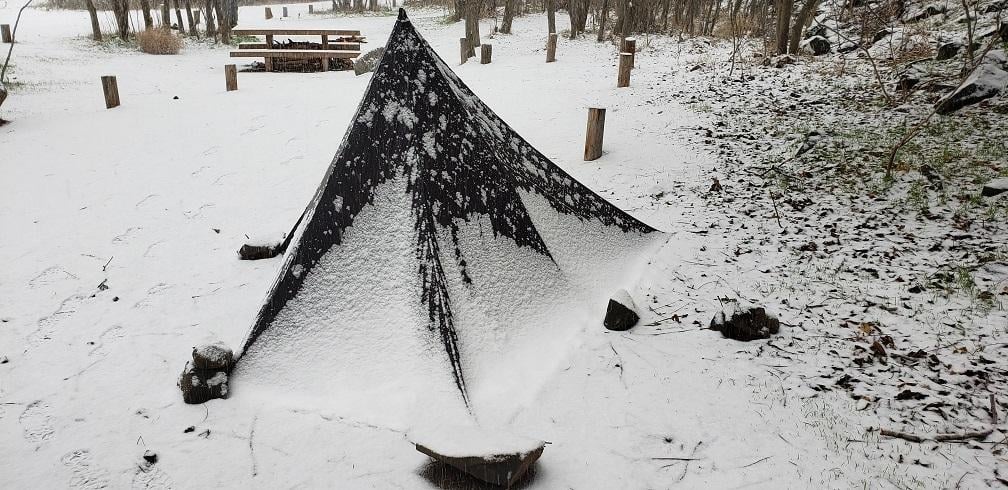
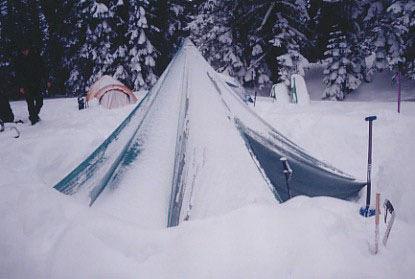
Snow reliably sheds once you get above about 55 degrees. Sometimes sheds at about 30-55 degrees, and rarely sheds below about 30 degrees. Snow stickiness and fabric stickiness are big factors too. On a slippery fabric like poly, all but the stickiest snow is going to shed at 62 degrees. Whereas a moderately slippery fabric like nylon at 45 degrees will have a lot more snow stick. And even moreso if that 45 degree slope was DCF.
As Dave mentions, using mid height guyouts to support whatever load doesn’t shed can be very helpful to reduce caving in. If you have enough support and strong enough materials, it wouldn’t really matter if the snow sheds. Similarly, a two pole structure also reduces the size of the unsupported spans to reduce caving in. And a proper 4 season mountaineering tent has poles and/or guylines everywhere so the unsupported spans are quite small. It all comes down to (1) minimizing how much of a load is on the tent and (2) supporting that load as well as possible.




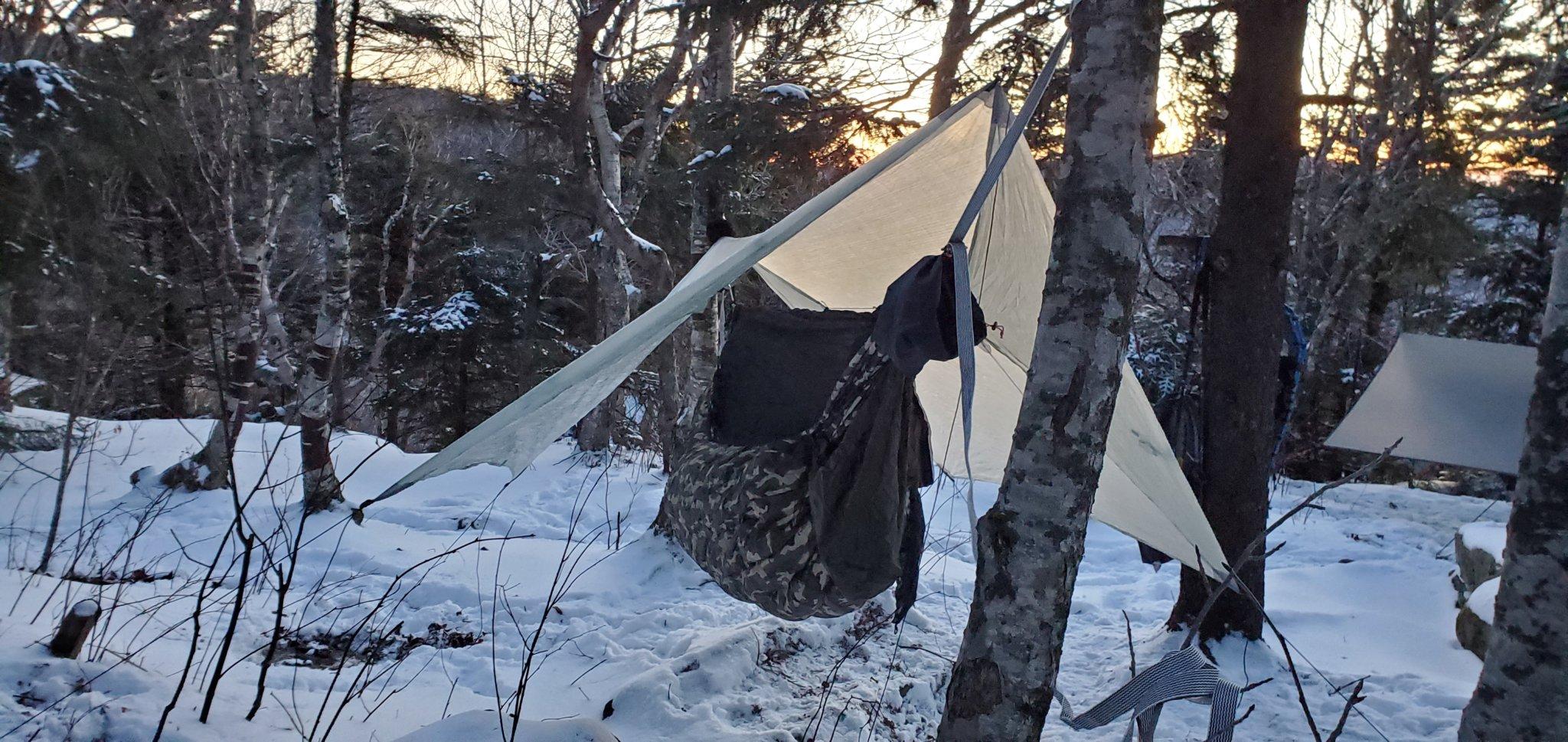
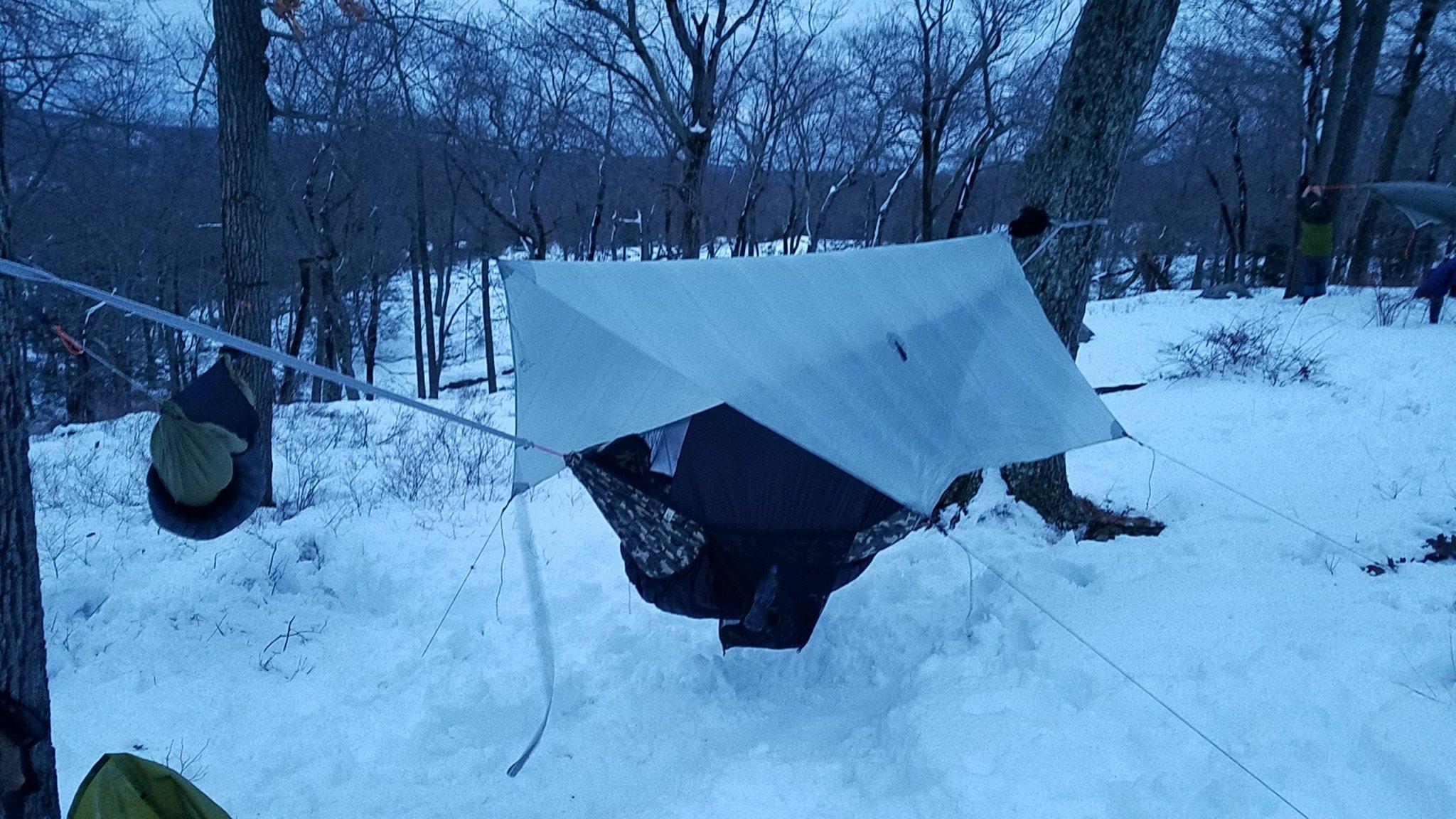
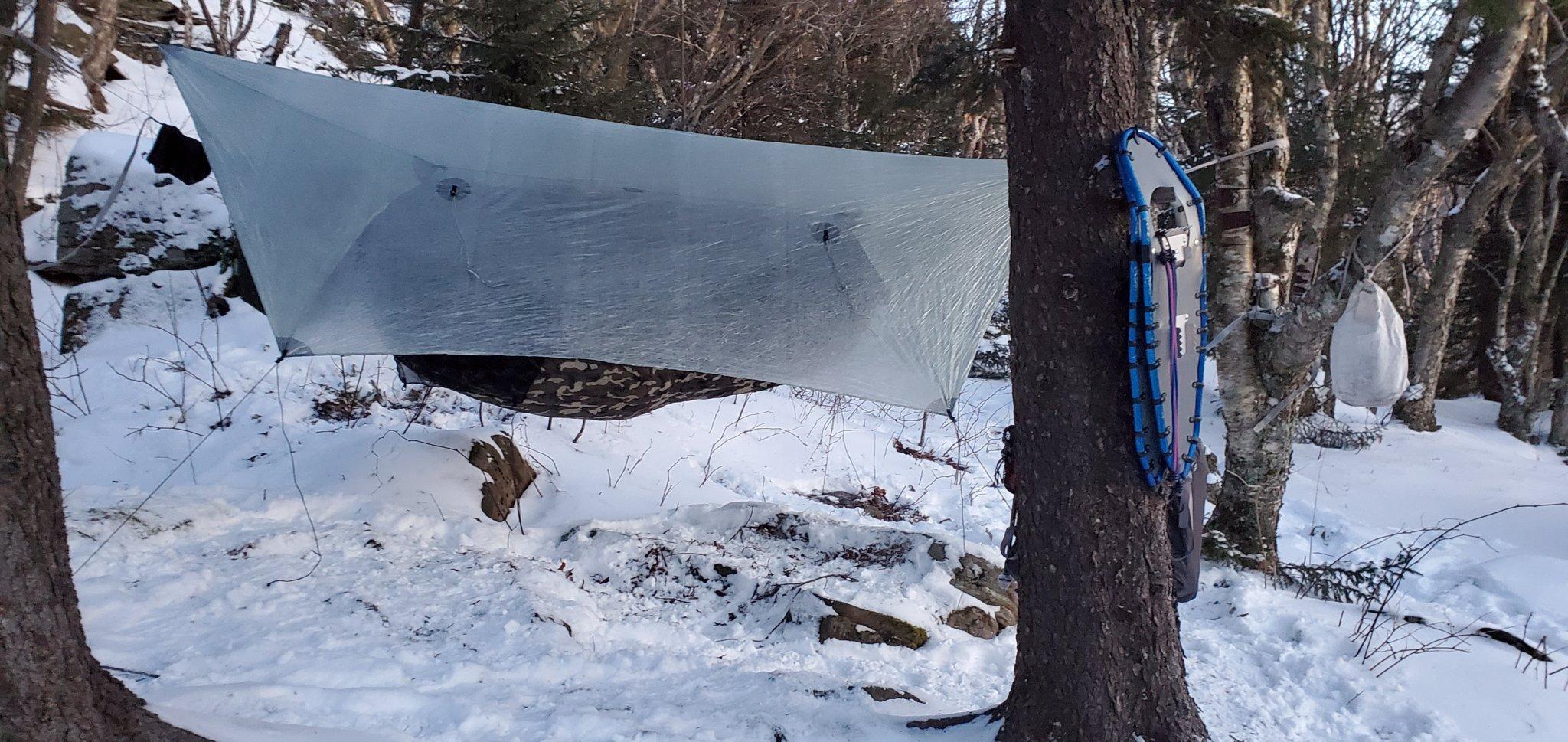 Hammock hanging in winter