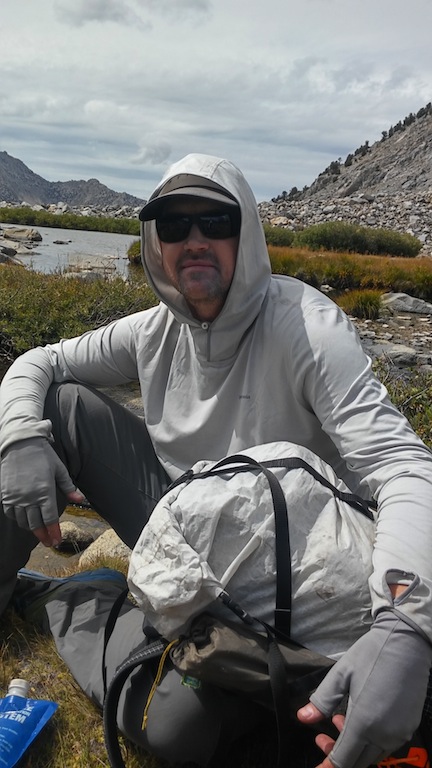
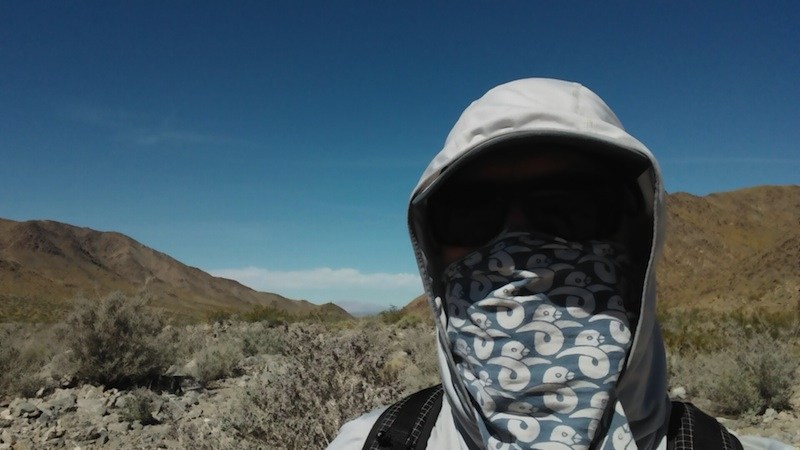
I recommend that people do not hike when it is hot in the desert unless they are well acclimated, experienced in desert hiking, and know how much water they need each day in this kind of weather. Running out of water is extremely dangerous because you quickly deteriorate mentally and can make poor decisions, even if your next water source is just a couple miles away. Most years we have several people who die hiking where I live. You don’t want to mess around with trying to minimize how much water to carry.
There is no clothing strategy that will enable one to significantly reduce the water requirements each day. I seem to need the same amount of water no matter what clothing I wear, or if I hike without a shirt and only wear shorts, shoes and socks.The only good strategy is not to hike in the heat of the day.
We also need to acknowledge that people have different physiologies. I have noticed that people I see (rarely) hiking in remote desert areas in summer all have skinny wiry bodies, to include the occasional solitary miner I used to see years ago. Don’t know if that makes a difference, but I suspect it does.
I’d like to be dressed right so I’d both minimize heat gain and sweat less cause I did so more efficiently cooling me when I did, so I could go farther carrying less water reserves.
The only strategy to go farther and carry less water is to hike at night. But if you hike at night there is more chance of a mishap. Also you won’t be able to sleep much during the day, it’s too hot. And if you think about it, at what temperature does it become difficult to sleep well at night? I’d guess most people start to have difficulty when it is 85F or higher.
Let’s take a look at the last 24 hours where I live, where yesterday and today the high is 110F.
- 5pm 110F
- 6pm 108F
- 7pm 106F
- 8pm 102F
- 9pm 99F
- 10pm 94F
- 11pm 93F
- 12am 91F
- 1am 89F
- 2am 89F
- 3am 87F
- 4am 87F
- 5am 85F
- 6am 85F
- 7am 86F
- 8am 89F
- 9am 91F
- 10am 95F
- 11am 98F
- 12pm 101F
- 1pm 104F
- 2pm 106F
- 3pm 108F
- 4pm 109F
- 5pm 110F
I live in a “low” desert which often is described as under 3,000′ elevation. In summer temperature differentials from low to high usually run 20-25 degrees F. In high deserts it is usually 25-30 F degrees in summer.
If you start hiking at 6am and hike until 11am (5 hours) the temp will rise from 85F to 98F. Now you rest until 7pm. Even though it is 106F, it is quite pleasant to walk because the sun is low on the horizon — not much sunlight hitting your body. Also it is common to get a slight breeze in the late afternoon. If you hike for 5 more hours until midnight, you will have walked for 10 hours, plus the temp is beginning to dip into the 80’s when it will be easiest to sleep. However, I couldn’t sit around for 8 hours during the day. When it’s really hot I will rest from around 1pm – 5pm and then hike until it gets dark.
Official temperature readings are taken 5 feet above the ground and in the shade. If you go out into 105F temps in the sun with an infrared thermometer and start measuring things you will get readings 125F and higher. So you want to avoid hiking in the “heat of the day” because this is the kind of heat you are faced with.
Another thing, don’t assume hot deserts have low humidity. The norm where I live is very dry, but last week we had a couple days where the highs hovered around 115F and humidity was over 50%. That kind of weather is awful for me.
When you are outdoors during the day, in the temperatures I posted above, you will sweat constantly even if you are just sitting in the shade. You will always feel hot. You can’t avoid it, but you can get used to it and learn to ignore it.
Some thoughts on clothing…
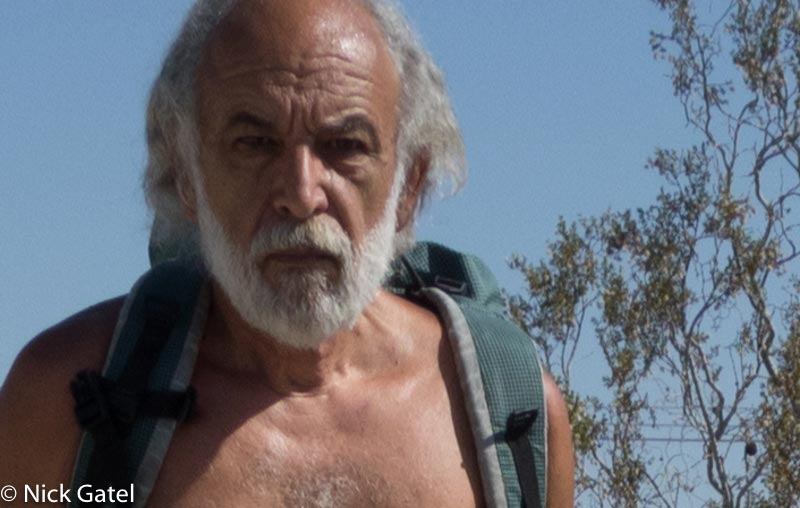
I am coolest when I don’t wear a shirt and wear thin, wicking, running shorts. I can work outdoors all day long in 115F temps wearing only shorts and flip-flops. I have a dark complexion and spend most of the hot part of the year at home outdoors with this uniform. When it gets above 115F, I usually wear a white cotton T-shirt — this is the point where a shirt feels cooler for me. And remember, you aren’t going to reduce you water needs much by wearing specialized clothing. You might as well work on being as comfortable as possible.
Colors: If dark colors absorb heat from the sun, they probably absorb heat from your body; if light colors reflect the sun, they probably reflect internal heat back to your body — so maybe colors balance out. I find there isn’t much difference in colors. Light colors might be a little cooler, but I can’t confirm that.
When I hike in the heat I wear the shortest running shorts I can find that have pockets. They are made from ultra-thin wicking material. I always cut out the liners. I want to minimize moisture because in these kinds of conditions “jock itch,” which is a fungal growth, can be a concern. Being skinny I don’t get any kind of chaffing from my thighs rubbing or anything like that.
If I wear a shirt, it is just because it is more comfortable under a pack vs. no shirt, and I wear loose fitting shirts. My size is medium and my hiking shirts are large or extra large. For years I wore a mesh shirt from REI. I had many pairs, some with sleeves, some without. I am down to my last shirt, since all companies discontinue good products <sigh>.
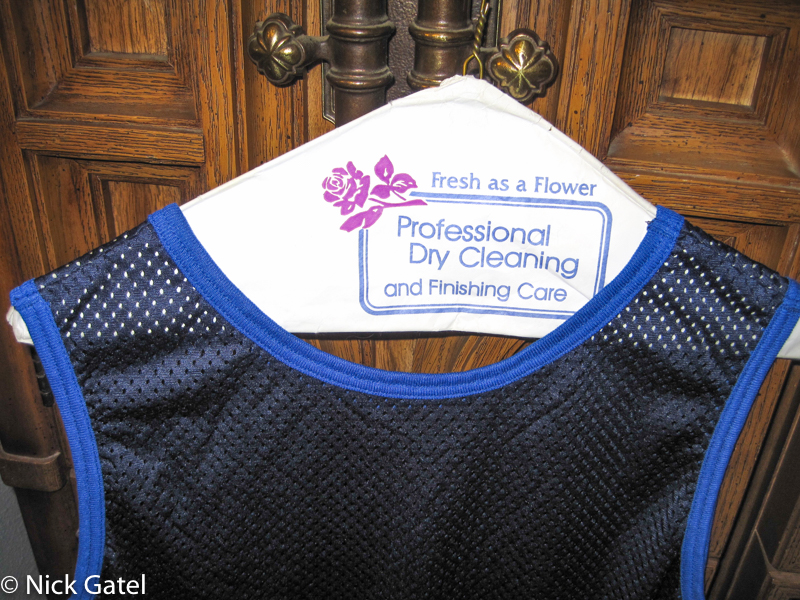
It is made from some sort of polyester material. You can buy similar shirts in the basketball section of a sporting goods store.
Nowadays I mostly wear a Rail Riders Eco Speed T-shirt. It has mesh side panels. The rest is some sort of polyester, large weave and fairly thick for a T-shirt. I also usually wear it much cooler weather. It works well, and since it works well Rail Riders discontinued it.
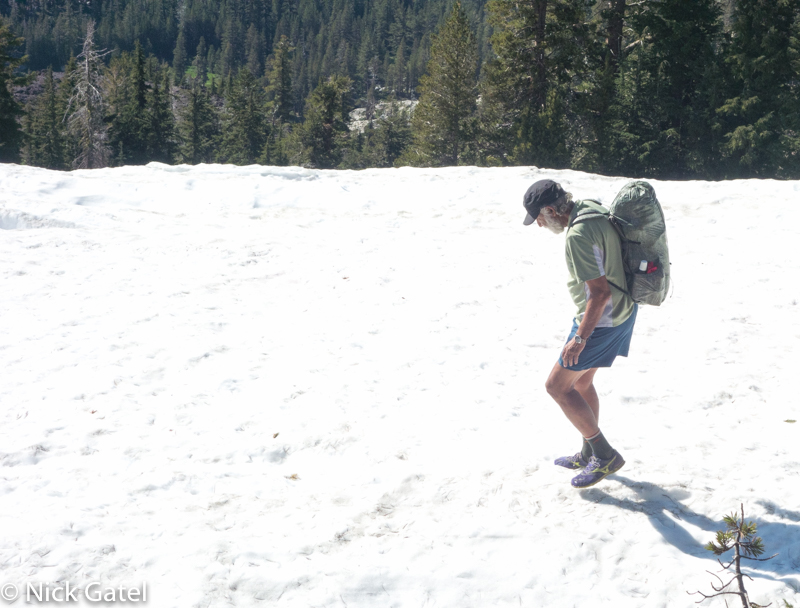
I may be on snow, but the temp was around 85F.
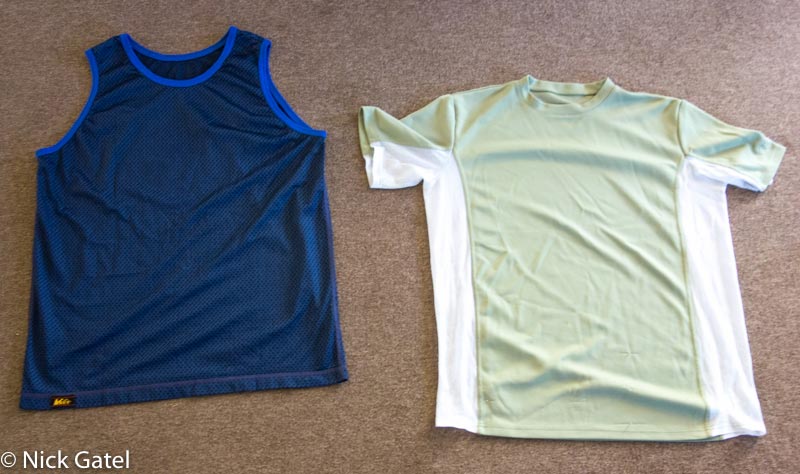
Left: REI Mesh Shirt, Right: Rail Riders Eco Speed Shirt
Sometimes I wear a cotton T-shirt. And a thick one, probably 6 oz per yard. It is an extra large. But it gets dirty really fast. If daytime temps get over 115, I usually wear one of these cotton shirts. I buy them by the dozen; they are usually my urban wear too.
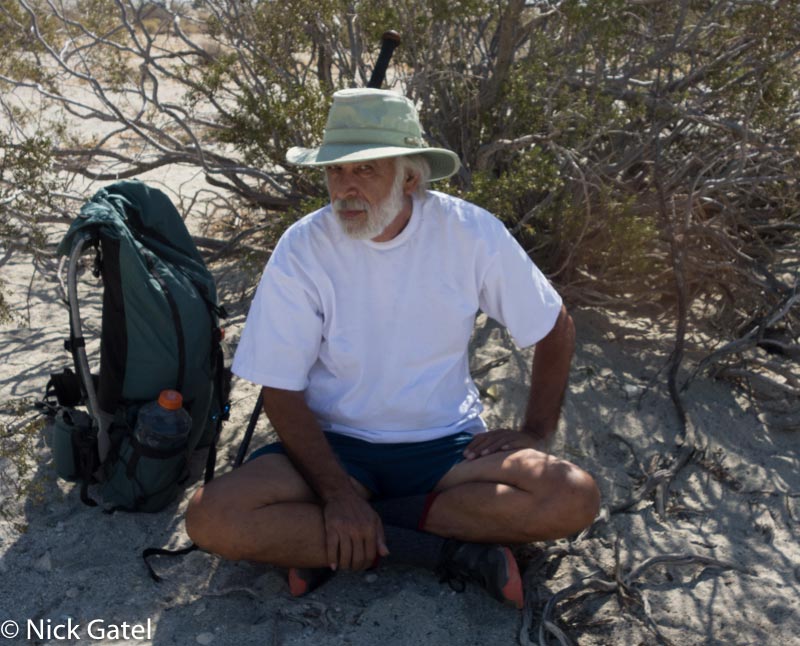
In my opinion, the most important piece of clothing is a wide brimmed, ventilated, high crown hat. I wouldn’t go hiking in the desert when temps go over 100F without one. The one in the picture is a Tilley Airflo hat. I have a couple of them. Other than that, most of the time I wear a light baseball cap hiking.
Keep in mind that I can work outdoors all day in extreme heat. The downside is I do really poorly in cold weather. On snow trips I have to bring more insulation and a heavier sleeping bag than most people. That being said, most people who hike in hot deserts should have a strategy to protect them from sunburn and possible skin cancer. Two strategies would be full clothing or sunblock. Since I usually have a good tan, sunburn isn’t an issue. I find that sunblock makes me feel hotter. Not sure if the lotion gets heated by the sun or it blocks my pores. Sunblock doesn’t bother me on my legs, so that isn’t an issue. But for my torso and arms it is. A cotton/poly (60/40 or similar) long sleeve shirt works well in heat. I have some Rail Riders Eco-Mesh and Adventure shirts. Another good choice, although they are made from some sort of polyester or nylon — no cotton. I prefer the cotton/poly.
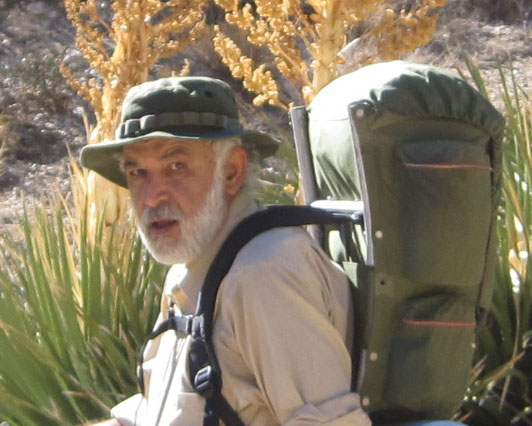
Years ago I experimented with a light cotton undershirt with a long sleeve cotton poly shirt. Didn’t make a difference with or without the undershirt.
If you need to wear long pants, cotton underwear is no good. You need wicking underwear. Ex-Officio Give-and-Go briefs are the best I have found. You don’t want to waste water in the desert, but washing the nether regions between your legs each night is a good idea when wearing underwear and pants. With my running shorts I don’t have to worry about it.
The last thing, and very important, is dealing with all the salt and minerals you lose through perspiration. They have to be replaced. If you don’t, you can get very sick and you can get sick quickly. I find sports drinks don’t “quench” my thirst like plain water does. So I drink plain water. You need to replace the salt. Many desert hikers use salt tablets. Although I generally have a cast-iron stomach, salt tablets upset my stomach. Potato chips, and other salty foods immediately perk me up when I go into a salt-deficient bonk. Pringles are highly recommended.