Hi folks
Another issue in my quest to design a solo tapered A-frame for lightweight use in exposed mountain and desert terrain. This will have sleeved trekking poles at the front, and sleeved DACs at the back to tension the side panels in bad weather.
I’m pretty much committed to going single skin – less weight, less faff, more space, and I’ve never been bothered by a bit of damp on the fly. But it does raise a couple of challenging design issues.
ISSUE #1: HOW TO MAXIMISE THROUGH DRAFT?
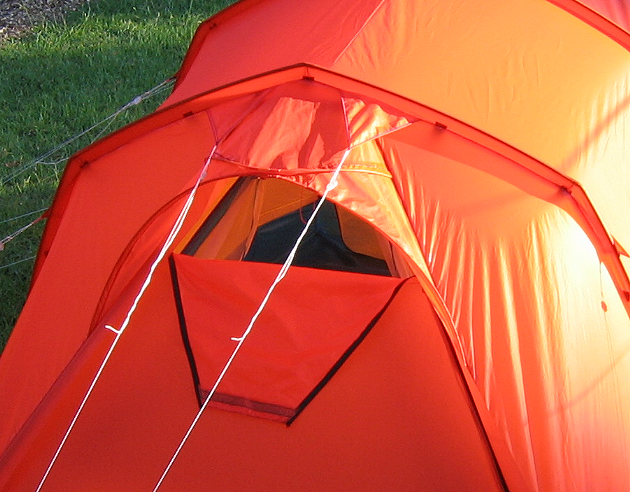
This is the easy one, I think, and also the most important issue for condensation management. Ideally, you have a sheltered and adjustable porch front and back, so you can keep the doors open in all but full-out storm conditions. And if you have to seal up you have sheltered vents in the fly, low in the back and high in the front to draw air through.
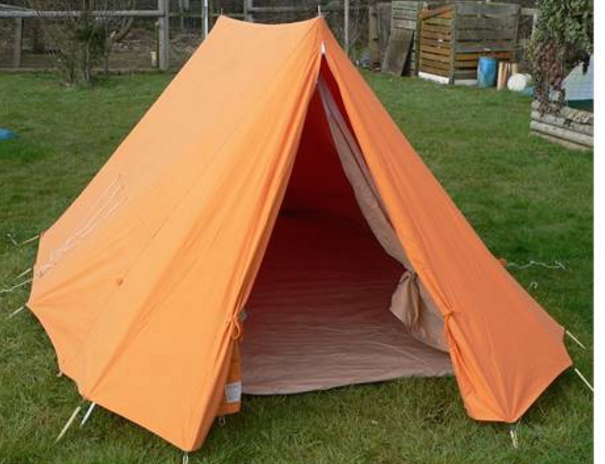
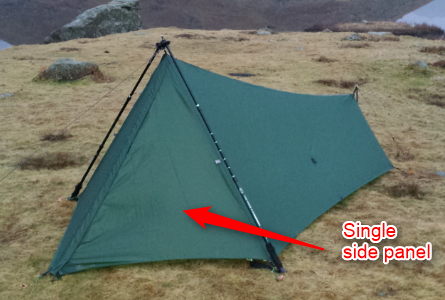
The simplest A-frame porch has a single panel on each side of a central zip, so you can have one panel open on either side, or both panels open in clement weather. Here’s the TrekkerTent Stealth – a really nice minimal A-frame that inspired to me start this project.
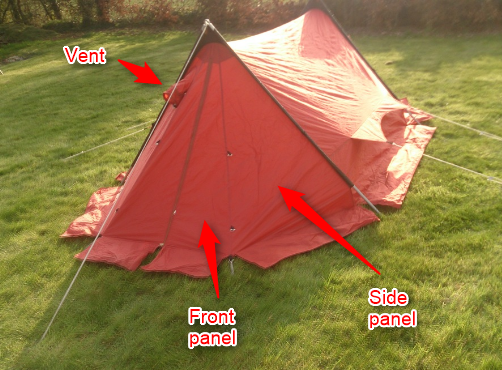
But for very little extra weight you can get something much more flexible. I think that Ultimate got it right with The Tent: You have 2 panels on each side of the porch, enabling you to fine-tune the shelter according to conditions and wind-direction, with the groundsheet well back from the drip line..
Even with both front panels open, the side panels give good shelter from side-winds and the porch is still helping provide tension for the ridge. And you still have the option of opening the porch fully on one or both sides.
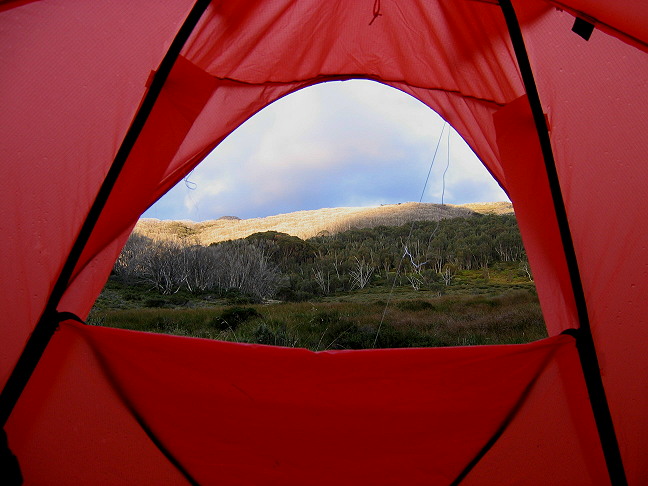
Unless someone can point out a downside I’ve overlooked, I think I’ll be going with this 2 panel approach front and back. Coupled with double half-moon doors in the inner providing adjustable draught and bug protection, you have flexibility from fully open to fully battened down with every gradation in between.
I’m planning doors at both ends of the inner so I can adjust the rear porch from the inside – nothing worse than having get out of your pit and into the storm to seal up the back vent. It’s surprising how many big-brand designs get this wrong. And an adjustable rear door will help fine-tune through-draft.
ISSUE #2: HOW TO JOIN THE FLY TO THE FLOOR?
This is much tougher issue, I think.
Approach #1: drop a mesh wall off the fly
Much the most common approach with single-wall tarptents is to drop a wall of mesh from the fly to the floor. The TarpTent ProTrail would be the classic example:

This helps with airflow in still conditions and helps keep drips off the floor. But it also makes the tent very draughty in a cold wind, and lets in driven snow and dust. For my usage, this isn’t ideal, and I’m looking for alternative approaches.
Approach #2: have a mesh wall but make it sealable.
The Yama Cirriform has a cunning approach. In fair weather you pitch high with the fly well off the ground and the mesh on the walls is open. In low weather you drop the pitch so the fly is near the ground and the side-wall is shorter, allowing you to close off the mesh with a drawcord arrangement. But this requires a single, unsleeved pole, I think, so it’s easy to alter the pitch height. I can’t see how it could work with a sleeved A-frame. And it would be a royal pain if you were pitched high and got caught out by an unexpected storm at 3:00 am…
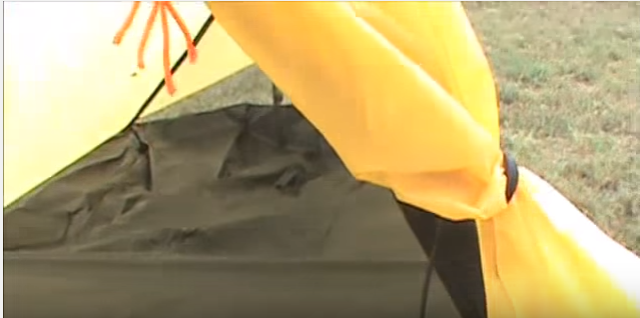
Alternatively you could have some kind of curtain to close off the mesh, held up by velcro, snap fasteners or a drawcord. This is relatively simple and should work OK, but would need some kind of arrangement to keep the curtain stored neatly when not in use. This has the advantage of flexibility, but at the cost of some faff and complexity.
Approach #3: catch the drips
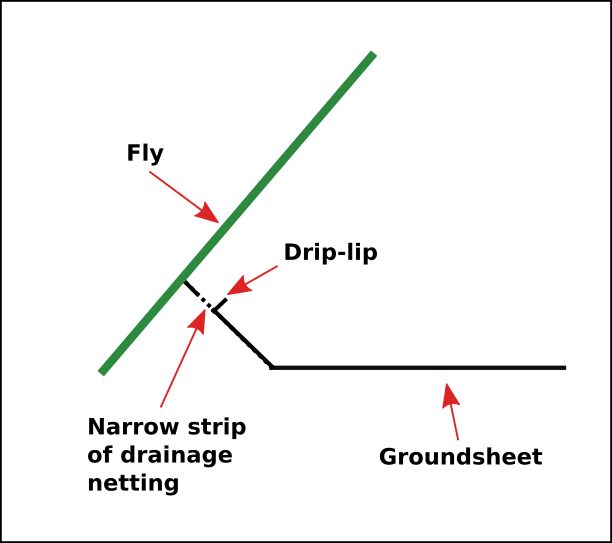
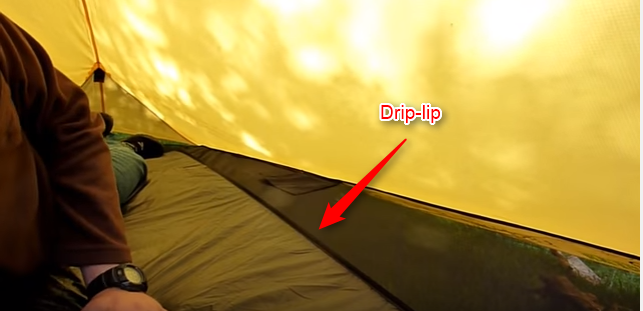
The UK tentmaker Gram Counter has come up with the Drip-lip – a raised seam at the bottom of the wall. This catches drips before they can run onto the floor, and you’d simply mop up the damp before packing in the morning. I like this idea – elegant and zero faff, though you’d have to be careful to keep your down away from the sides..
Approach #4: sew the fly to the floor and damn the drips
This is the always-closed approach, the opposite to the always-open Pro Trail approach. Simply sew the floor to the bottom of the fly in a tube like the Stephenson Warmlite, and rely on through ventilation.
The downside, obviously, is increased condensation in still conditions. And condensation can run down the walls and onto the floor – through this could be managed by pairing it with the Drip-lip.
But there are compensating benefits:
- No faffing about with side curtains for battening down.
- No way for moisture rising from the ground under the fly to reach the inner tent, as there seems to be with the Pro Trail approach
- No need for separate tensioning for the fly and the bathtub – stretch out the fly and the floor is set up too.
So which way to go?
As with most lightweight design, this seems to be a question of tricky tradeoffs.
I’m tempted by the always-closed option with the Drip-lip because of it’s elegance and simplicity. By shutting out damp rising from the ground, the only condensation is from the occupant. And as a solo tent, there is only half the moisture you’d be getting in a double. Coupled with a good though-draft and the ability to open both ends fully in calm conditions, my gut feel is that condensation would be workable.
But I’d very much welcome any suggestions from your own experience.


 .
.